

I’m offering you the most “bare-bones” guide I’ve written so far. No adventures or mishaps – straight to the point (and hopefully accurate), so it can help if you’re planning a city break.
Basically, I’ll show you what I’ve seen in Milan during my three “landings” here: a one-day visit in 1999, a day-and-a-half transit in 2021 after a vacation through pandemic-era Italy, and in the summer of 2025, a little two-day escape.
TOP MILAN
MILAN CATHEDRAL (DUOMO DI MILANO)
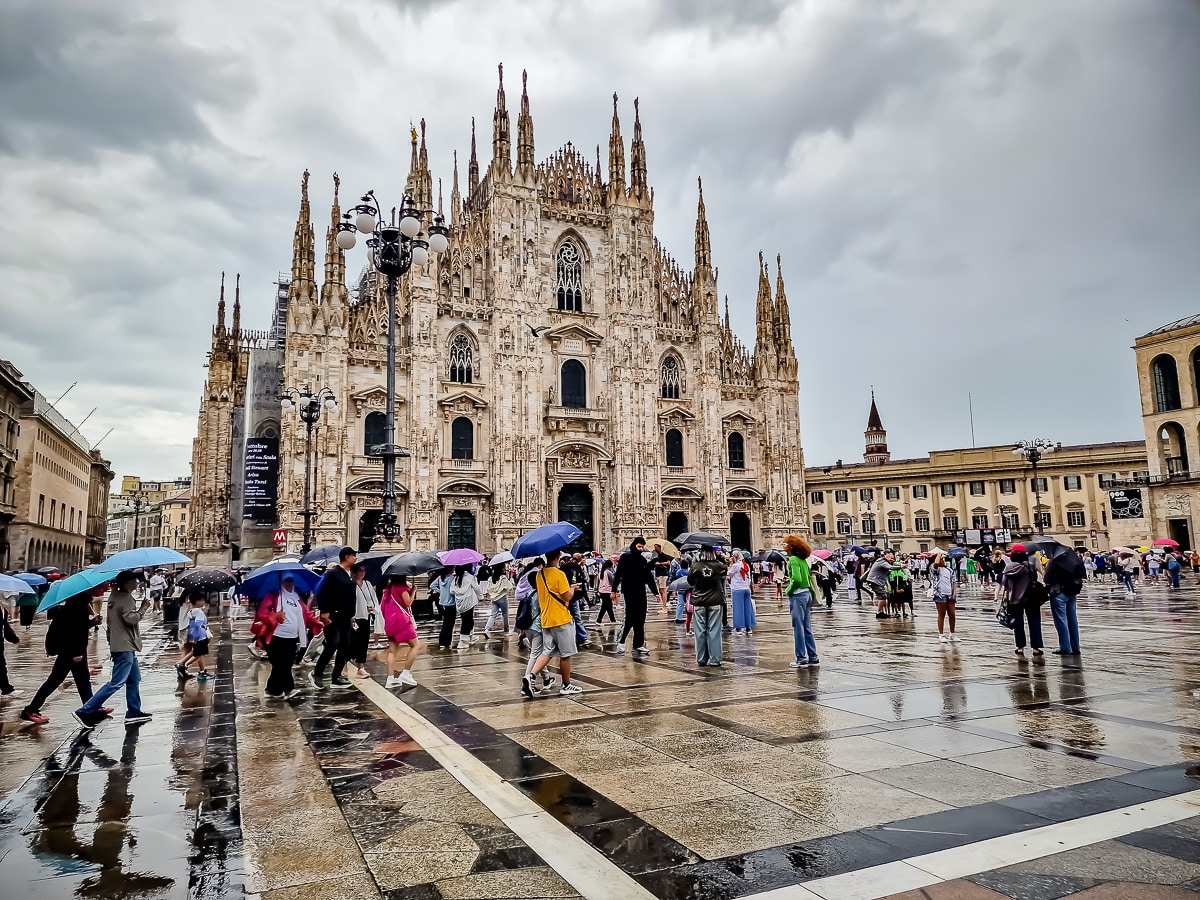
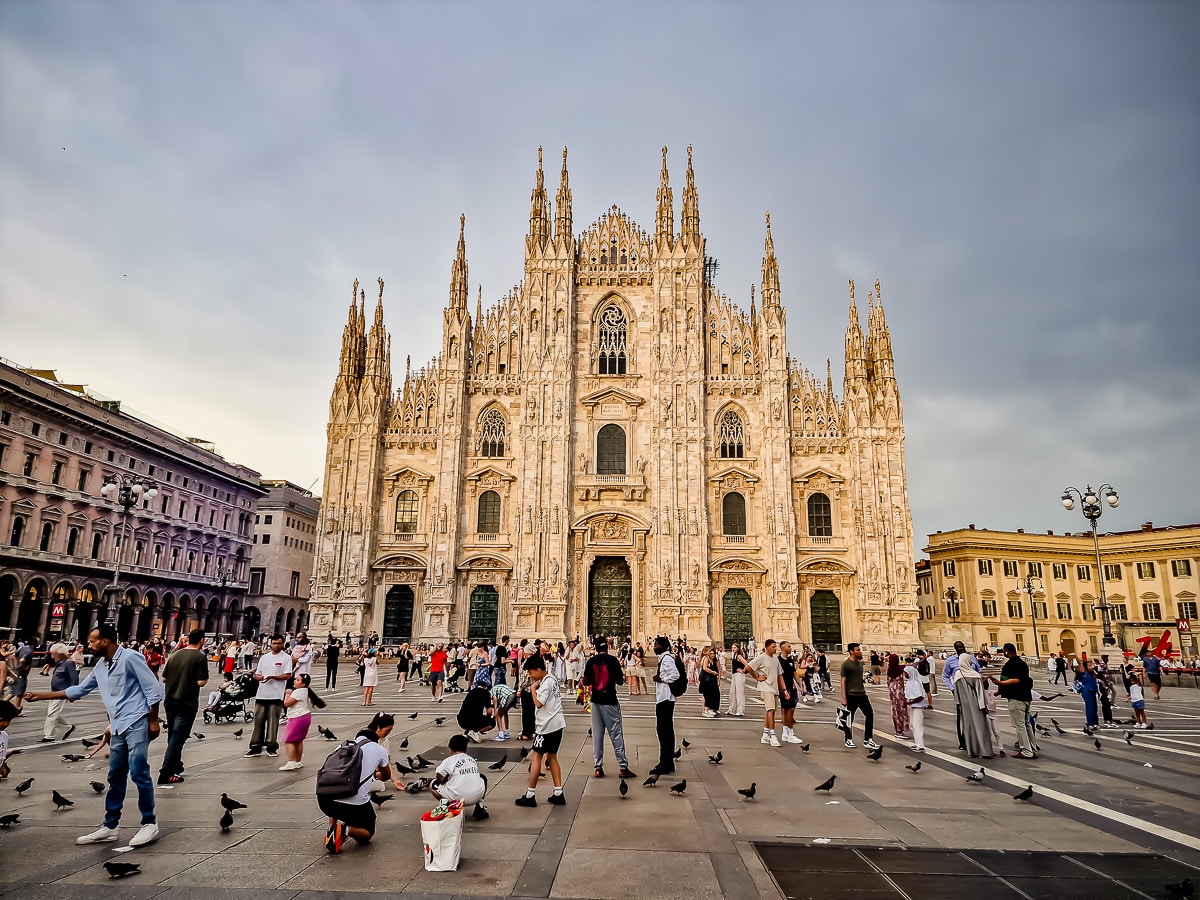
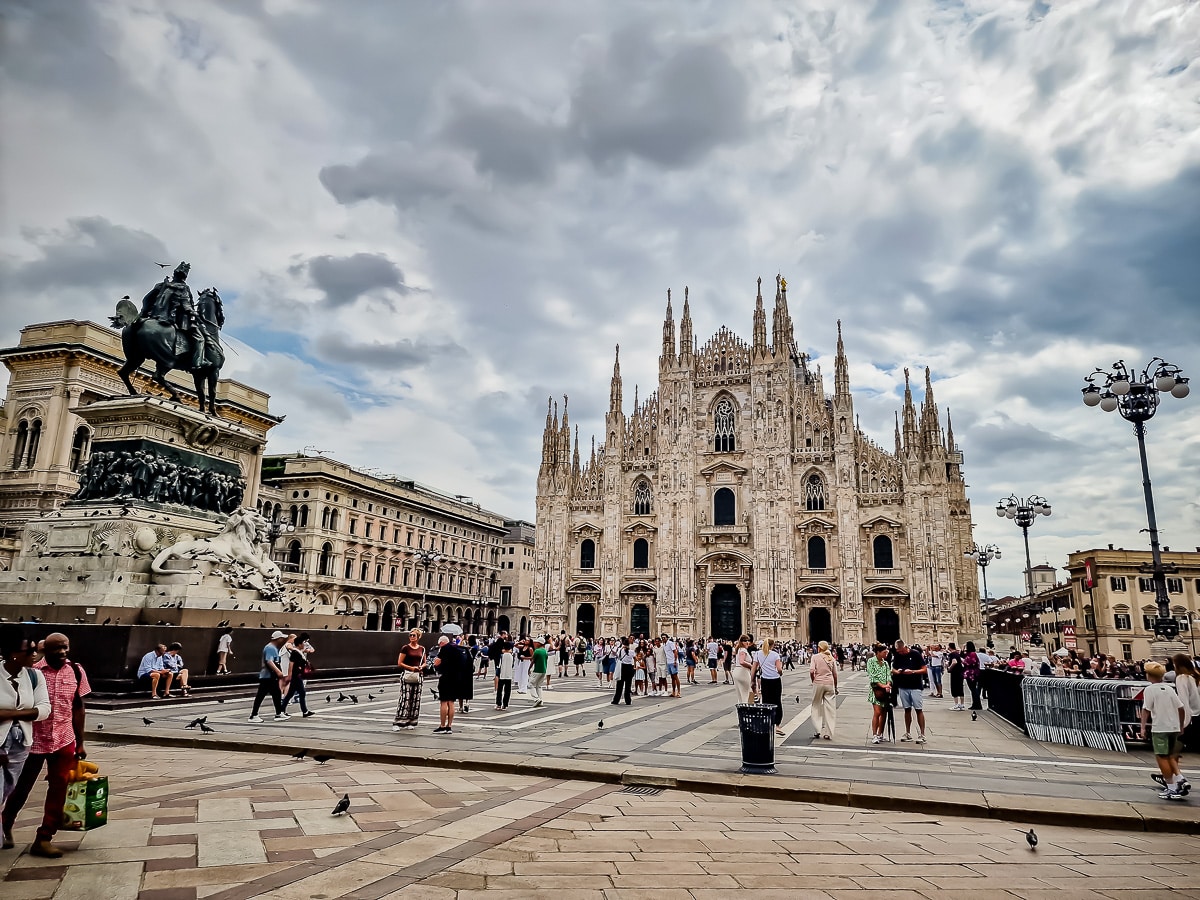
Whatever the reason you came to Milan – transit, business, pleasure 🙂 – you can’t miss the Cathedral. The Duomo, that is. You’ll run into it anyway…
It’s the largest Gothic cathedral in Italy and one of the biggest in the world.
Construction began in 1386 and, believe it or not, it was only completed in the 20th century!
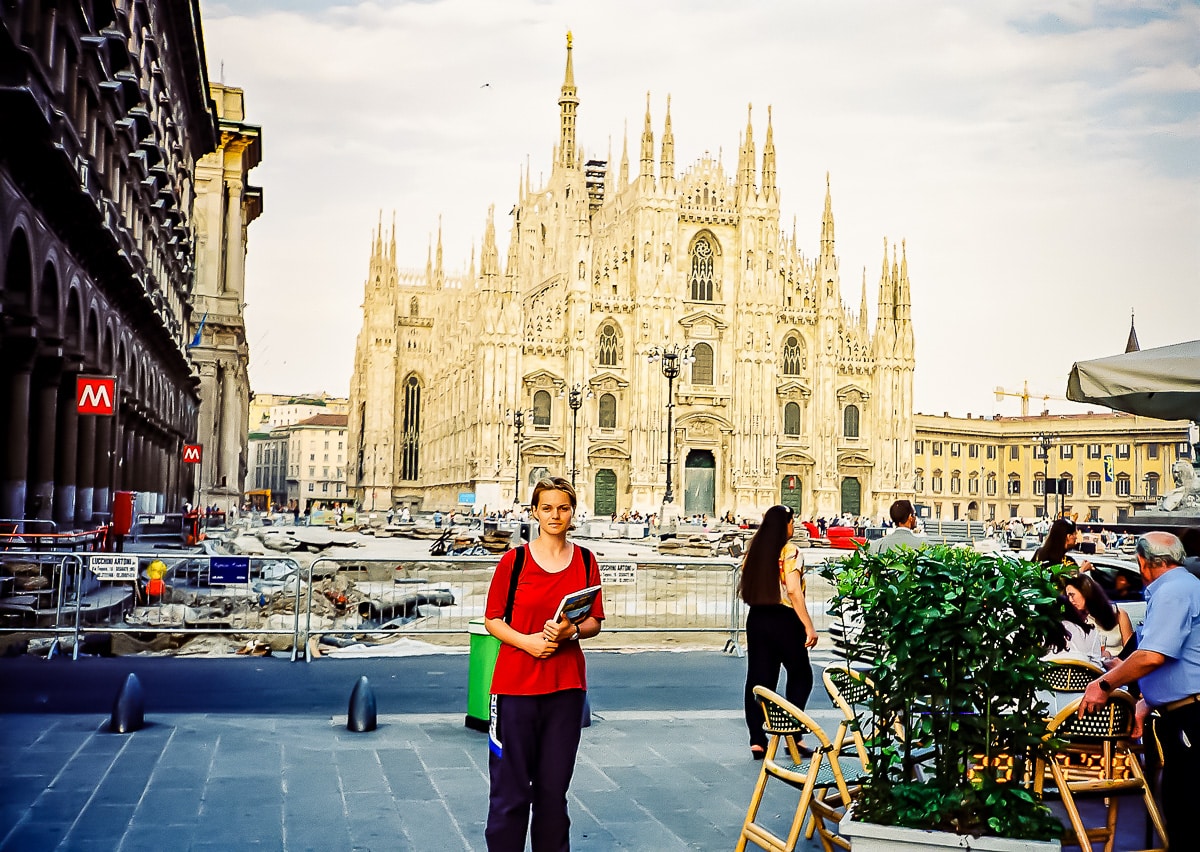
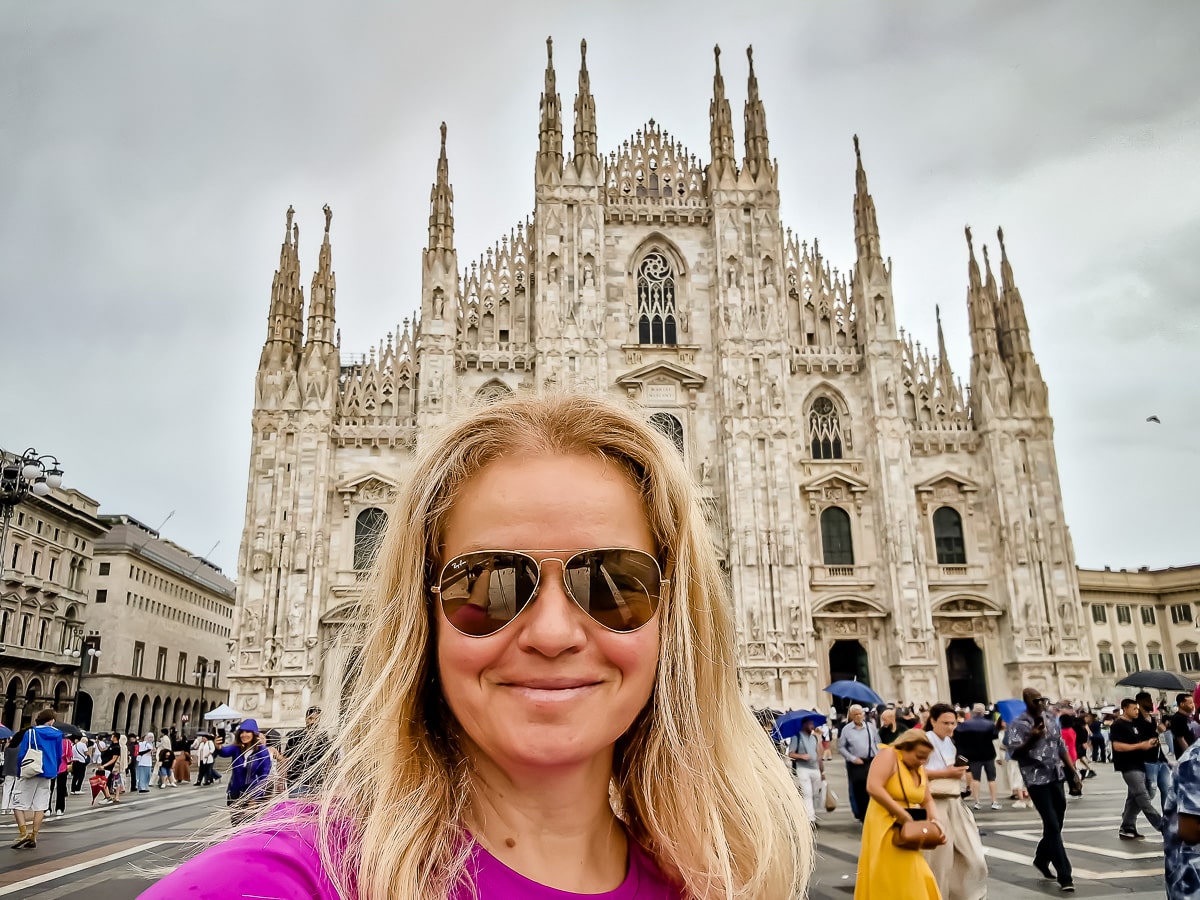
In Piazza del Duomo you can take as many photos as your heart desires – by day, by night, fat or thin (oh wow, I’ve been there!!!). But if you have the time, buy a ticket and go inside to see it. And even better, climb up on the roof!
Let’s take things step by step:
PIAZZA DEL DUOMO
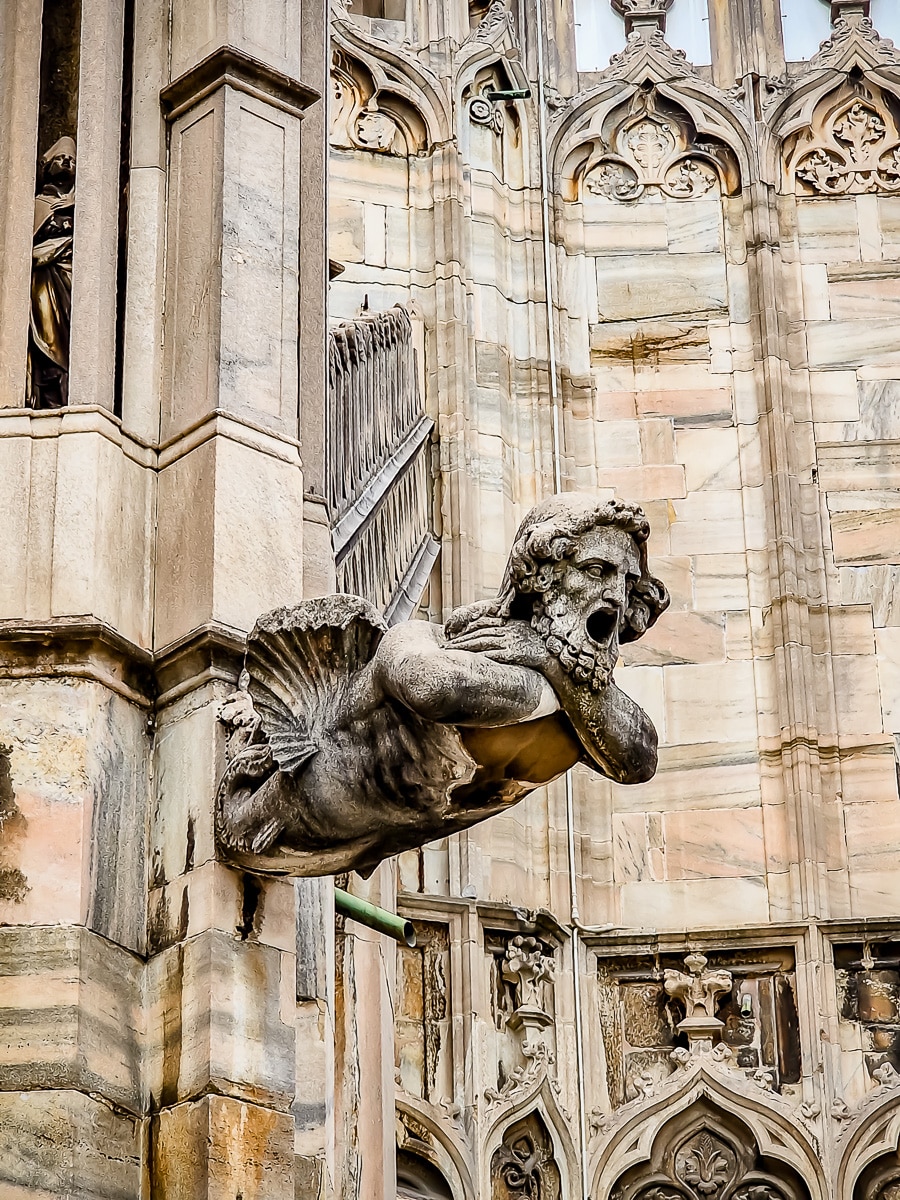
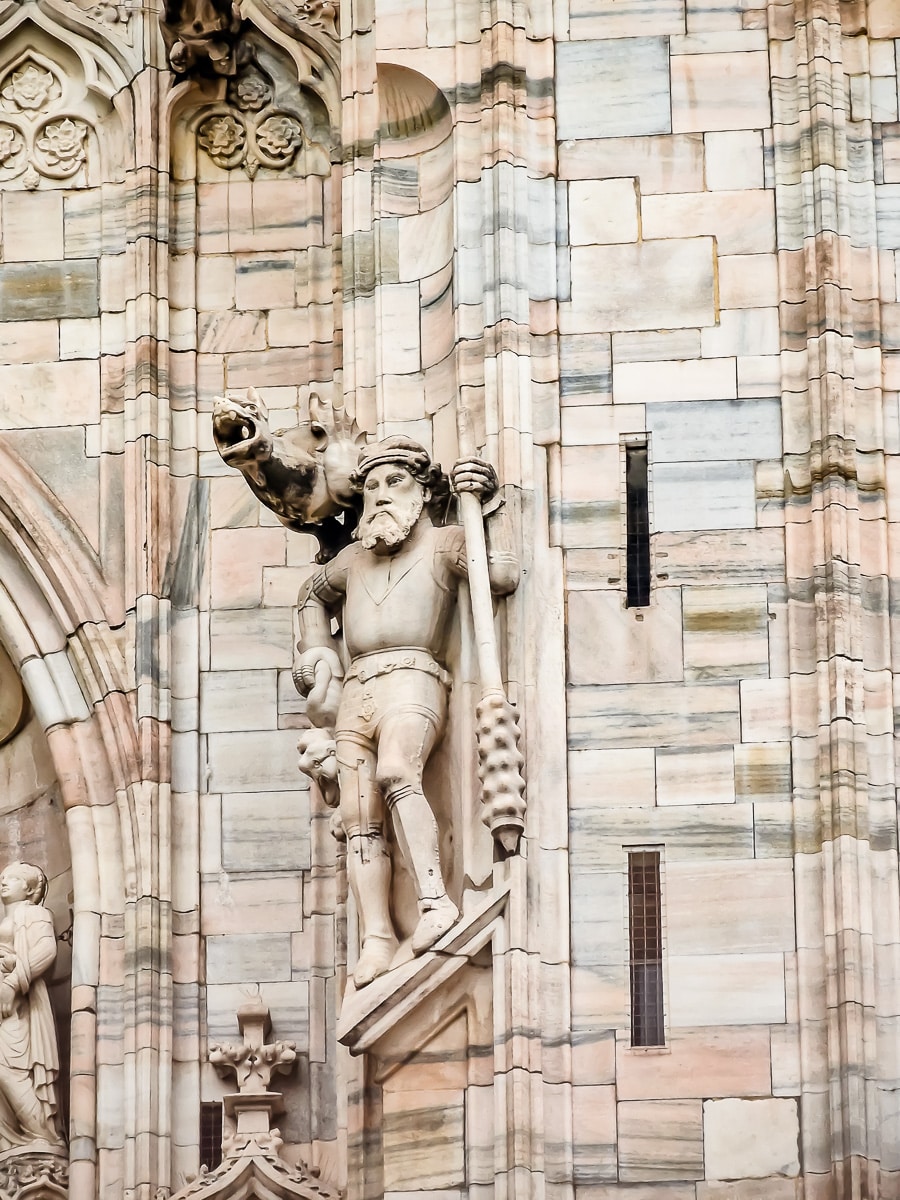
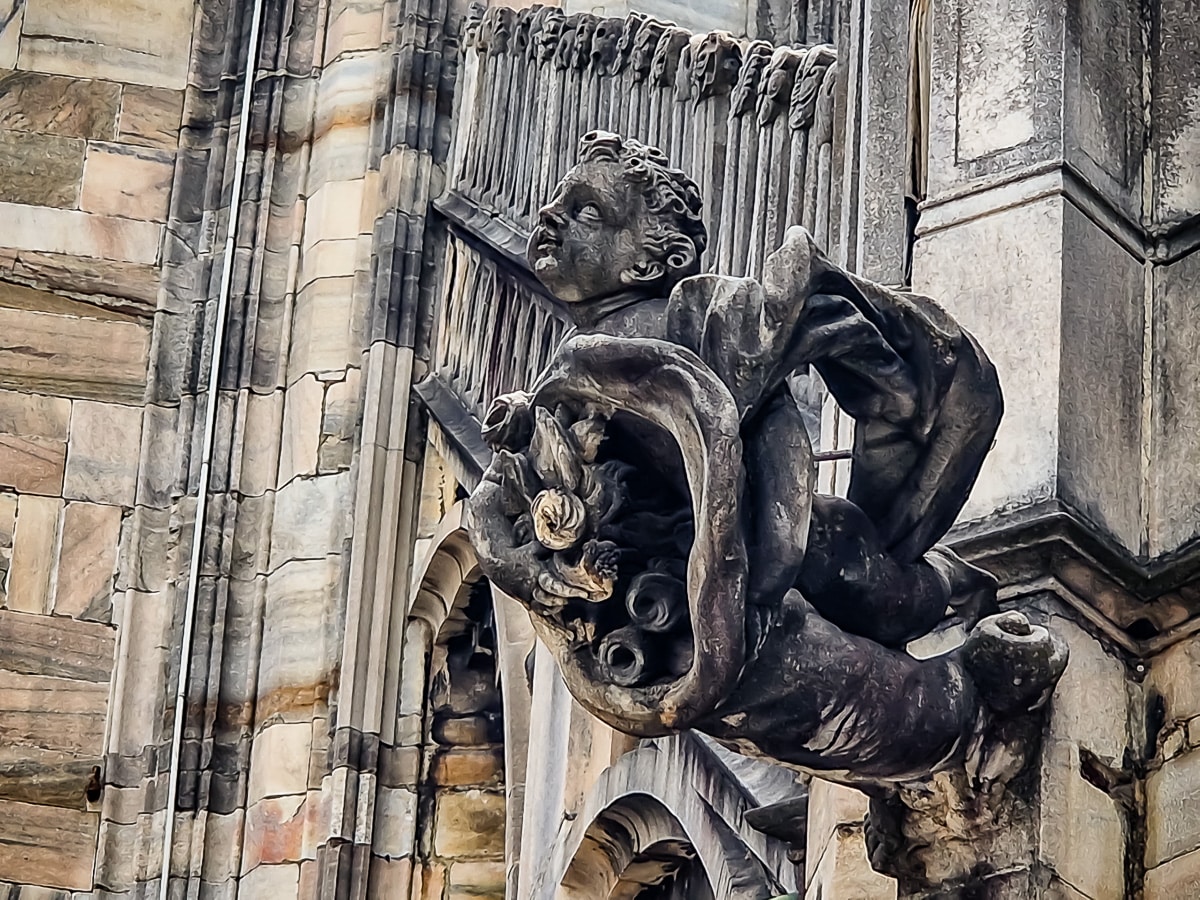
It’s obvious the exterior offers enough details to analyze for days, not just hours: columns, statues, doors, windows, sculptures…
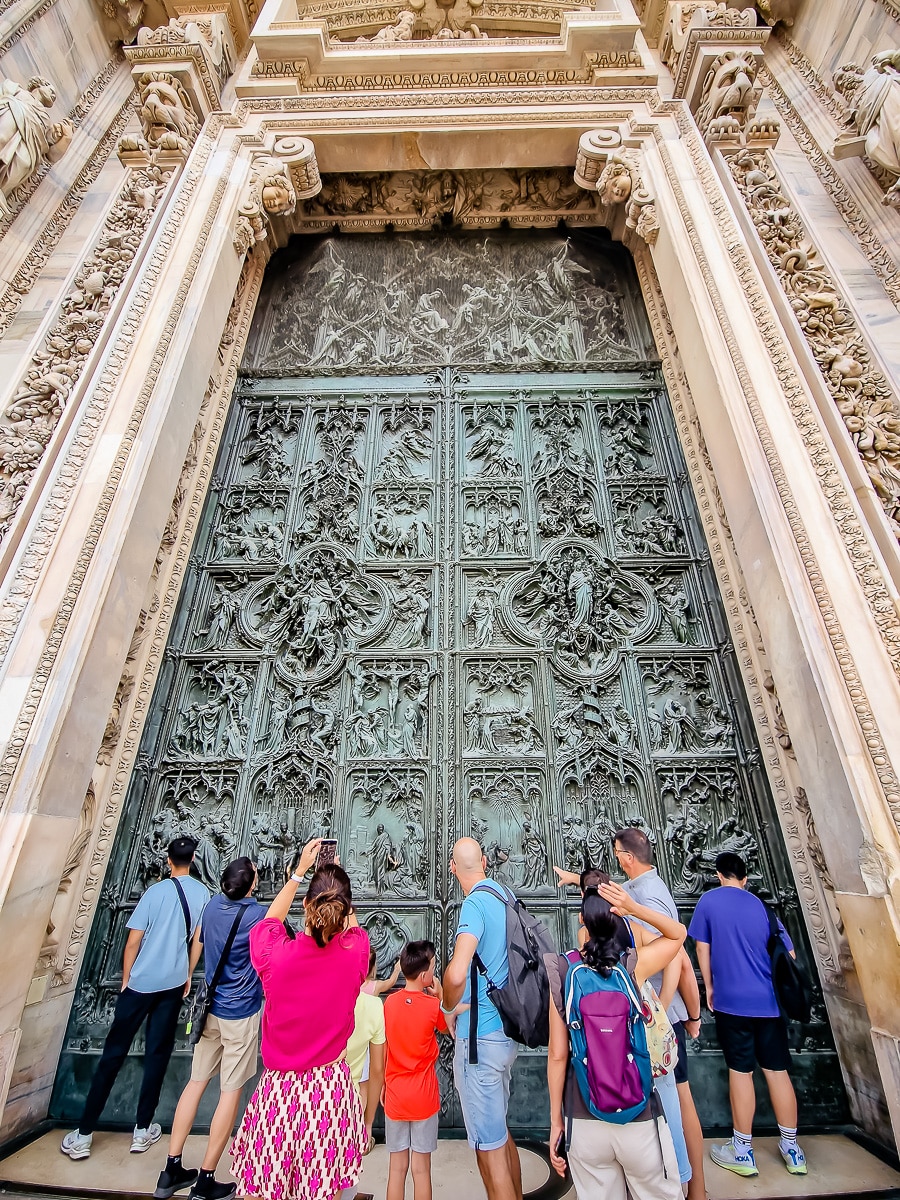
The spectacular central portal is decorated with many biblical “panels”.
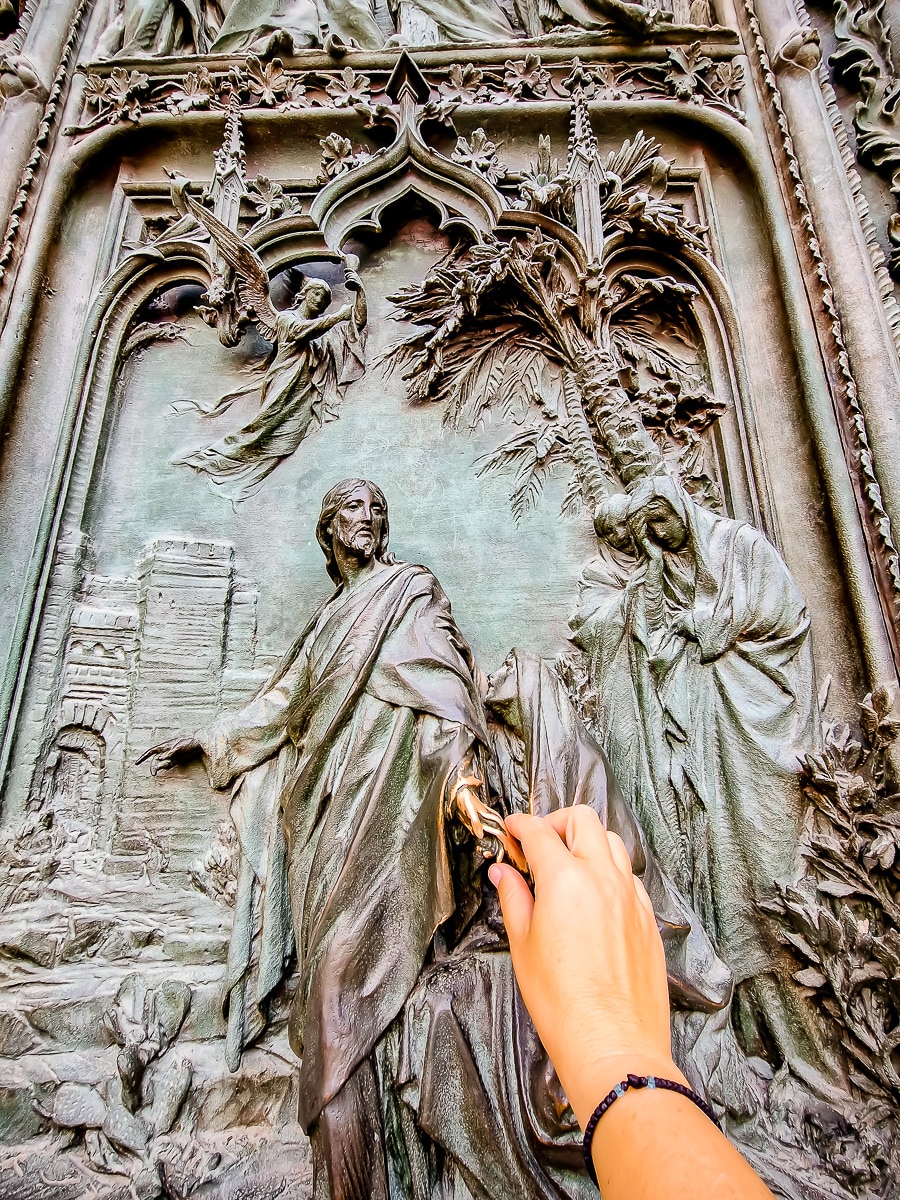

But most people approach it to touch, like a prayer expressed through gesture, the hand or foot of Jesus depicted on two bas-reliefs. The areas are already visibly “polished” from so many touches.
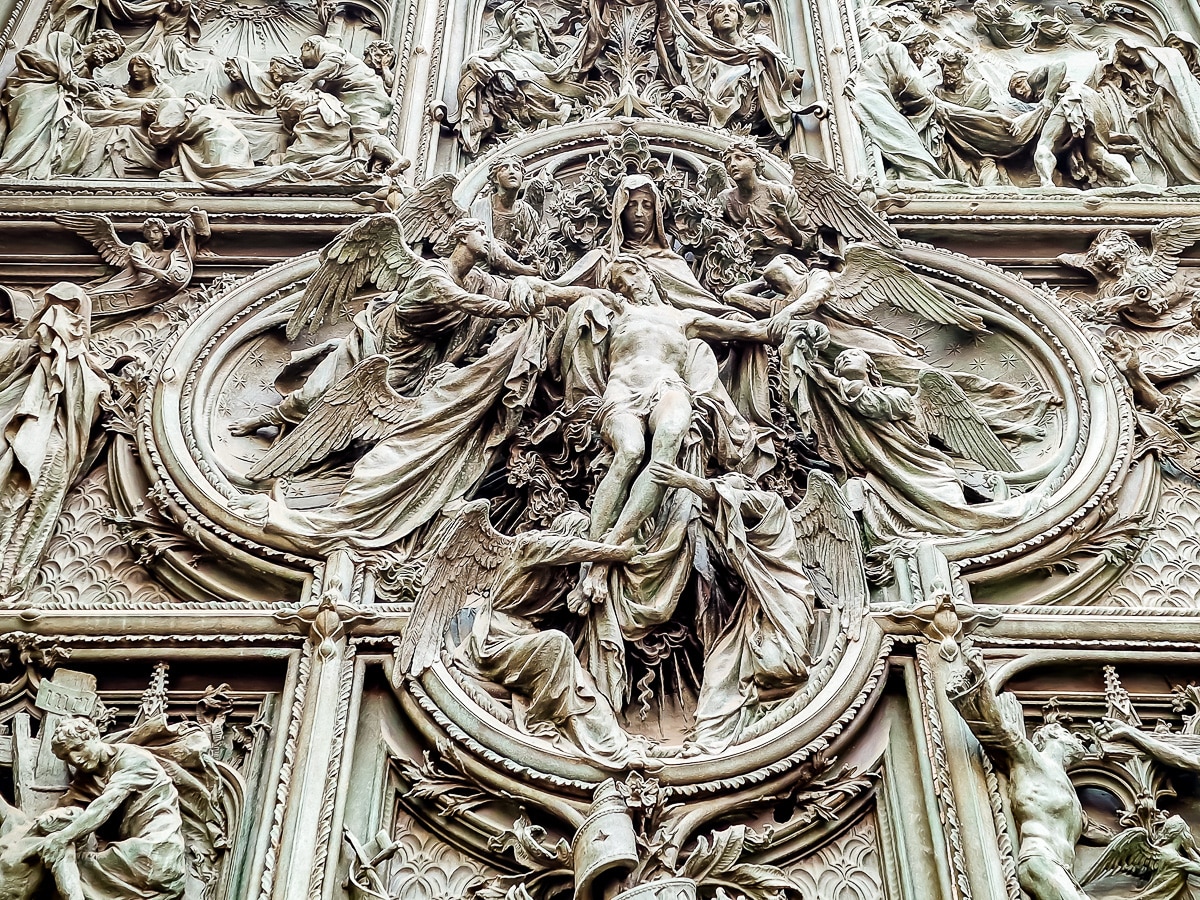
Overwhelmed by so much visual information, what do I do? I quickly search online and find a concise guide specifically for the Milan Cathedral, very useful (grazie, https://www.yesmilano.it/), because it challenges me to look for details I certainly wouldn’t have noticed on my own.

For example, the sleeping dragon on the Duomo’s façade. It’s right next to the central portal, on the marble column (above the little bow).
It’s called Tarantasio and was a kind of Loch Ness-style monster that supposedly ate children and terrorized the marshy area where it lived. Until one brave man finally defeated it and put an end to kids being served for breakfast.
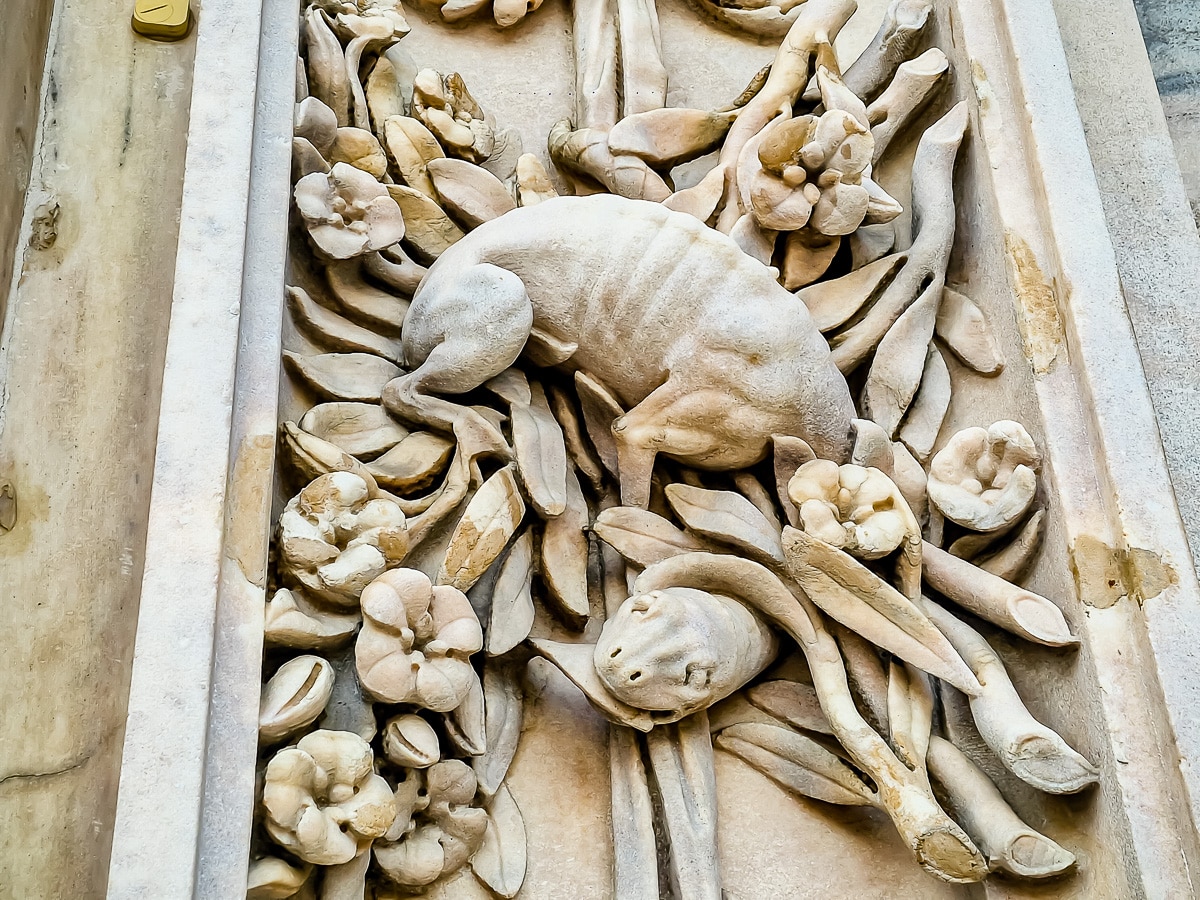
The dragon became the coat of arms of that man’s family (the Visconti family – future Dukes of Milan), but you can also spot it on fountains, old buildings around the city, and even in the Alfa Romeo badge or Inter Milan’s logos!
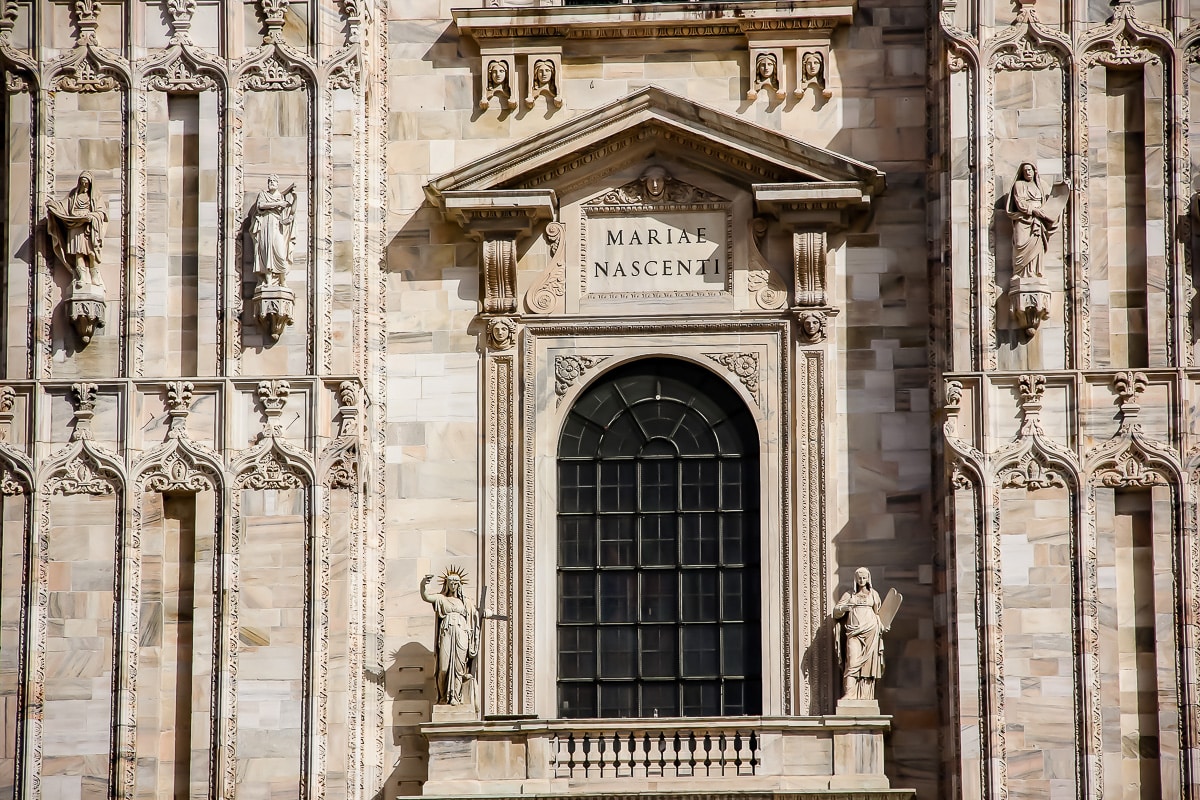
On the left side of the beautiful balcony on the Duomo’s façade, I discover… the Statue of Liberty 🙂
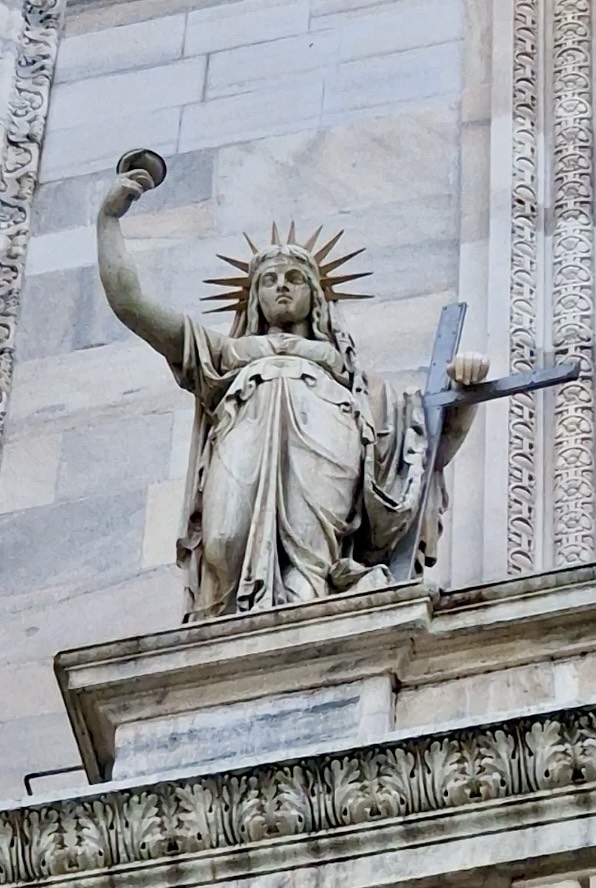
It’s called “The New Law” and was sculpted in 1810 by Camillo Pacetti. What’s fascinating is that it’s said to have inspired the famous Statue of Liberty in New York by Bartholdi (the French sculptor from Alsace – I visited his home in Colmar a few years ago, and I definitely need to write about Alsace soon).
INSIDE THE DUOMO
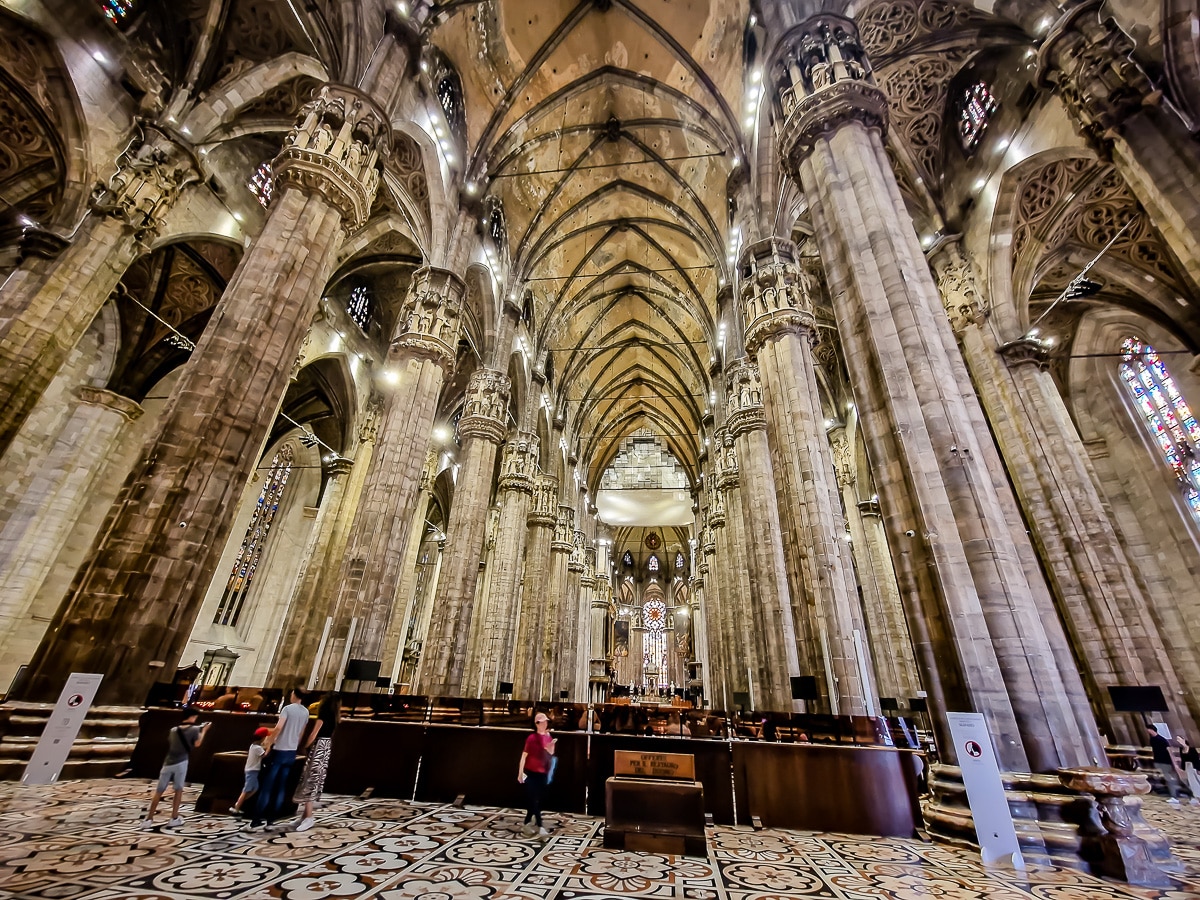
One of the nails from Jesus’s crucifixion is kept right here in the Duomo! Amazing, right?? But no chance to see it, because it’s lowered to the altar only once a year, in September.
Instead, I stand there spellbound, admiring the splendid stained-glass windows brought to life by the light outside.
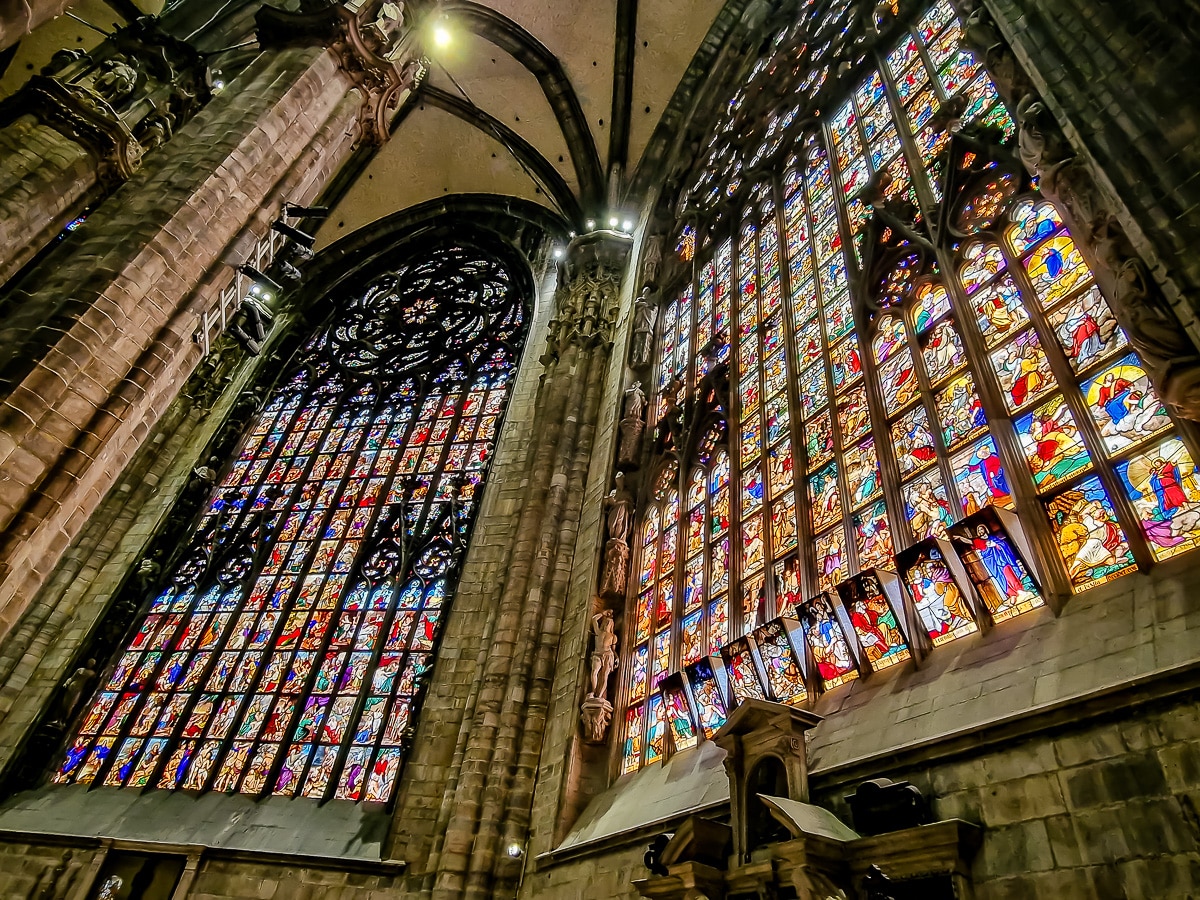
These spectacular windows are known as the “Bible of the poor”, since they showed even those who couldn’t read the stories from the Old and New Testaments, as well as the Apocalypse.

The oldest windows date back to the late 1300s, while the newest ones are from our own times, at the end of the 20th century.
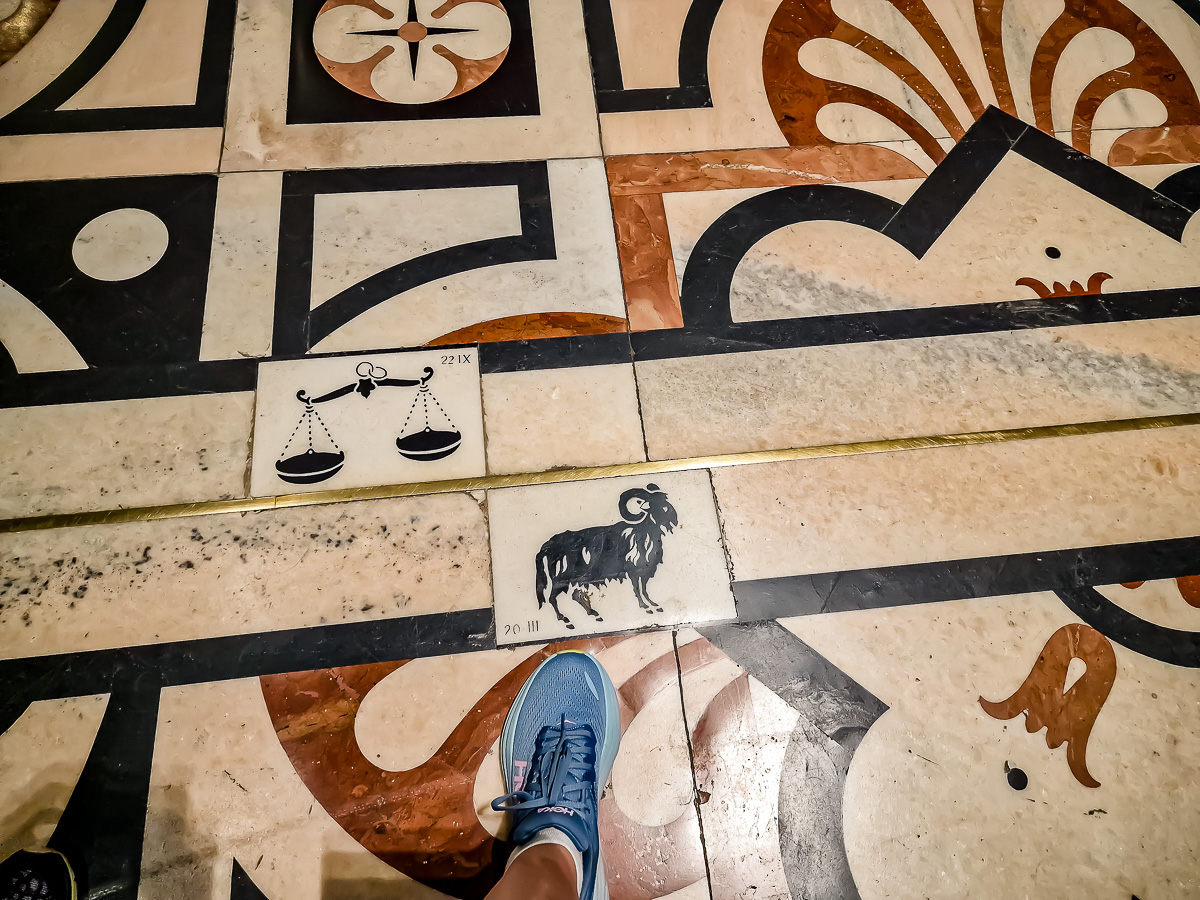
Are you into zodiac signs? This is the place where you can find yours 🙂
Right near the Cathedral entrance you’ll find a Solar Meridian. Along the metal line are all the zodiac signs, illuminated (when their time comes) by the ray of sunlight that enters through a small opening above the first chapel on the right.
I’ve come across “clocks” like this in several churches in Italy – the first that come to mind are Santa Maria degli Angeli in Rome (near Termini station) and the Basilica of San Petronio in Bologna. The latter actually has the longest indoor astronomical meridian line in the world! (I’ve written about it, and other secrets of the city, here.)

I light a candle in front of a painting with an unusual story: although it’s called the Madonna of the Roses, there isn’t a single rose in the painting…
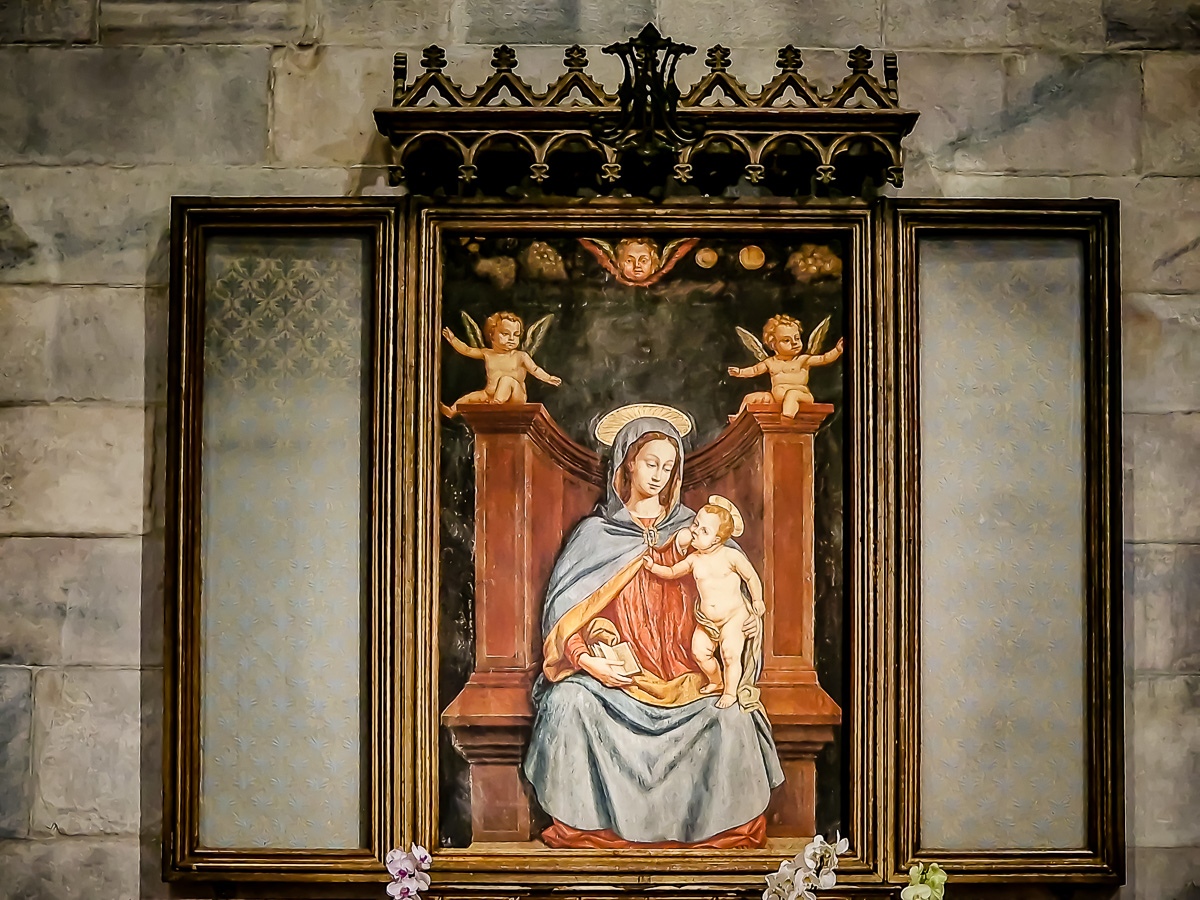
The name actually comes from the roses a woman – who used to pray regularly before this icon – brought during a time of siege, when marble meant for the Duomo’s construction was being used as ammunition for catapults. She feared the misfortunes that might follow such a sacrilege. Some time later, when her son was wounded in battle and she came to pray to the Madonna for his salvation, the roses, long wilted, suddenly bloomed. And her son miraculously recovered!
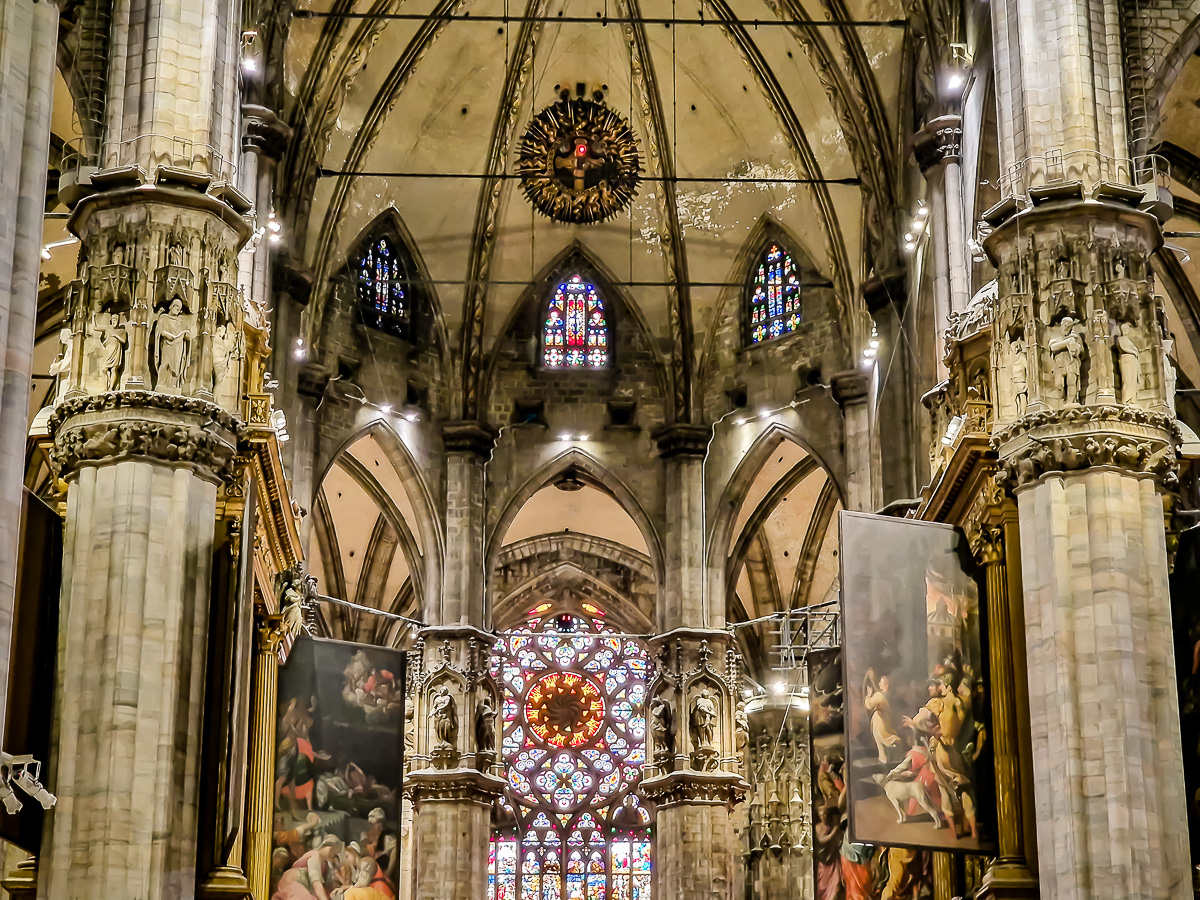
The Duomo is one of the few cathedrals in the world where you can see statues placed high up on the columns, integrated directly into the architecture. Venerable statues dating back to the 14th century!
And speaking of statues, the Milan Cathedral holds the (unofficial, as I understand) world record for the number of statues – no fewer than 3,400 in total, combining those outside with those inside!
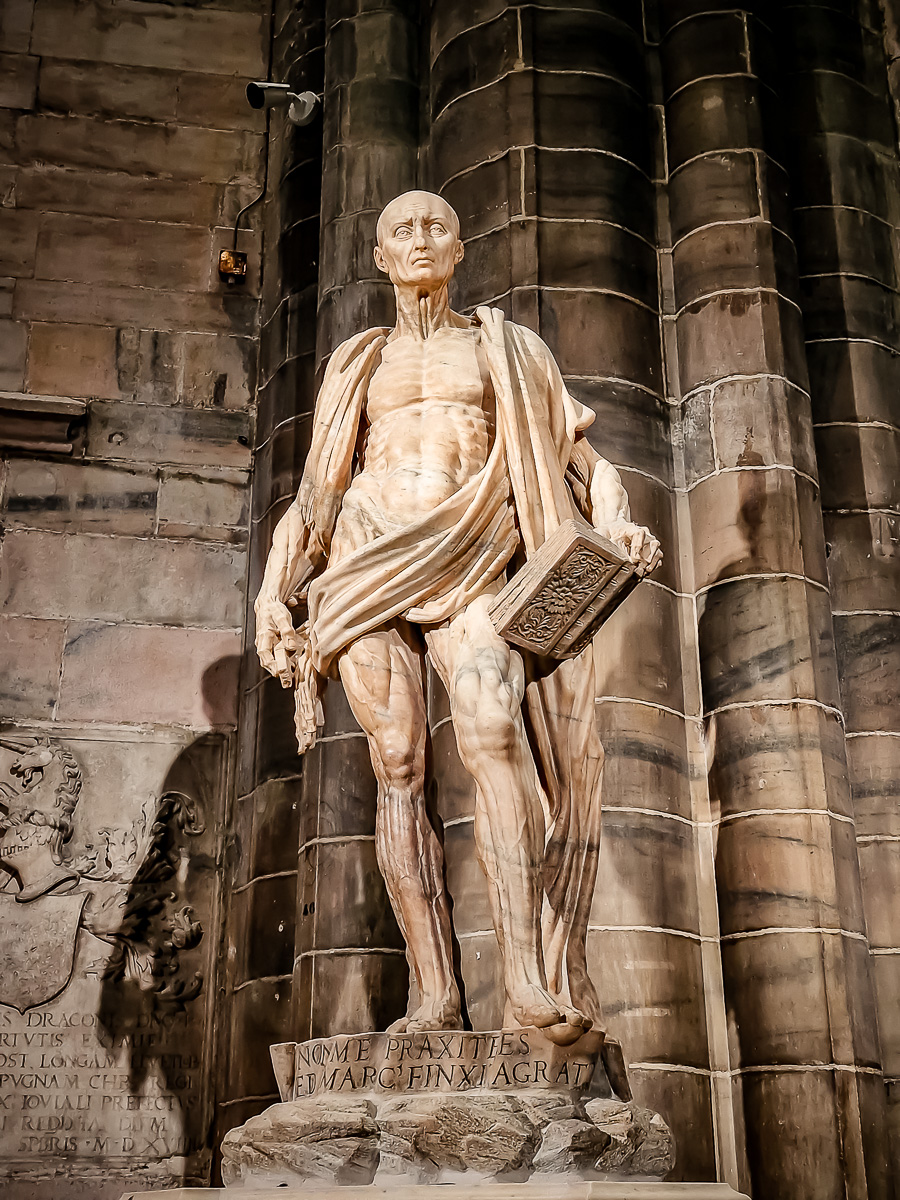
One of them is the statue of Saint Bartholomew Flayed. Straight out of a horror movie…
In short: the saint, flayed alive, is “dressed” here in his own skin brrr.
The statue sparked enormous interest and became extremely popular, so it was moved from the Cathedral’s exterior to the interior to be easier to admire.
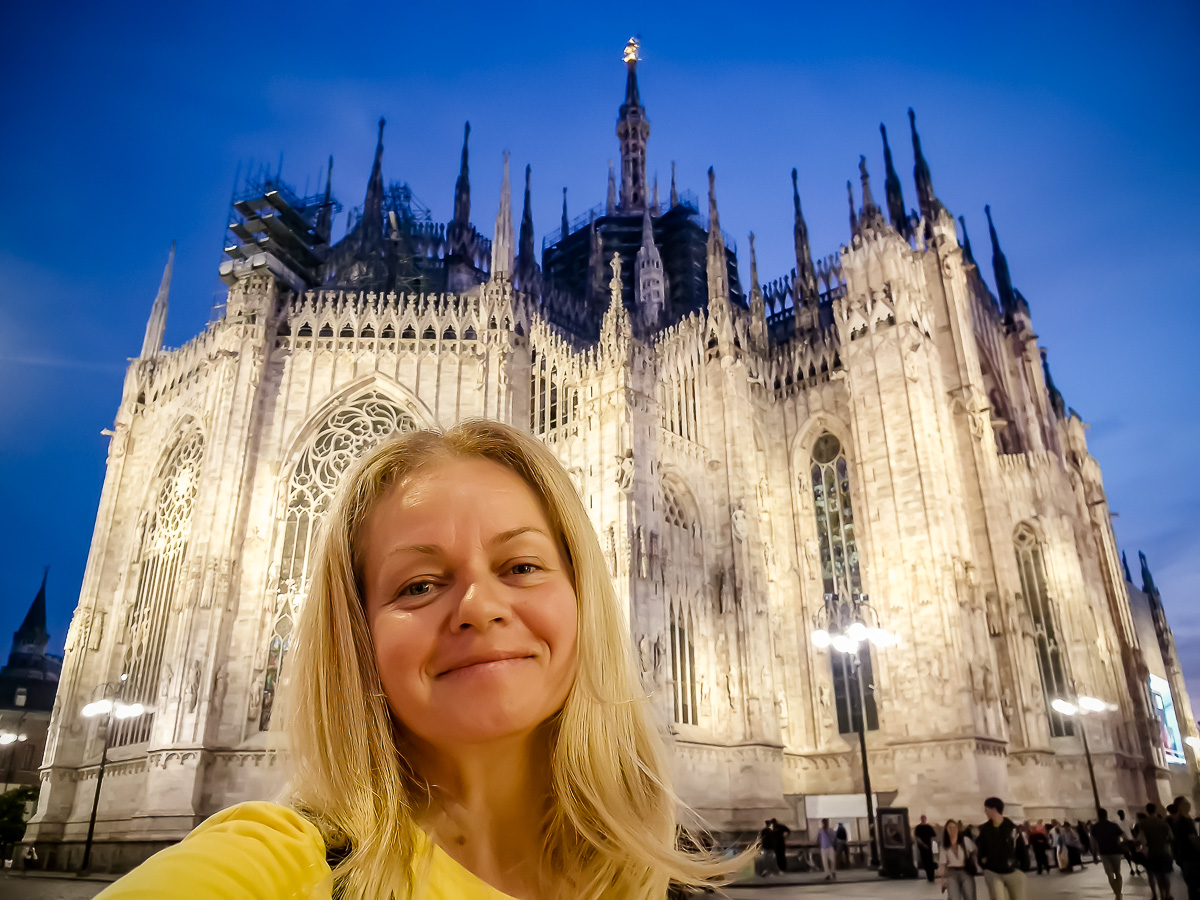
At dusk, the Duomo looks beautiful from any angle.
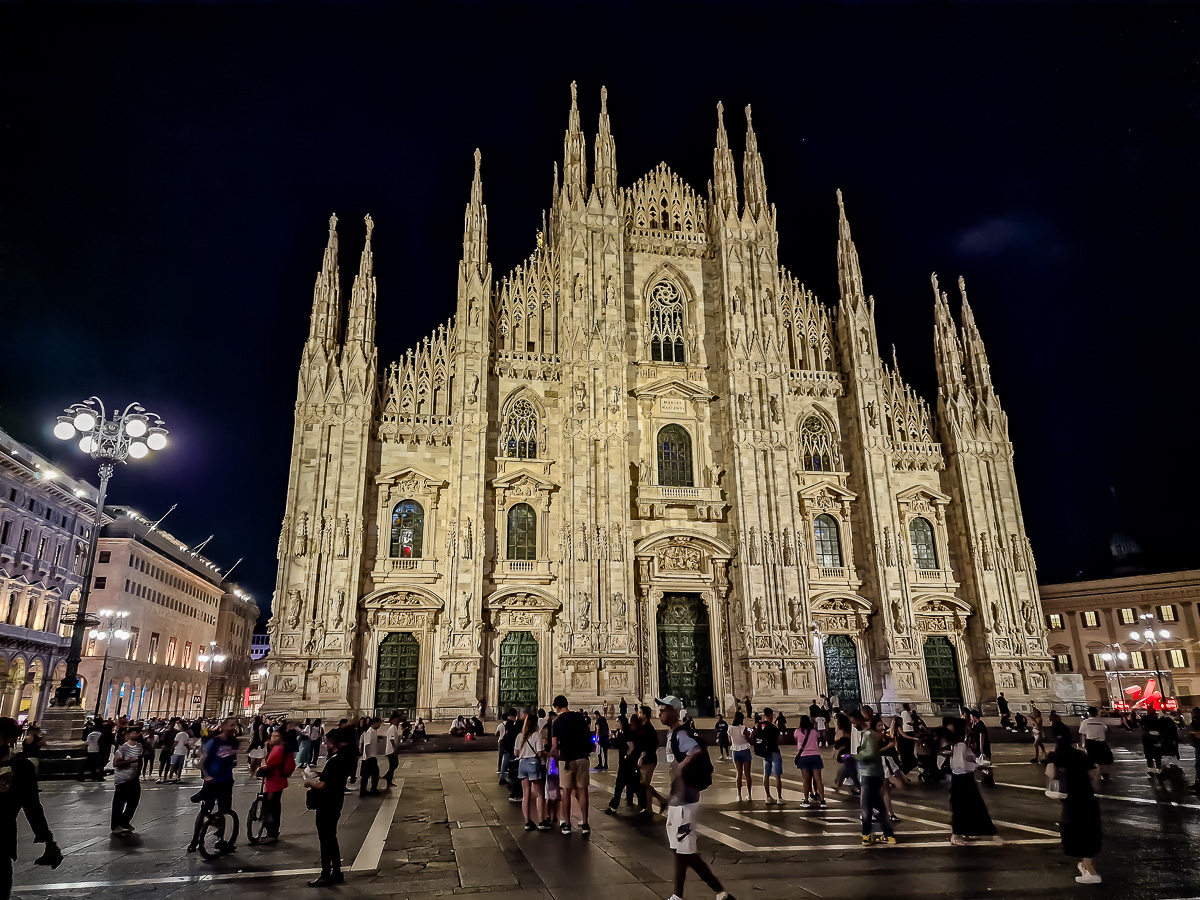
The atmosphere is great – you can sit by the central statue, eat an ice cream, and watch passersby. That is, if remembering you can find a spot among delivery riders who, regardless of nationality, also gather here to rest their bones or wait for their next order.
THE MILAN DUOMO TERRACE
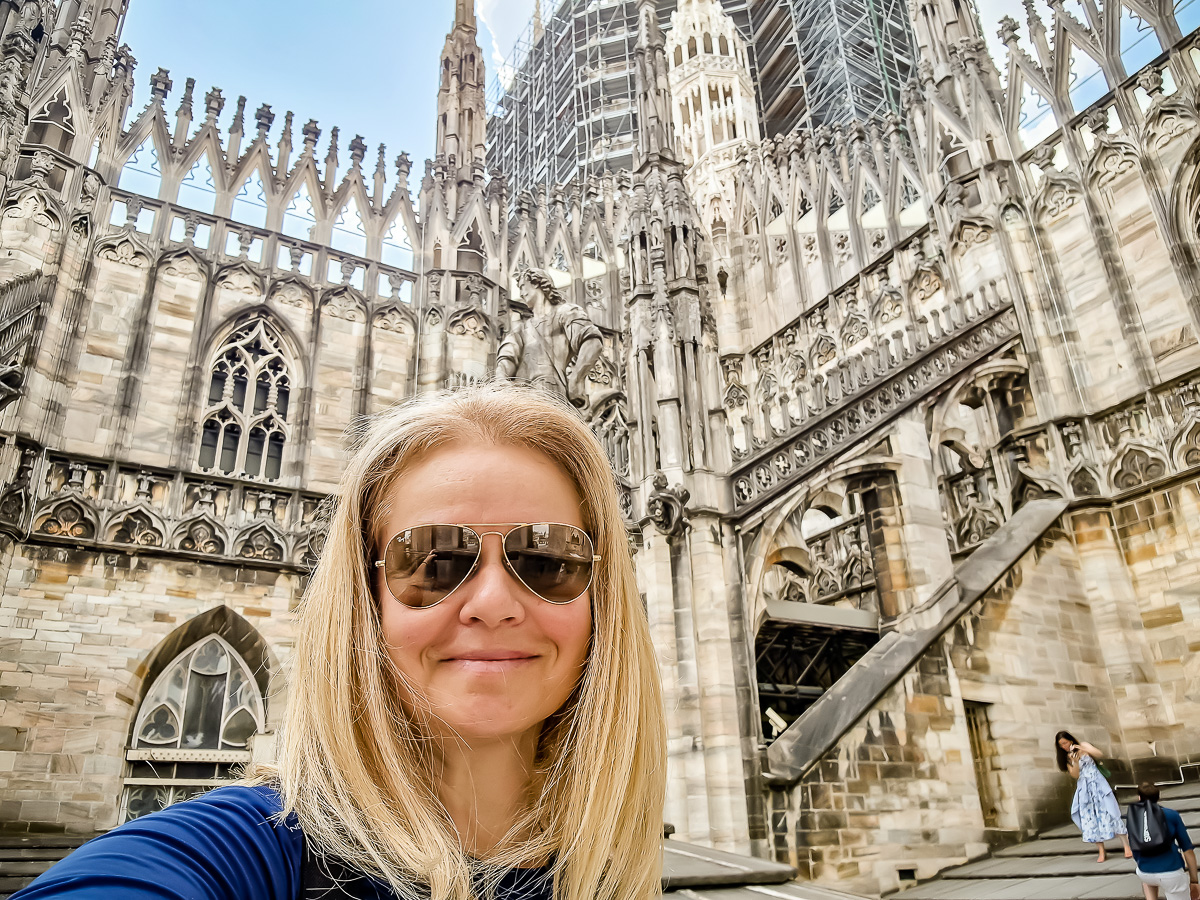
The Milan Duomo is the only church in the world whose entire rooftop you can walk on!
I decided to go up as well, for the first time in my life. Nonsense – what am I saying??? After returning from Milan, I realized I had actually climbed the Duomo before, back in 1999 🙂
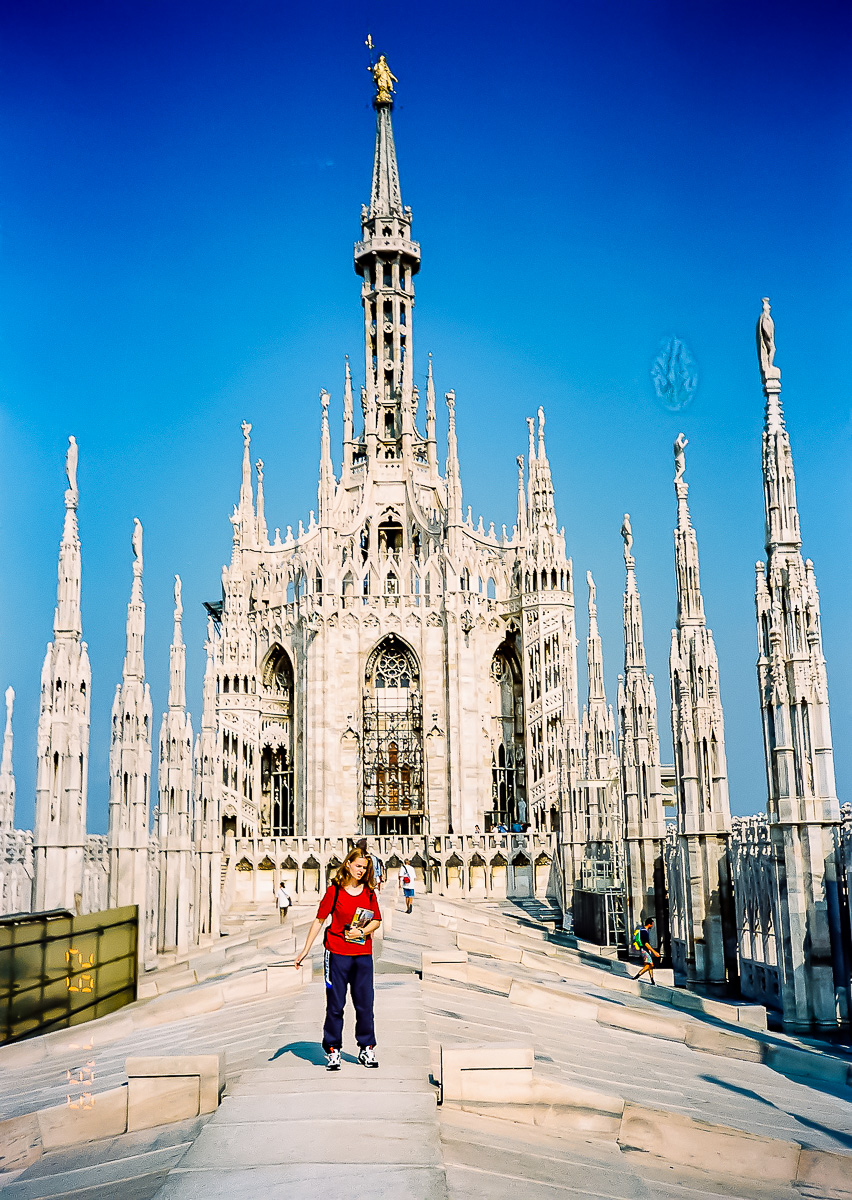

You can go up the stairs (there are 251 steps to the first level), but there’s also the option of taking the elevator. You can use it to go down as well, though only under certain conditions – since I was with my mom (87 years old), we were allowed.
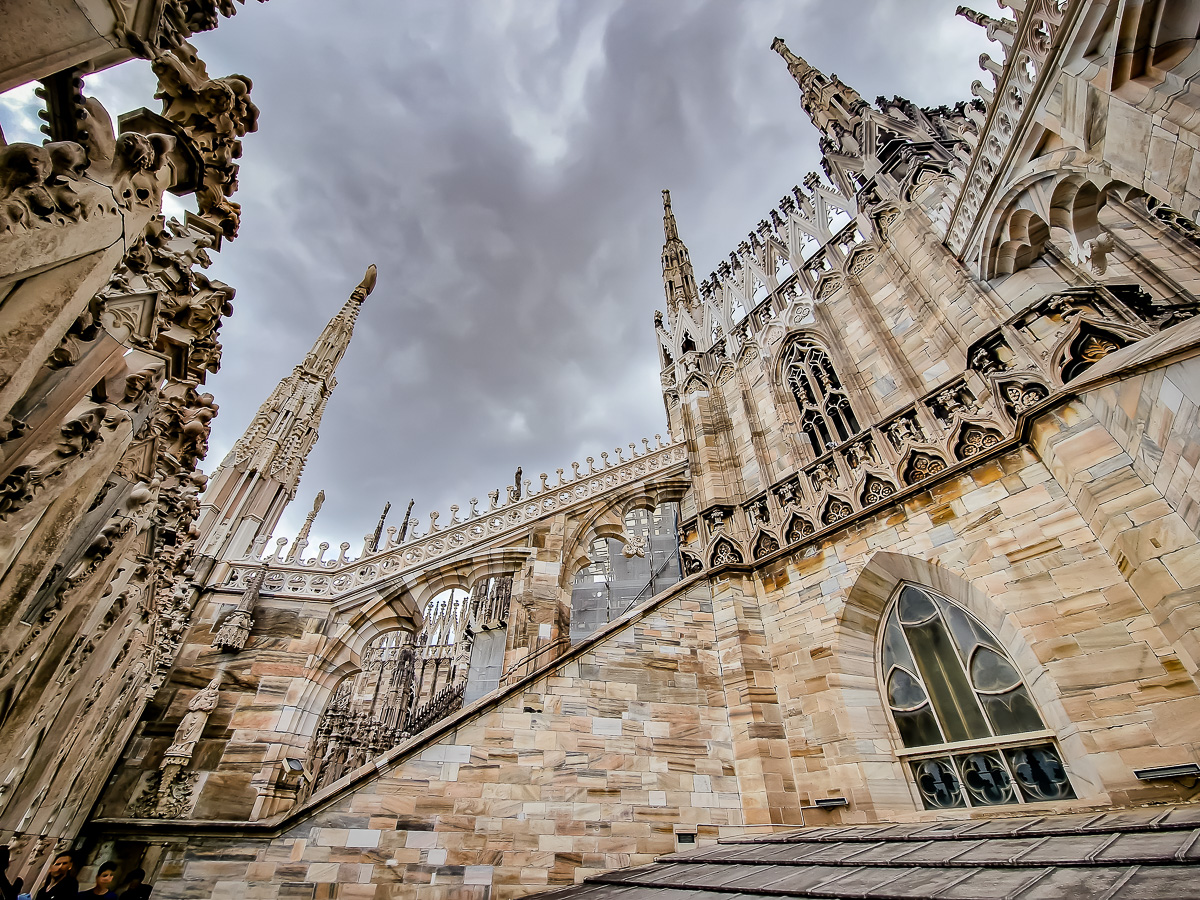

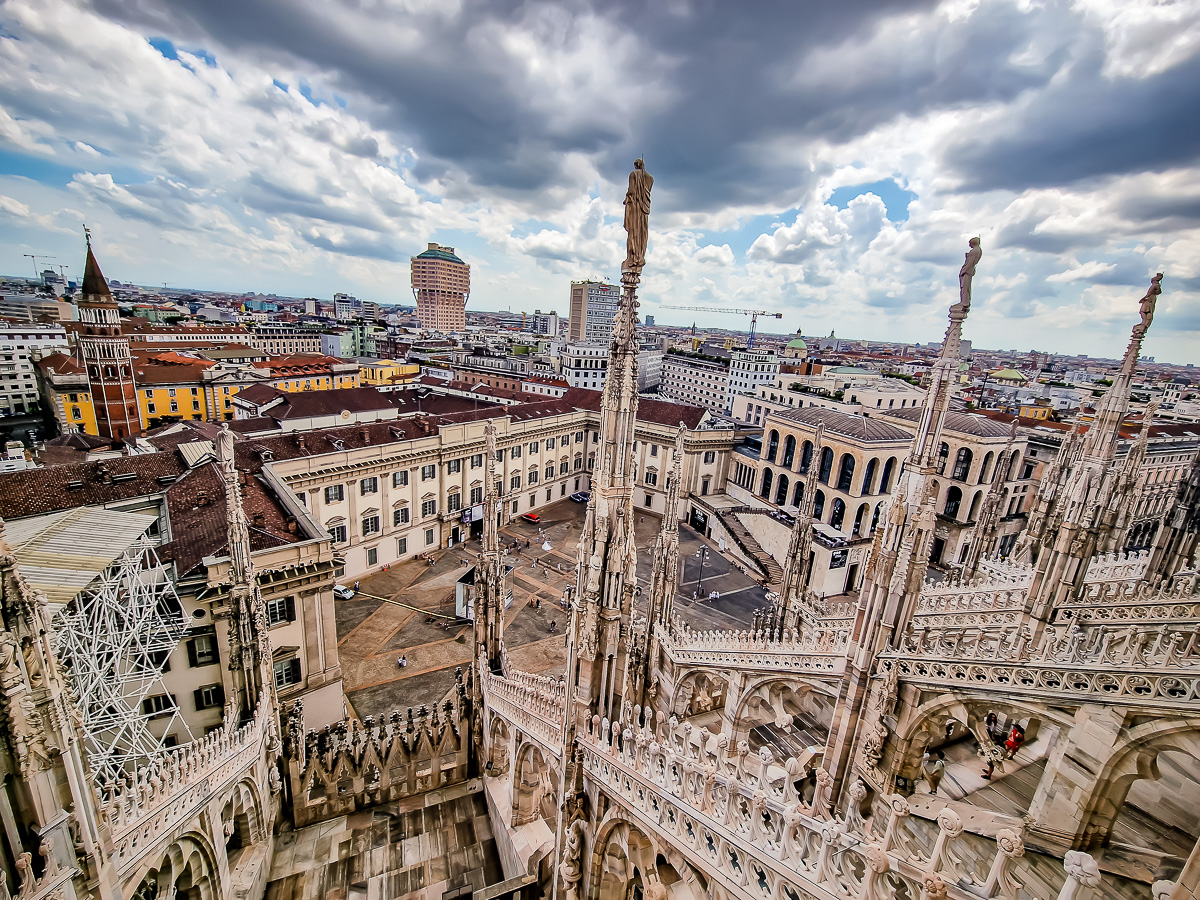
Anyway, once you reach the first terrace level, after wandering among the spires and statues decorating the roof, you take the stairs up to level two.

There are 99 steps. They felt much easier than elsewhere because you have a wonderful view at every moment, and people are patient, no one rushes you to climb faster.

And that’s it – you’re right on the Duomo’s rooftop! You can stay here as long as you like, sitting on the “tiles” or turning in every direction to look out between the spires.
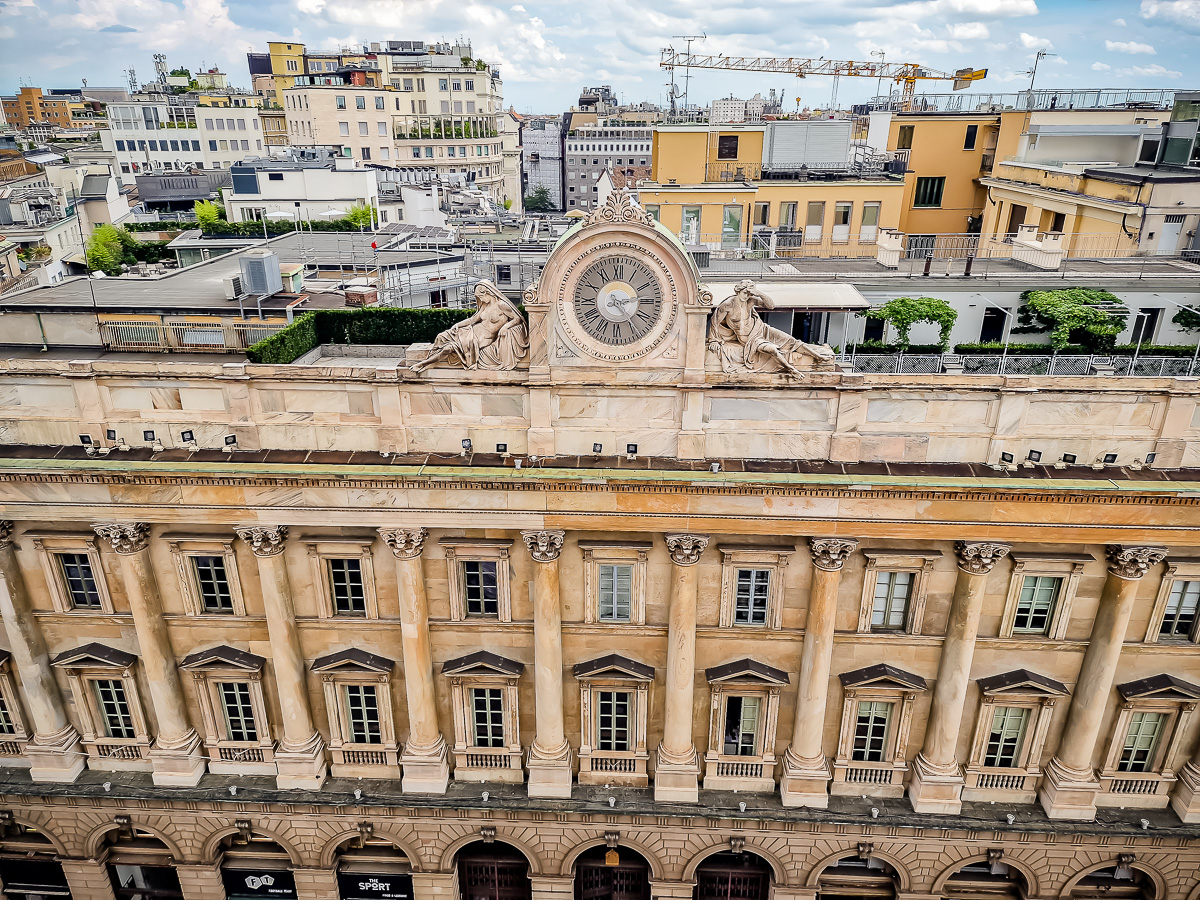
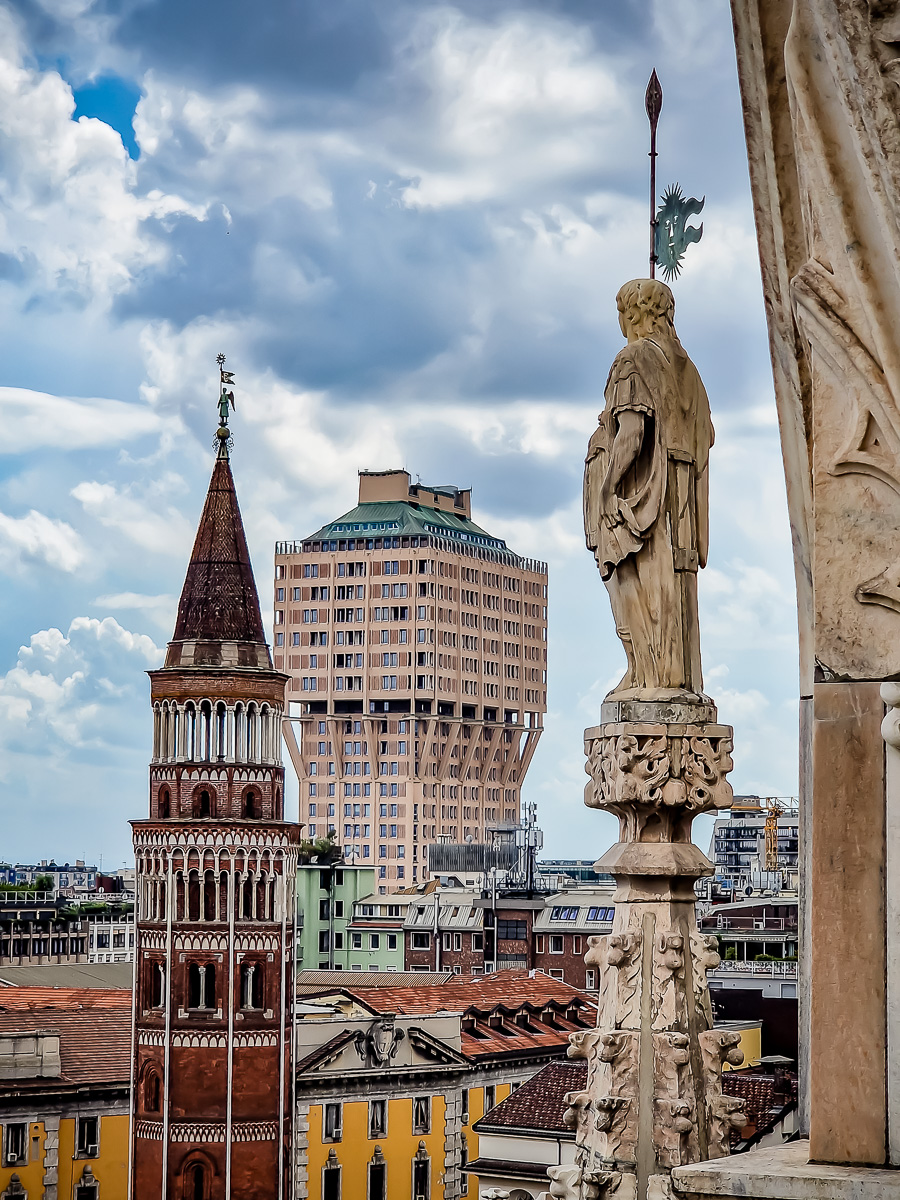
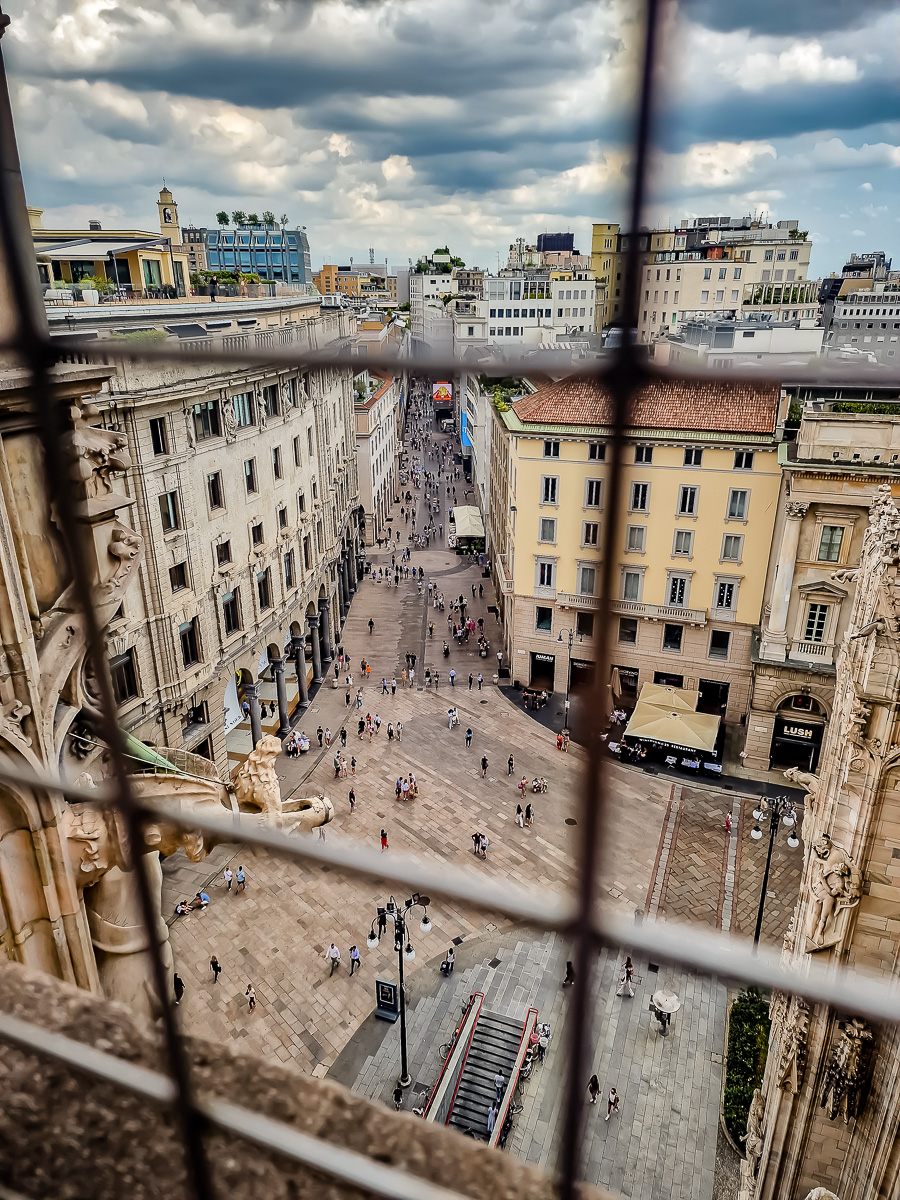

The city looks beautiful from up here, and on clear days you can even spot the Alps!
MADONNINA
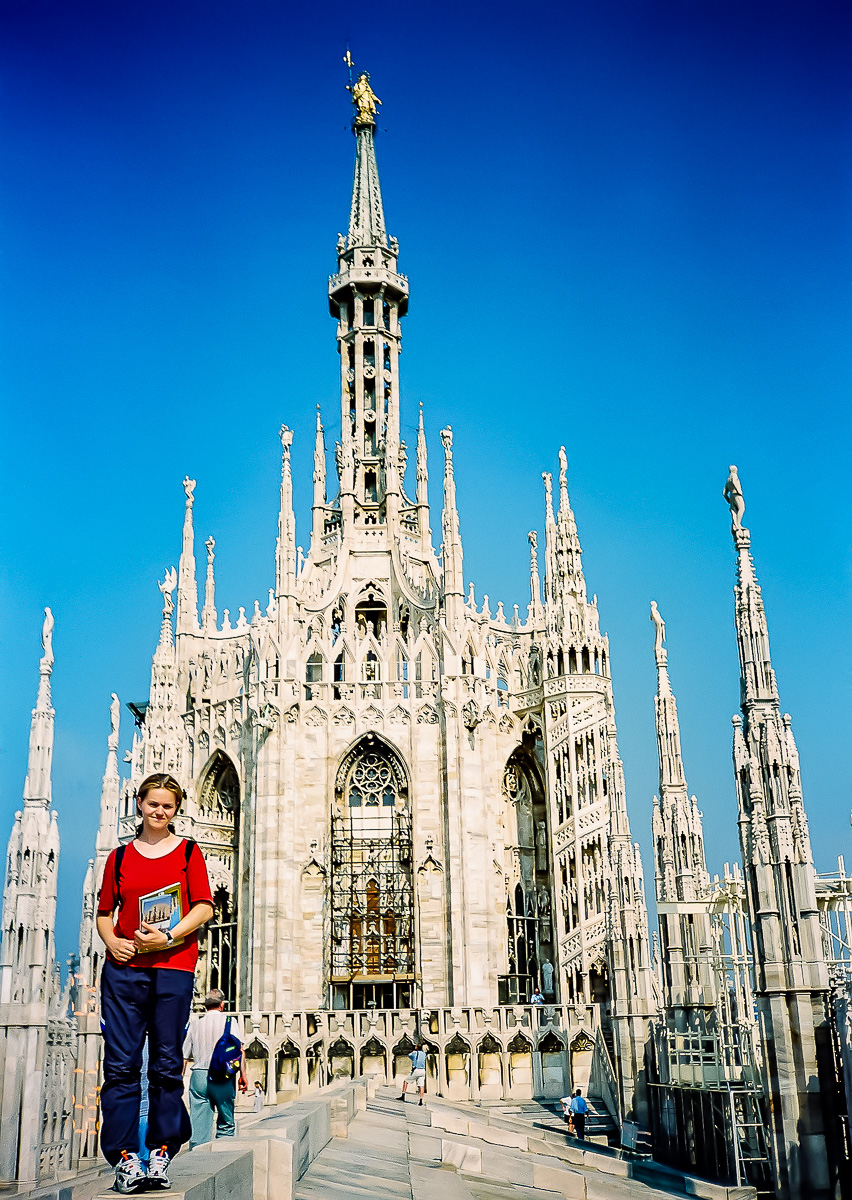
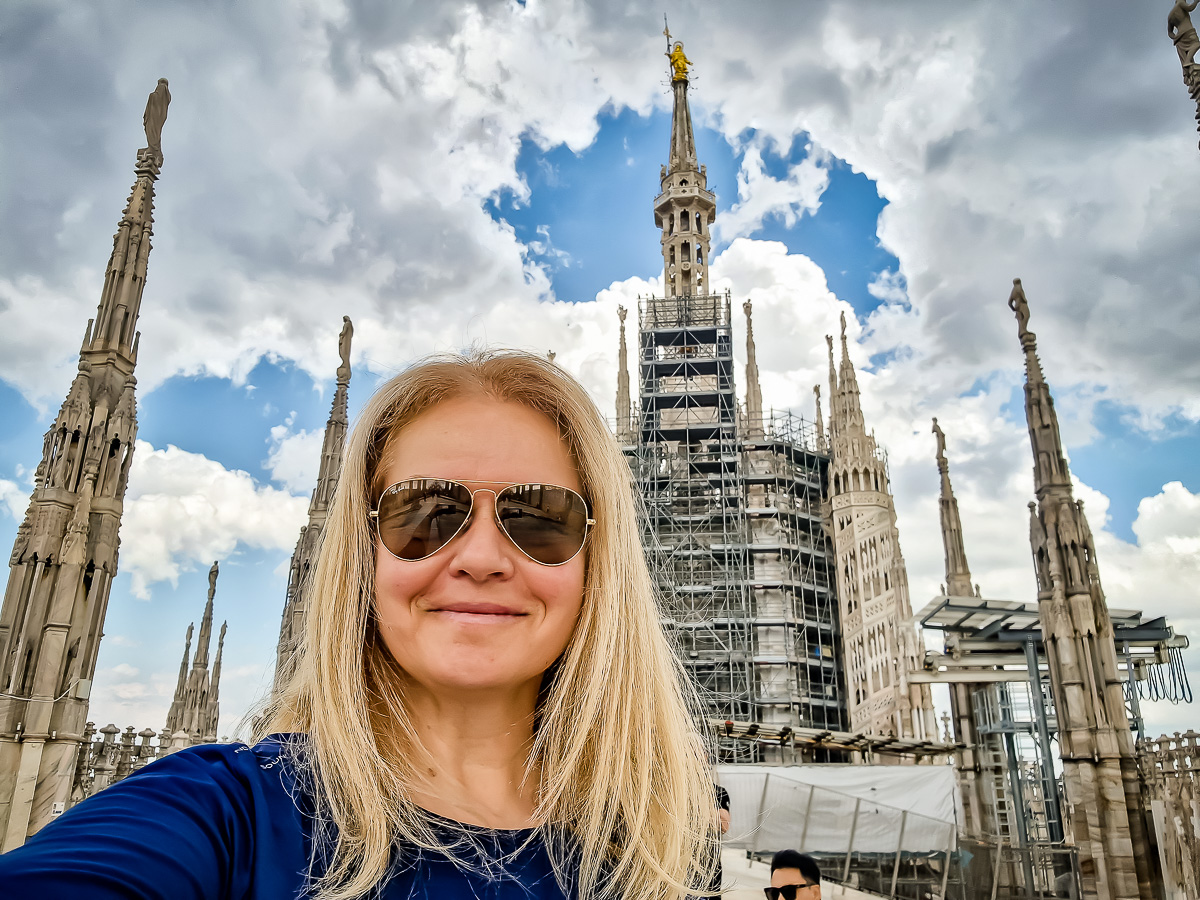
At the very top, 108.5 meters high, like the cherry on the cake 🙂 – stands the Madonnina, the symbol of the city of Milan.

Just as I saw at Mont Saint-Michel in Normandy, the statue here also functions as a lightning rod – through the halberd that the Madonnina holds in her right hand.
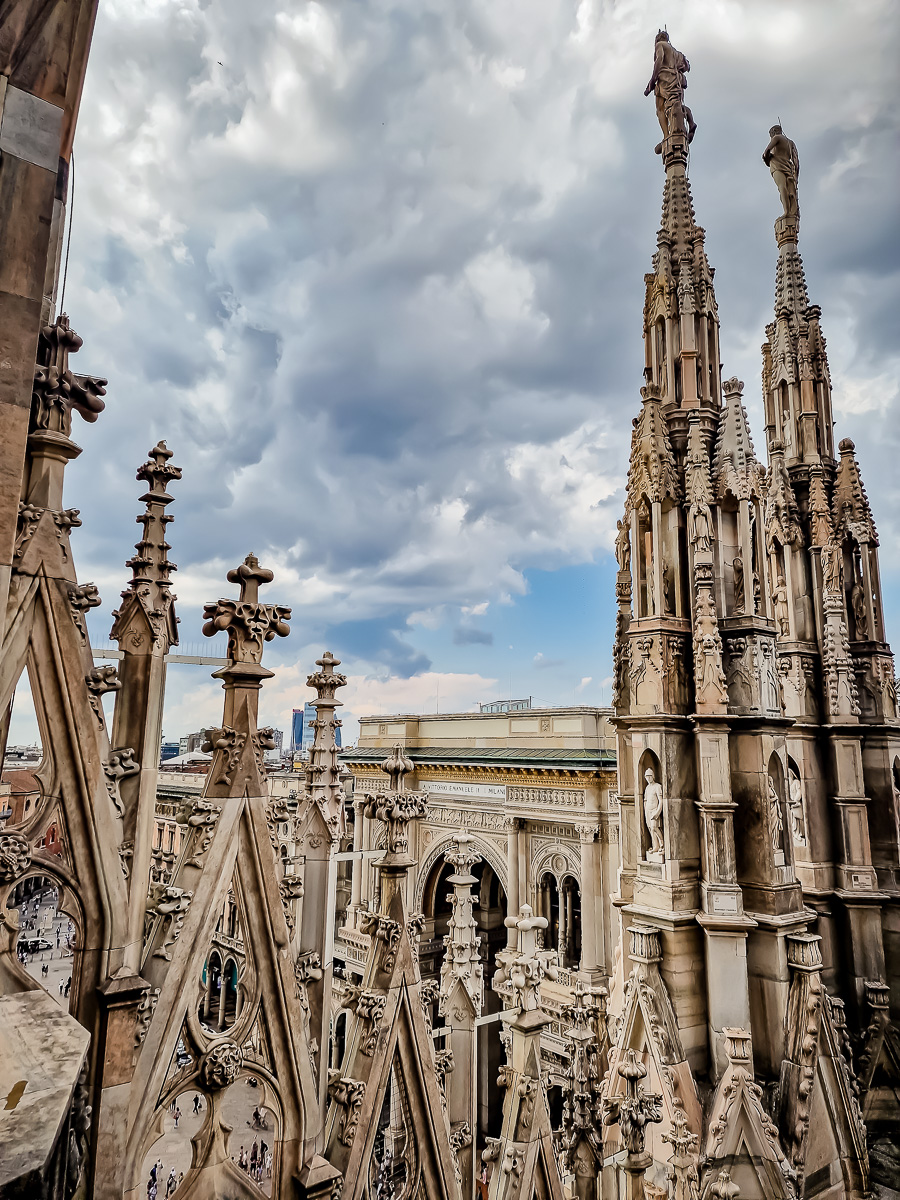
From up on the rooftop, you also get a beautiful view of the famous luxury gallery where people from all over the world take their Instagram-worthy photos…
GALLERIA VITTORIO EMANUELE II

Inaugurated in 1877, the Galleria Vittorio Emanuele II is one of the oldest shopping galleries in the world! It bears the name of Italy’s first king, but it’s also known as the “drawing room of Milan”, having served as a social and cultural meeting place ever since it opened.
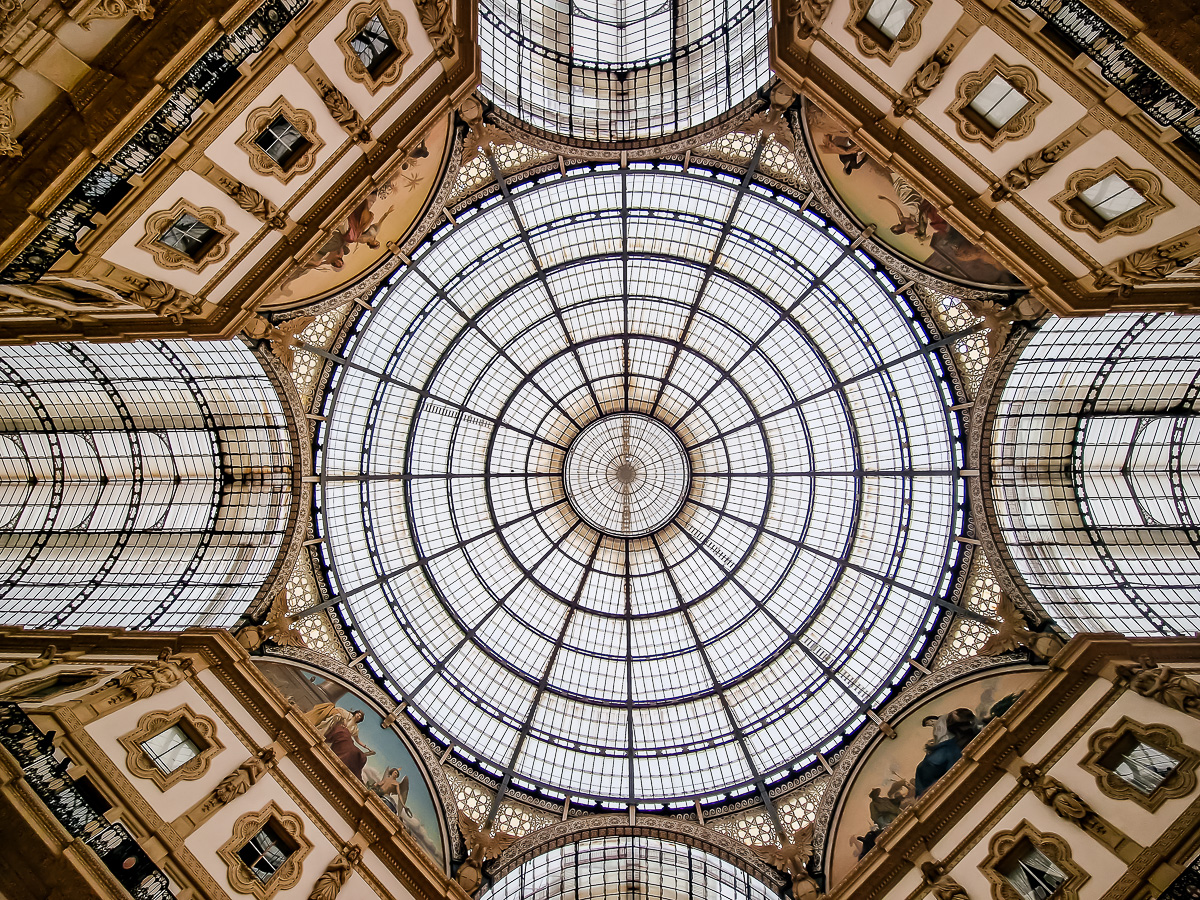
Covered by a glass-and-steel dome, it hosts luxury brands such as Prada, Louis Vuitton, and Gucci.

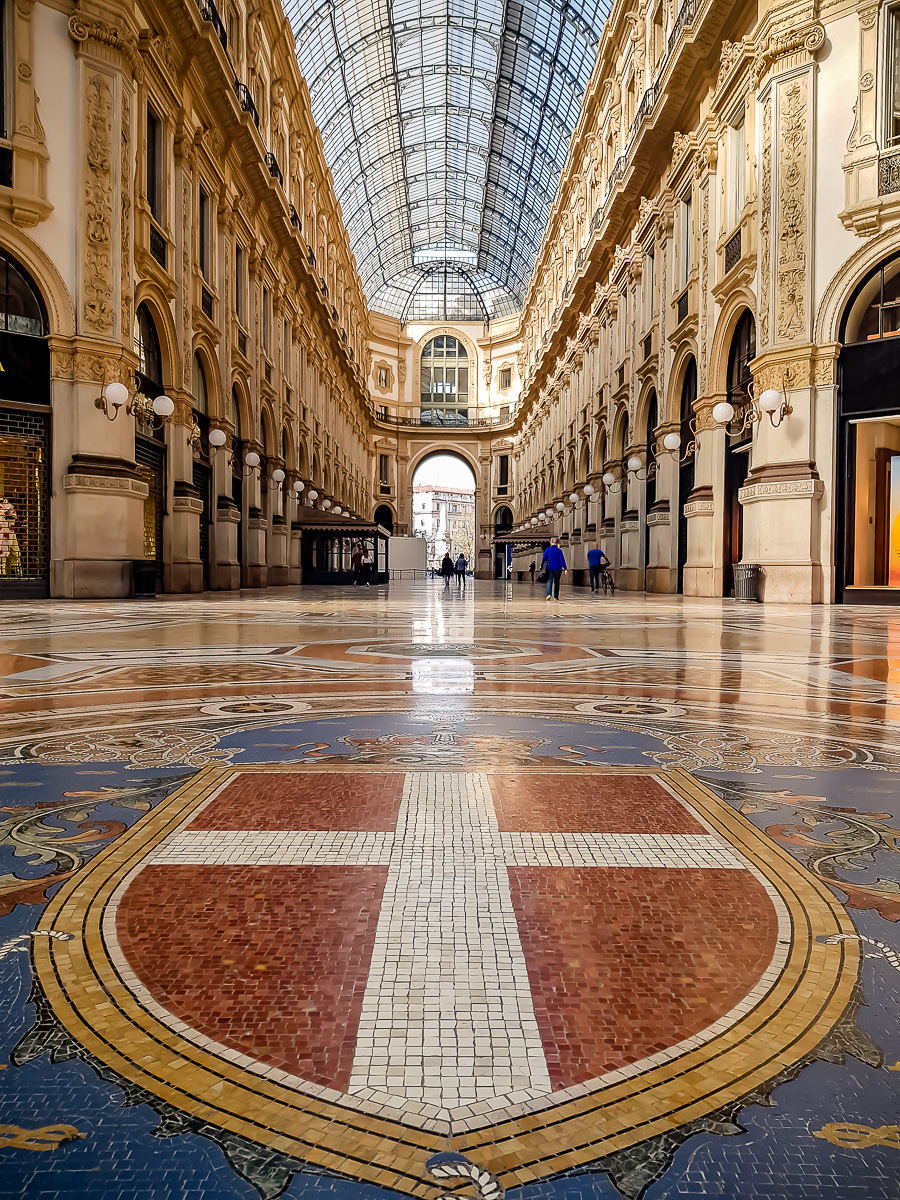
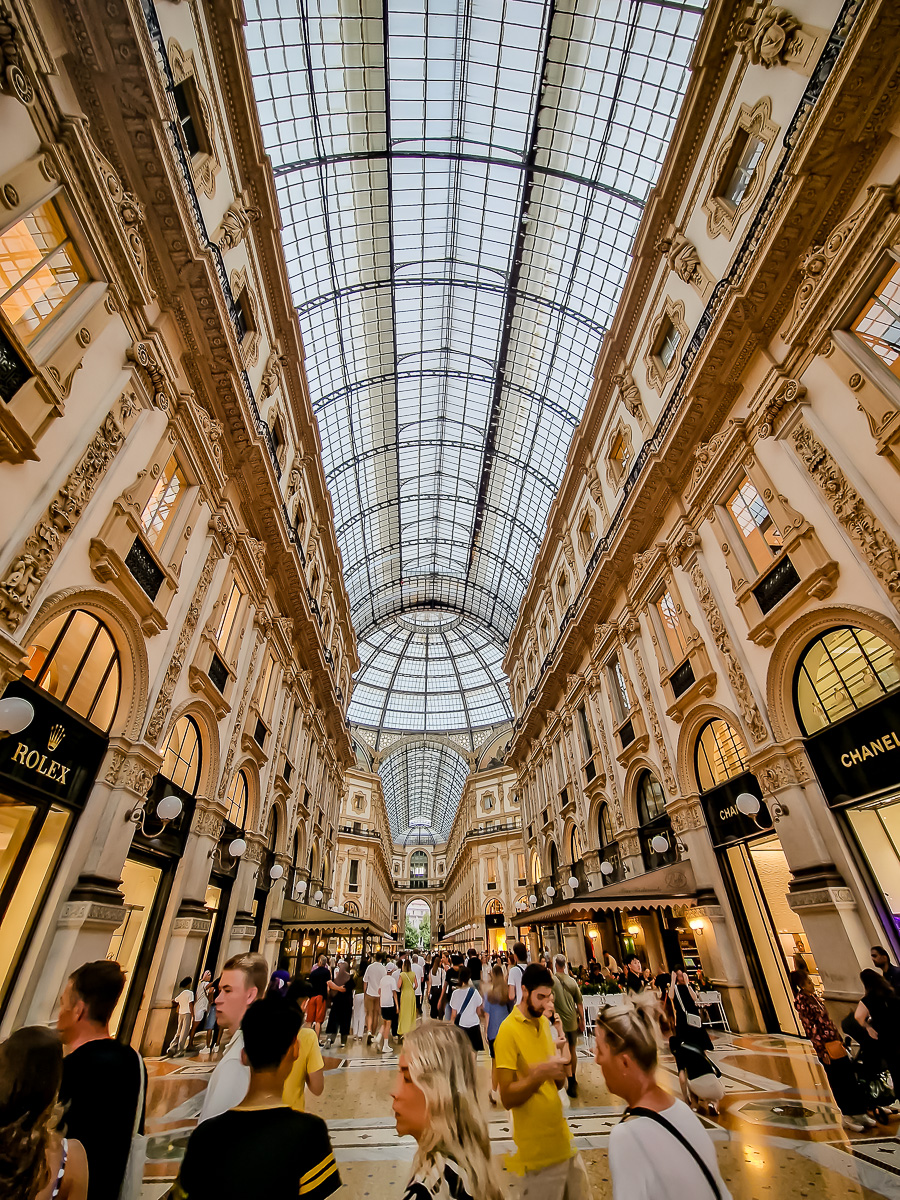
If you’re not ready to spend thousands of euros on clothes or handbags, you can simply sit at one of the terraces or historic cafés inside the gallery, grab a bite or linger over an espresso, and people-watch.
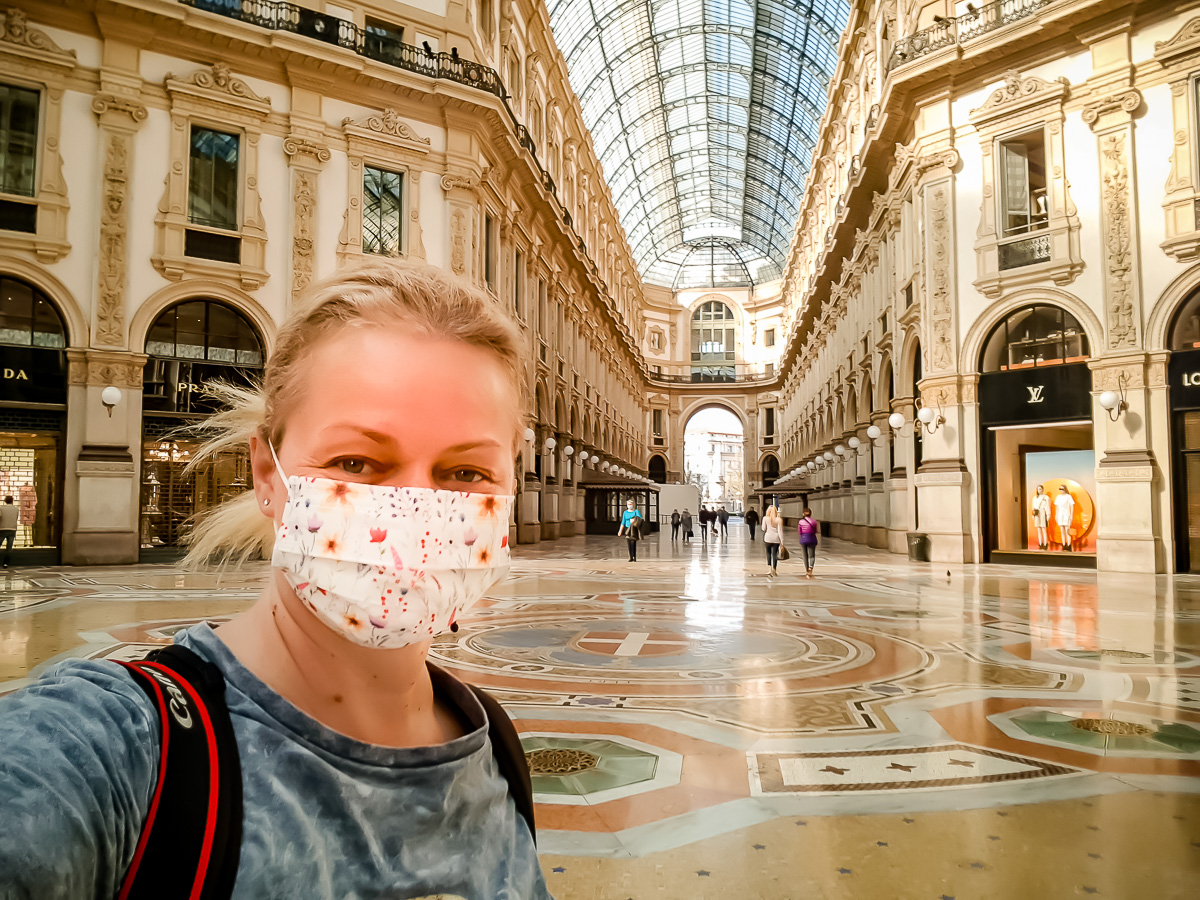
…well, that is if it’s not a pandemic and you have neither a place to sit nor any passersby to gawk at 🙂
So I can’t say I wasn’t a “customer” in the famous gallery, I join a fairly long line at a gelateria for two scoops in a cone. No offense, but I have to admit I’ve had better ice cream elsewhere, and probably cheaper too. But hey, those places weren’t this famous.
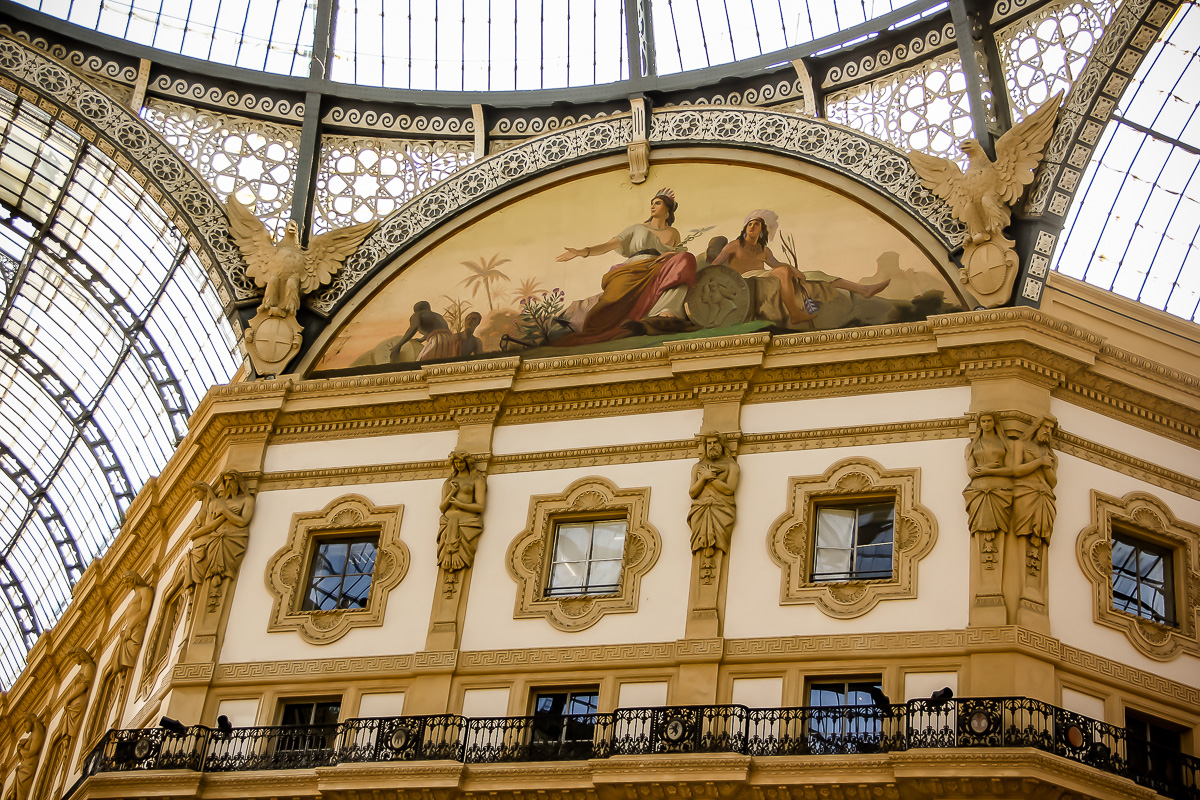
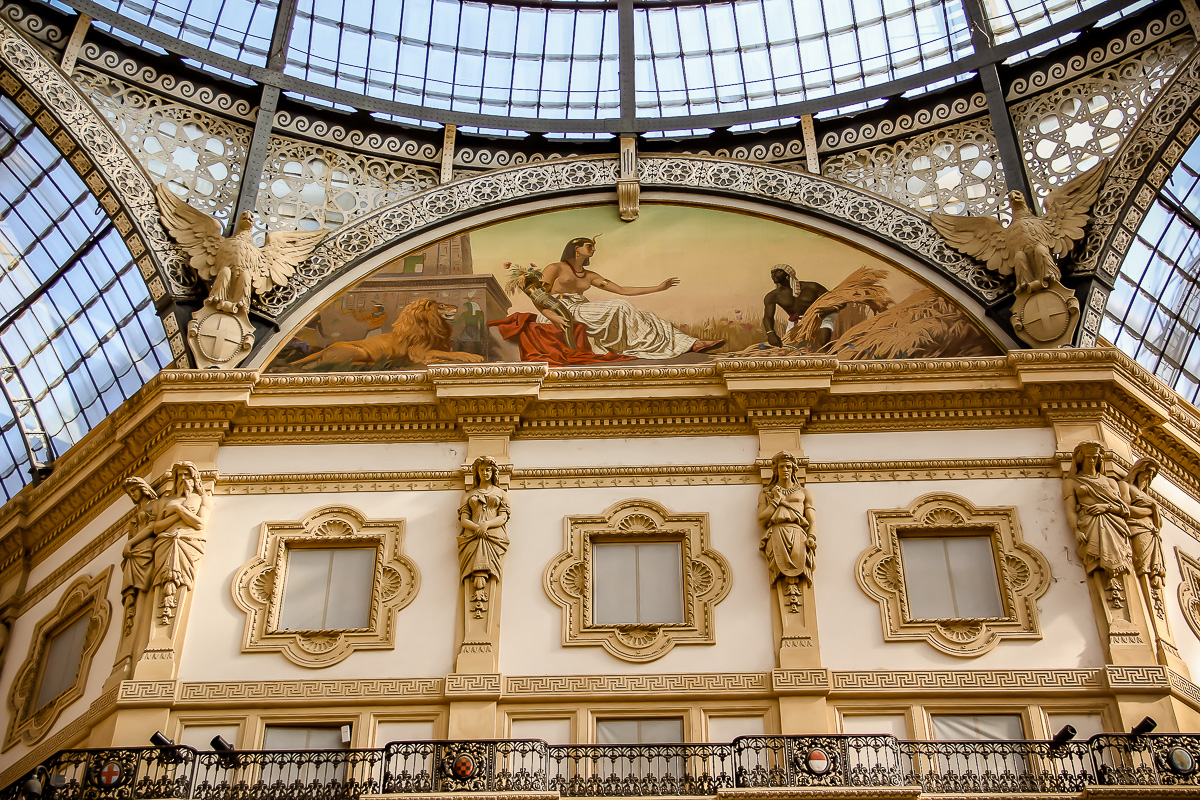
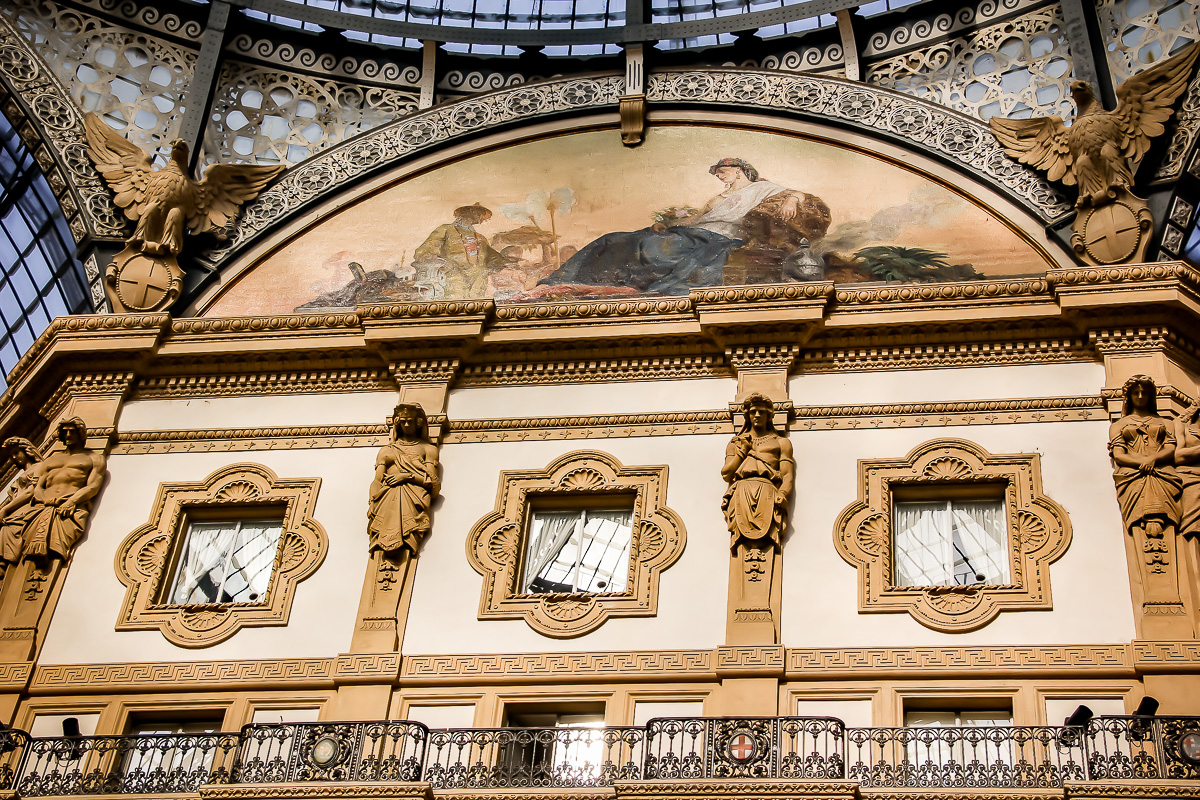
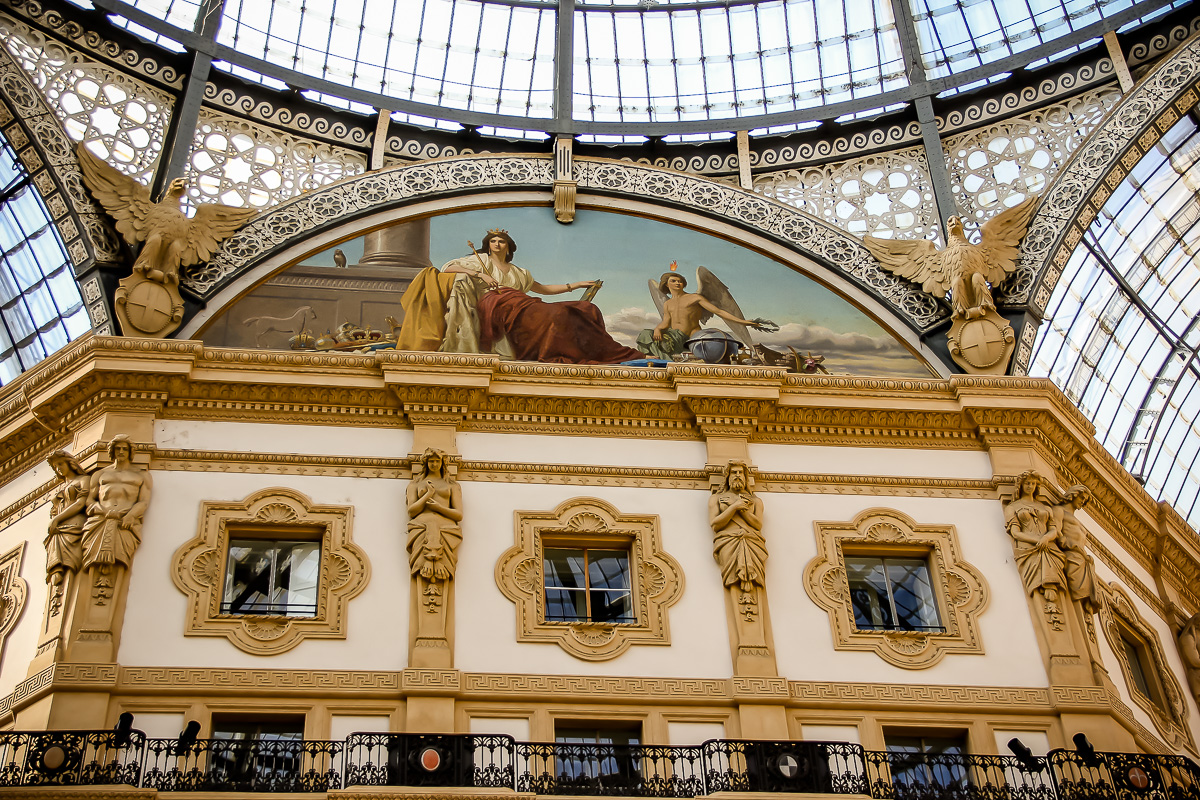
Inside the Gallery there’s also a luxury hotel: Galleria Vik Milano or TownHouse Galleria – a boutique hotel with uniquely designed rooms.
But what do you think is the Gallery’s main attraction??

A coat of arms with a bull, set into the floor mosaic!
Legend says that if you spin your heel 360 degrees on the… bull’s testicles, you’ll have good luck.
You should see the line for that poor bull!!! And how worn its “jewels” are 🙂 A lot of lucky people have walked away from there!
LA SCALA
The Galleria Vittorio Emanuele II connects two of Milan’s most important squares: Piazza del Duomo and Piazza della Scala.
So, as soon as you exit the gallery at the end opposite the Duomo square, you’ll come across the famous La Scala Opera House.
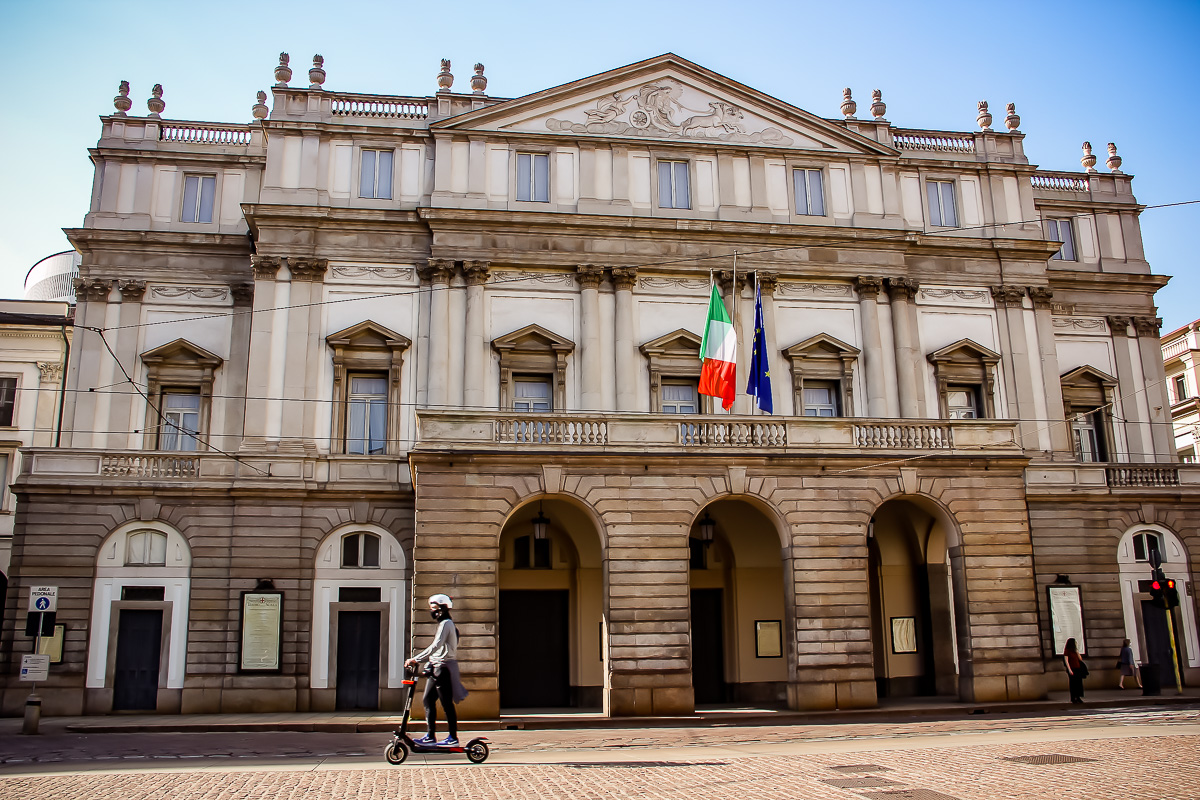
Inaugurated in 1778, it has hosted numerous premieres by Verdi and Puccini.
The greatest conductors and performers of all time have appeared on its stage. And since I won’t play smart and pretend I know many, I’ll just mention a few: Maria Callas, Montserrat Caballé, Caruso, Pavarotti, Domingo, and Carreras.

Inside, you can visit the museum featuring instruments, costumes, and famous portraits from opera history. I didn’t manage to see it.
And of course, if you have time and can get tickets, attending a performance here is definitely a must!
I hurried past La Scala like a rushed tourist and, just a few minutes’ walk away, found Via Monte Napoleone – one of the most exclusive shopping streets in the world! I did a bit of window shopping 🙂
In my travels around the world, I’ve seen other streets famous for luxury shopping – in Paris, London, New York, Madrid, Budapest, and Asia. I don’t know why, but given its reputation, I had imagined this one in Milan to be more spectacular.
And since we’re staying in the realm of the wealthy, let’s head to the castle just a stone’s throw away.
CASTELLO SFORZESCO
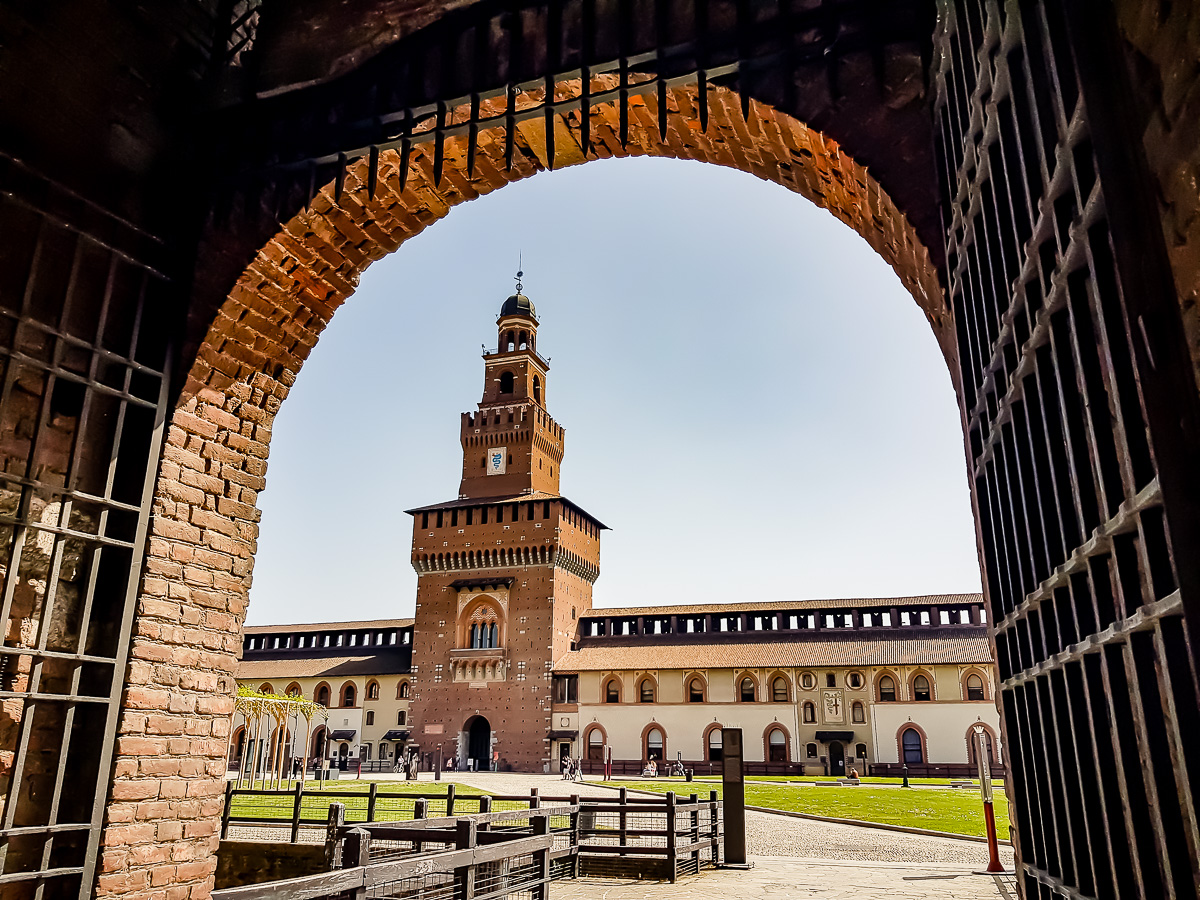
Once the seat of the Sforza dynasty and the city’s defensive fortress in the 15th century, today it’s one of Milan’s tourist attractions, housing several art museums.
Must-sees here include Michelangelo’s Pietà Rondanini and Leonardo da Vinci’s Sala delle Asse.
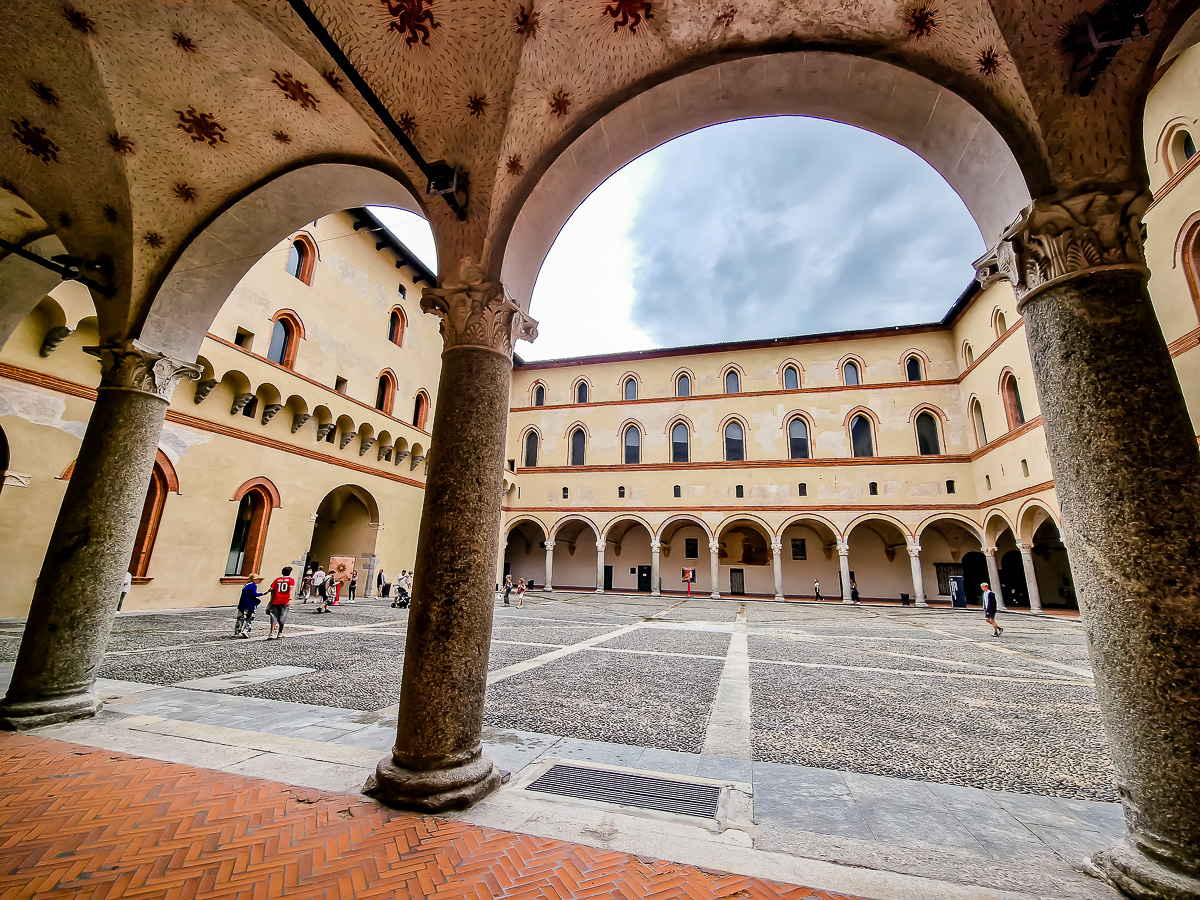
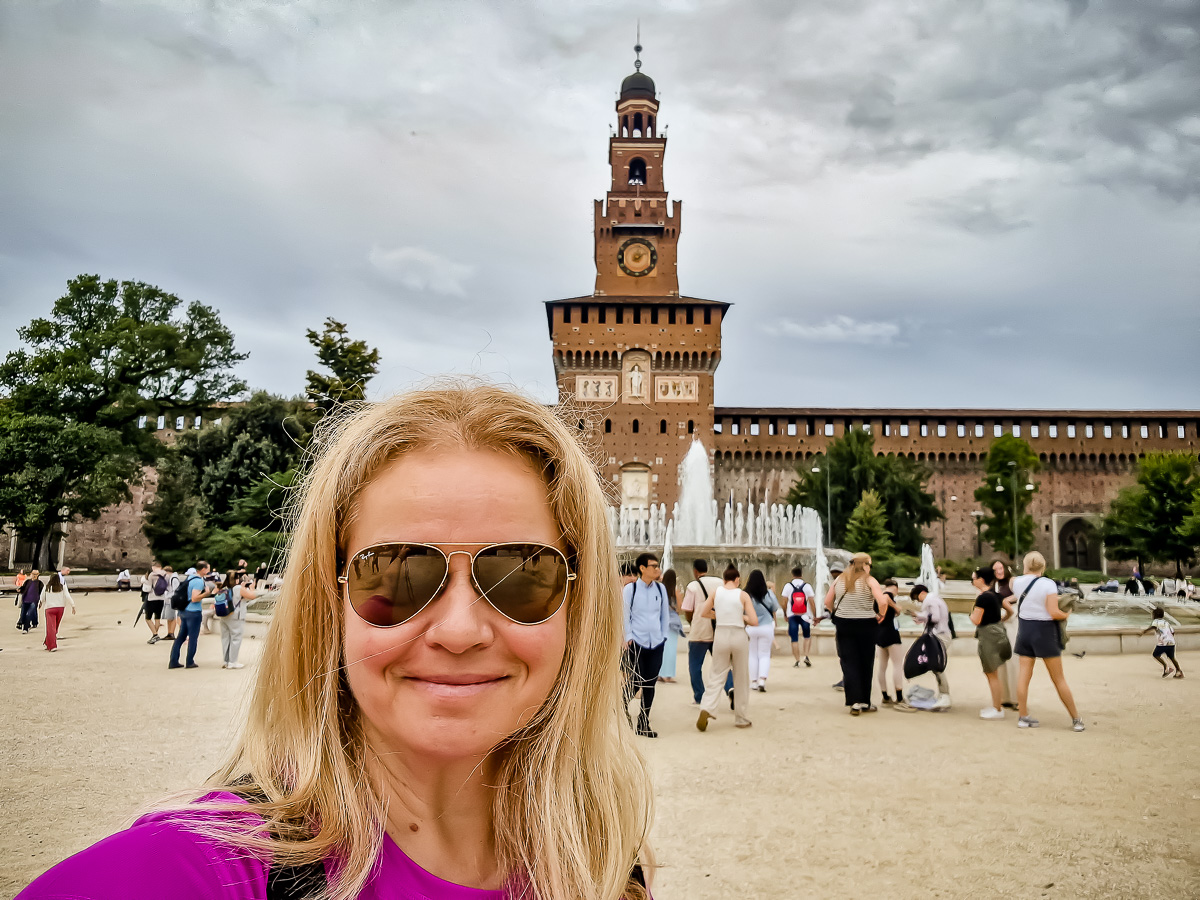
If you’re not in the mood to feast on art, you can simply grab a sandwich or bask in the sun in one of the castle’s courtyards, because it’s a very welcoming place.
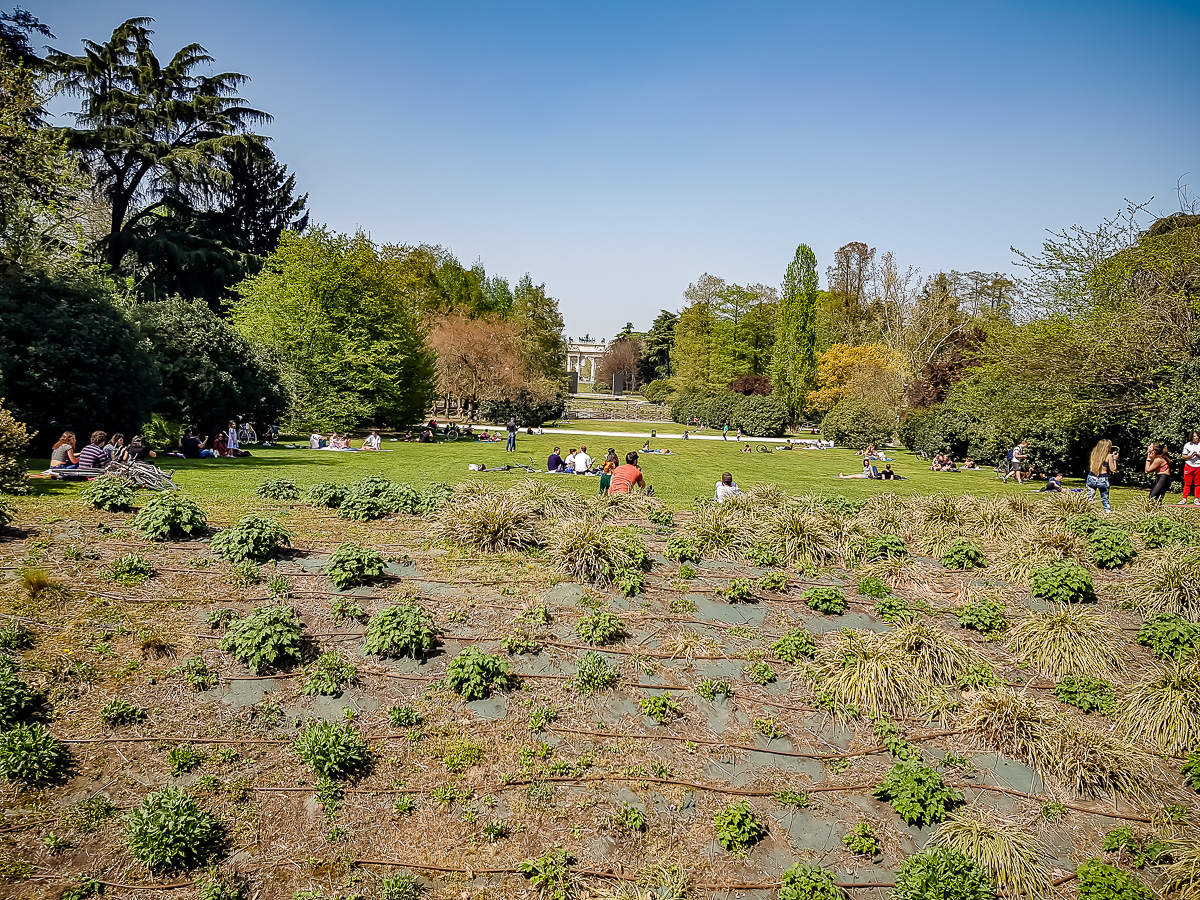
From the castle, you have direct access to Milan’s largest park – Parco Sempione.
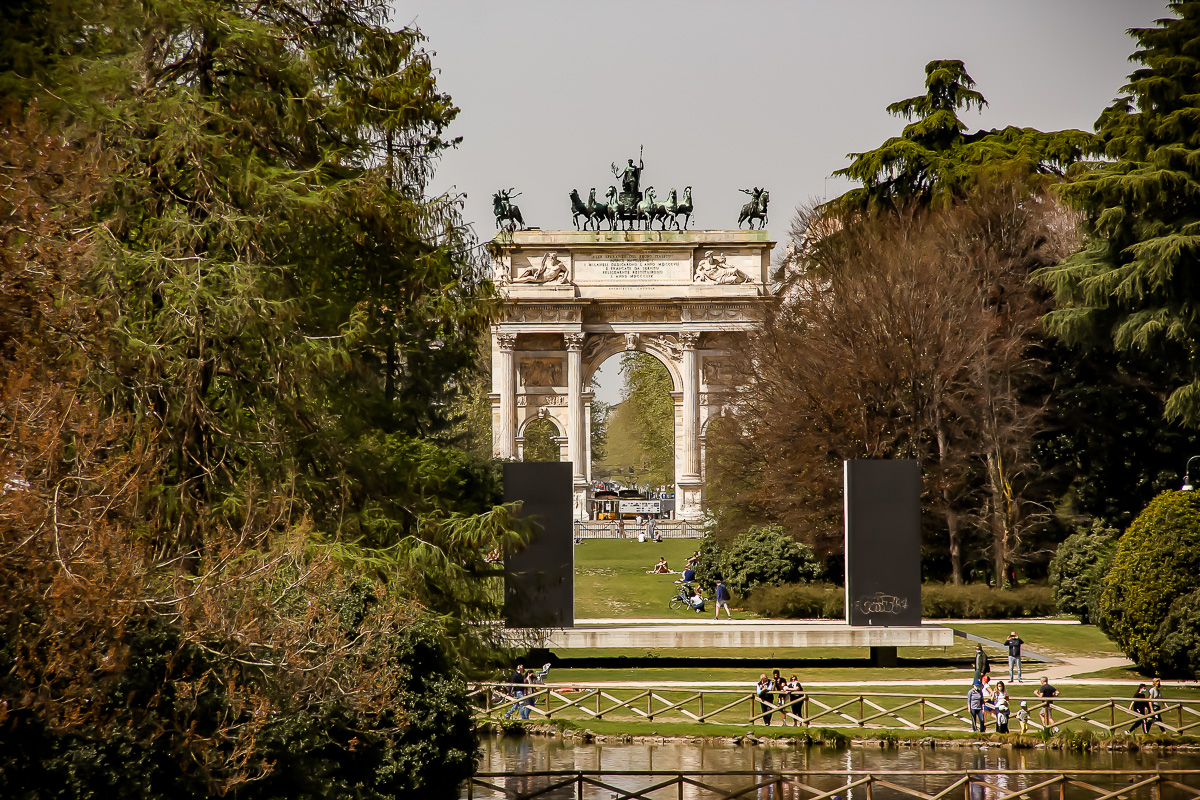
The park is perfect for relaxing, picnicking, jogging, walking your dog, or admiring the triumphal arch – Arco della Pace – and the Branca Tower (108 meters), which you can climb for a panoramic view.
THE LAST SUPPER – LEONARDO DA VINCI
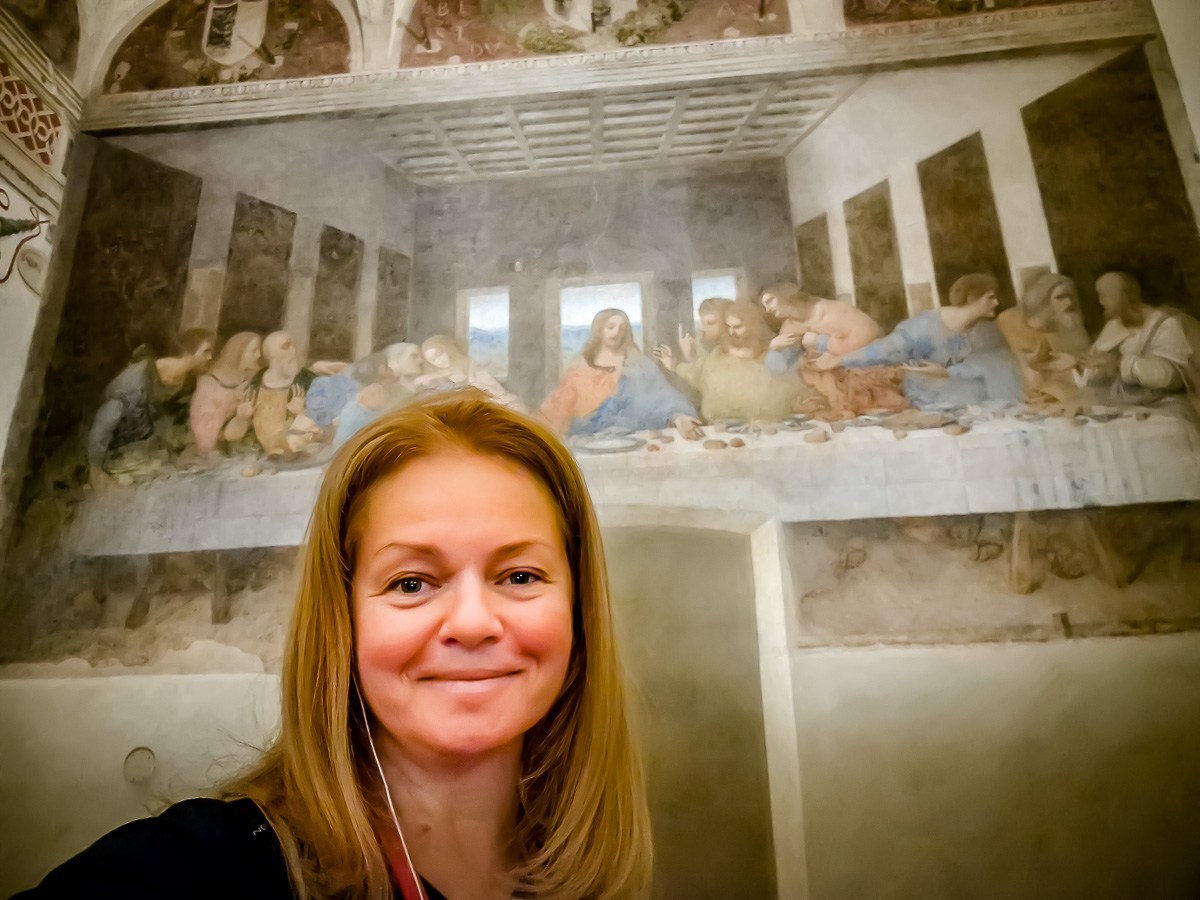
Oh, how much I wanted to see (again) Leonardo da Vinci’s masterpiece!!! I’ll explain why in a moment.
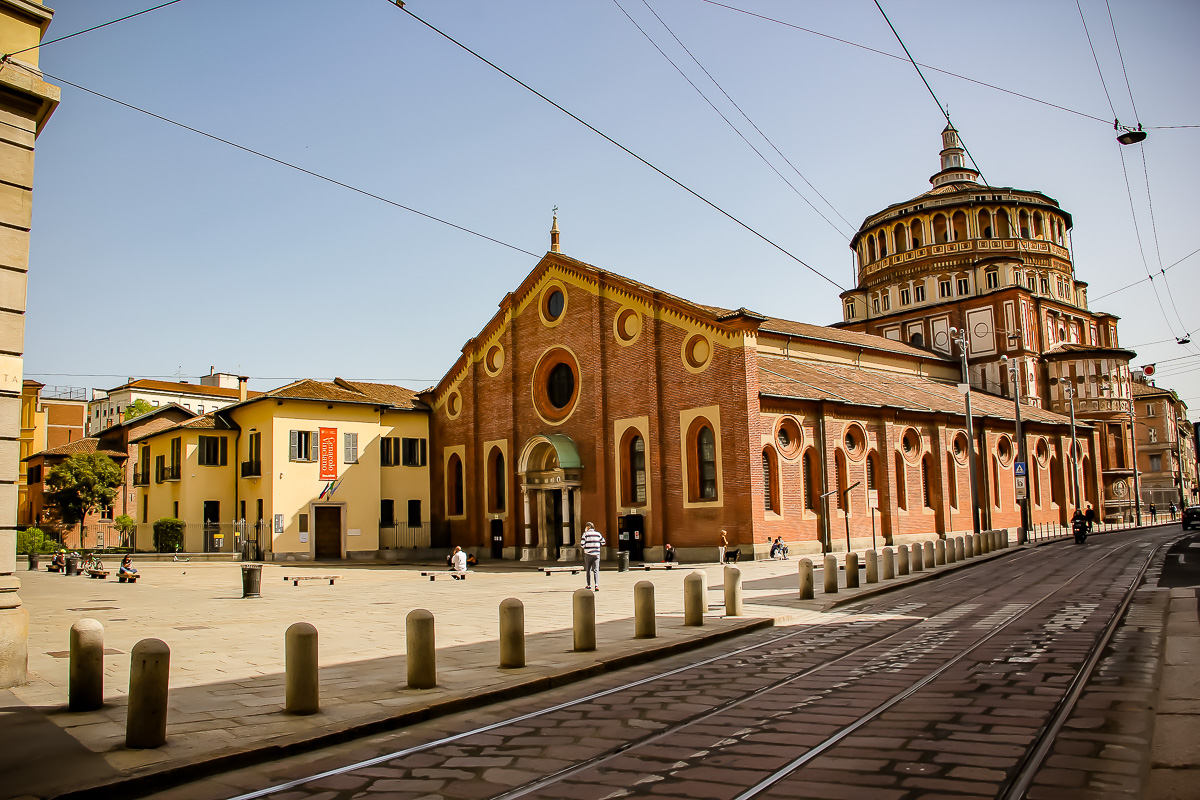
The large church in the photo is Santa Maria delle Grazie, located a bit farther from the main attractions in the city center. I got there easily by tram.
Ludovico Sforza, known as Ludovico il Moro, commissioned its decoration, as it was also meant to become the family mausoleum. He was the Duke of Milan, and Leonardo da Vinci was at his court during those years, so… an order is an order 🙂 : in four years (1495–1498), he painted The Last Supper.
But Leonardo’s mural isn’t actually inside the church!
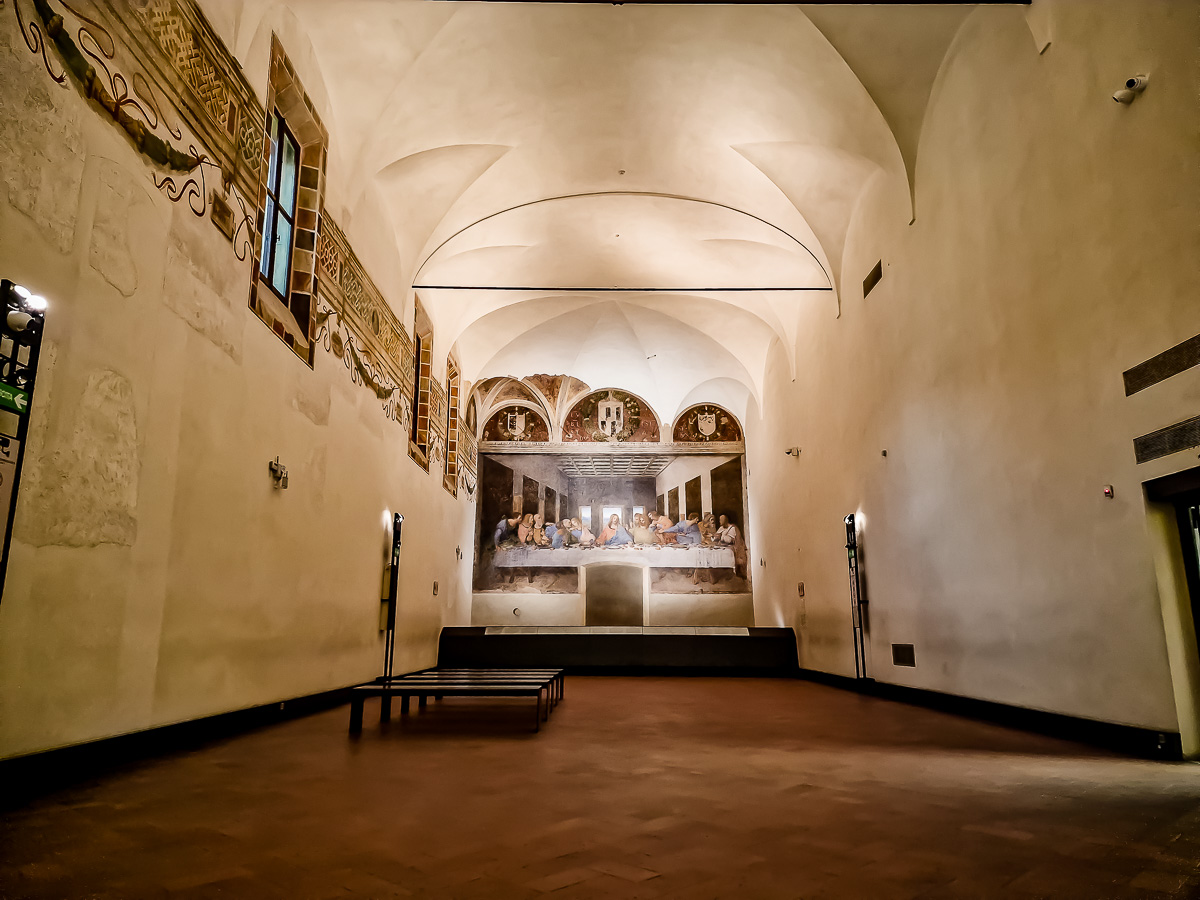
Leonardo painted “Il Cenacolo” on the wall of the monastery refectory – the place where monks ate together every day. At the time, it was customary for monastery dining halls to feature a depiction of The Last Supper, transforming the act of eating into a spiritual experience.
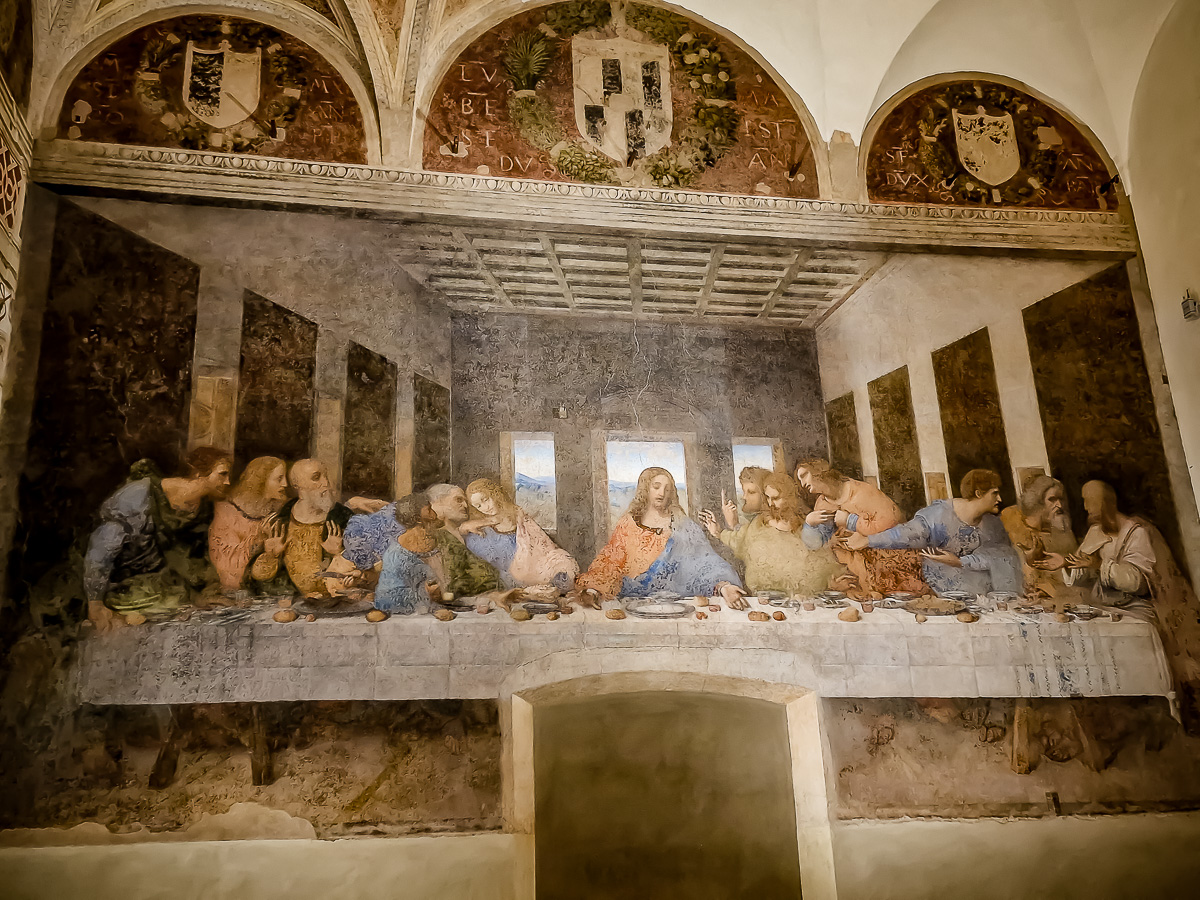
The Last Supper is extremely well protected, and access is limited to small groups and specific time slots.
Back in 1999, when I first came to see it, I didn’t need a reservation or online ticket – I simply showed up and bought one at the entrance. That’s no longer possible. Reservations are sometimes made months in advance!
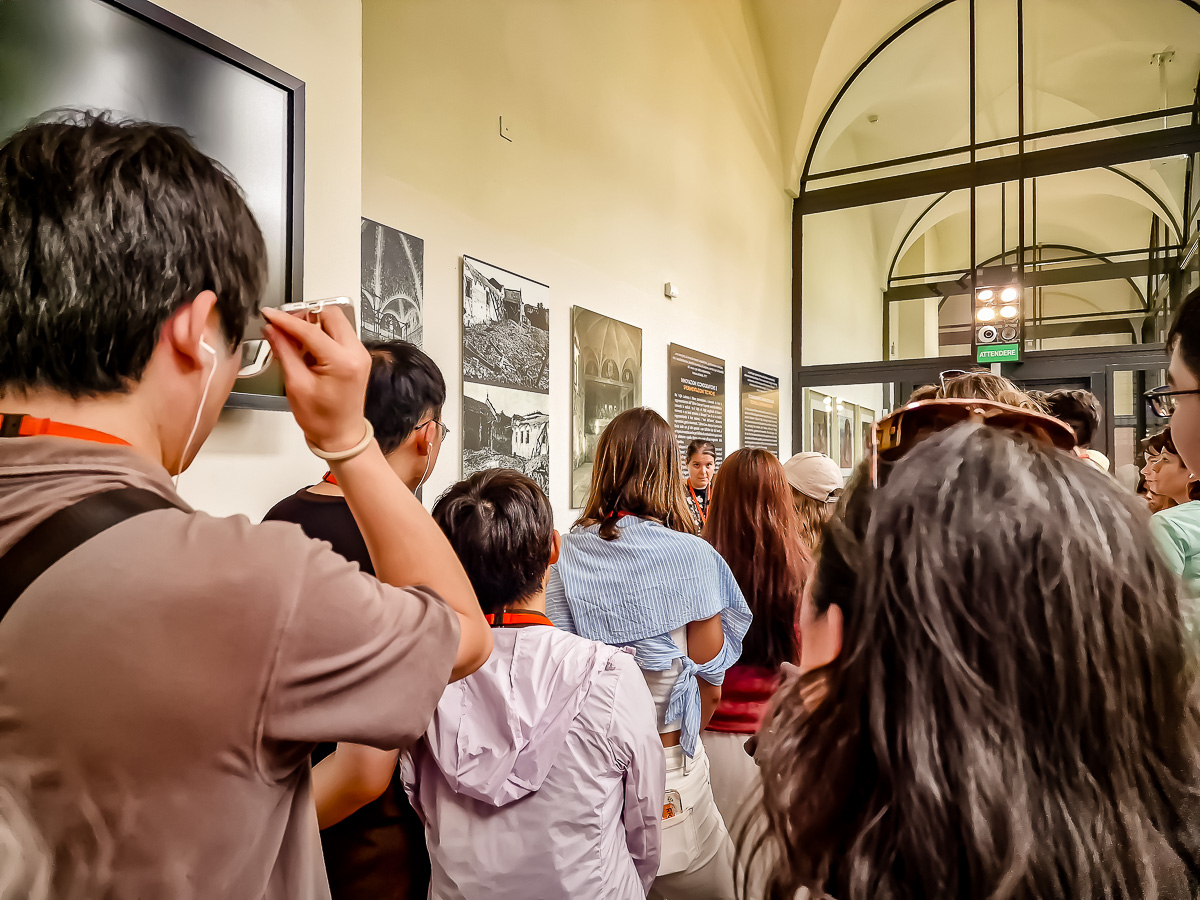
I enter with my scheduled group, led by a guide who shares various details about The Last Supper and the site, using old photos hanging on the walls. She repeatedly emphasizes that filming is absolutely not allowed, we pass through a secure door, and finally reach the dining hall. “15 minutes here, that’s all!” she says – and then begins giving us more information.
The Last Supper isn’t a fresco but “tempera grassa su muro secco” – I quickly jot that down so I won’t forget 🙂 “That’s the most important piece of information!” the guide emphasizes.
In other words, Leonardo didn’t paint on wet plaster, as in true fresco, but on a dry wall, using an experimental mixture of tempera and oil. He achieved the artistic effects he wanted, but technically it proved a long-term disaster. Just 20-30 years later, the work began to deteriorate – due to the technique, humidity, poor restorations, and the fact that the room was at times used as a granary, a stable… the list goes on.
And to make matters worse, the bombings of 1943 during World War II followed.
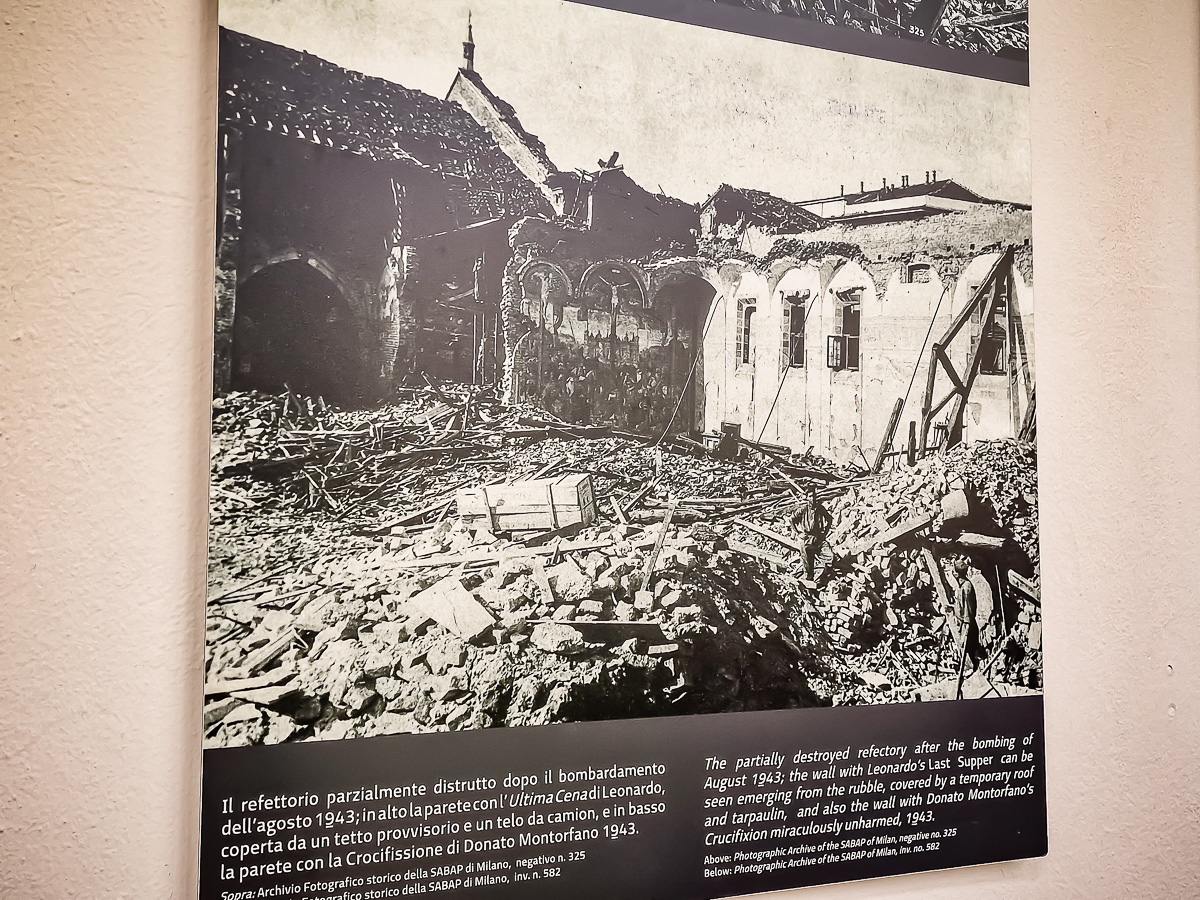
This is the refectory, partially destroyed by bombing during the Second World War.
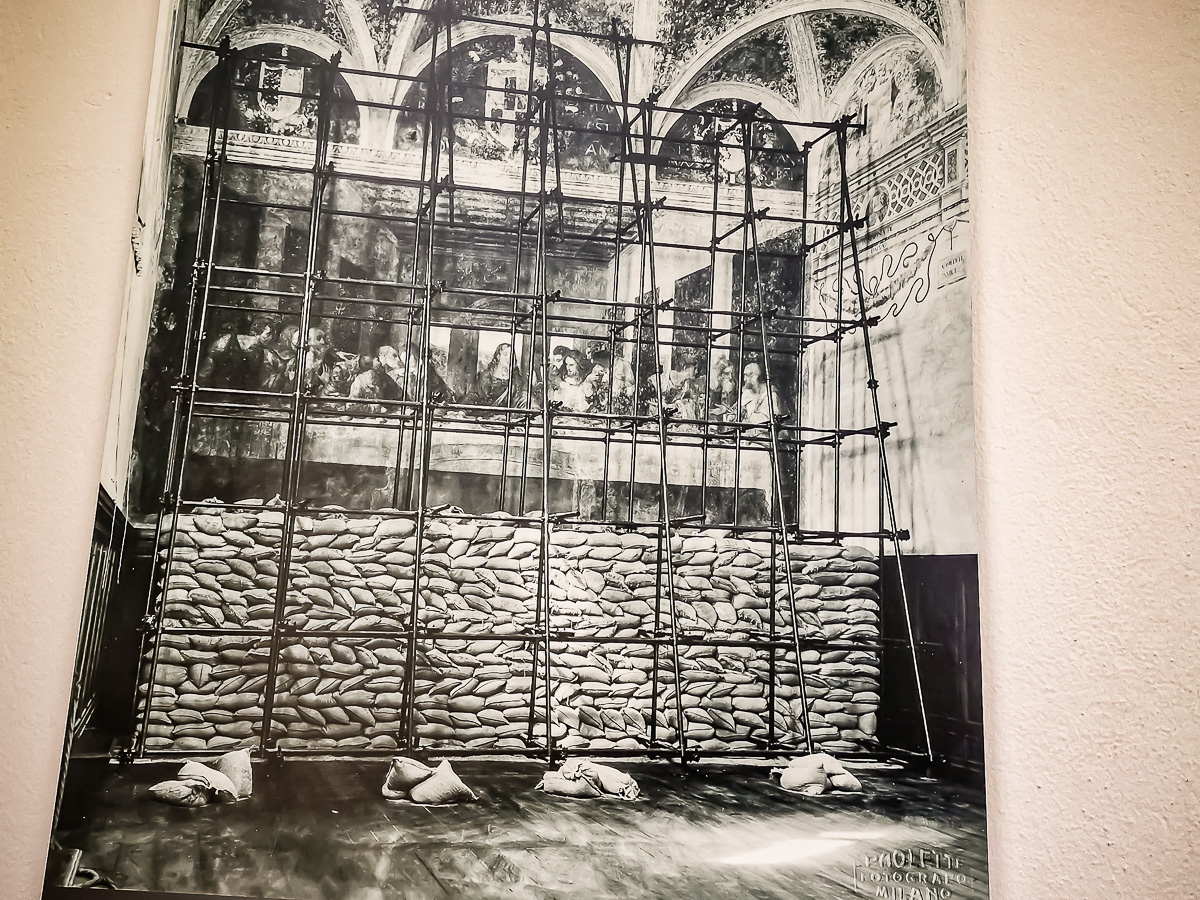
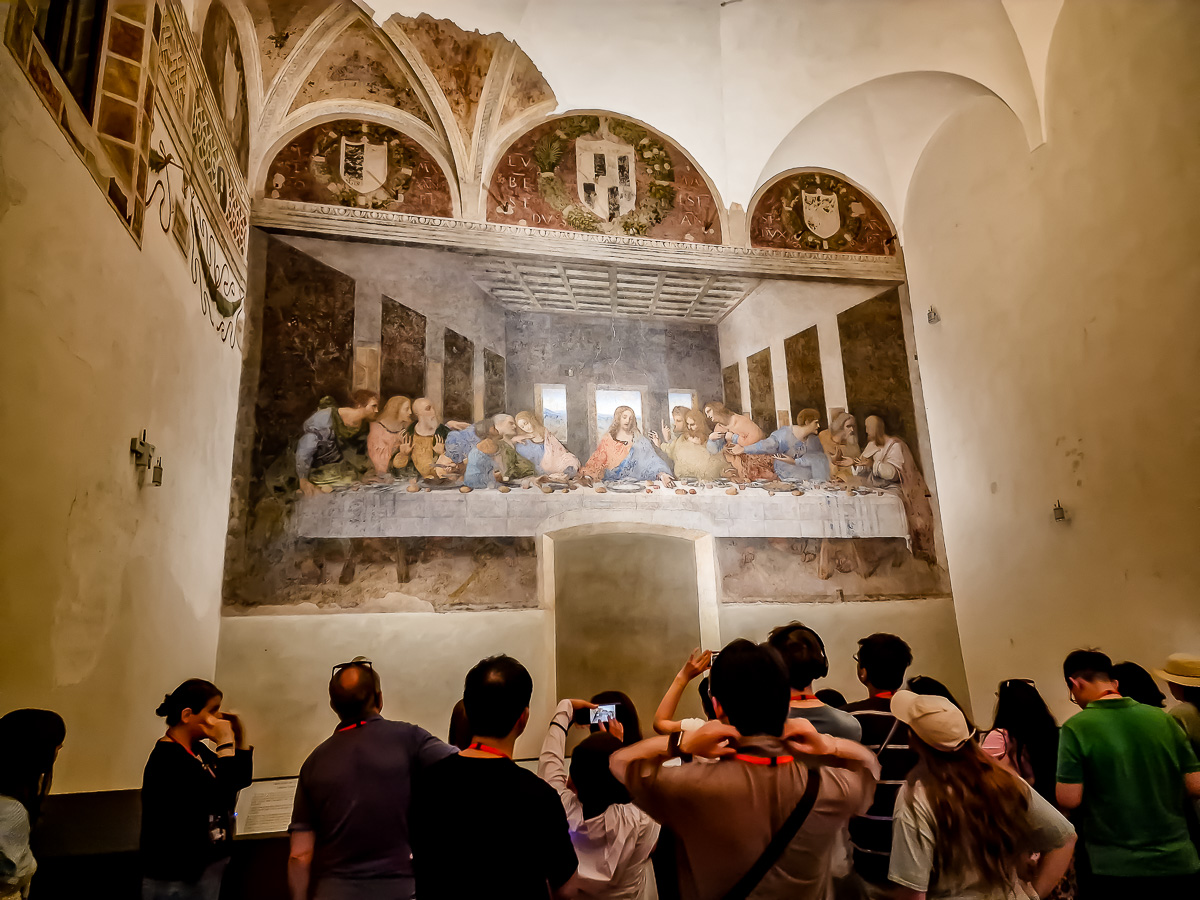
Amazingly, the bombs destroyed the refectory’s side walls and ceiling, yet The Last Supper, protected beforehand by authorities with sandbags, temporary walls, and supporting structures, survived!
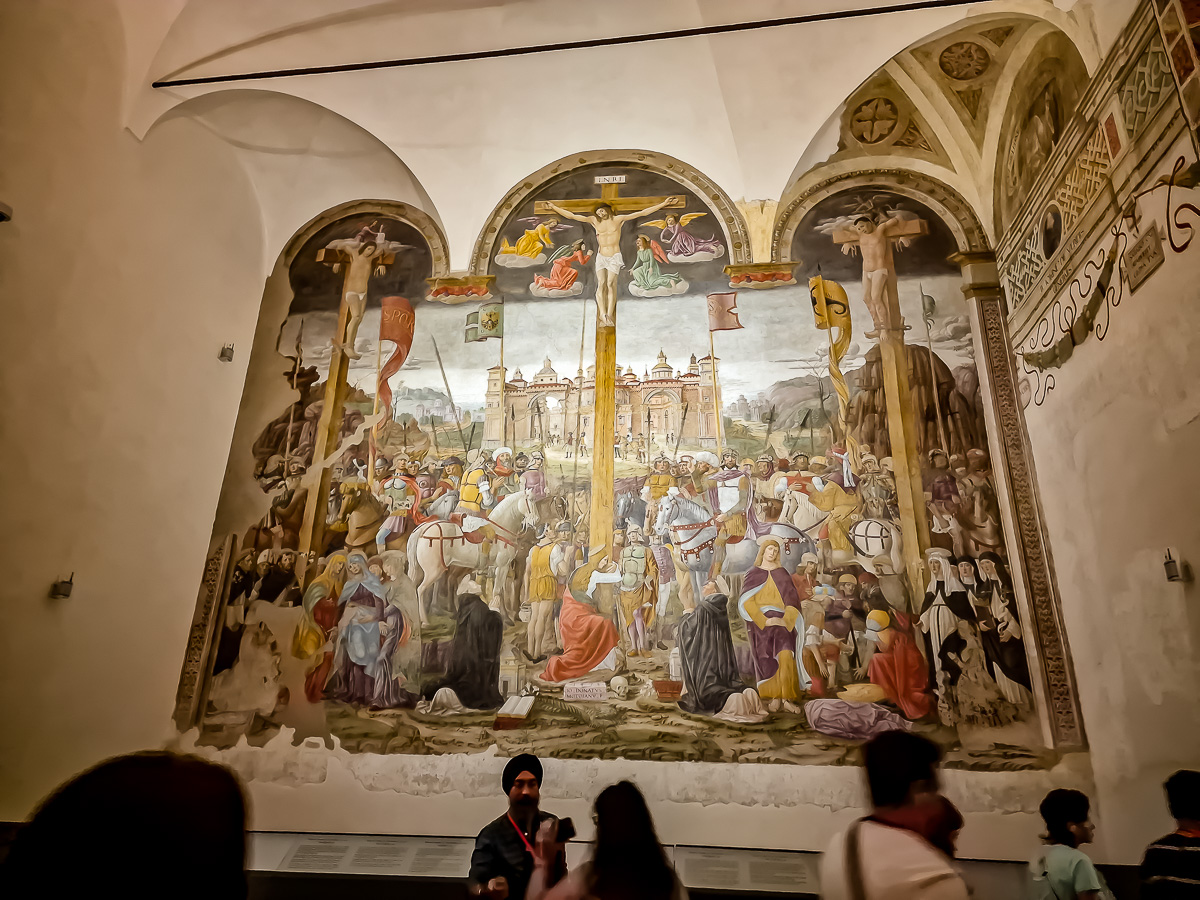
By a miracle, although unprotected, the opposite wall also remained standing, the one bearing Donato Montorfano’s Crucifixion (1495). A fresco painted according to classical rules – on wet plaster – which helped it endure over time.
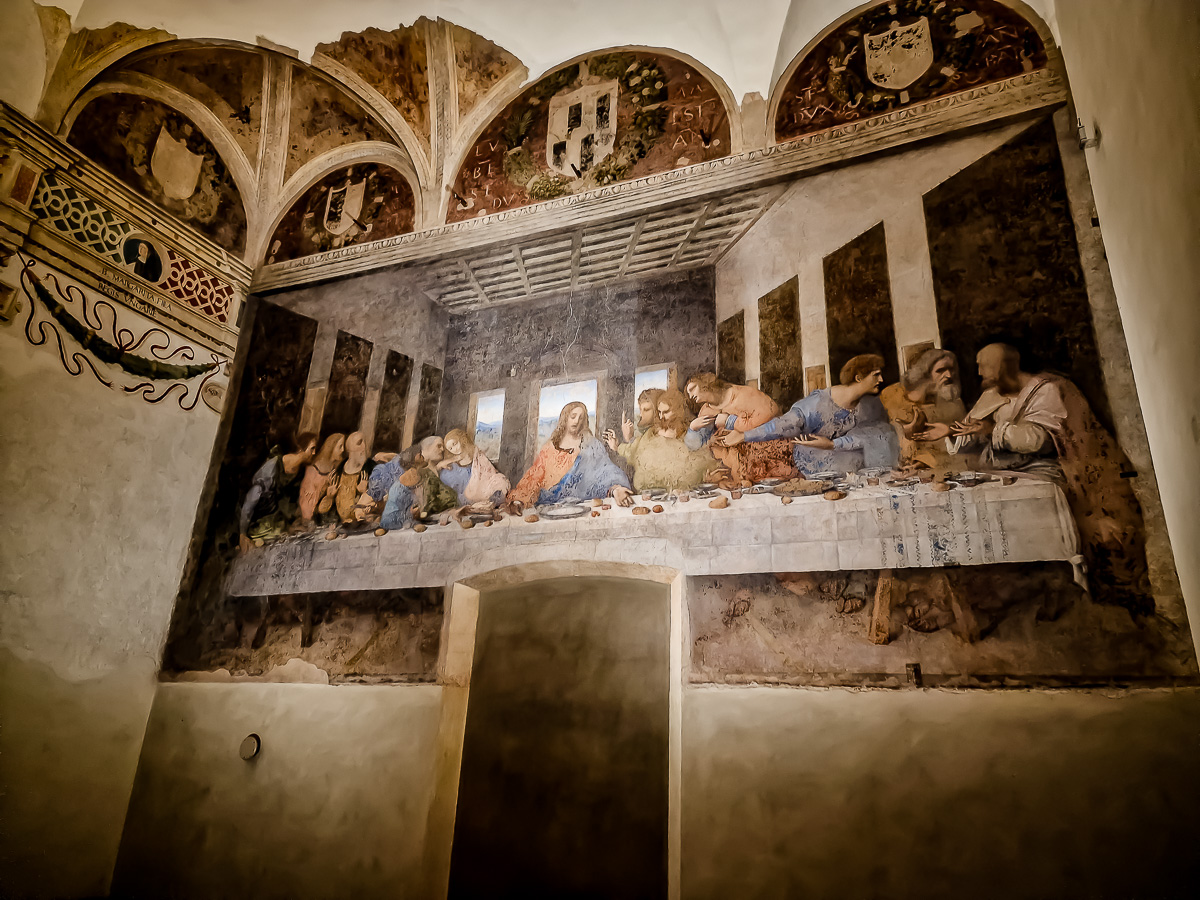
Among the many questions running through my mind during the short time I have to observe every detail is the one about the “door” that essentially cuts through Leonardo da Vinci’s painting. Was it there from the beginning??
Well, no, it wasn’t! The Dominican monks here decided in 1652 to break through the wall with The Last Supper to create, believe it or not, a passage between the kitchen and the dining hall…
Shocking, right? For us, yes, but for the monks it was a natural, practical decision. The functionality of the monastery mattered more than a painting, a painting that was already deteriorating… The Last Supper wasn’t perceived as a masterpiece then the way we see it today.
Their decision, however, affected Leonardo da Vinci’s work: it destroyed the central part of the table, Christ’s feet, and part of the perspectival floor. All of these elements played an important compositional role because, from what I’ve read, Leonardo constructed the entire scene using extremely precise geometry.
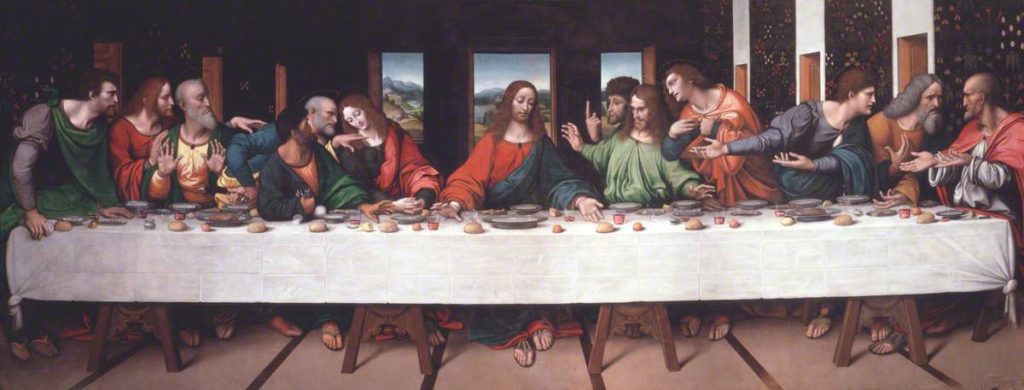
I looked to see whether there were paintings or drawings made after The Last Supper before the wall was cut through. And I found Giampietrino’s copy (c. 1515–1520), large in scale and close to the original, which shows the complete table and Jesus’s feet. It’s housed at the Royal Academy of Arts in London.
My crazy desire to see The Last Supper again came not only from the fact that so much time had passed and my memories had faded like the paint on the wall, but also because of the wonderful photo I have from my first visit here, back in 1999:
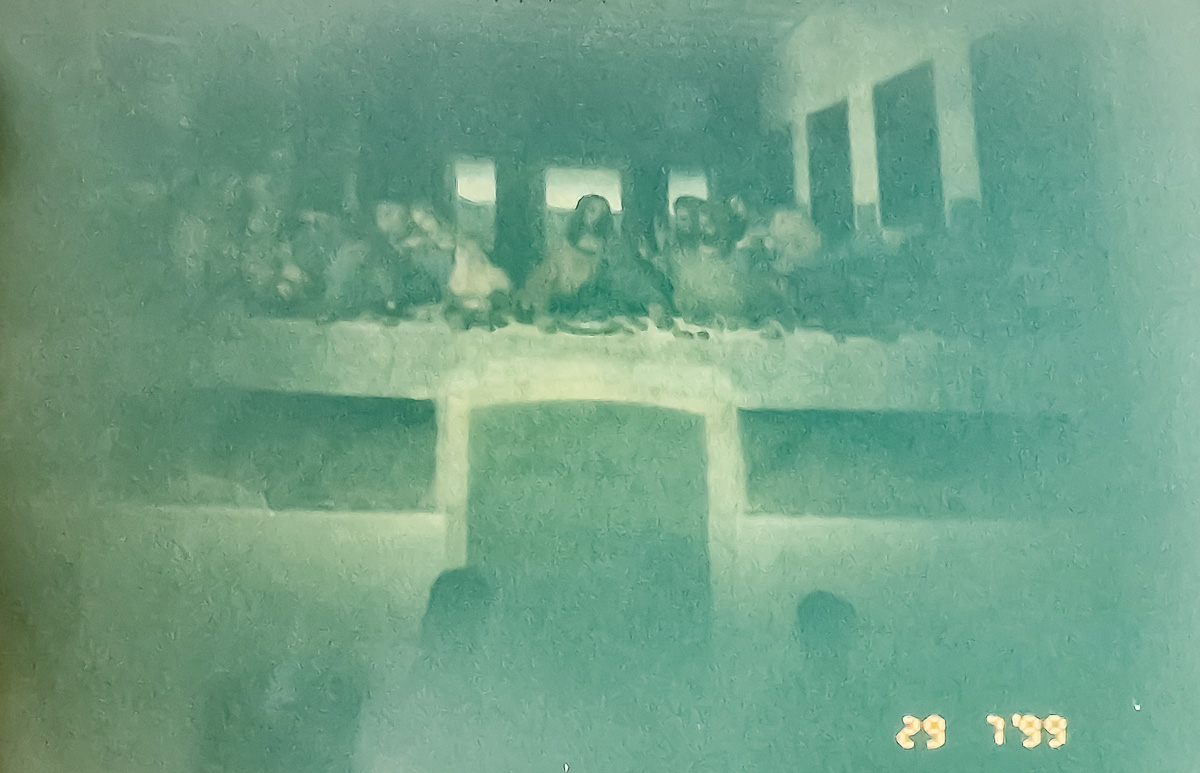
Yes, I’m in the picture, believe me! 🙂
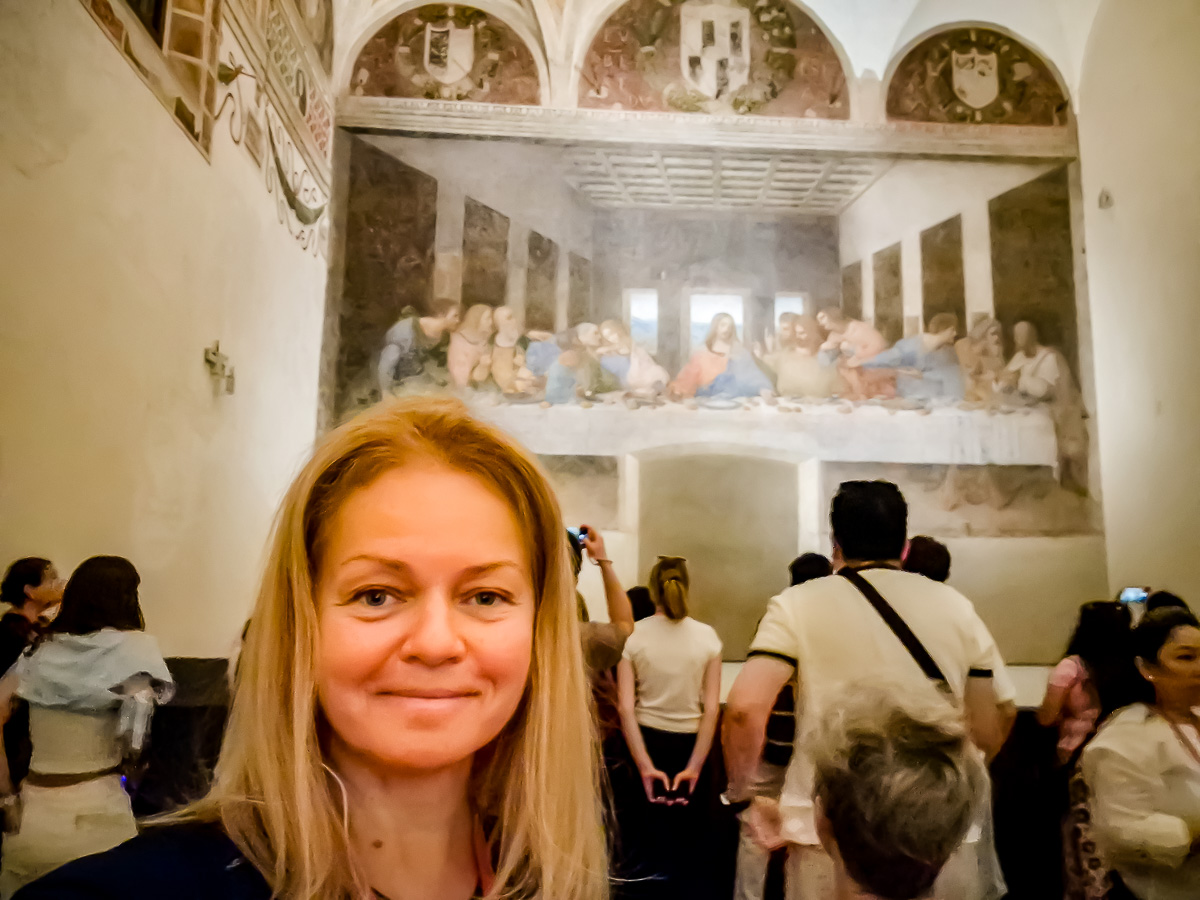
Goodness, I was quite upset for a while that I had no photo of myself here… So this time, while listening to the guide’s explanations through my headphones, I took plenty of selfies – vertical, horizontal, with people, without people – just to be sure I’d have at least one where I could actually see myself!
And just before the guide ushered us out – since the next group was already waiting – I quickly snapped a selfie that makes it look like I had rented the whole room just for myself:
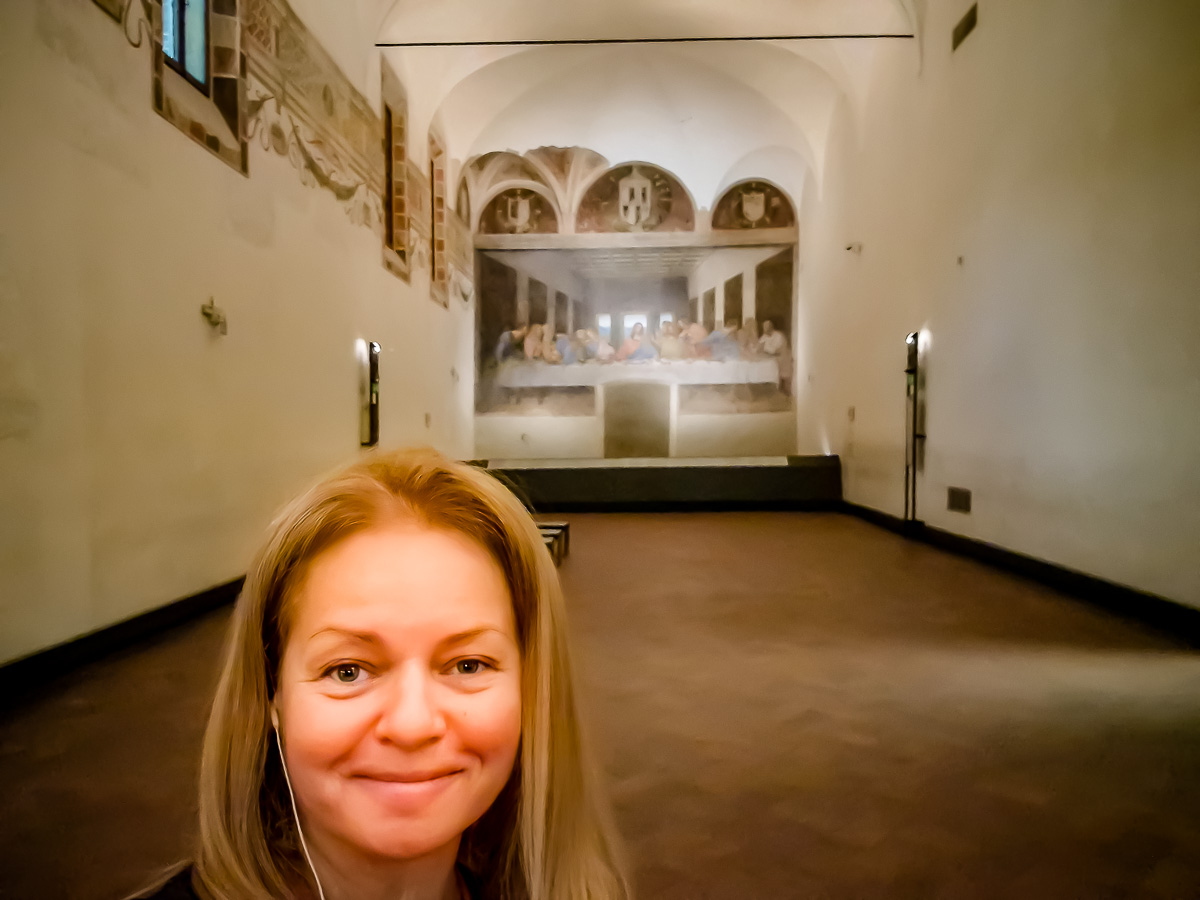
Believe me, it all happened in a matter of seconds!

A short but intense visit. I didn’t go into the basilica again, as I had seen it in a previous year. Both Santa Maria delle Grazie and The Last Supper have been on UNESCO’s World Heritage list since 1980.
BASILICA DI SANT’AMBROGIO

I came to this church after hearing it’s one of the oldest and most important in Milan. It was founded back in the 4th century by Saint Ambrose, the city’s patron saint (who is also buried here). The current structure dates from the 11th-12th centuries.
Notable features include the two towers of different heights and the inner courtyard (atrium).

Inside, you can admire the golden altar, crafted from gold and gilded silver, as well as the ancient mosaics.
I must admit there was another element that “hooked” me and made me want to come here:
THE DEVIL’S COLUMN

Just outside the courtyard, a short distance away, you’ll find this column with two visible holes. And that’s where a legend was born…
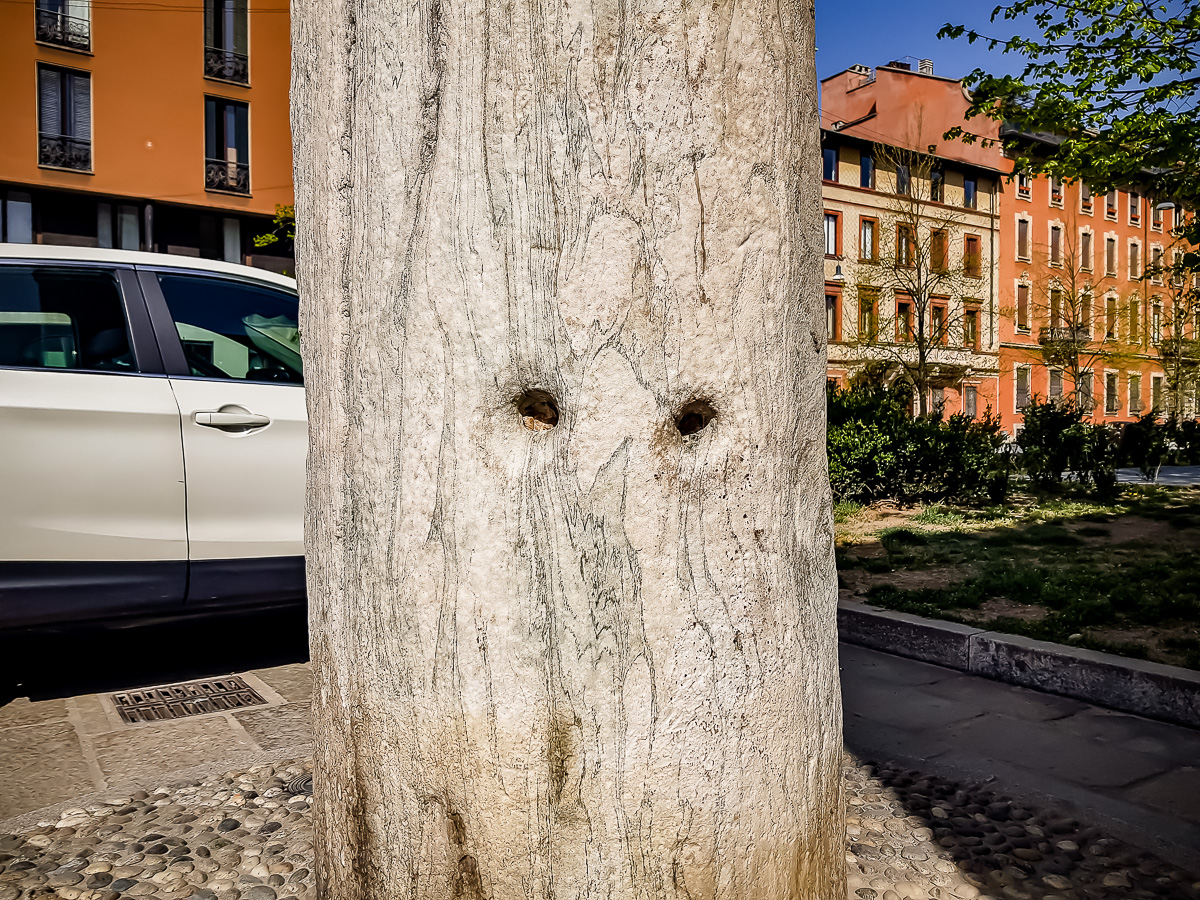
It’s said that the Devil himself tried to tempt Saint Ambrose but failed. In a fit of rage, the Devil attacked him with his horns, but missed and ended up embedding them in the column instead. The two holes are supposedly the marks left behind.
(That is, unless you prefer the more down-to-earth explanation: since the column is a reused Roman element, the holes may simply come from old metal fittings…)
BOSCO VERTICALE
I first spotted them from above, from the Duomo’s rooftop, and curiosity got the better of me: I went to see them up close, even though it was pouring.
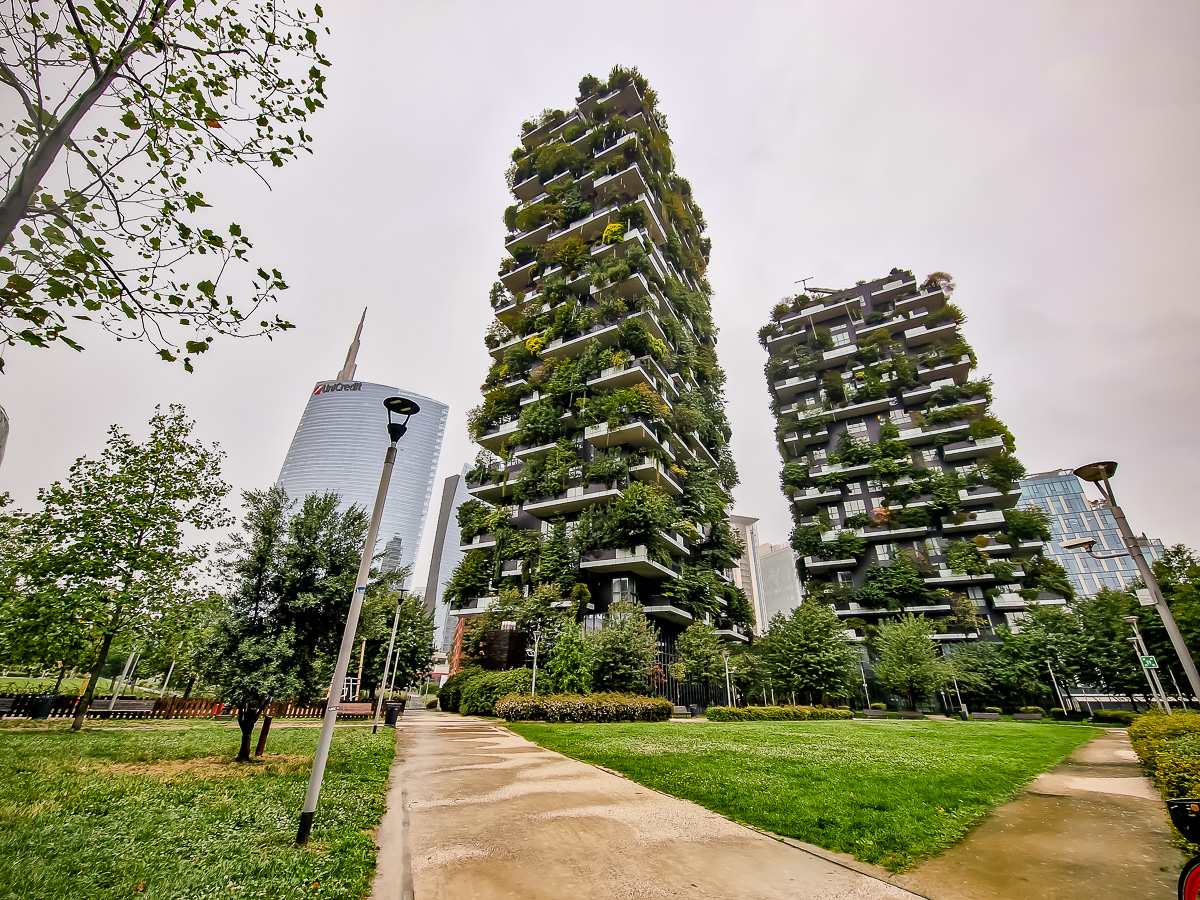
They’re basically two residential towers covered with over 20,000 plants and trees. And honestly, they look incredible! I’d love to live in this vertical forest.
Apparently, they’ve won international awards and are considered a symbol of sustainable architecture.
SAN BERNARDINO ALLE OSSA
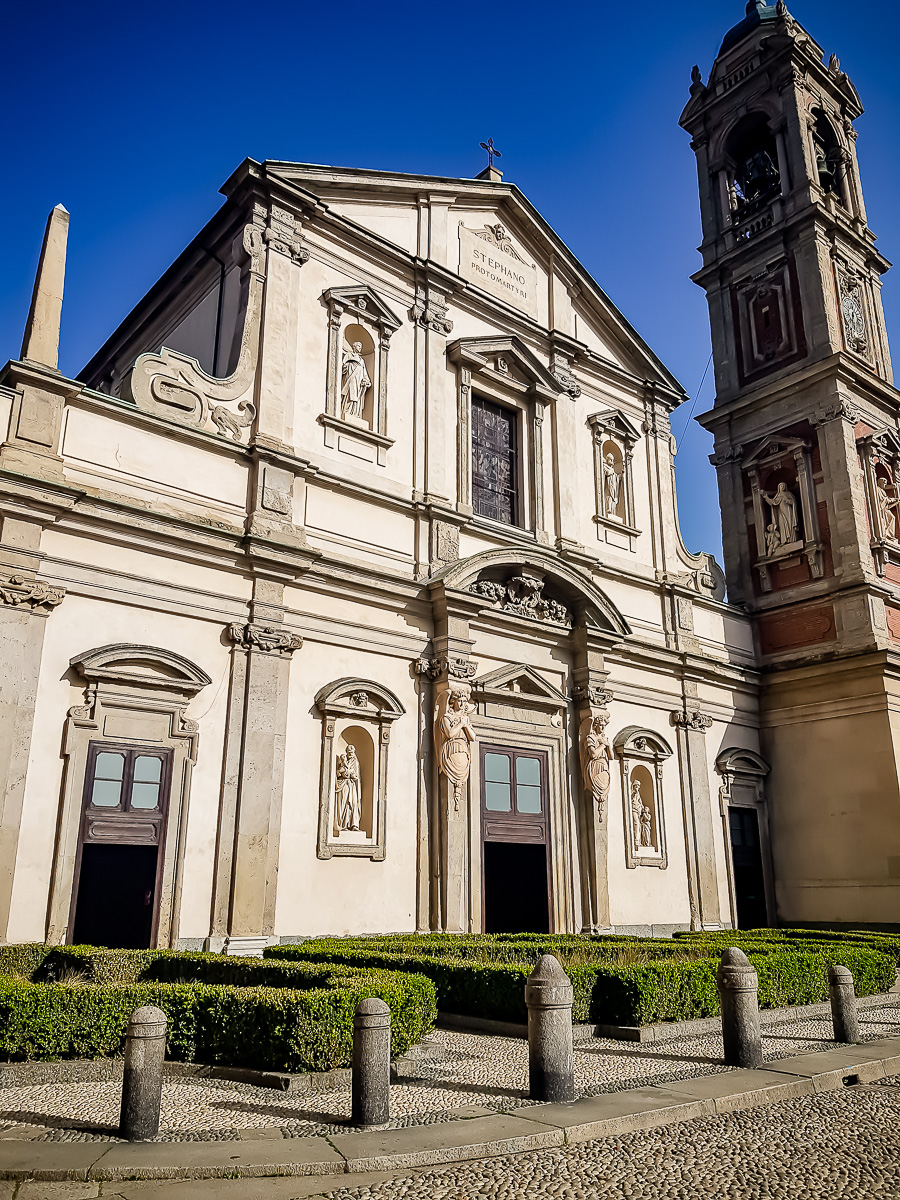
I came across one of the most… unusual churches in Milan.
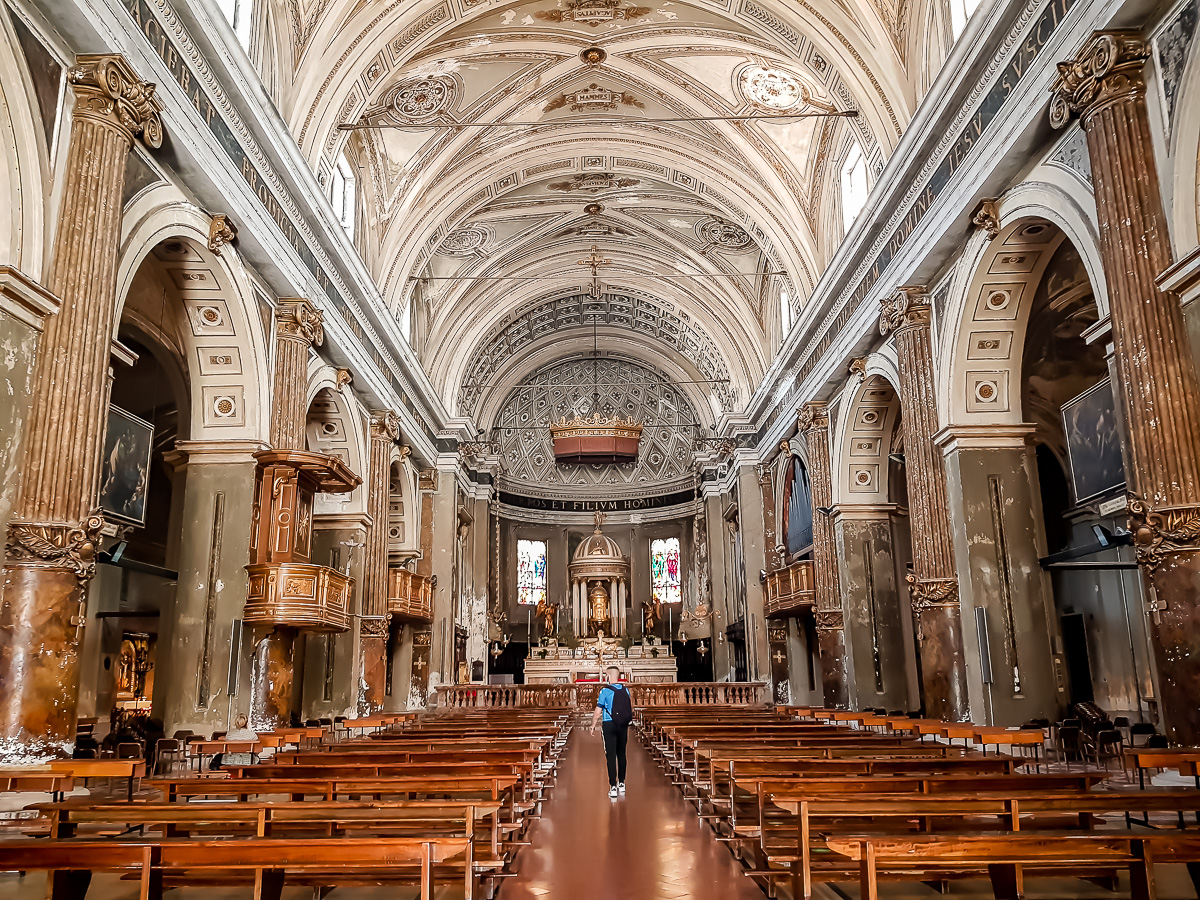
When you enter, everything seems perfectly normal. And yet…
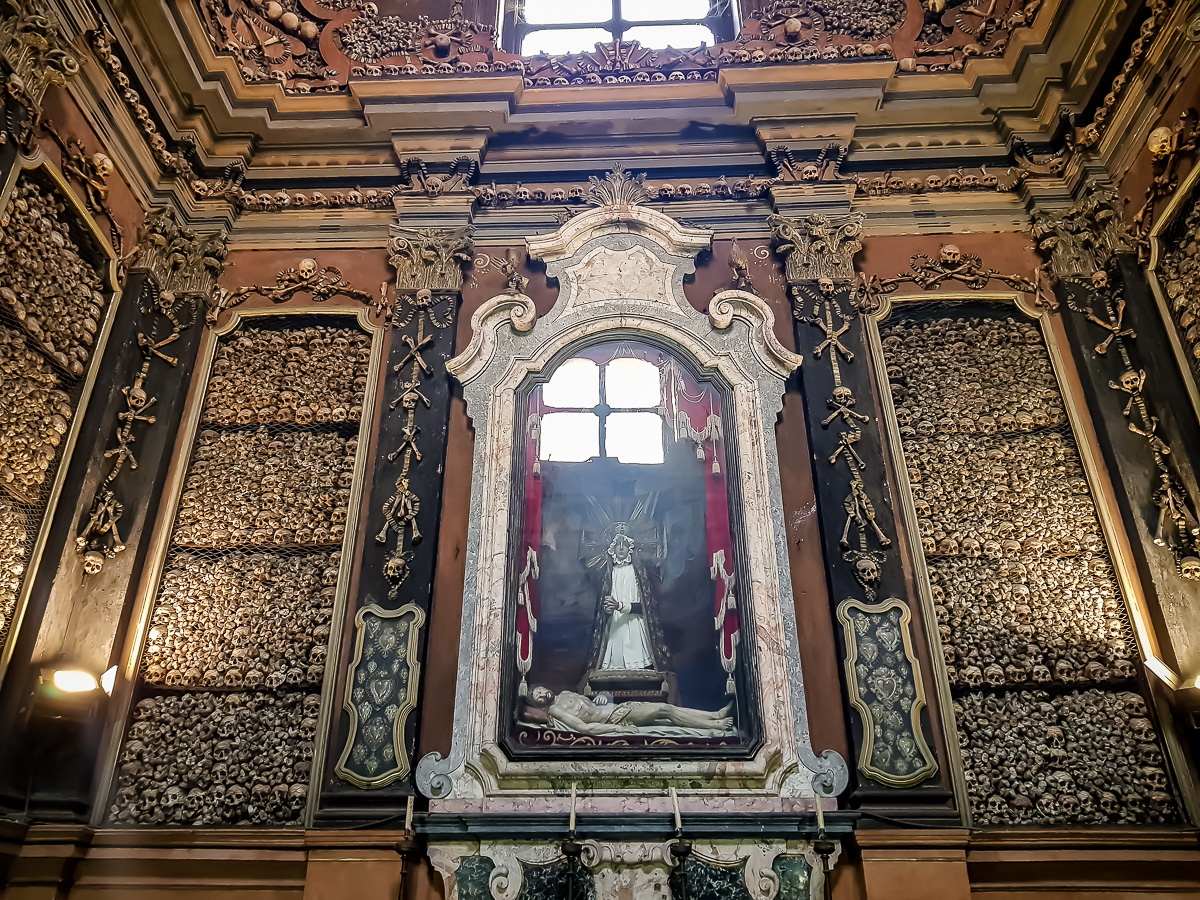
…this church has a chapel decorated with human skulls and bones!!! Yes, you read that right. And they didn’t come from some eccentric horror-movie fan’s donation.

In the 13th century, the nearby hospital cemetery became overcrowded, so exhumed bones were placed in a specially built room called an ossuary. A few years later, a church was attached to it, and the ossuary was transformed into a chapel.
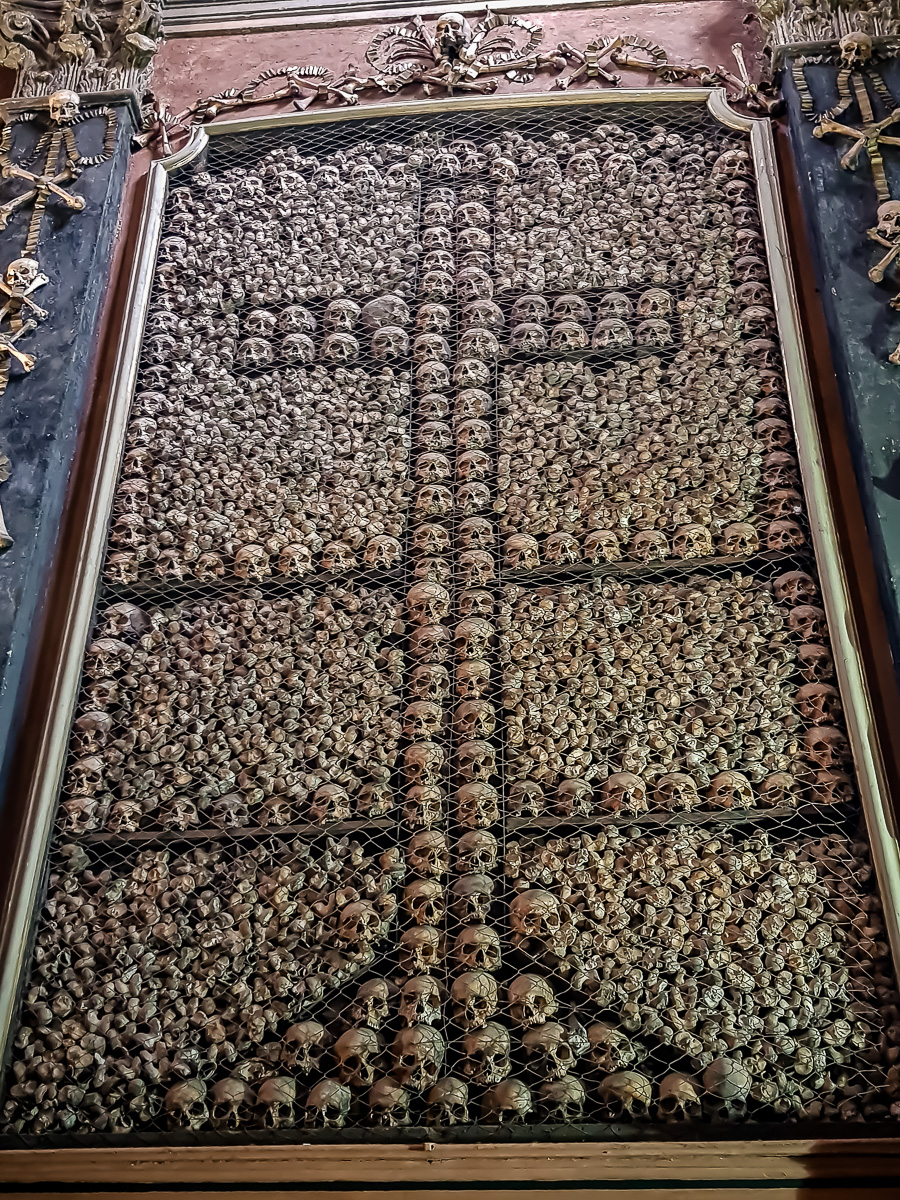
This chapel is described as a space that’s not macabre in a horror sense but rather a Baroque meditation on death and the fleeting nature of life – something typical of the spirituality of that era.
That may be true, but it still gave me chills down my spine…
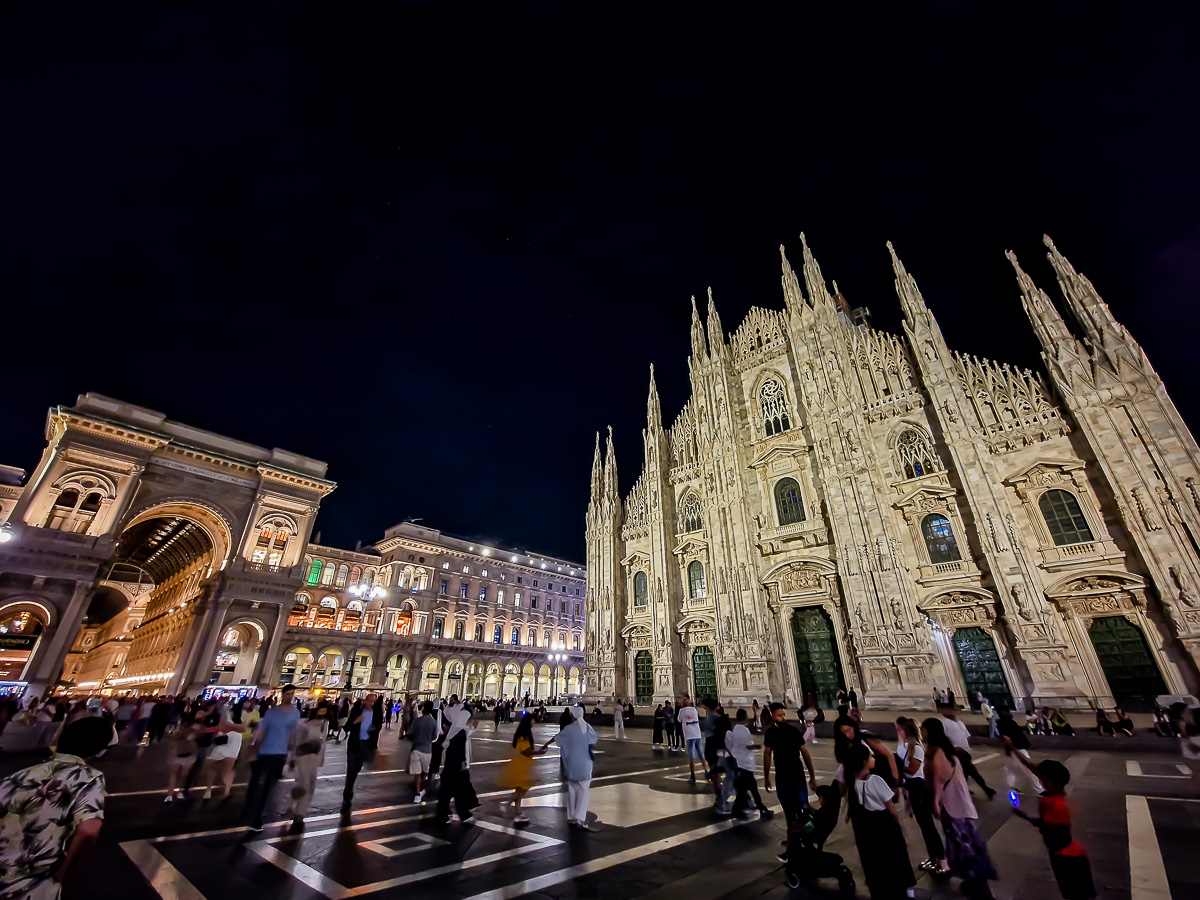
This church, San Bernardino alle Ossa, is very close to the Duomo (about 600 meters). Oh wow, looks like night has fallen while I was writing about Milan 🙂 That’s it, I’ll stop here.
What I didn’t get to see, but heard is worth it:
- Chiesa di San Maurizio al Monastero Maggiore – a church often compared to the Sistine Chapel because of its paintings.
- Navigli – the canal district originally designed by Leonardo da Vinci to facilitate trade. Today, it’s full of restaurants, bars, and an antiques market.
- Chinatown Milan – vibrant and cosmopolitan, from what I’ve heard.
- Pinacoteca di Brera – one of Europe’s most important art galleries, featuring works by Raphael, Caravaggio, Bellini, and more. I only made it as far as the courtyard, since it was closed during the pandemic.
Speaking of the pandemic, here you can see surreal images of Milan from March 2021, when the city was shockingly empty!!!