

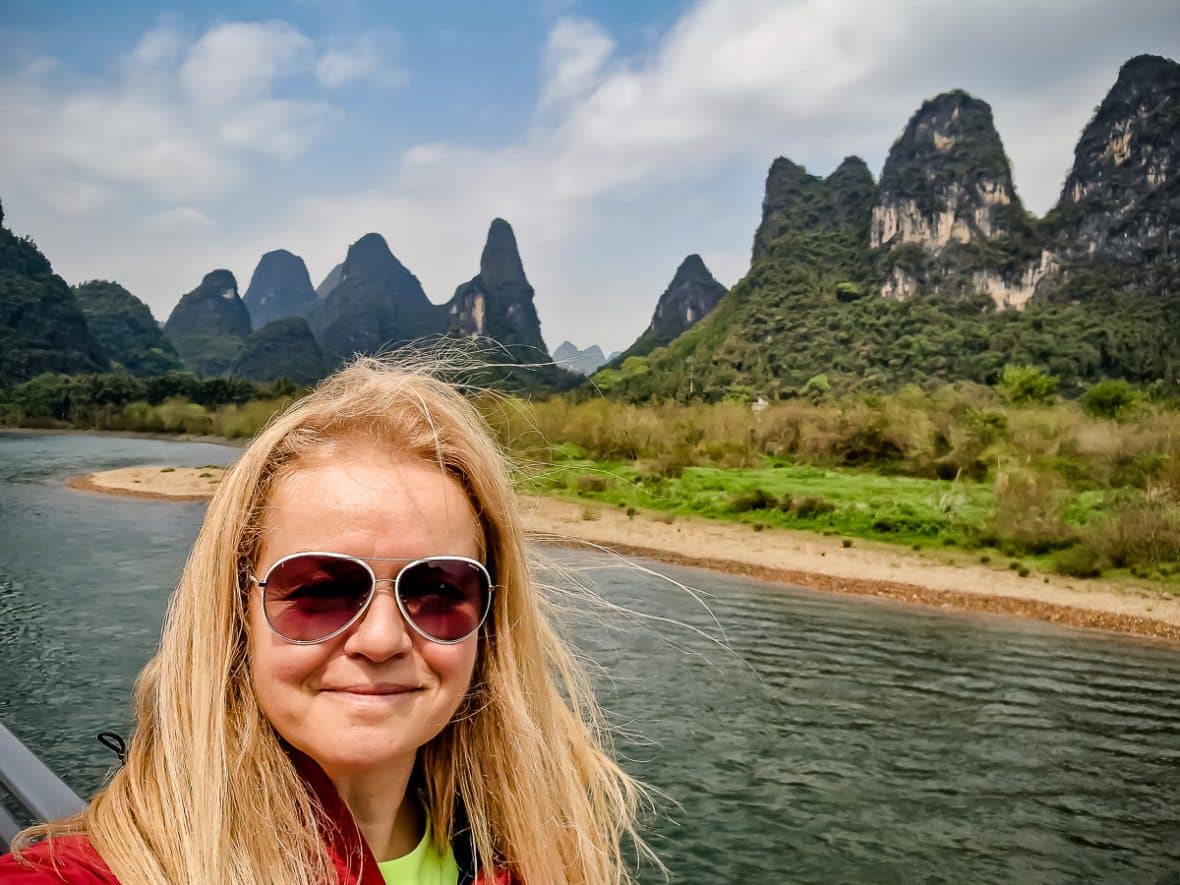
“So you’re not coming to our area?!?” the Chinese lady from the agency asked me after I’d booked my 2025 tour with her (Beijing, Xi’an, Chengdu, Chongqing). “We’re in a really beautiful area, Guilin, maybe you’ll come next time”, she added.
“Yeah, yeah”, I replied politely, thinking there was no way I’d ever end up wherever she was talking about.
Well, guess what? I did! 🙂
Just one year later, once again for my birthday, I decided to see some other wow places in China that I’d heard about, read about and seen online – Guilin and Zhangjiajie.
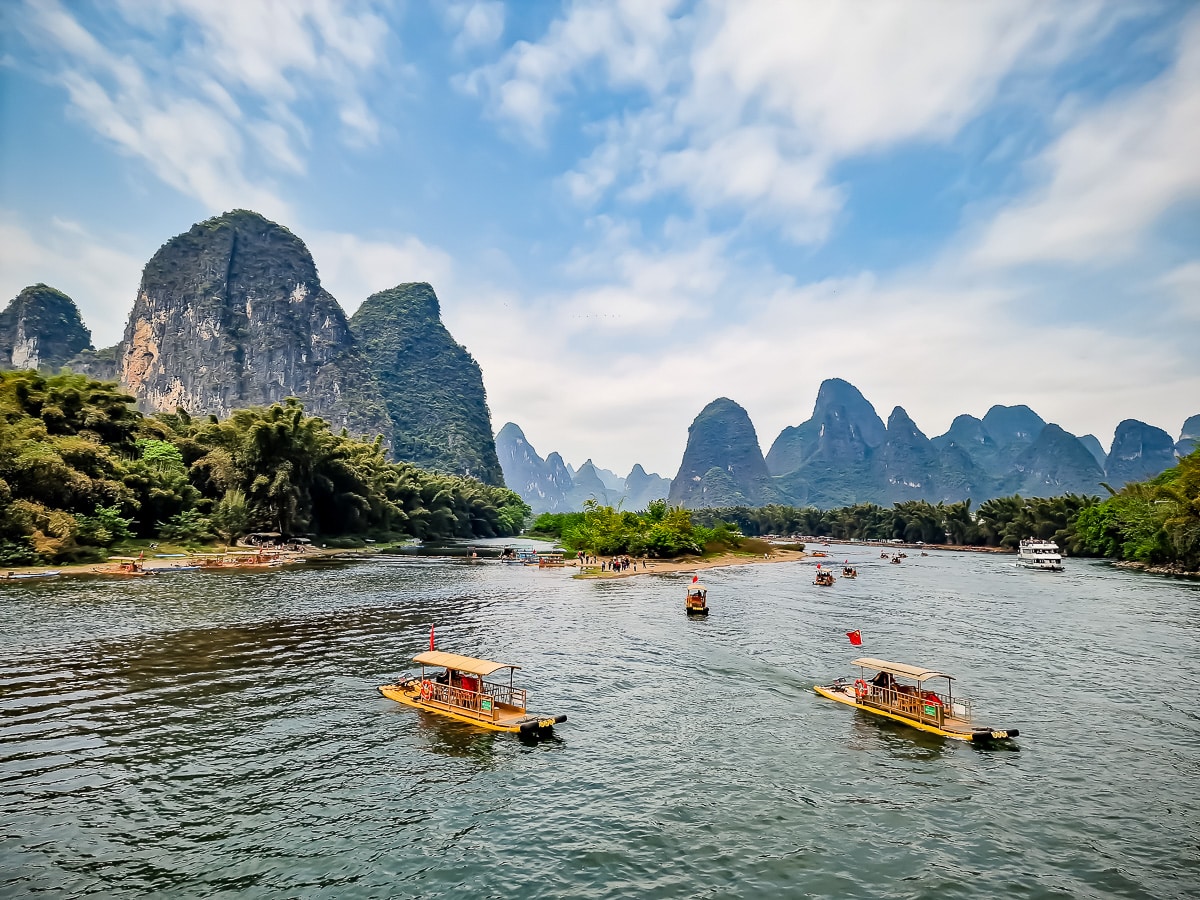
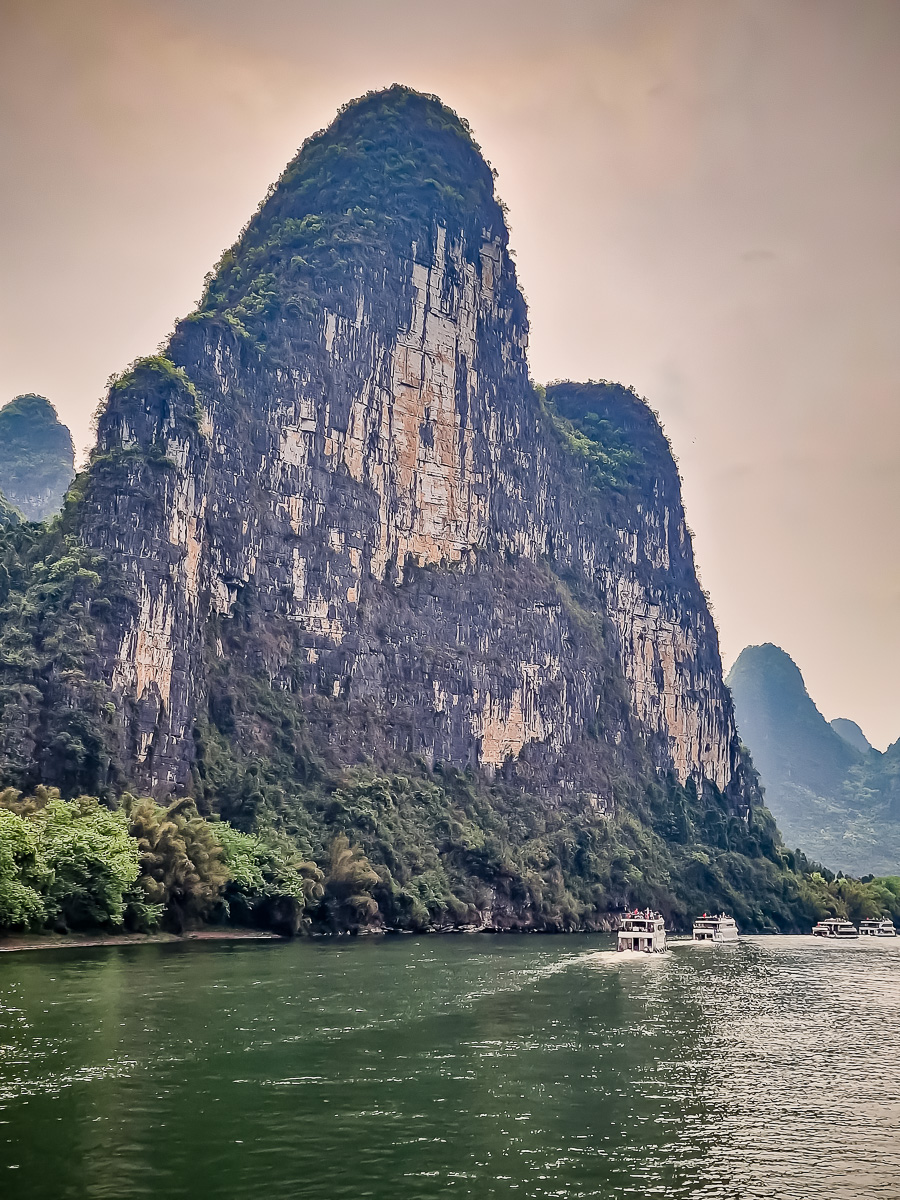
The photo shows a tiiiiiny part of what I saw – and it was only the beginning of the “wtf, are these even real?!?” scenery.
But before I get on the boat and show you what’s what, let’s start at the beginning…
GUILIN
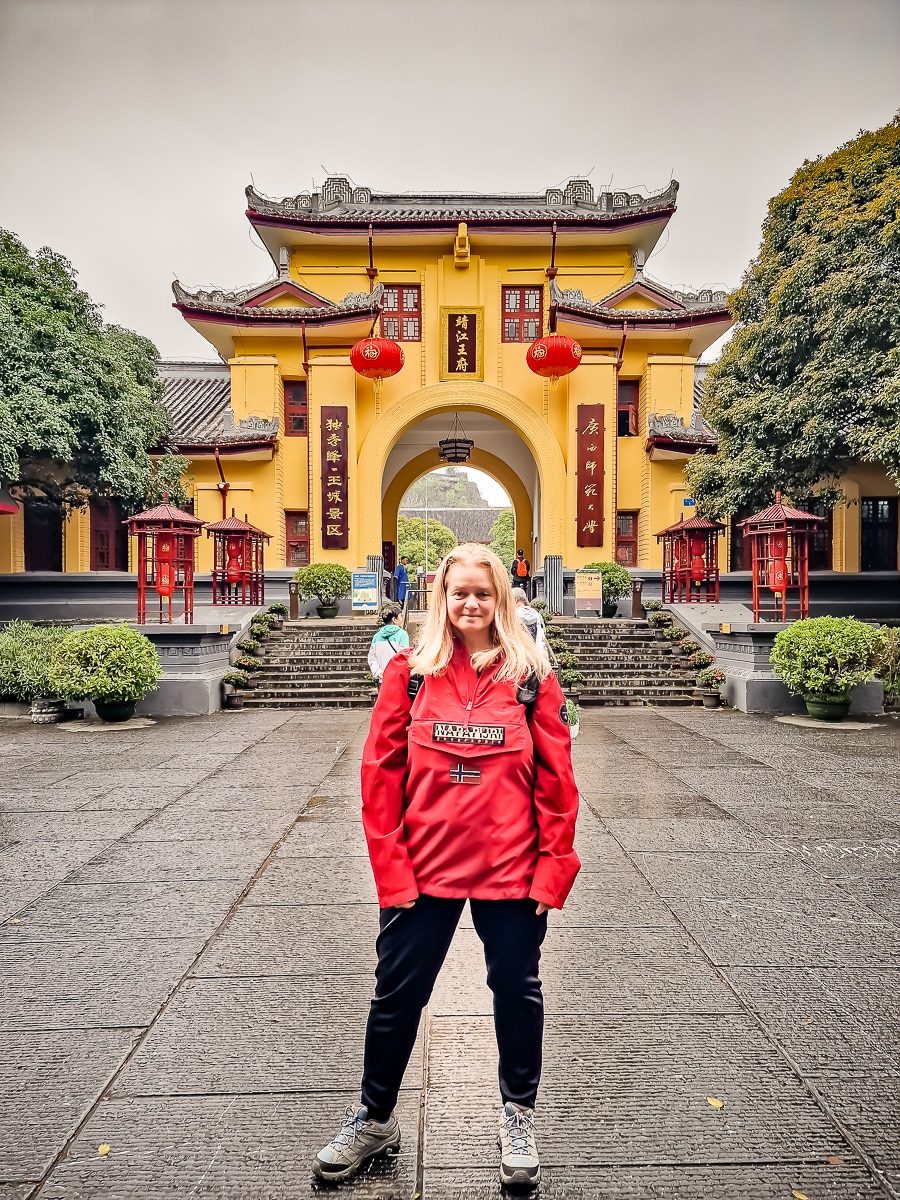
I flew to Guilin from Shanghai – my first stop on my 2026 holiday. The flight took about two and a half hours, then another 40 minutes from the airport to the city centre, with decent traffic!
Even though I had a private tour – because this is definitely an area where you’re much better off with a guide than wandering around like a headless chicken – I did plenty of research online beforehand and asked the agency to include pretty much everything that looked unmissable to me.
At first, I was worried that I was spending only one day in Guilin, but later I realised there was no reason to panic. Guilin really is a city you can see in a day or a day and a half, after which everyone recommends moving on (and staying) in Yangshuo, where even more unreal places await!
WHAT TO SEE IN GUILIN
My Chinese guide, William, understands exactly what I want – to get a feel for the city and meet the local people (beyond the tourist attractions) – so he decides our first stop should be… the street market 🙂
I loooove it! I stare at some of the stalls like I’ve never seen food before! I ask what this is, what that is, as if I’d understand the answer anyway…
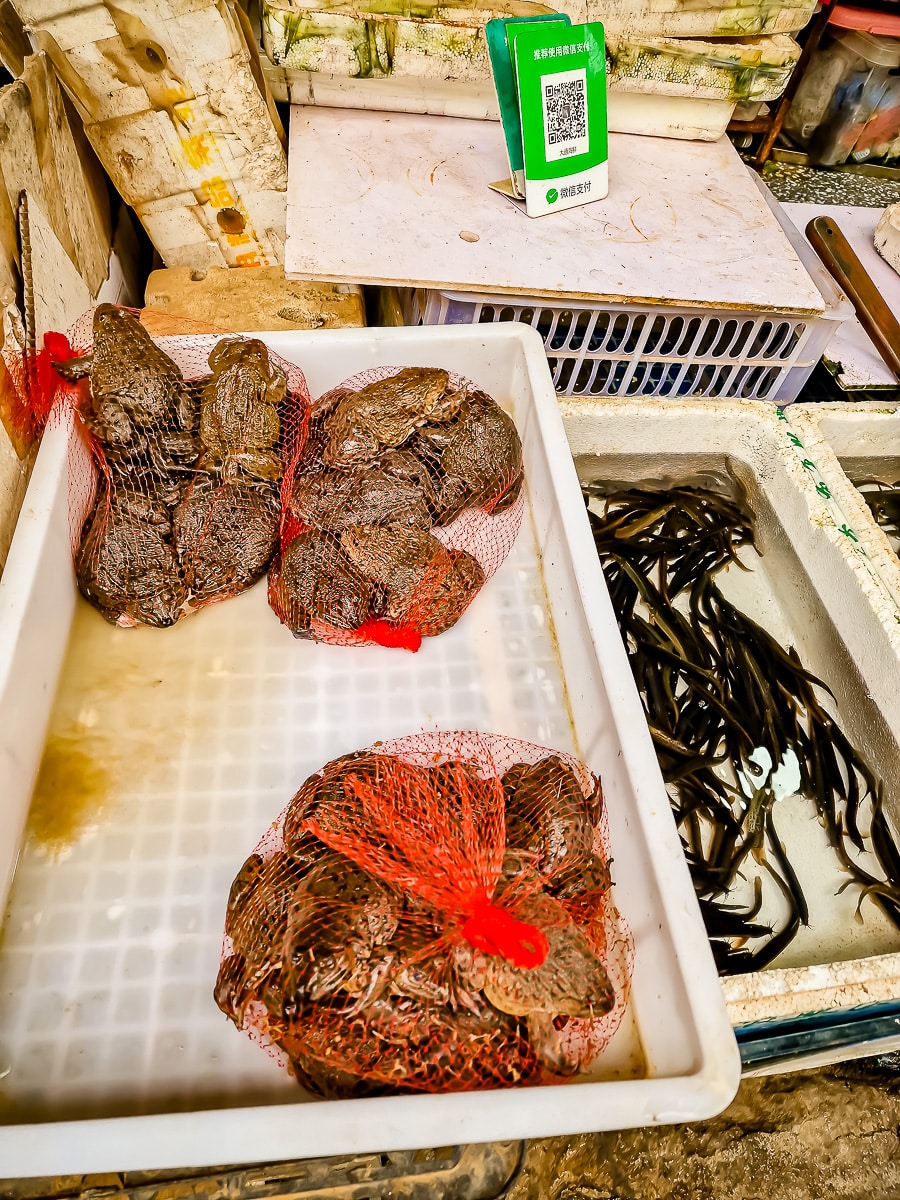
I do manage to identify the live frogs, though. Some of the poor things are struggling and jumping, hoping to escape from the net they’re packed into like sardines. Well, like frogs…
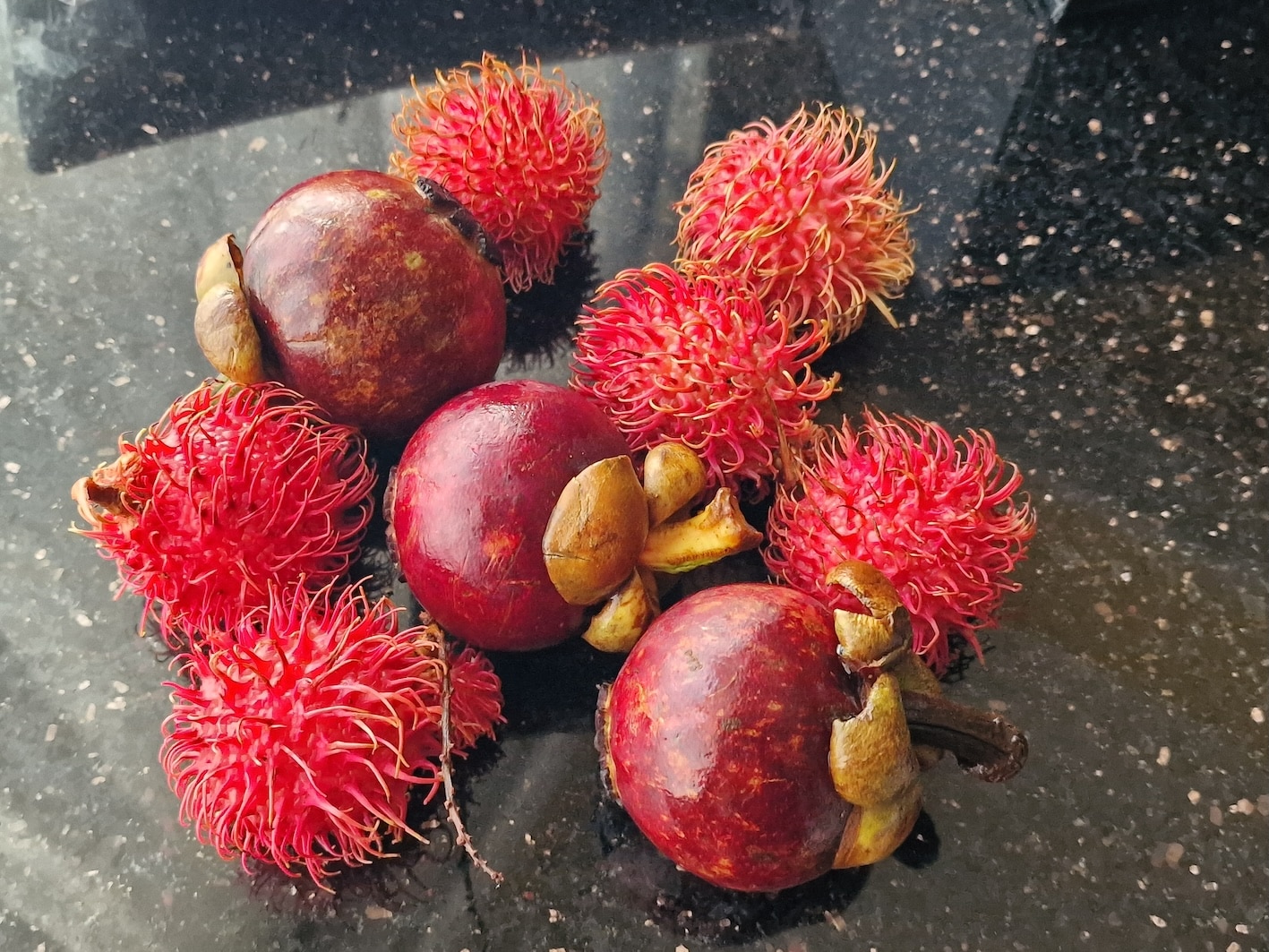
Loads of fruit at the market! Some of it you can find back home, some of it you can only find here. Exotic fruit, as we call it…
William points out the oranges and tells me, with obvious pride, how incredibly cheap they are – for 10 yuan (a little over 1 euro), you can buy 4 kg!
A lady peels a pineapple for me, sculpting it like some Chinese Brâncuși, and I bite straight into it because my mouth has been watering ever since I laid eyes on it!
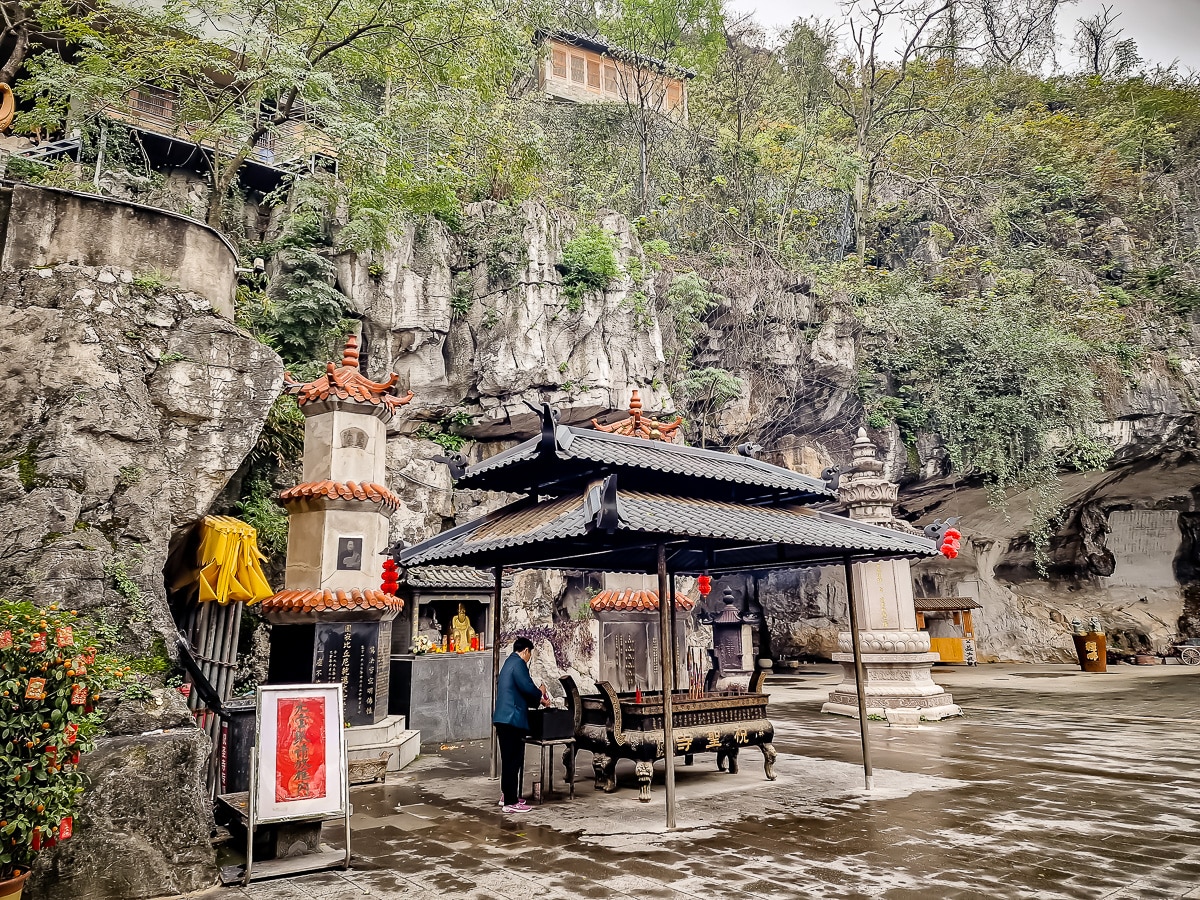
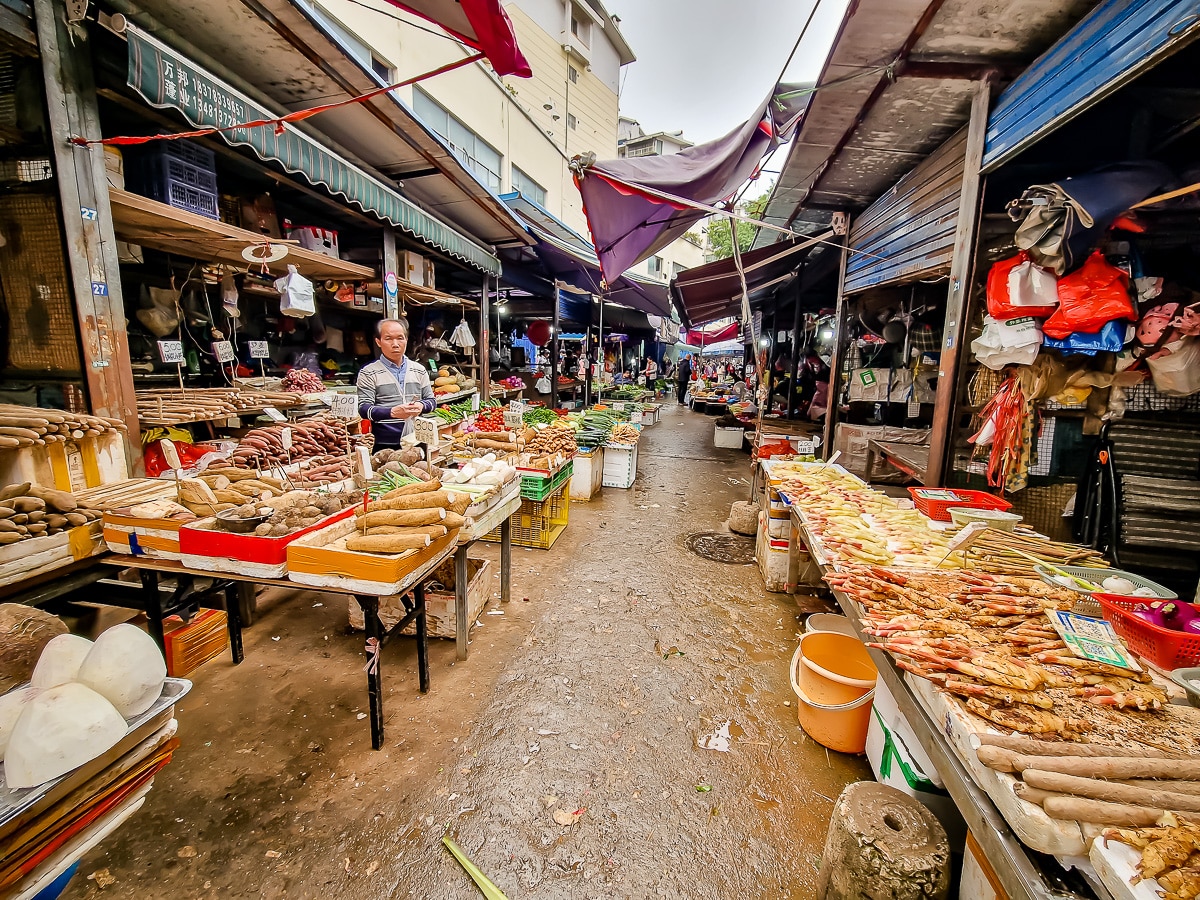
But this city market drops to number 2 in my personal ranking once I reach another one, at the foot of a mountain, on the road to Qixia Temple (where you’re not allowed to take pictures, which is why I only have a photo from the temple courtyard).
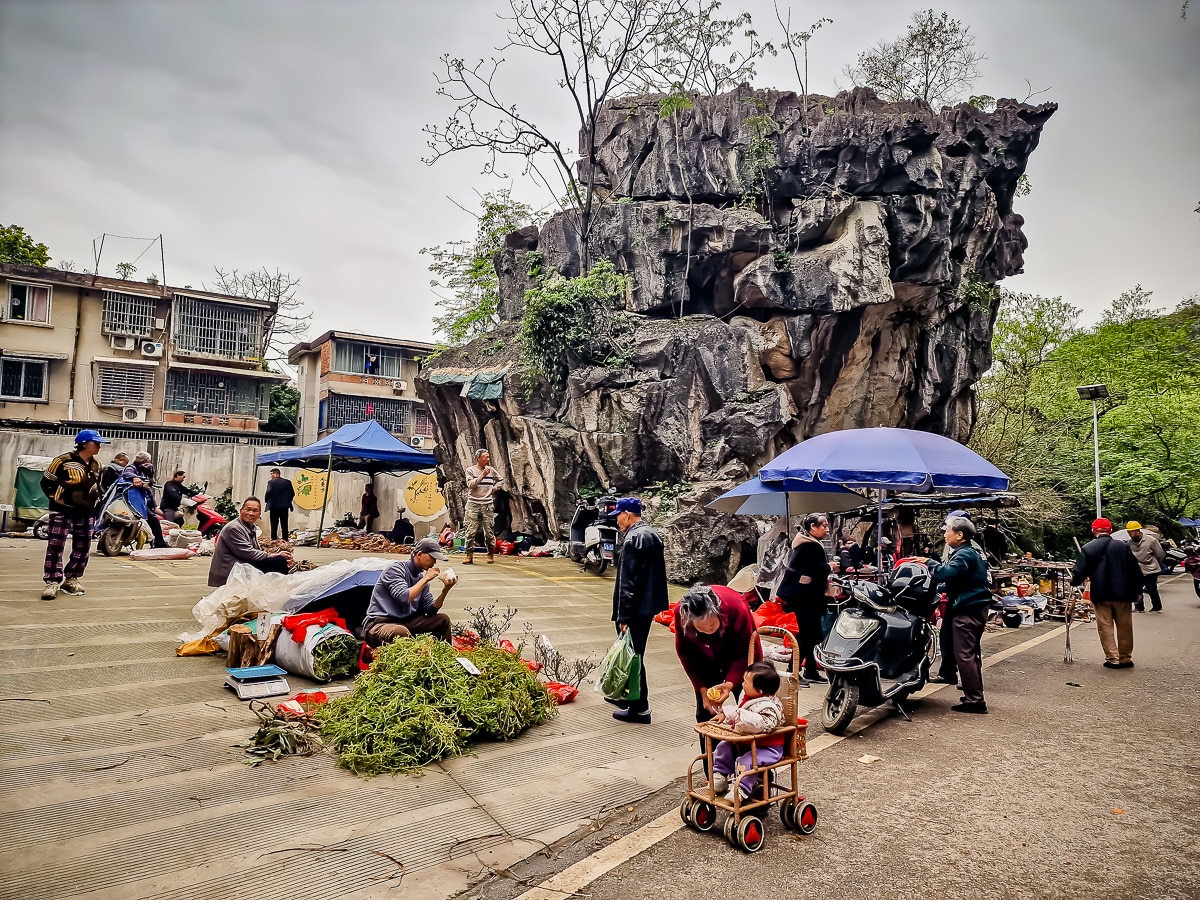
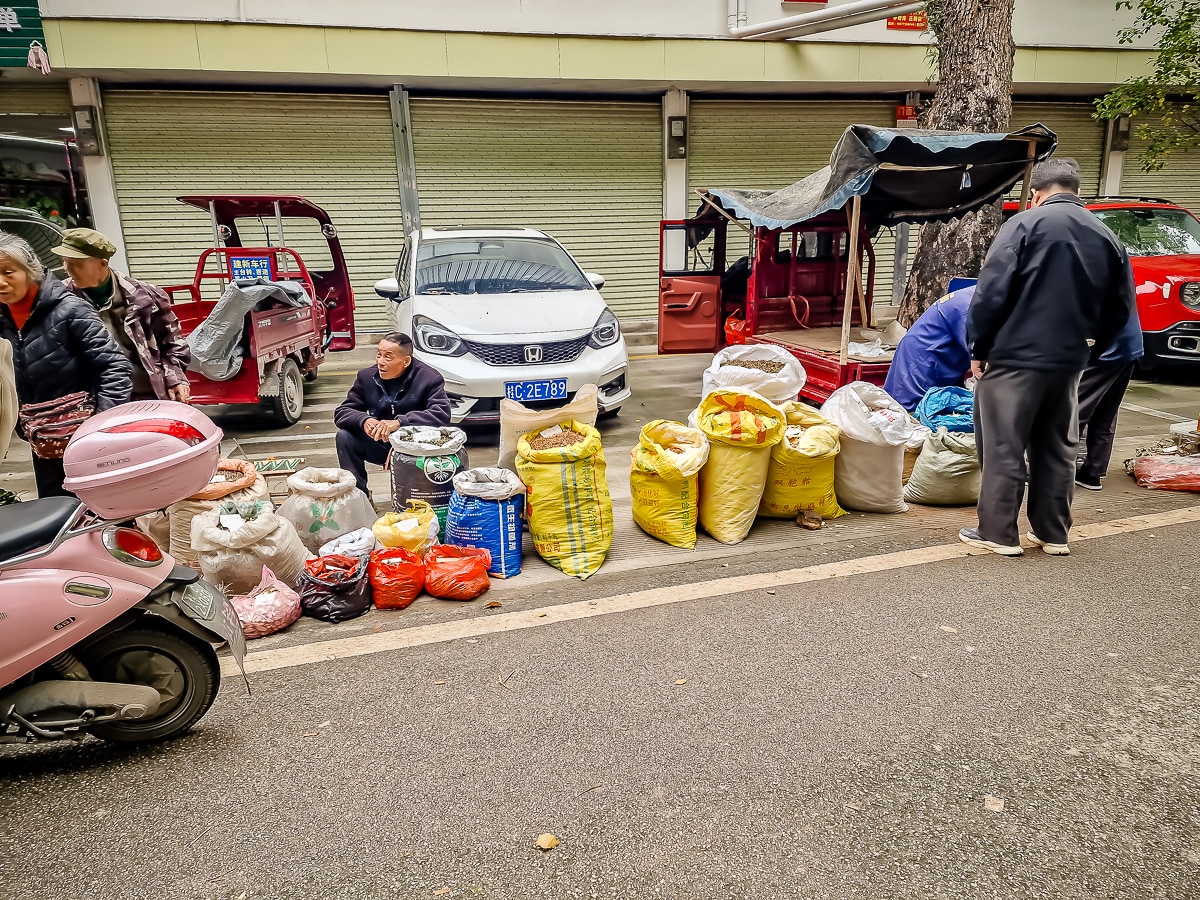
All along the street, on both sides, countless vendors wait for customers, their goods in sacks, crates or simply spread out directly on the pavement.
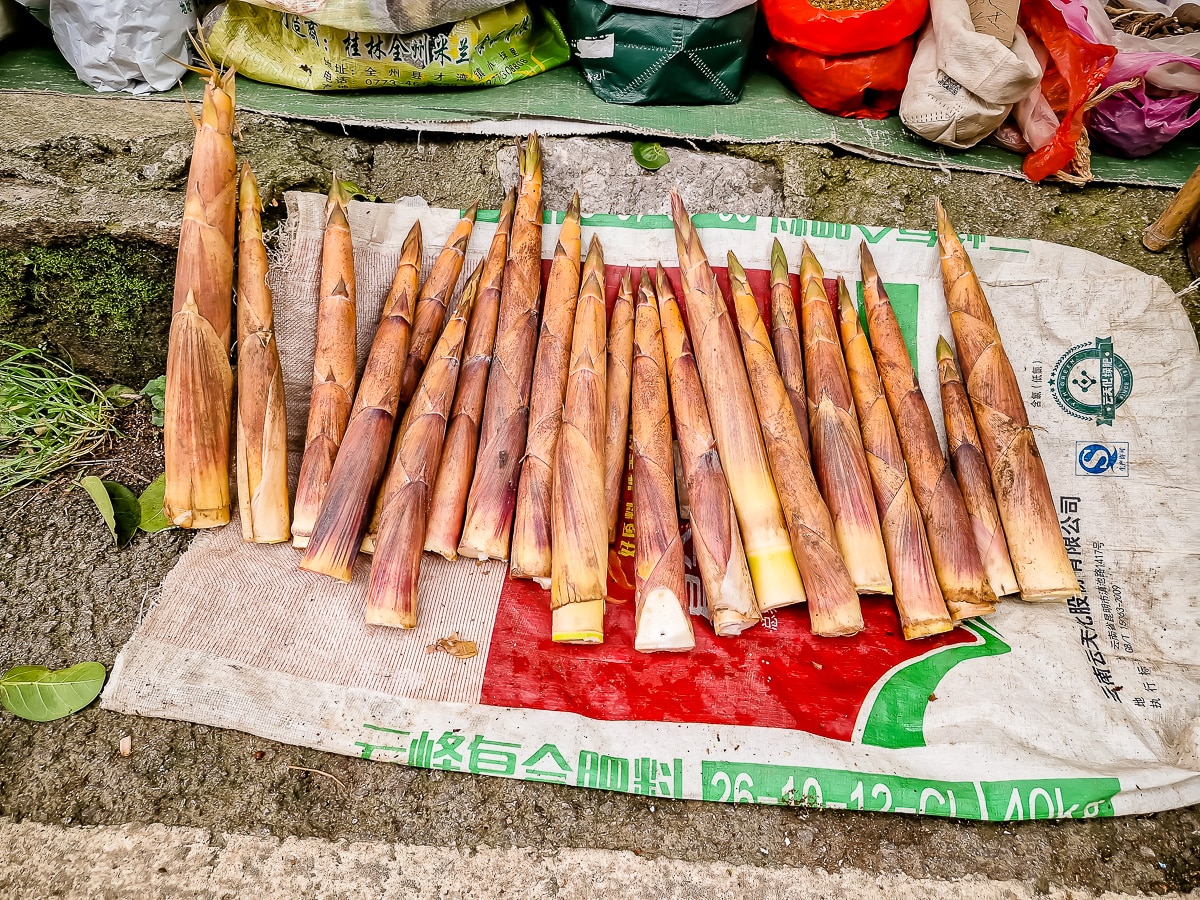
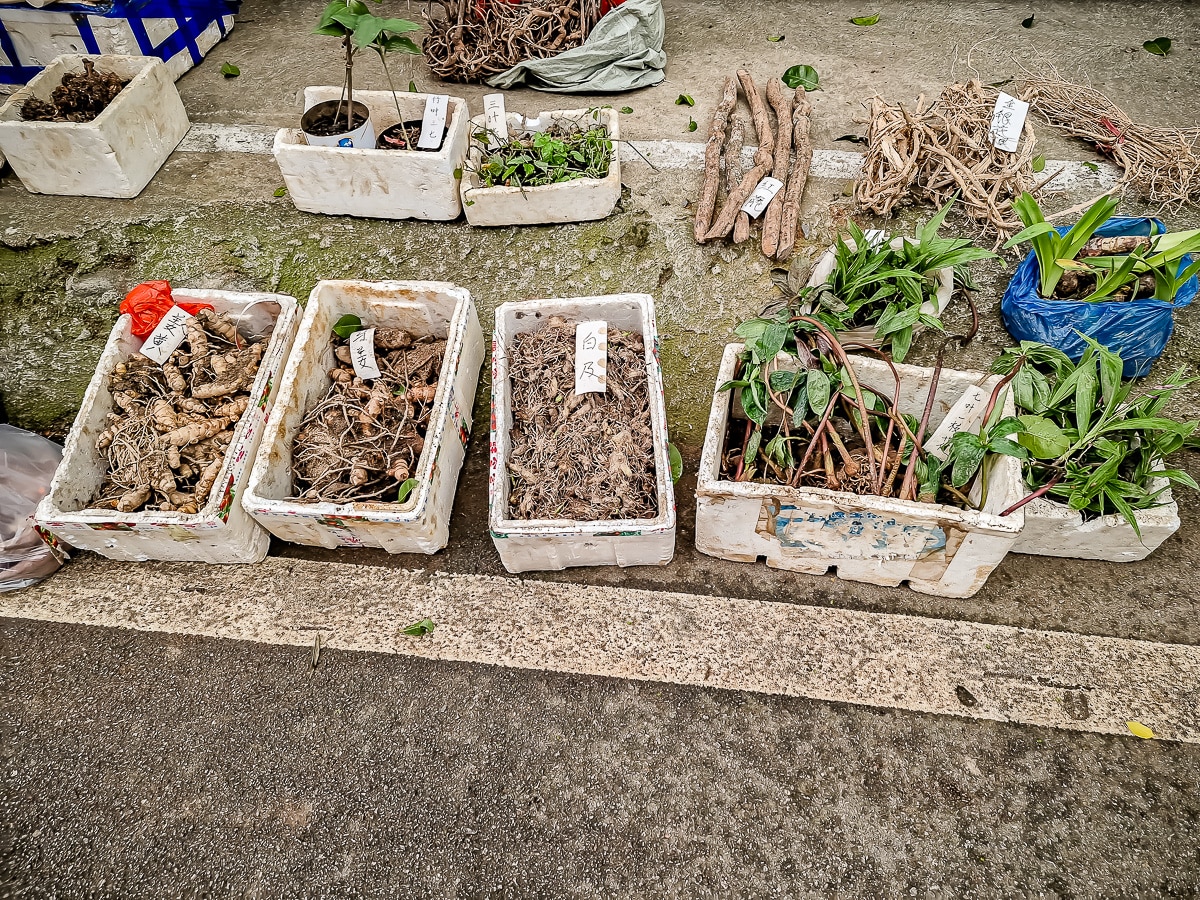
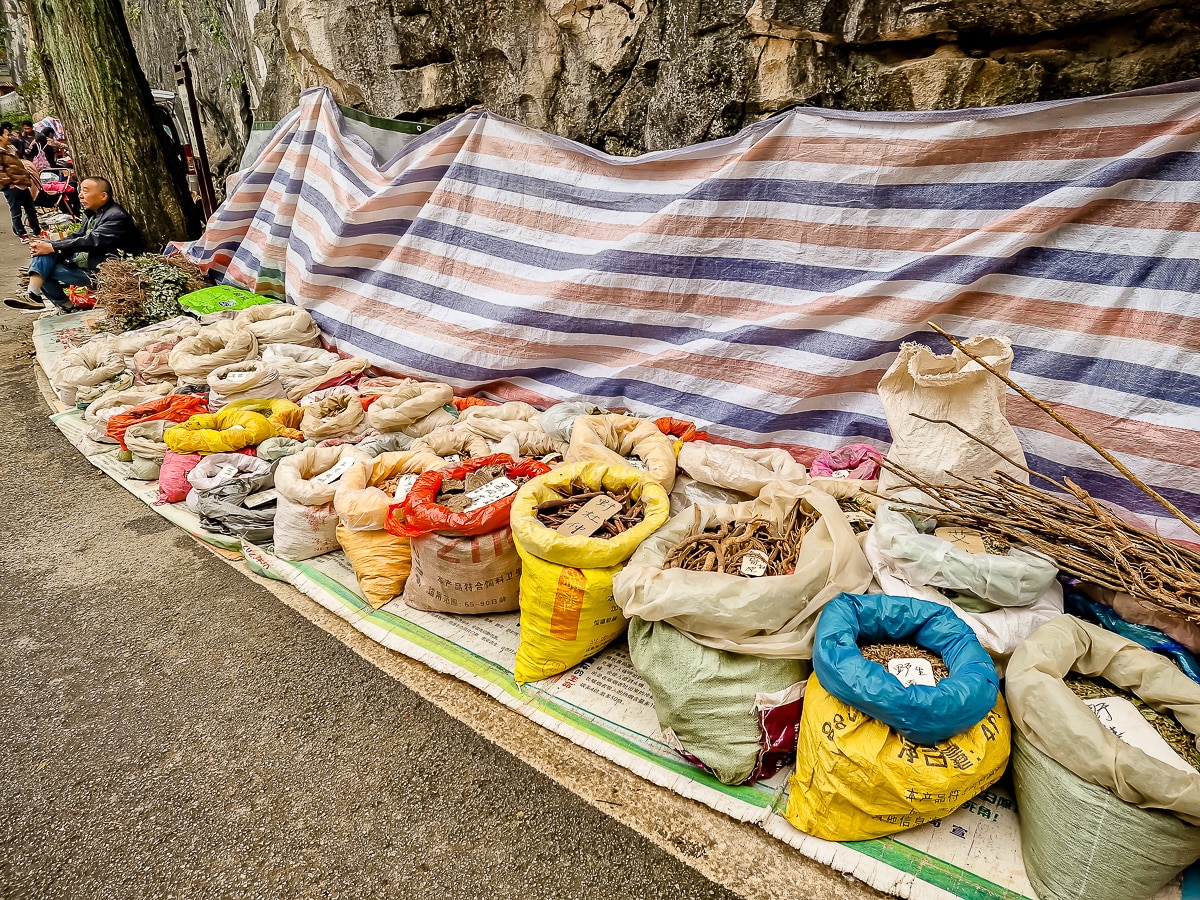
It’s a market where you can find all kinds of roots, herbs and plants – the sort that will undoubtedly cure whatever ails you 🙂
My guide tells me about some of them. Even he can’t keep up with the huge variety of natural remedies!
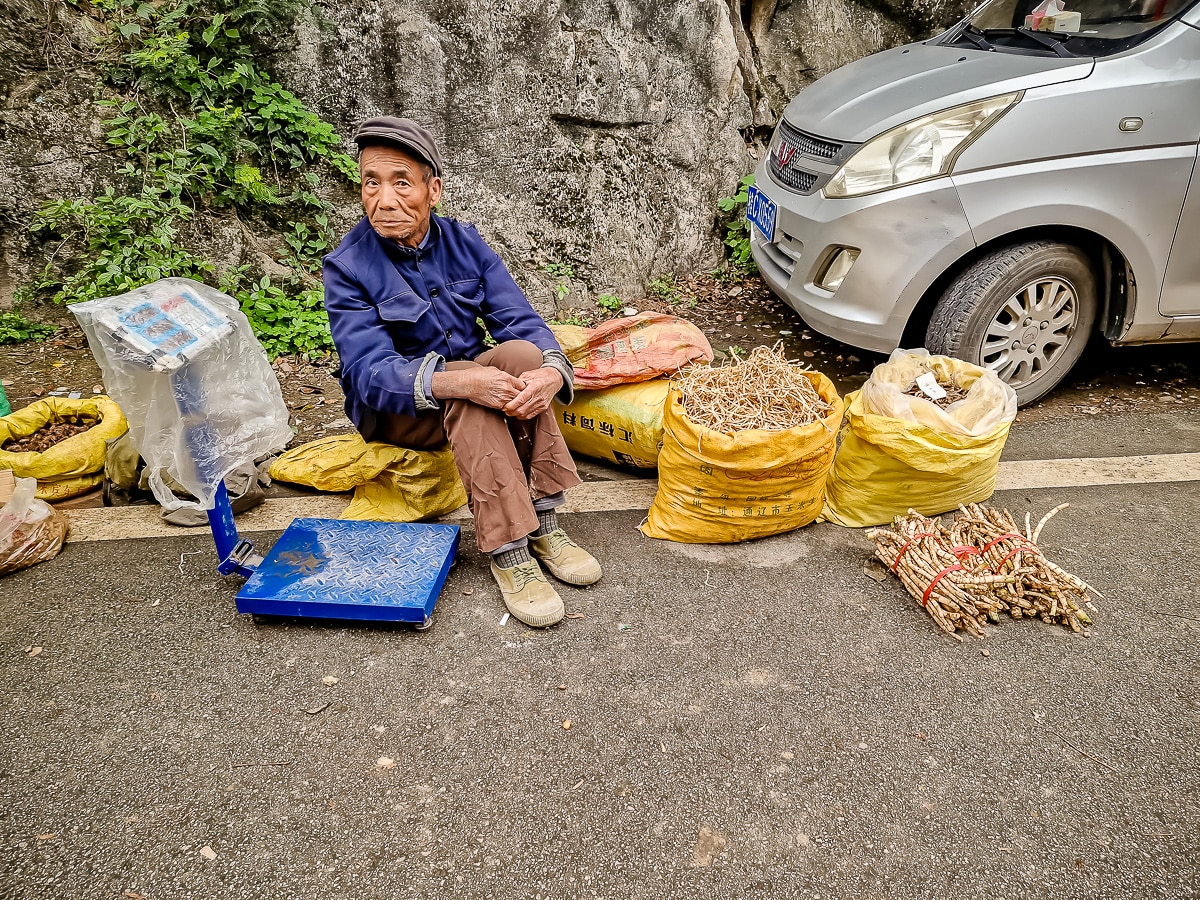
I’m struck by the simplicity of the people selling them. I can just picture them working to produce everything they bring here first thing in the morning, trying to earn a little money for the other needs in their lives. Just looking at them makes me want to buy something! But how on earth am I supposed to drag branches and leaves all over China and, more importantly, what the hell would I do with them?!… At least I understand the Vitamin C I brought with me 🙂
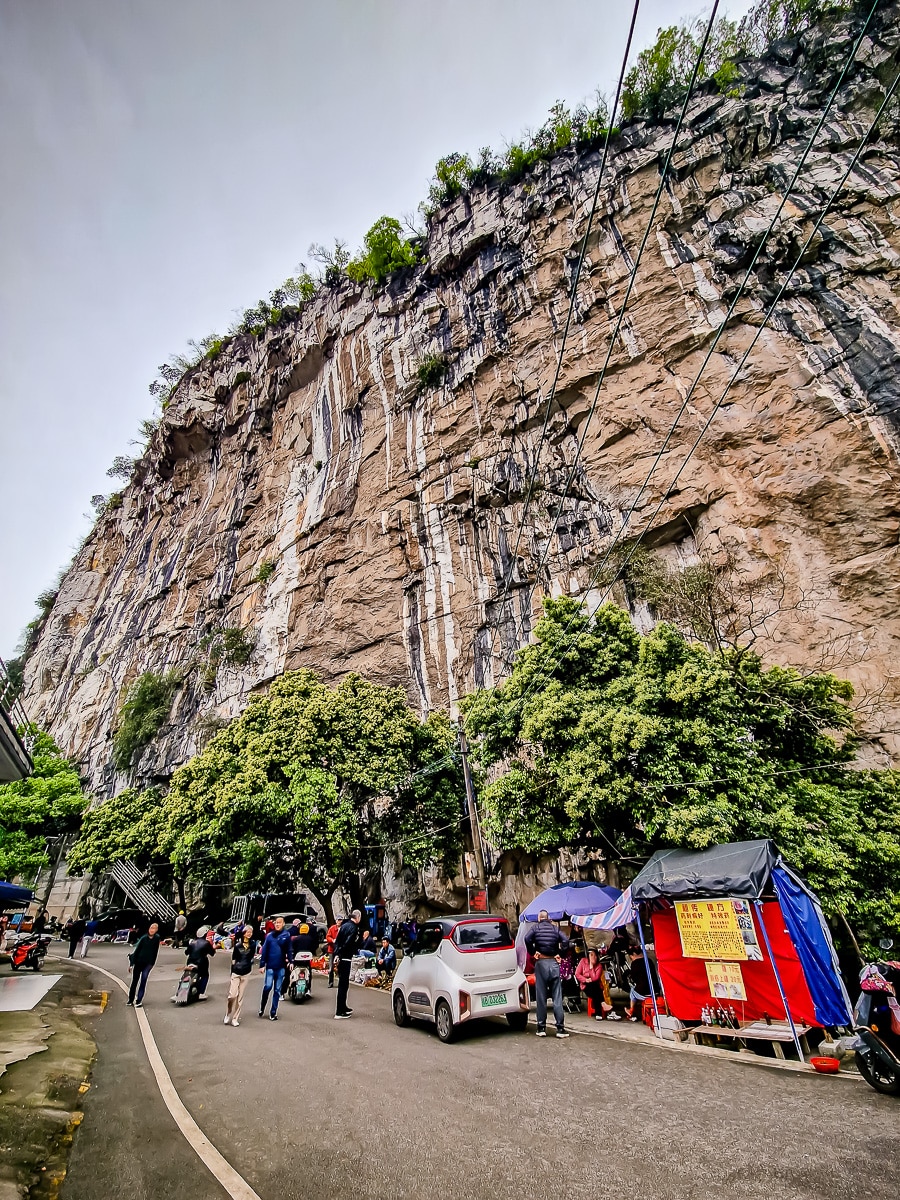
Among the plants and roots, one man is giving another a proper beating – otherwise known as a massage session. And inside a tent, a woman even bring out the fire so one customer can leave with his back sorted out.
SUN AND MOON PAGODAS
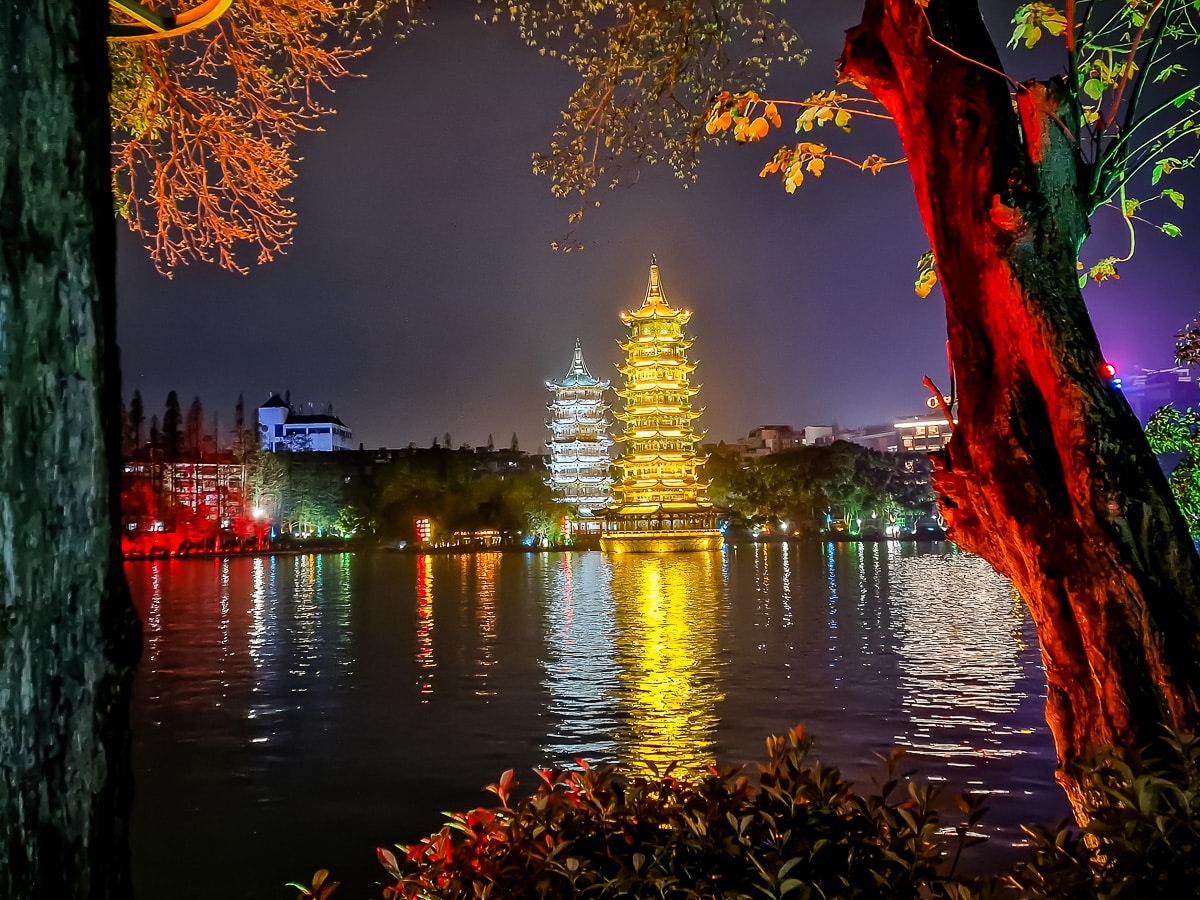
I first saw them at night from my hotel room window, and I could have sworn the “gold” one was bigger than the “silver” one. Ah, perspective.
They’re actually identical, which is why they’re also called the Twin Pagodas.
They are the Sun and the Moon, standing on Shanhu Lake, right in the heart of Guilin.
As far as I’m concerned, they’re worth seeing at night during a walk along the lakeside, but I wouldn’t necessarily say you need to go inside.
Their reflections in the water make for postcard-perfect pictures!
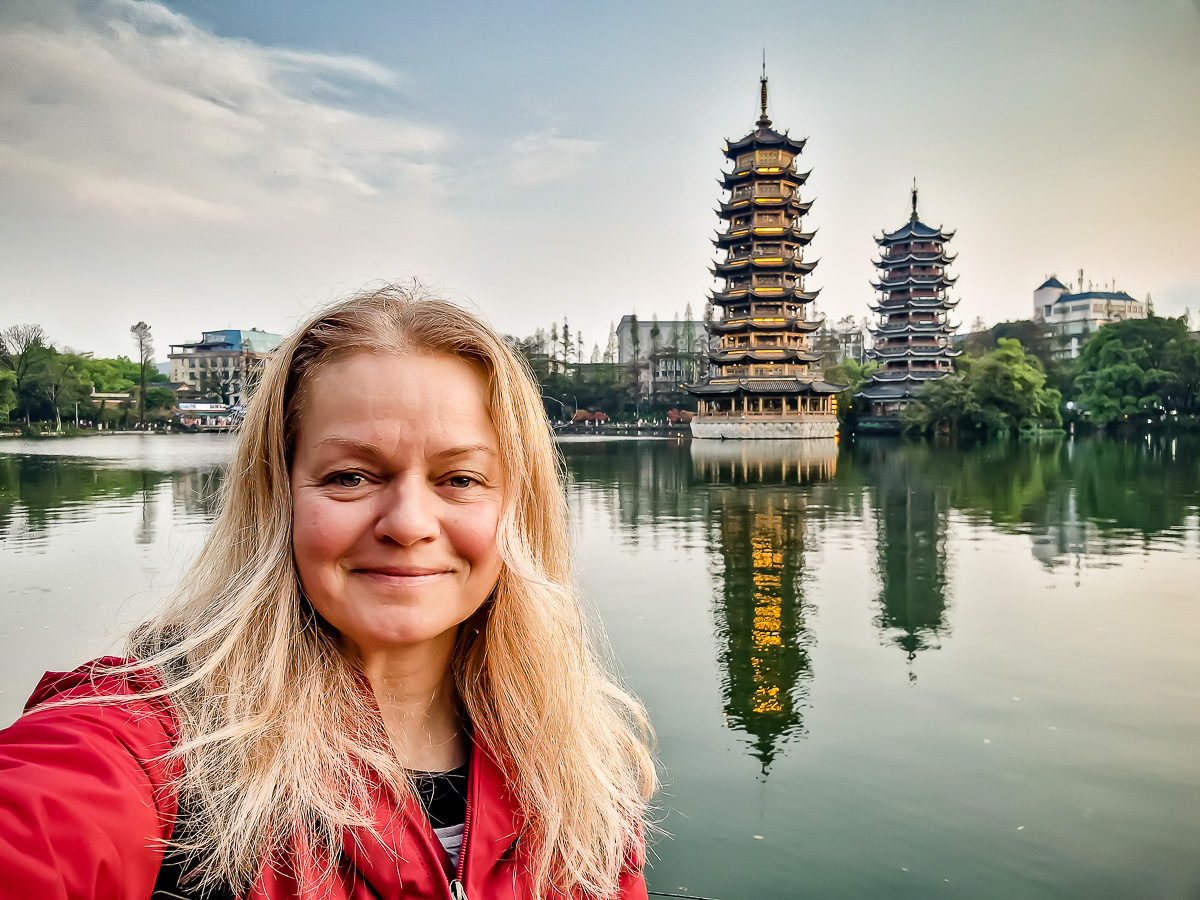
Since every trip out of my hotel and back to my room takes me past the lake, I manage to photograph them both during the day and at night.
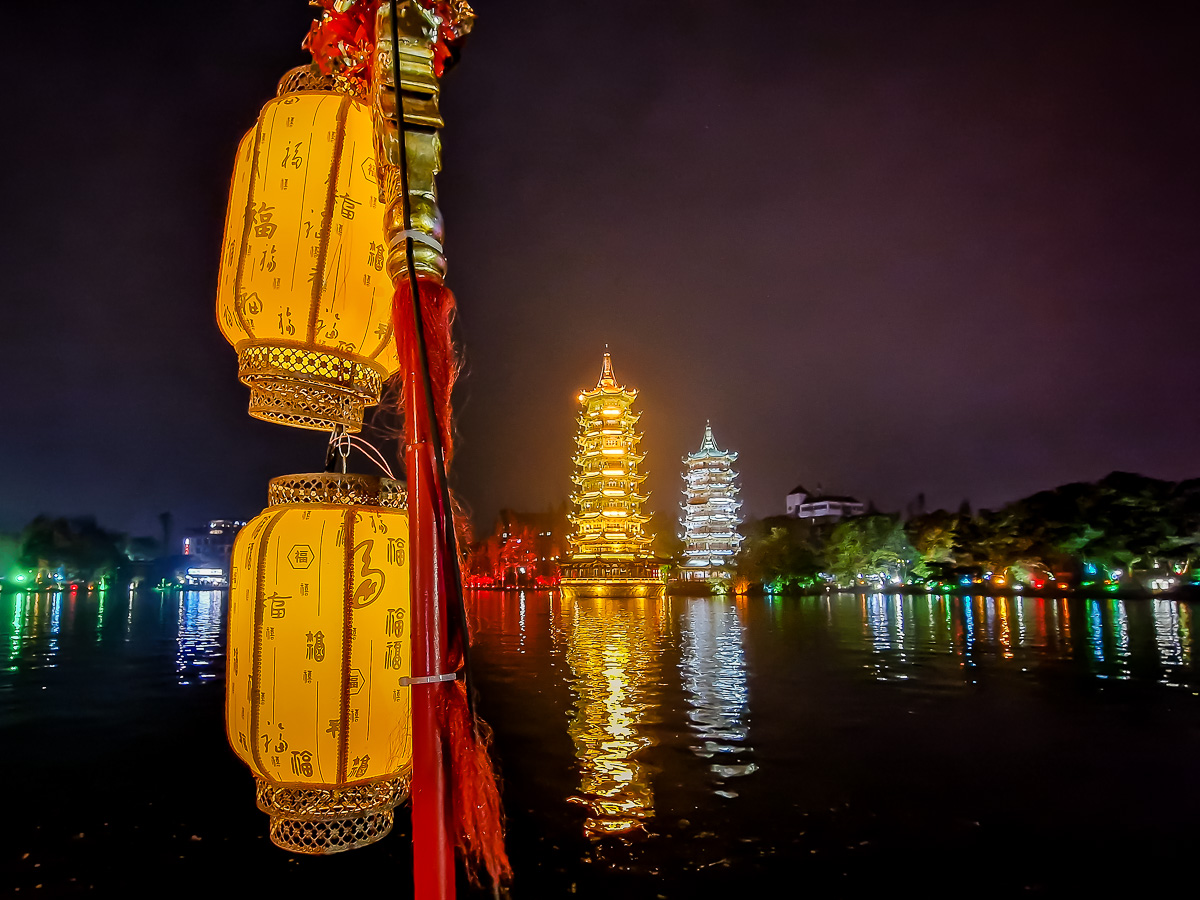
During the day, there’s no huge photo frenzy. At night, however, the area gets crowded and every Chinese person (because I’m surrounded by pretty much nothing but Chinese people…) tries to elbow their way into position for a picture they can show off on social media.
ELEPHANT TRUNK HILL
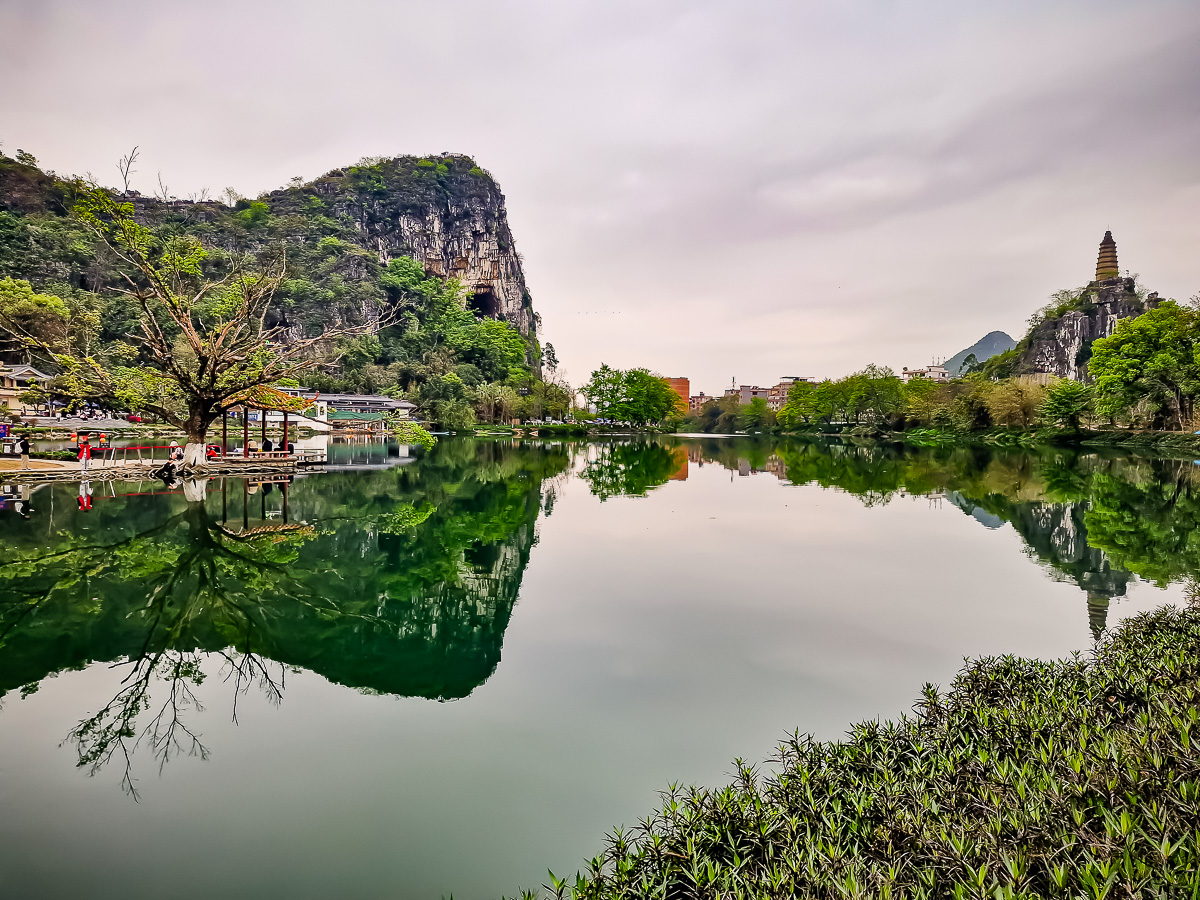
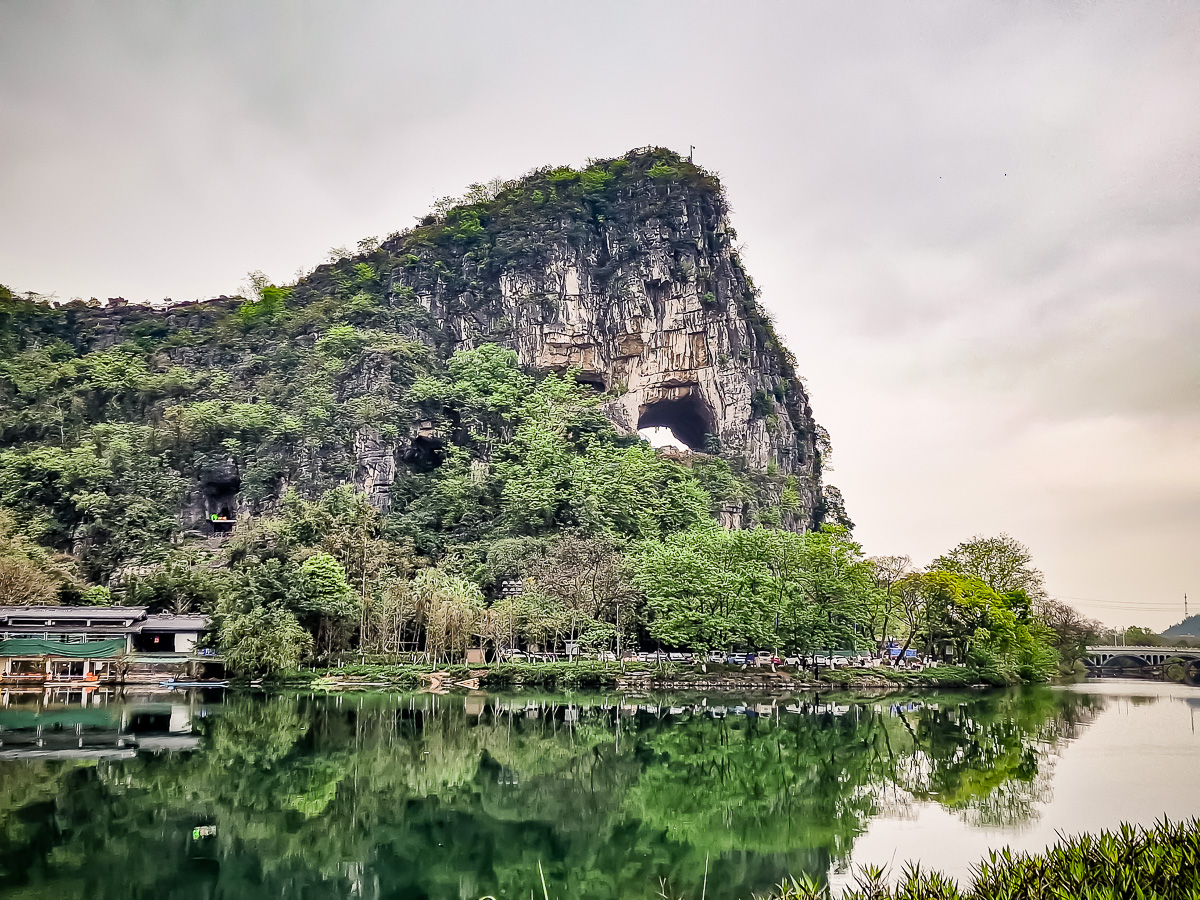
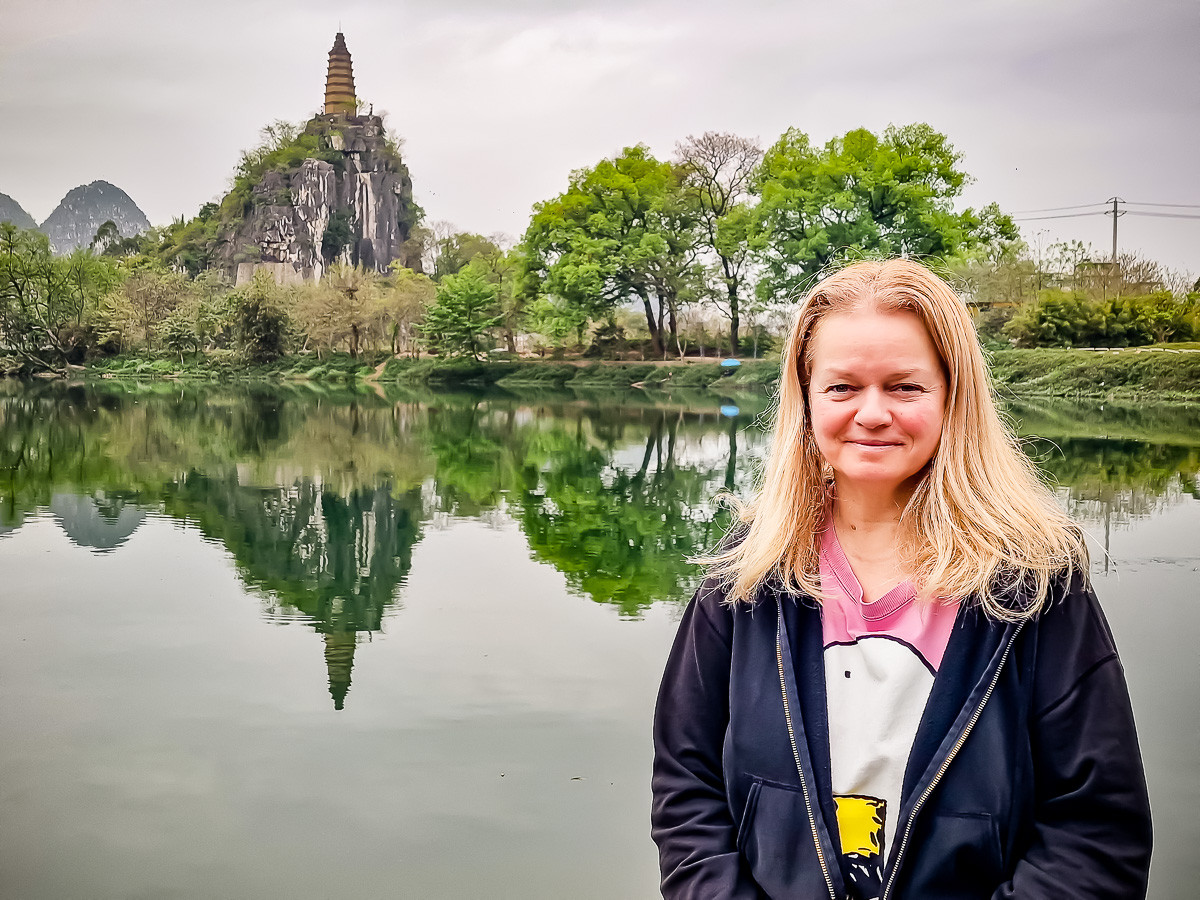
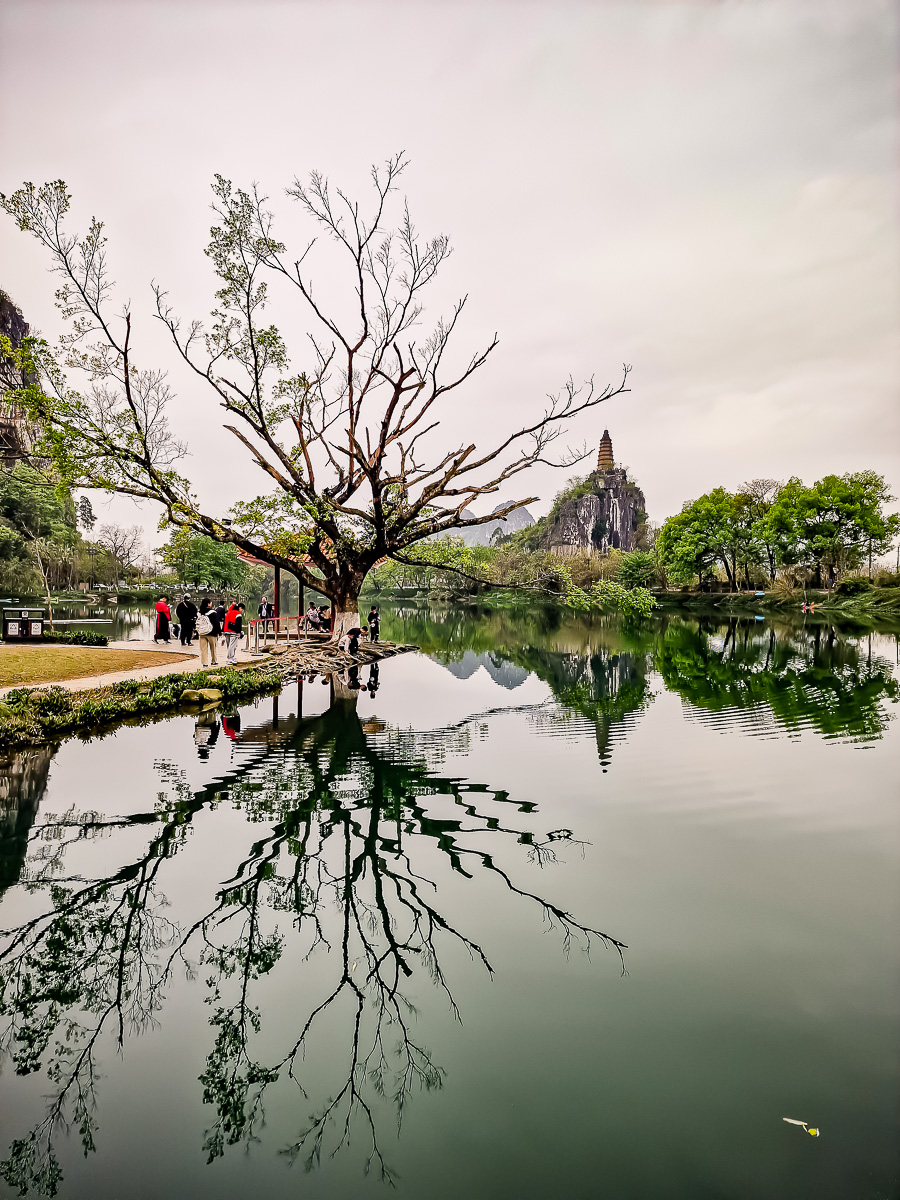
I saw two elephants in Guilin, believe me! 🙂 It’s just that the rock above is on Mulong Lake and has absolutely nothing to do with the famous elephant…
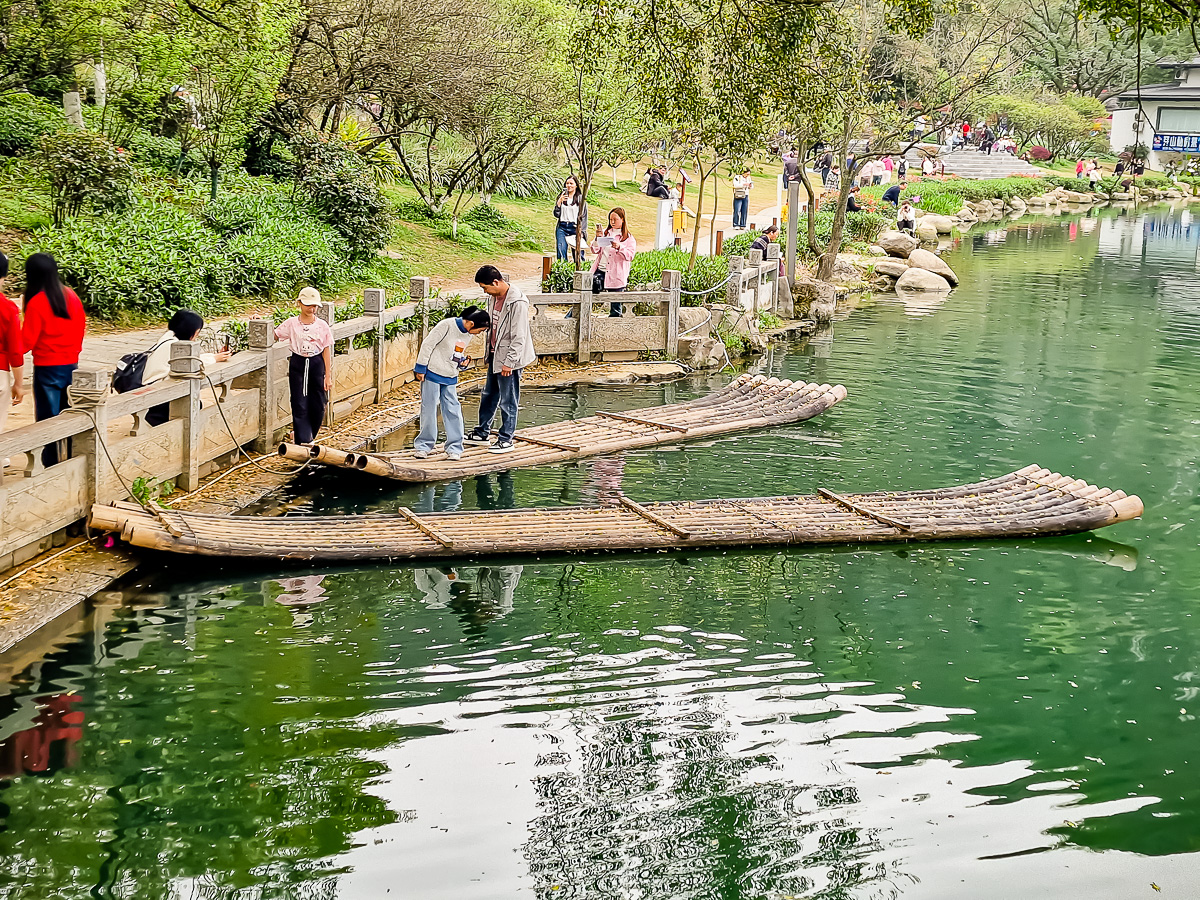
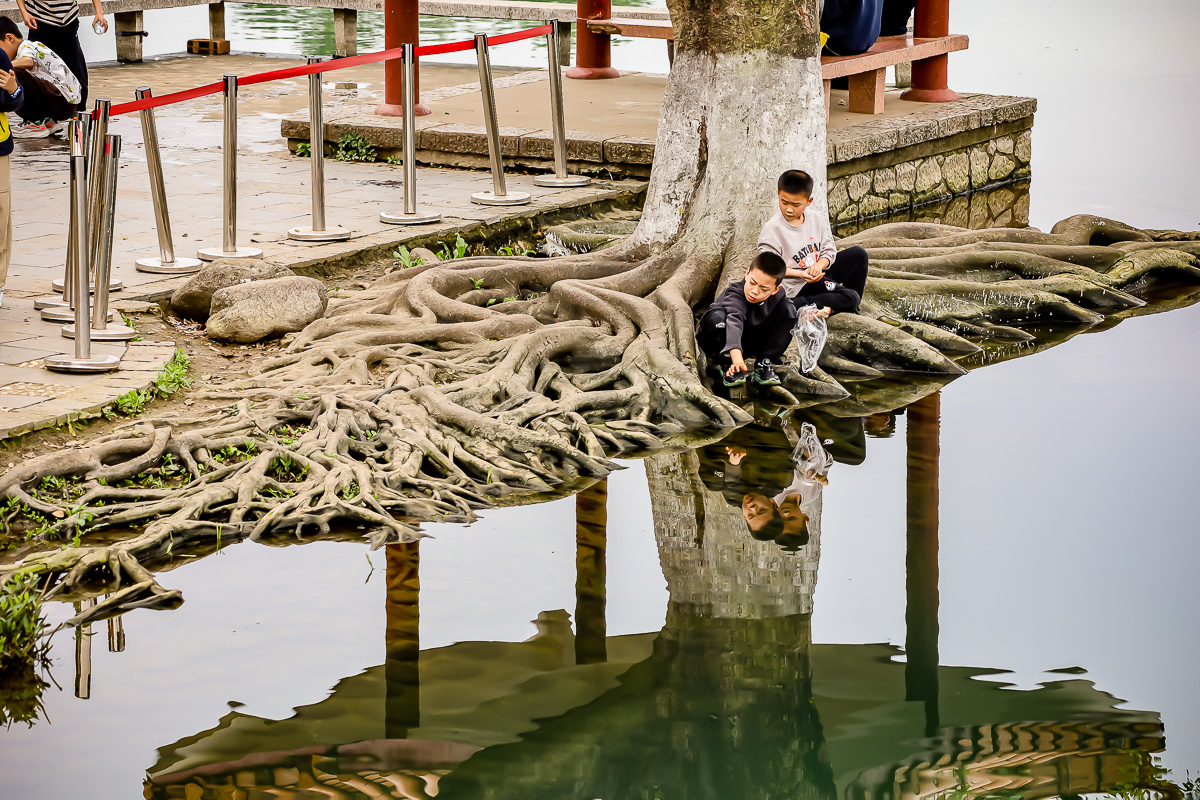
This place is more like a park, with groups of Chinese people having picnics, others keen on taking a bamboo raft ride, and kids who can turn absolutely anything into a game.
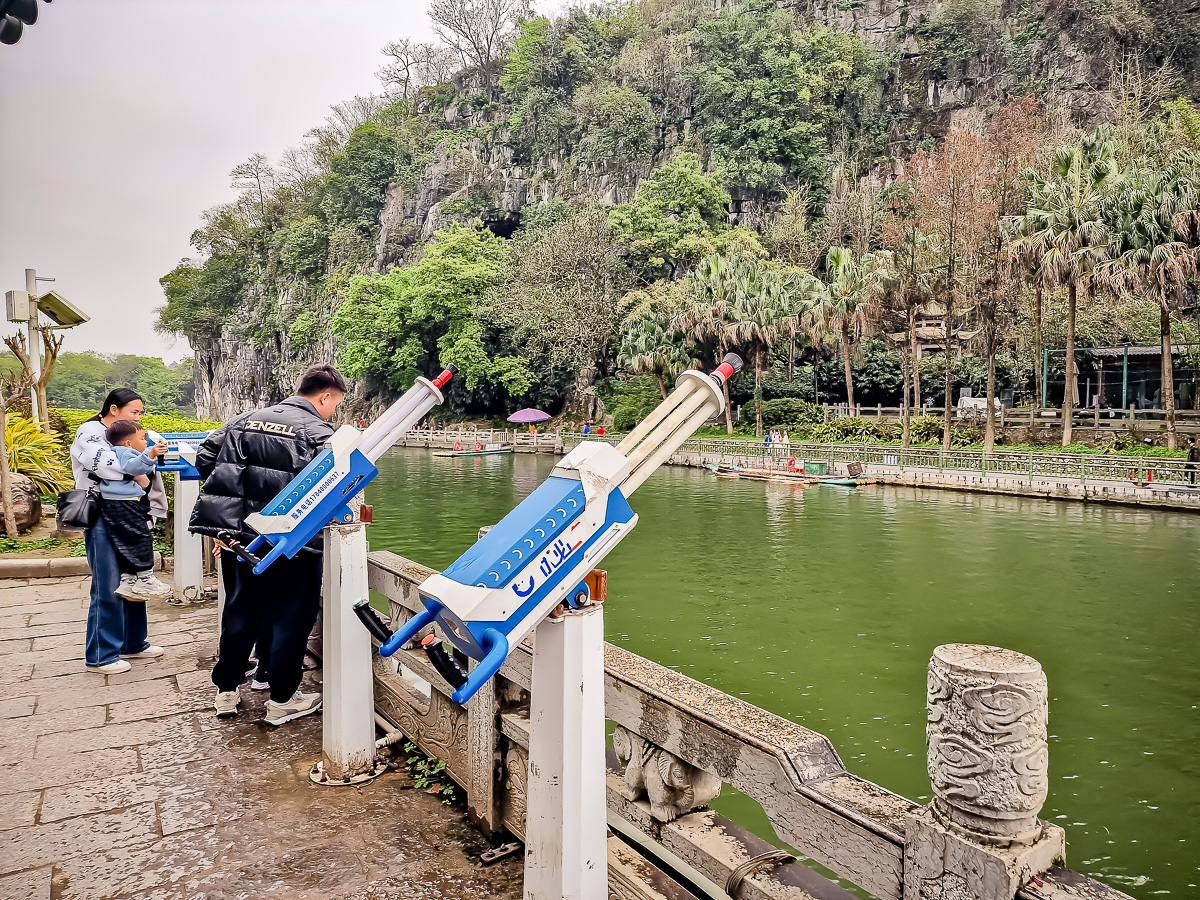
A little further on, I even find a special toy for them. Telescopes? Noooo. They’re guns you can use to shoot at the mountain opposite until you’ve got all your frustrations out of your system. Or until you’re ready to enlist in the army…
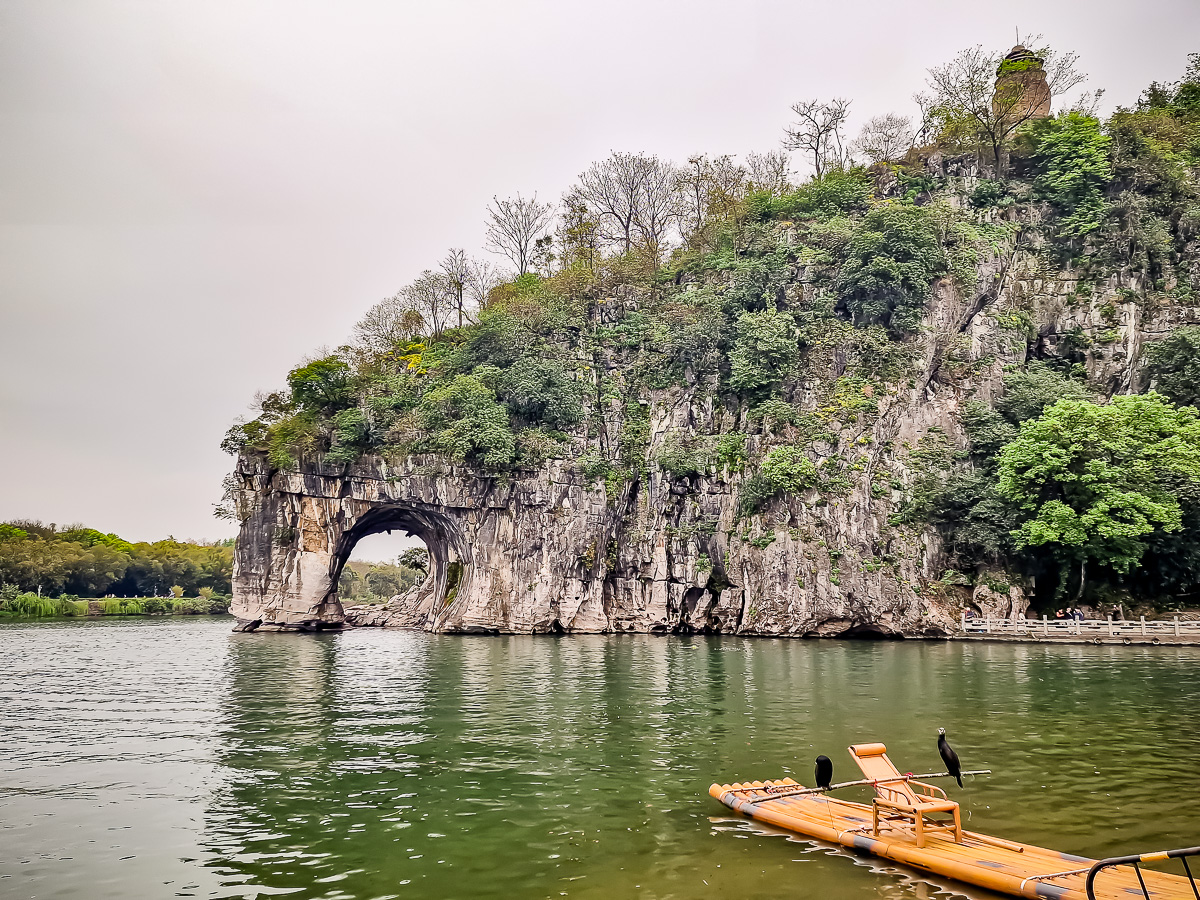
And finally, I reach Elephant Trunk Hill, its trunk dipping into the water. It’s the official symbol of the city and appears on lots of promotional materials.
By the time this photo was taken, I’d recovered, but not long before that I’d practically died climbing the rather steep path up to Puxian Pagoda at the top.
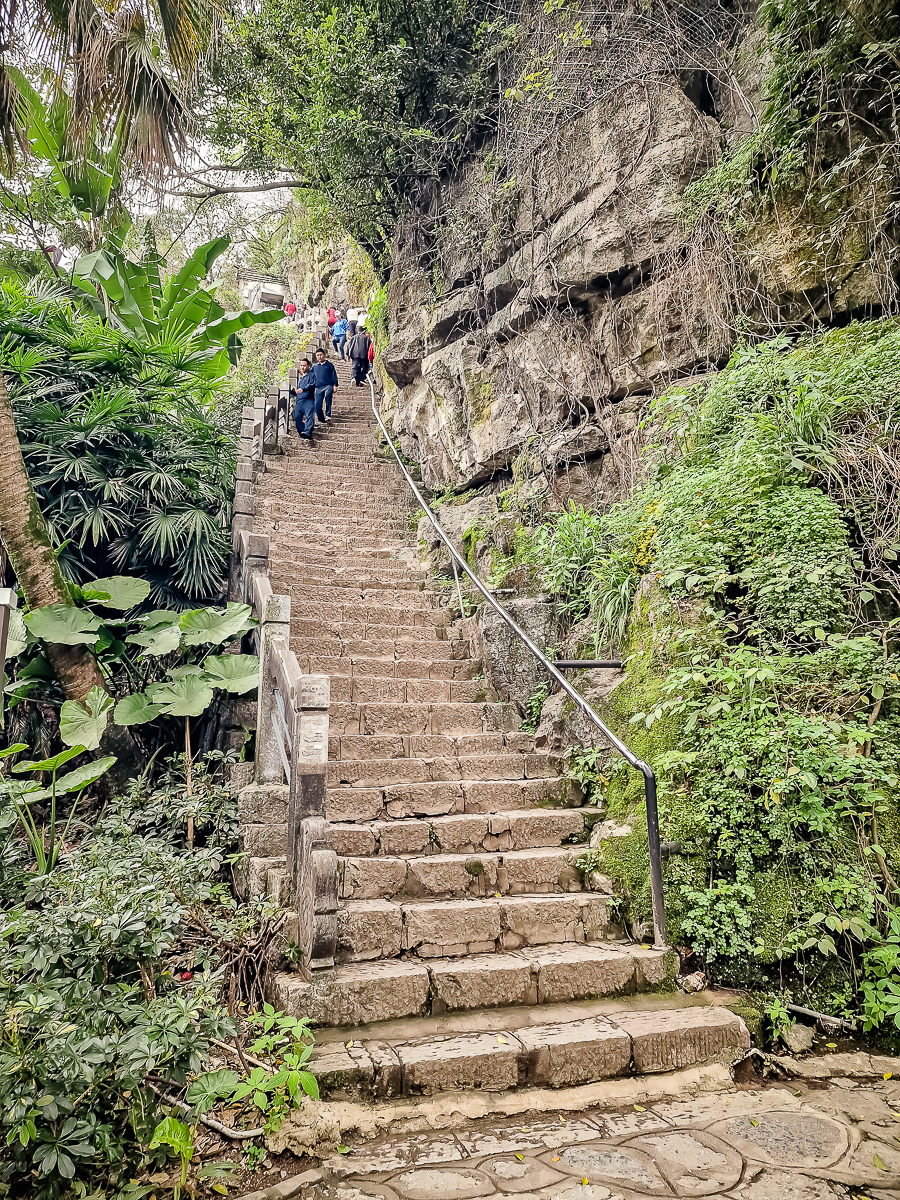
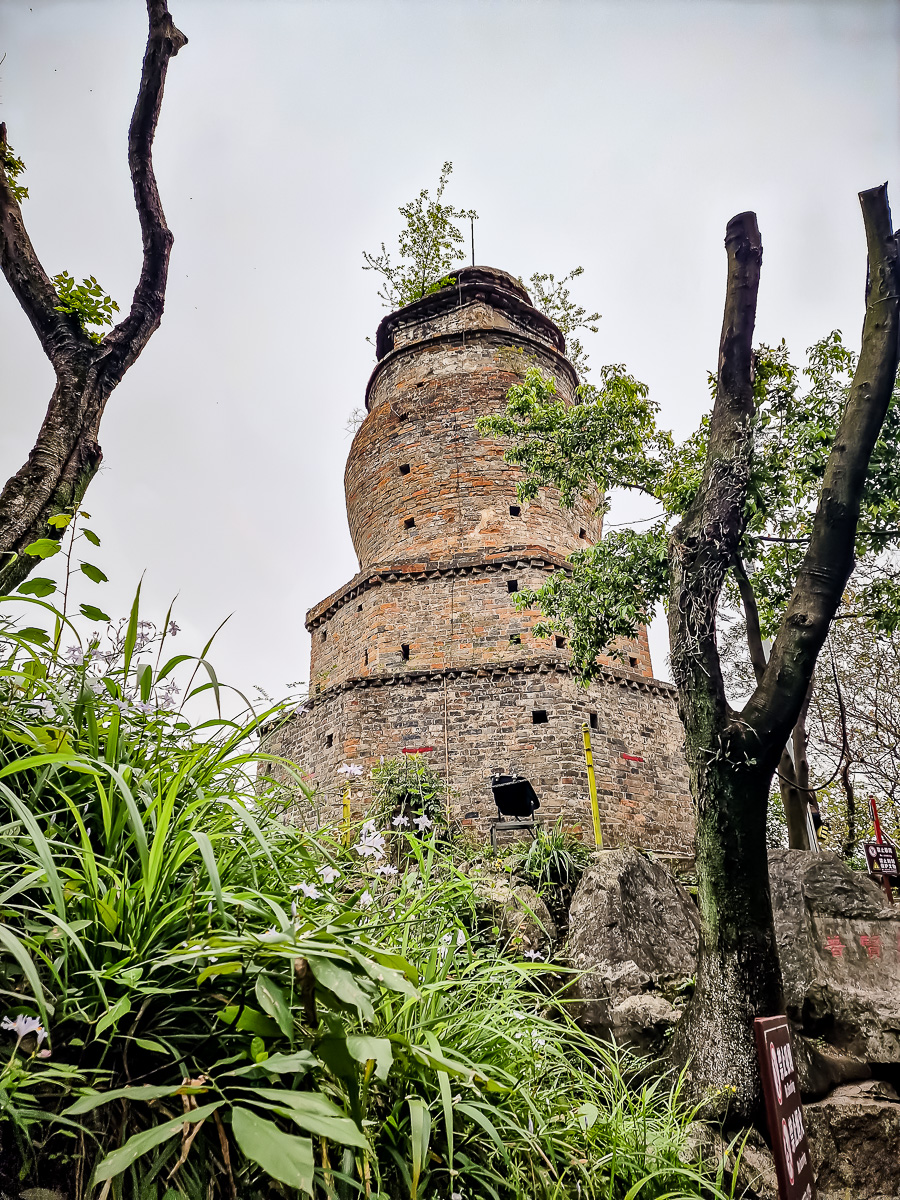
The cool thing is that once the stairs have nearly killed you, you’re “the king of the world”!

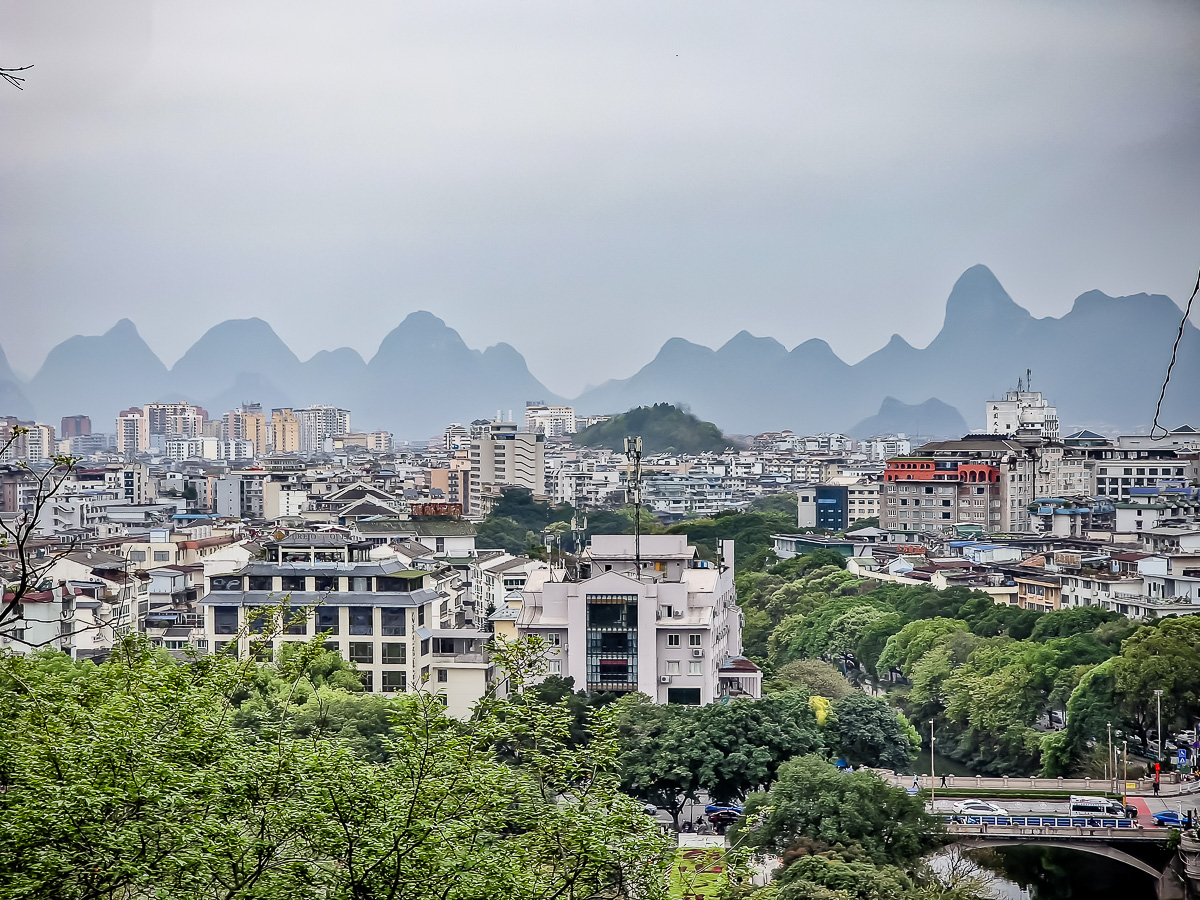
Well, king or no king, if you happen to get hazy weather, you can be King of Whatever You Like and you still won’t see all those spectacular rows of rocks that look as though they sprouted like mushrooms after the rain.
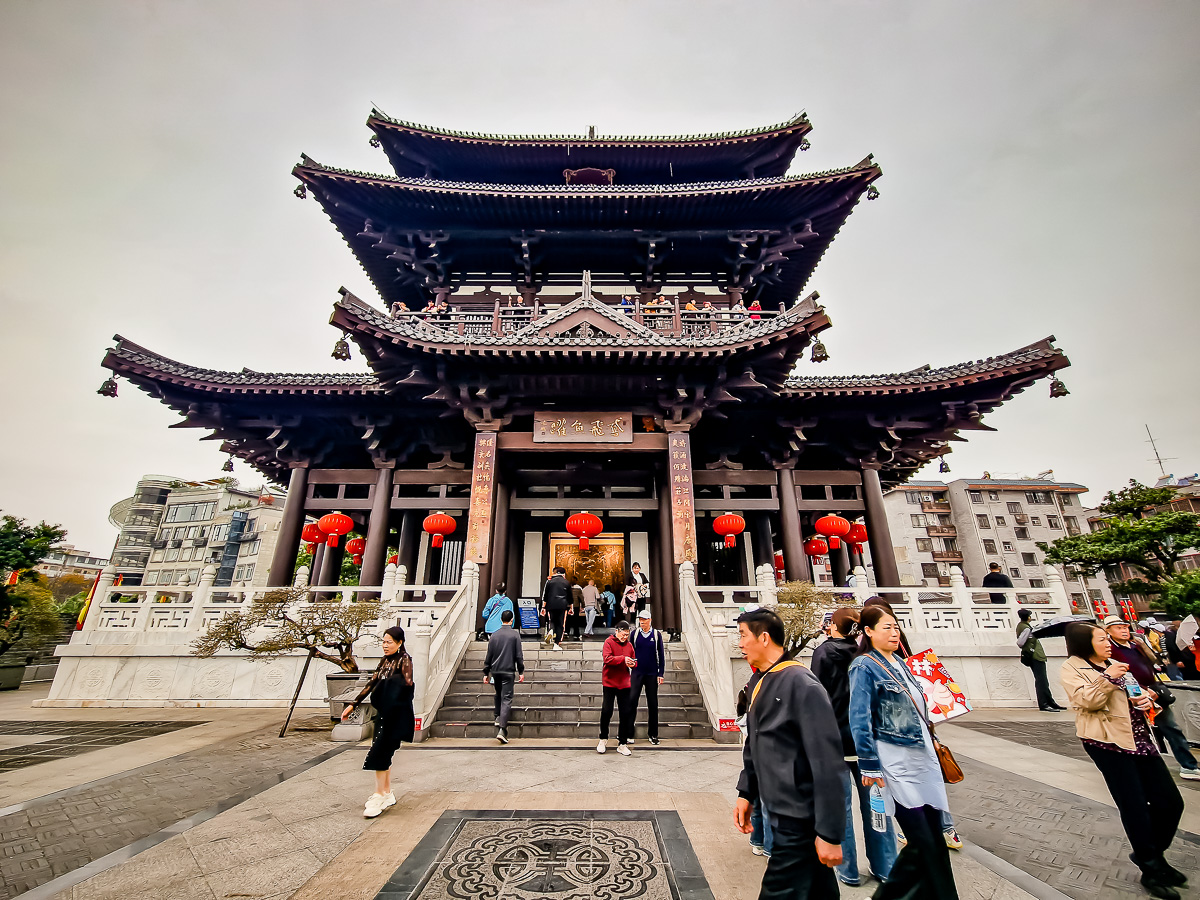
Speaking of rain, you can blame that too when you can’t see the stone “pointy peaks”.
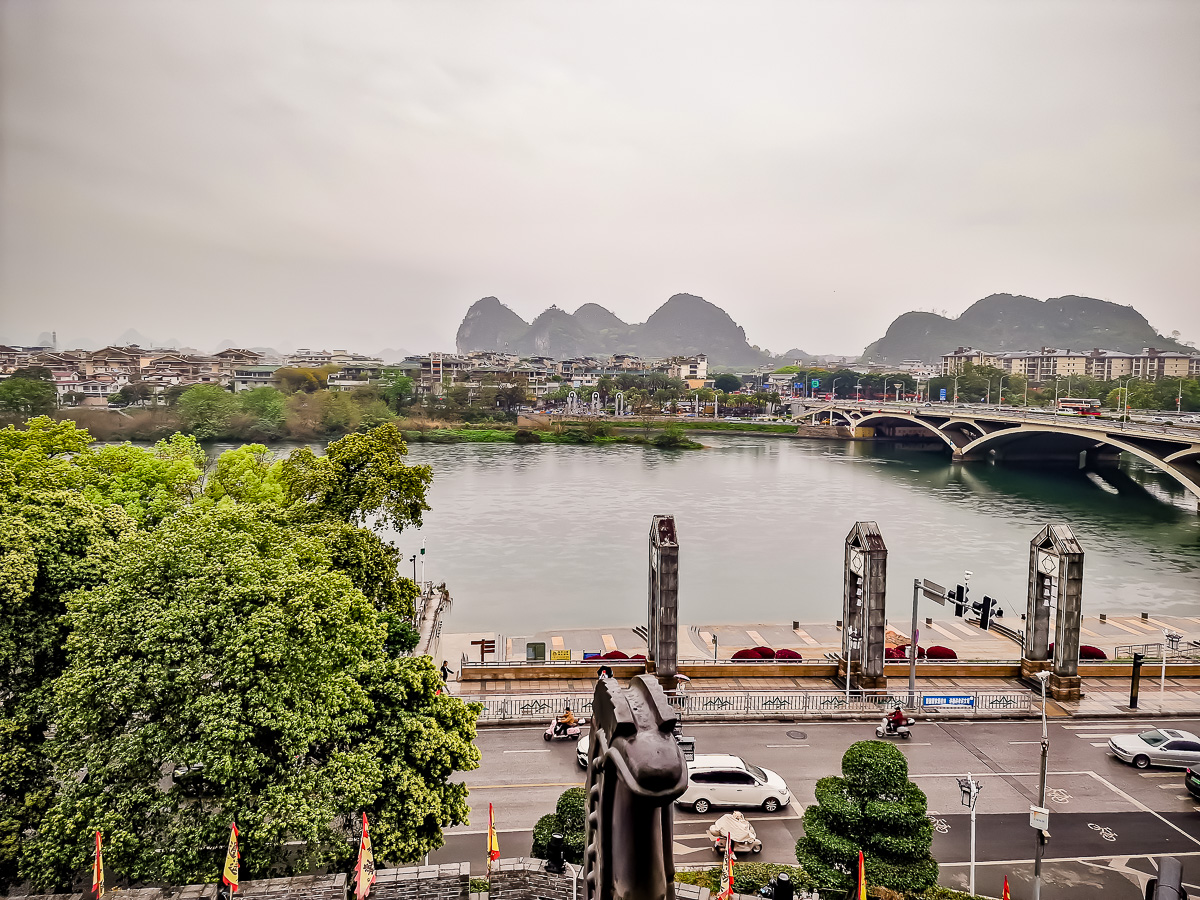
I’m in Xiaoyao Tower, in the city centre. Apparently, on a clear day, the view from its terrace is spectacular!
“But WHEN is the weather clear??” I ask my guide desperately while taking pictures.
“In summer. But then it’s horribly hot!”
REED FLUTE CAVE
To add a bit of colour to the day, we head to a famous cave – Reed Flute Cave.
(Entrance is around 12 euros. Mine is included in the tour.)

As I understand it, the name comes from the reeds that grow around the entrance to the cave and were once used to make flutes. Or so they say?
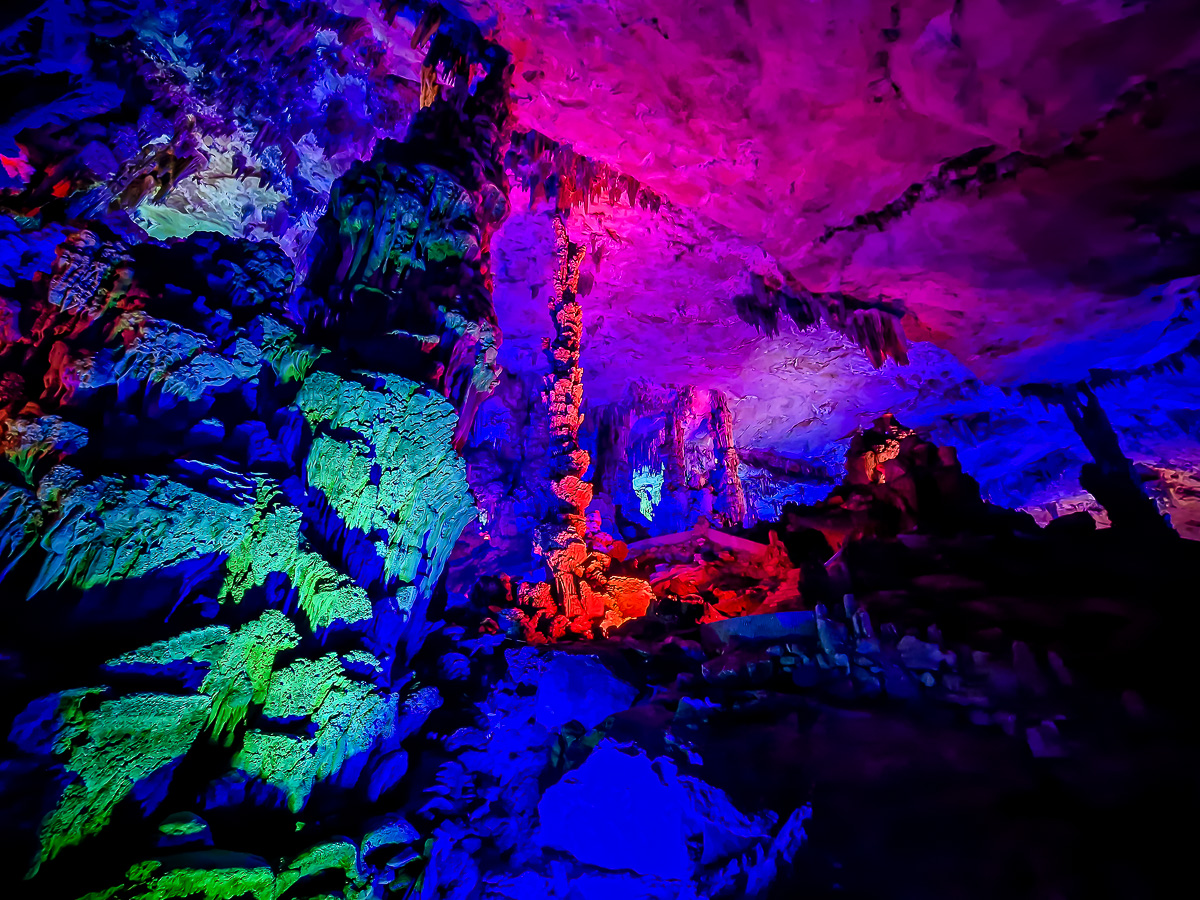
It’s very smartly “decorated”. The lighting highlights every stalactite and stalagmite. They’ve even named some of the formations after whatever they happen to resemble – something I came across in several places in China. And not only did they name them, they also gave nature a little helping hand with the lighting effects:

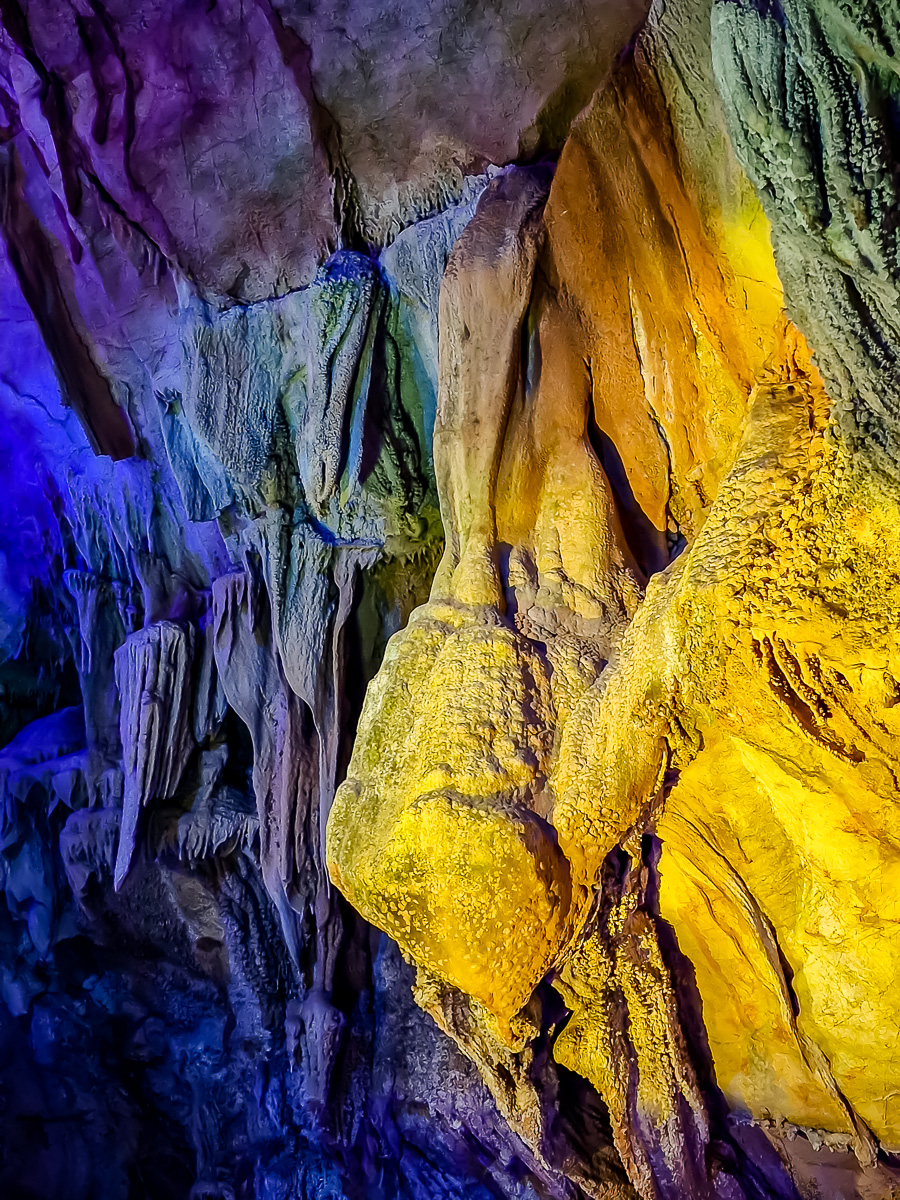
Here we have the snowman and the goldfish.
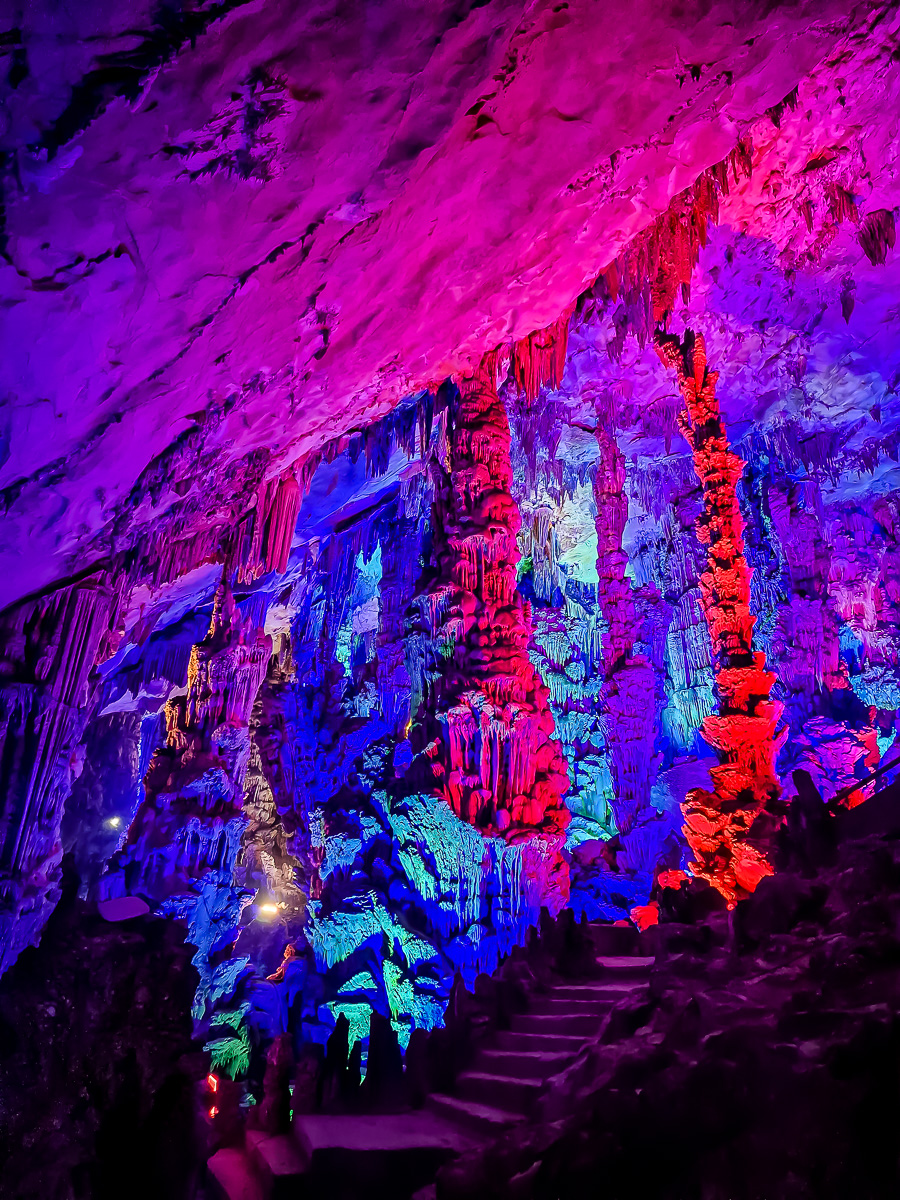
The route is relatively easy, with proper paths and steps to make access easier. And you can almost avoid poking your own eyes out…
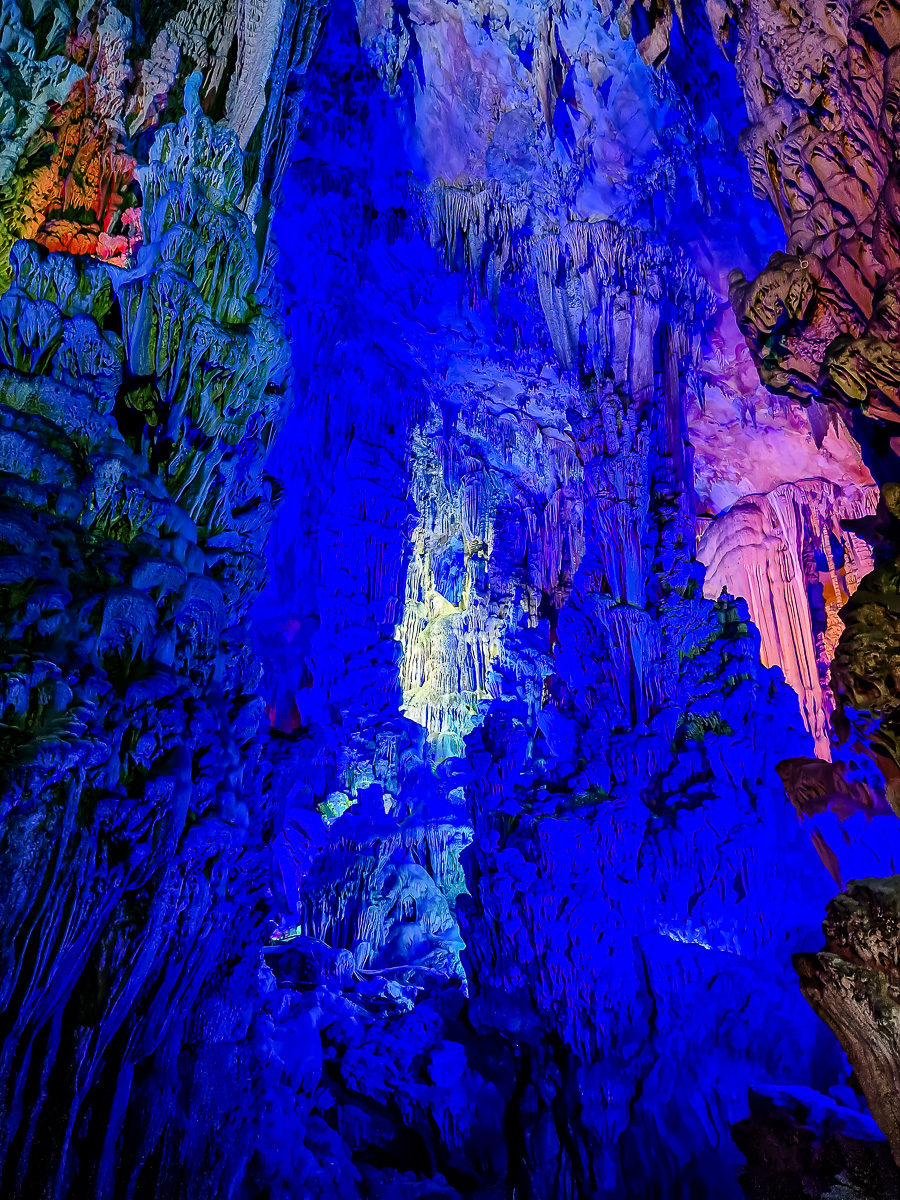
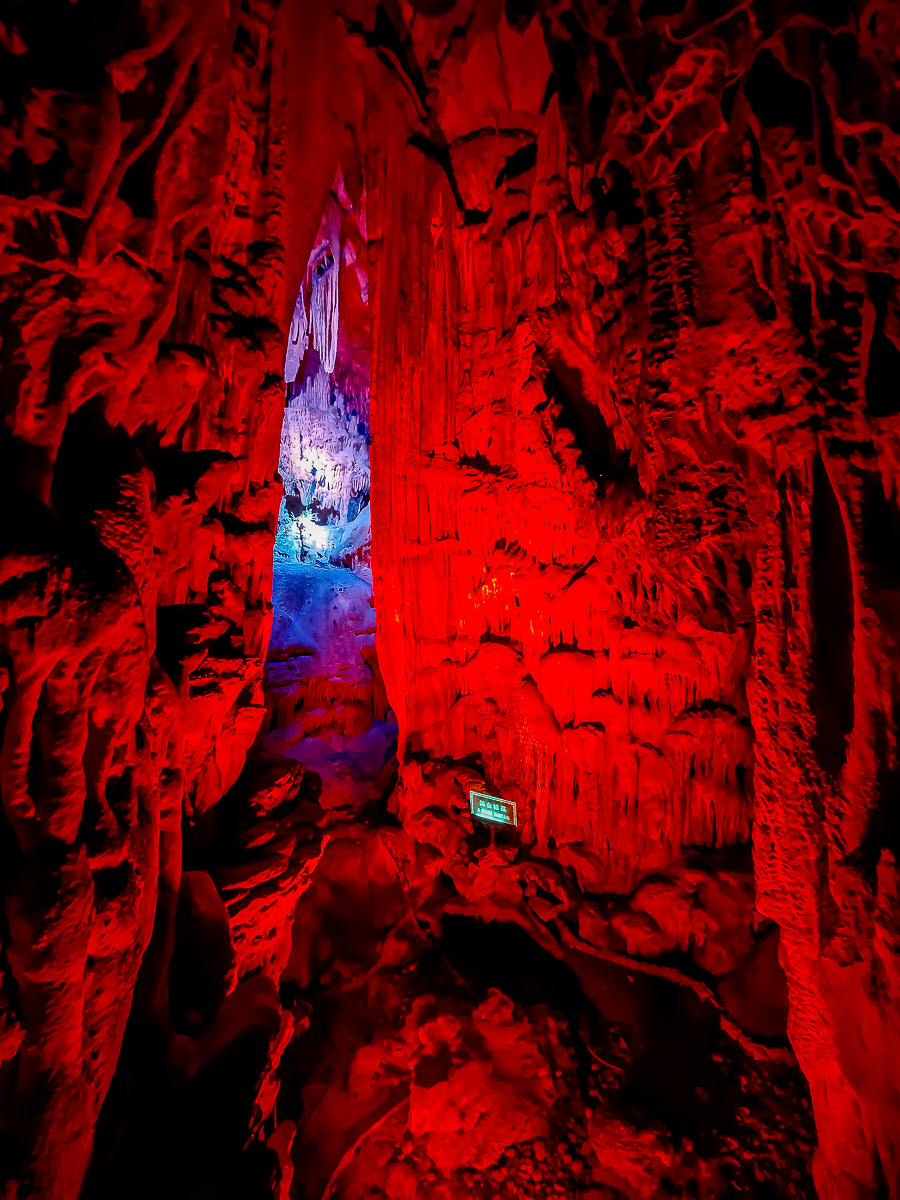
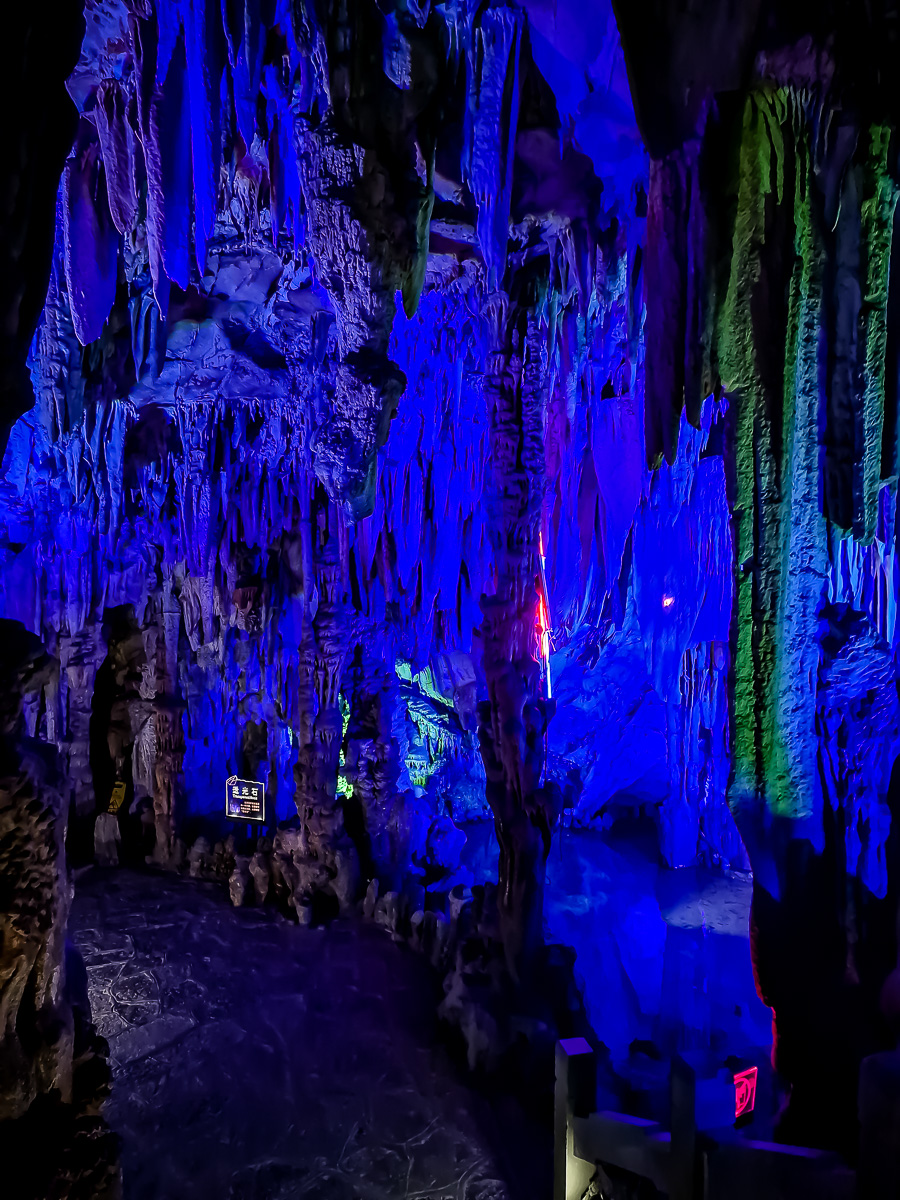
Reed Flute Cave is apparently around 180 million years old! And people have been visiting it for about 1,200 years – proven by inscriptions on its walls dating back to the Tang Dynasty.

There’s even a lake deep inside the cave! The atmosphere is really cool, slightly eerie, especially as I manage to reach the lake without any tourists around. The groups are behind me, so for a while it feels as though I have the entire cave to myself.

Selfies are tricky in this lighting, but I refuse to give up…
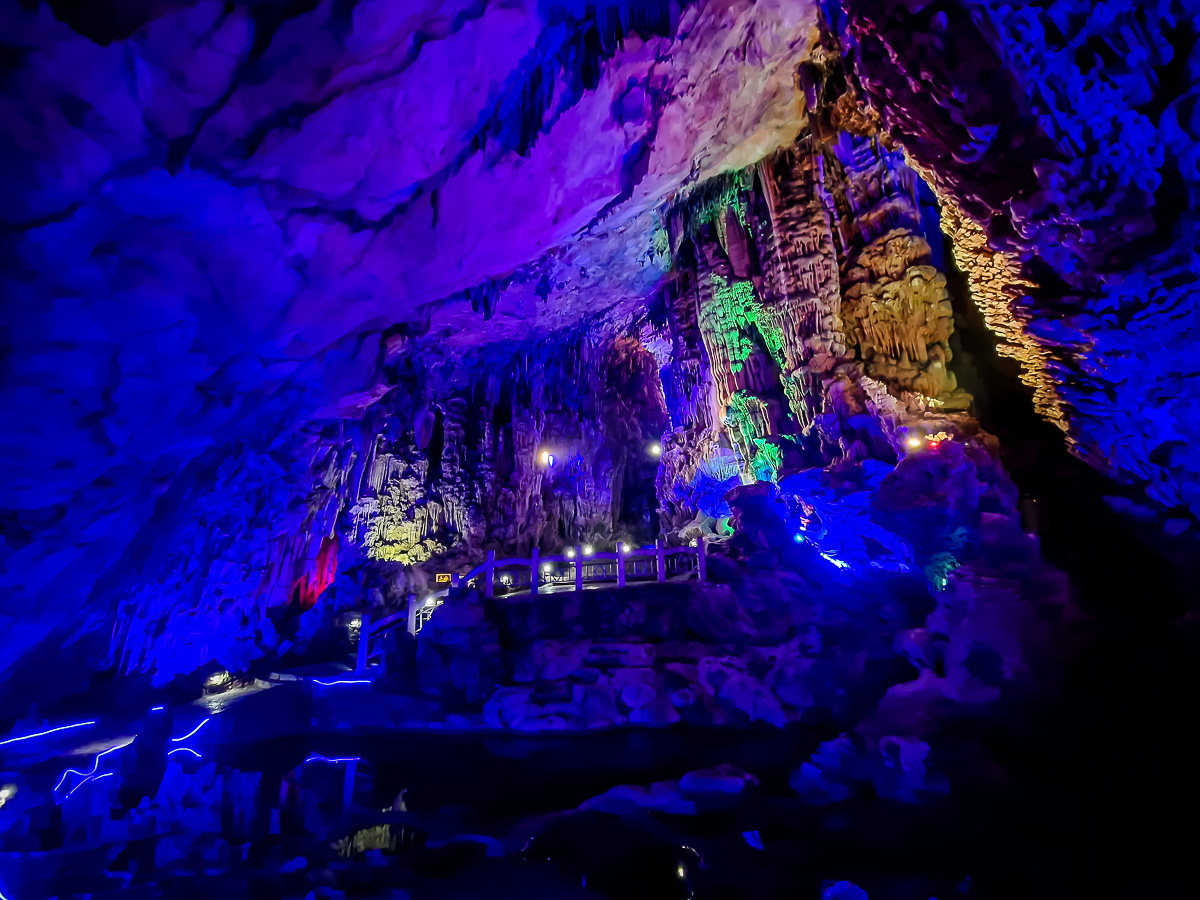
Then I continue along the marked route, which is one-way.
About an hour later, that’s it for the visit.
DAXU ANCIENT TOWN
A few kilometres from Guilin, we enter an old trading town on the banks of the Li River.
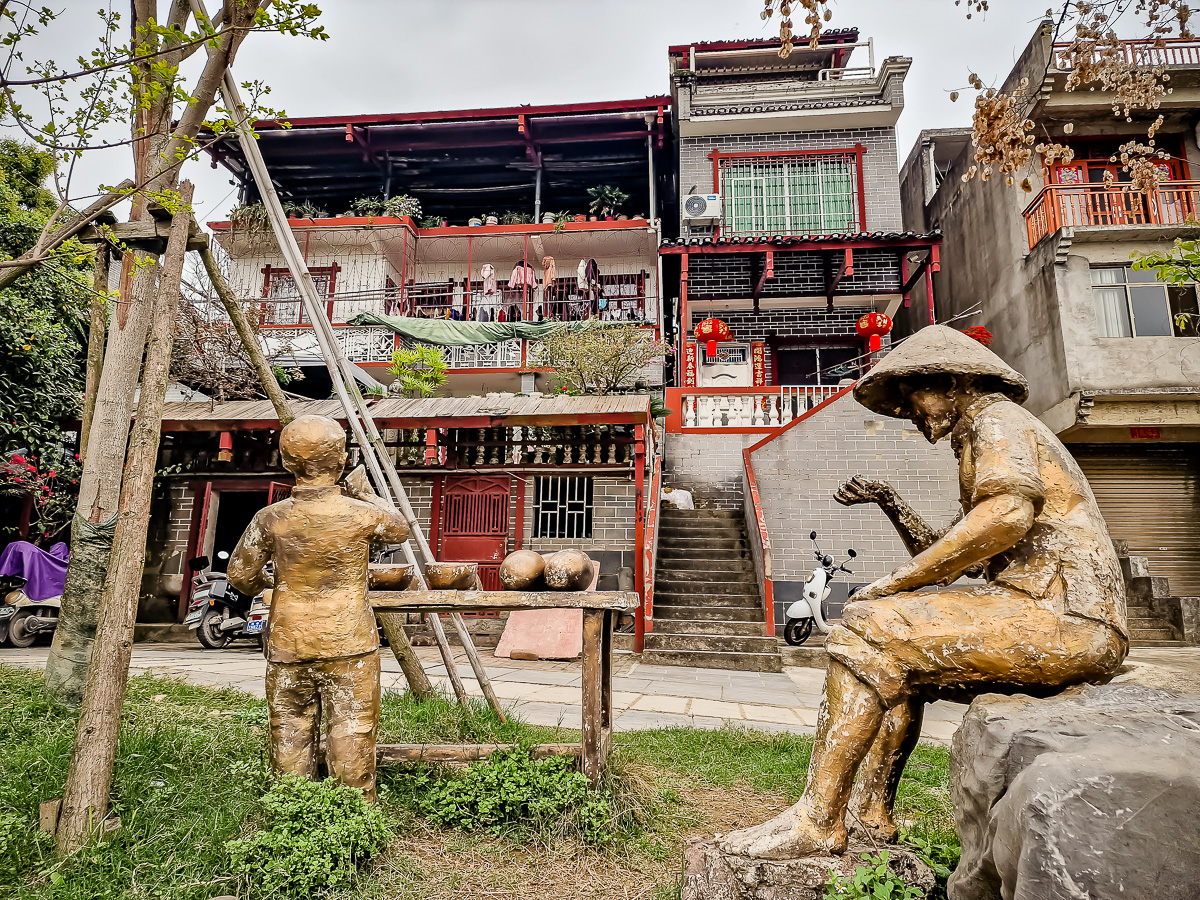
I feel as though I’ve travelled back in time – that’s what this place looks like!
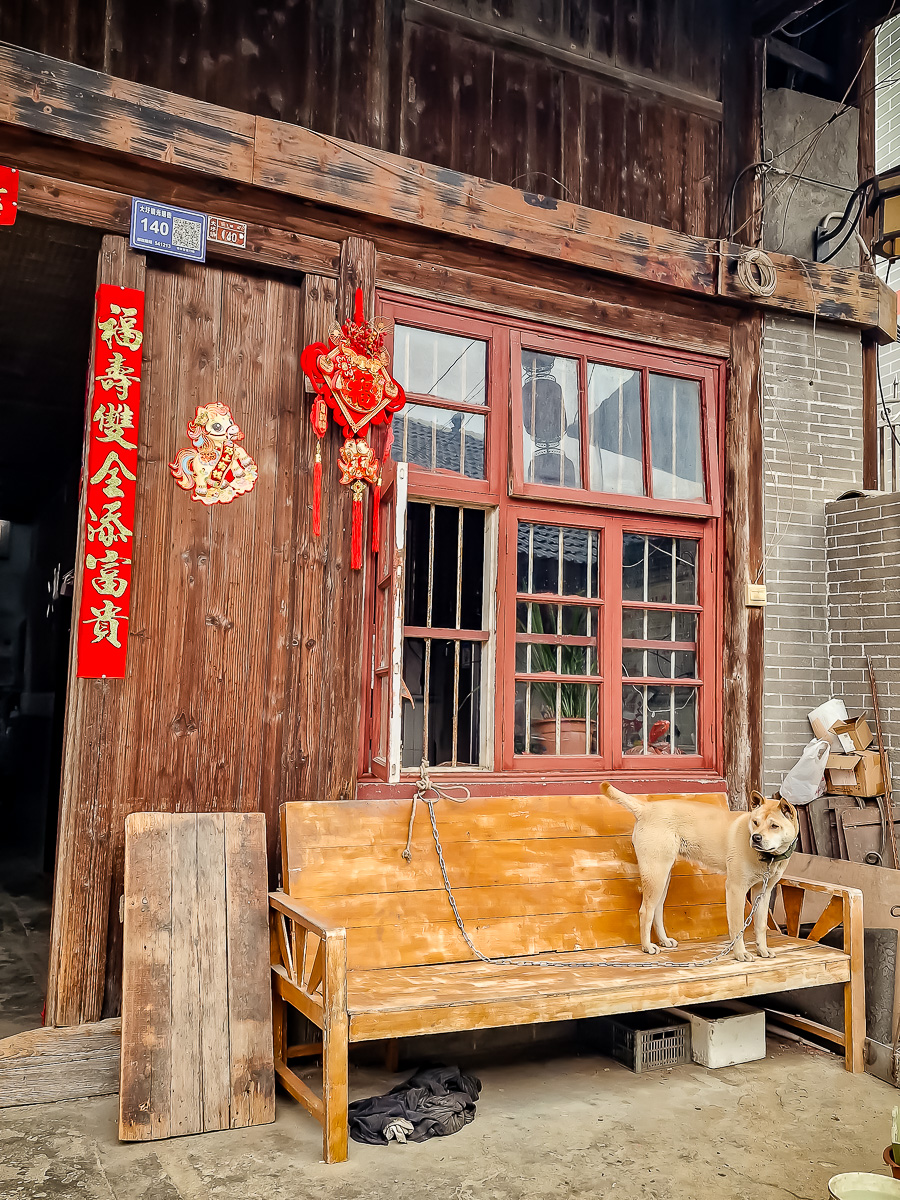
It feels like an old village forgotten by the world. There isn’t a soul in sight for several hundred metres. Just one bored dog tied to the bars of a window, utterly unimpressed by the fact that a European blonde is walking past.
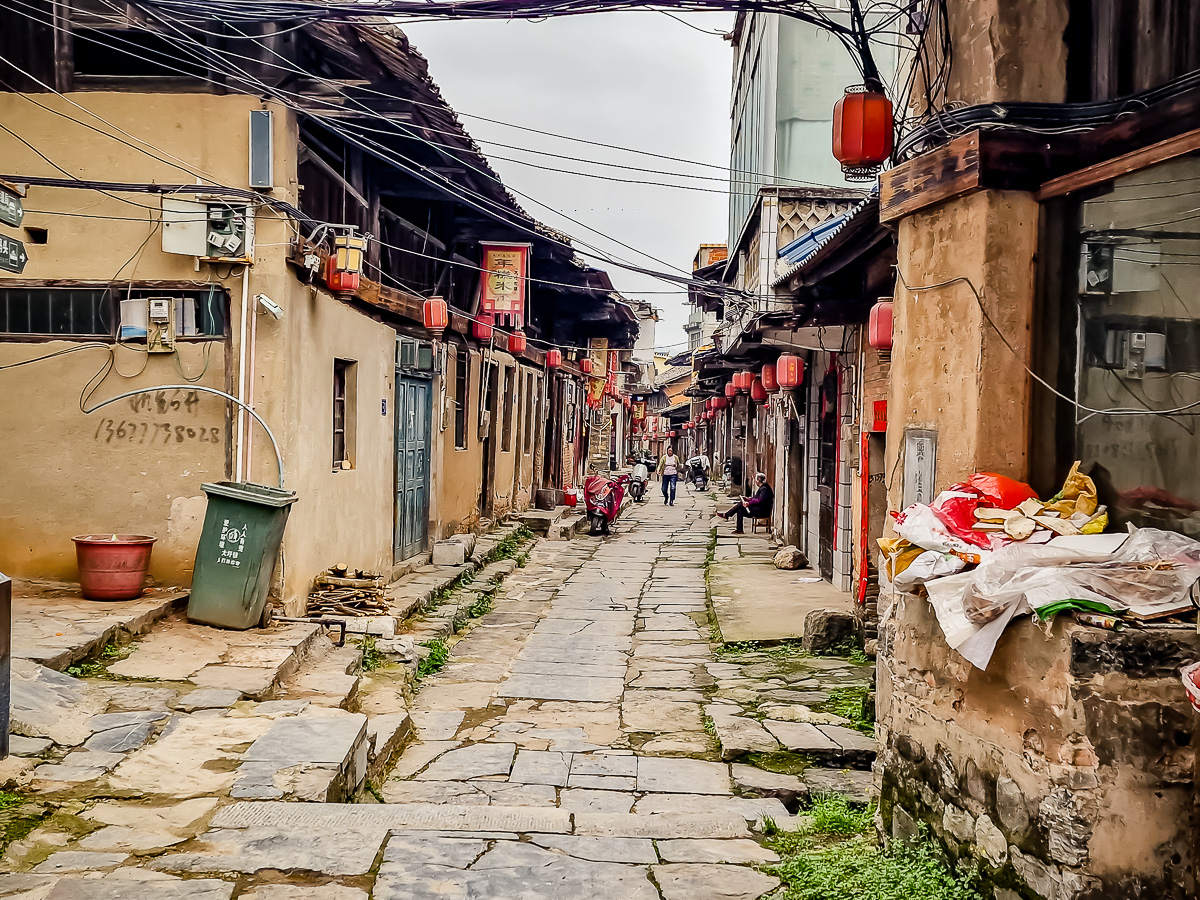
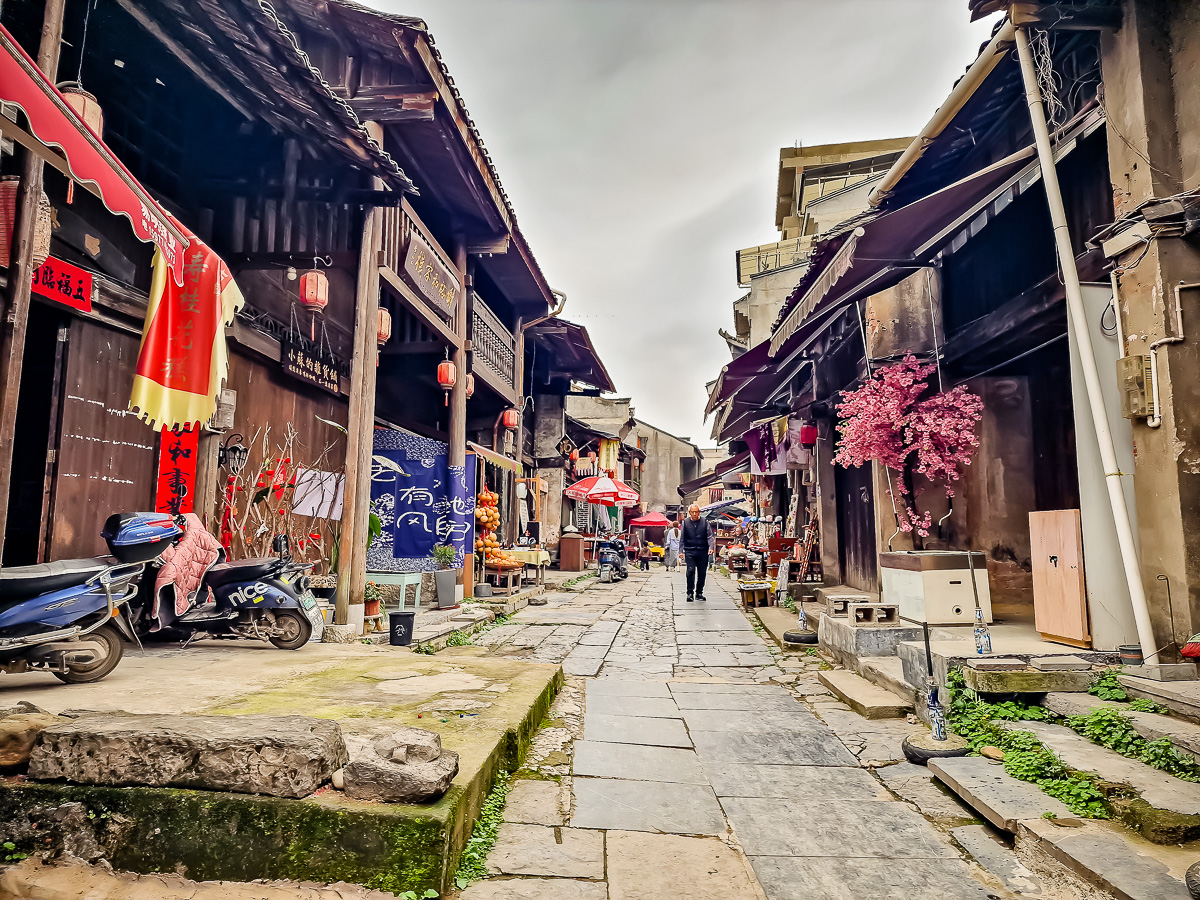
Then I come across a few elderly people – some sitting on their doorsteps, others slowly making their way along the path, like ghosts from a long-gone era…
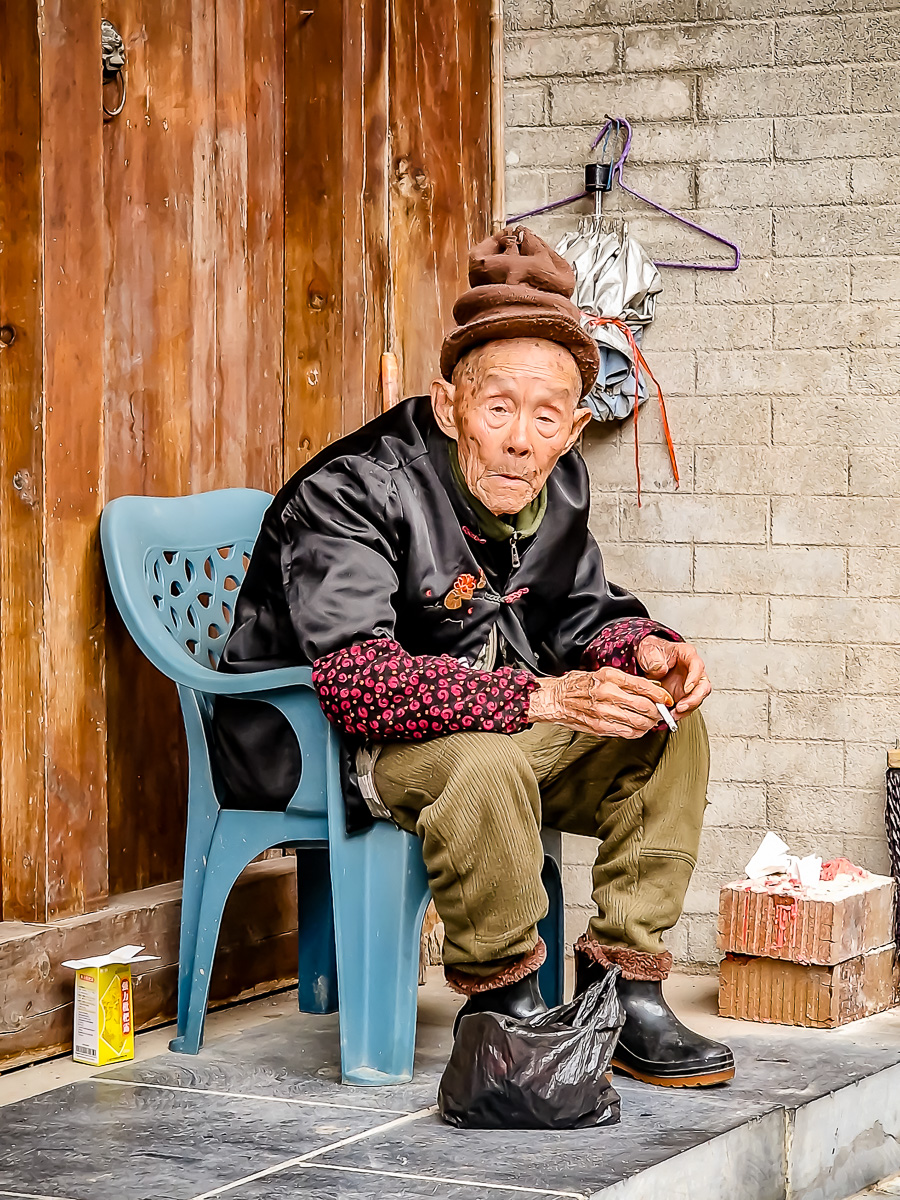
This old man fascinates me the most! I can’t help wondering… what kind of life has he had??
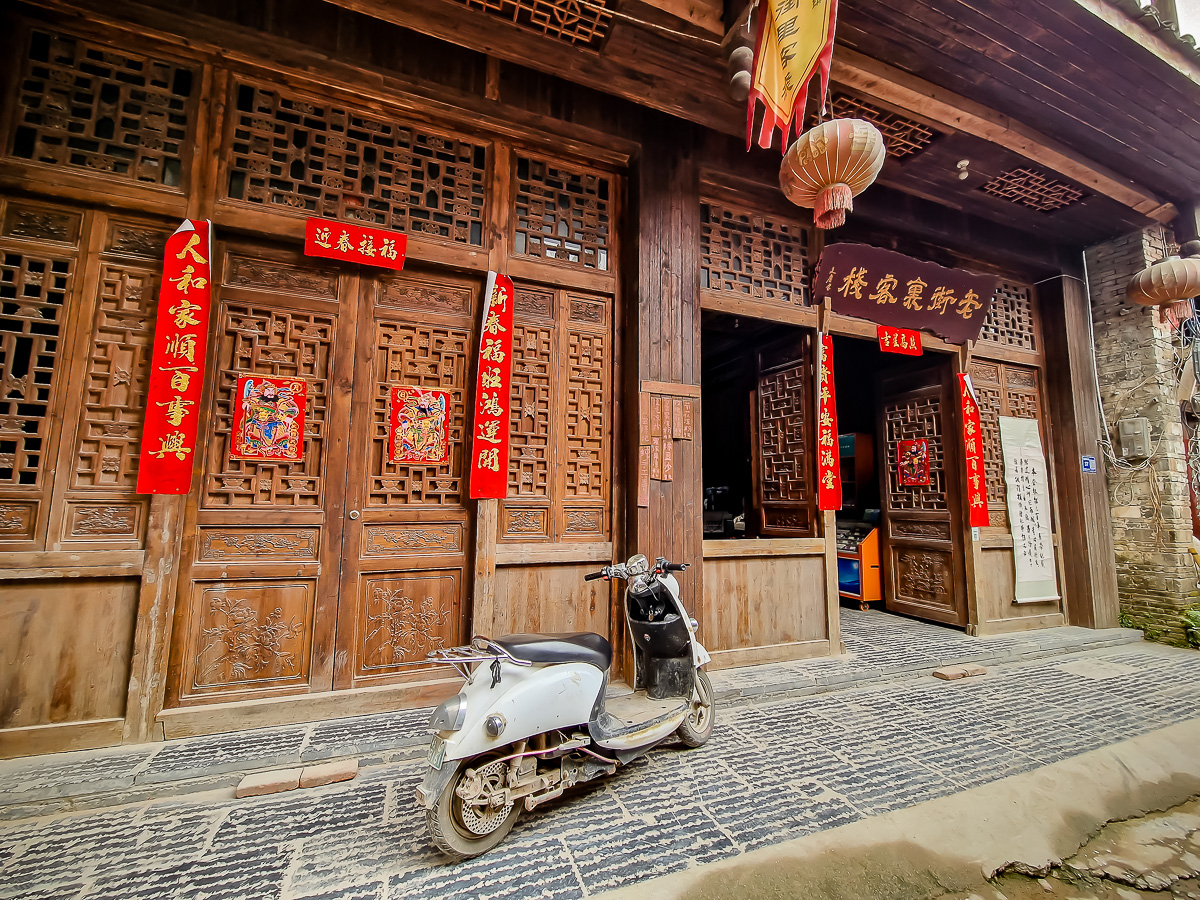
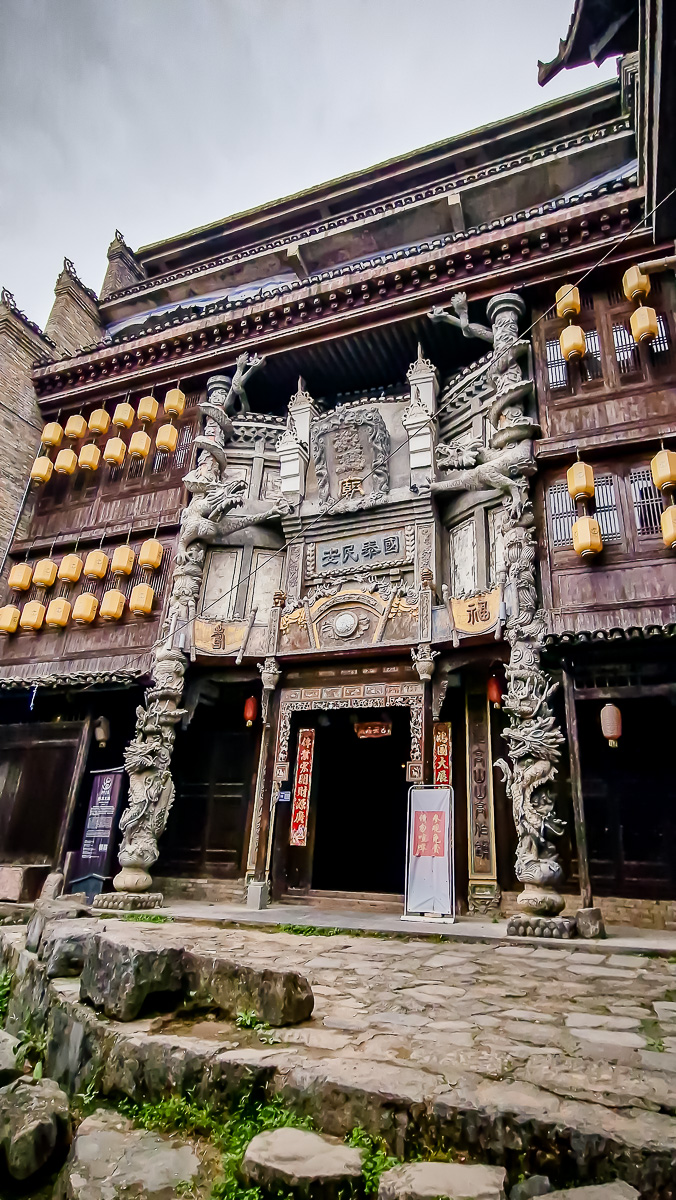
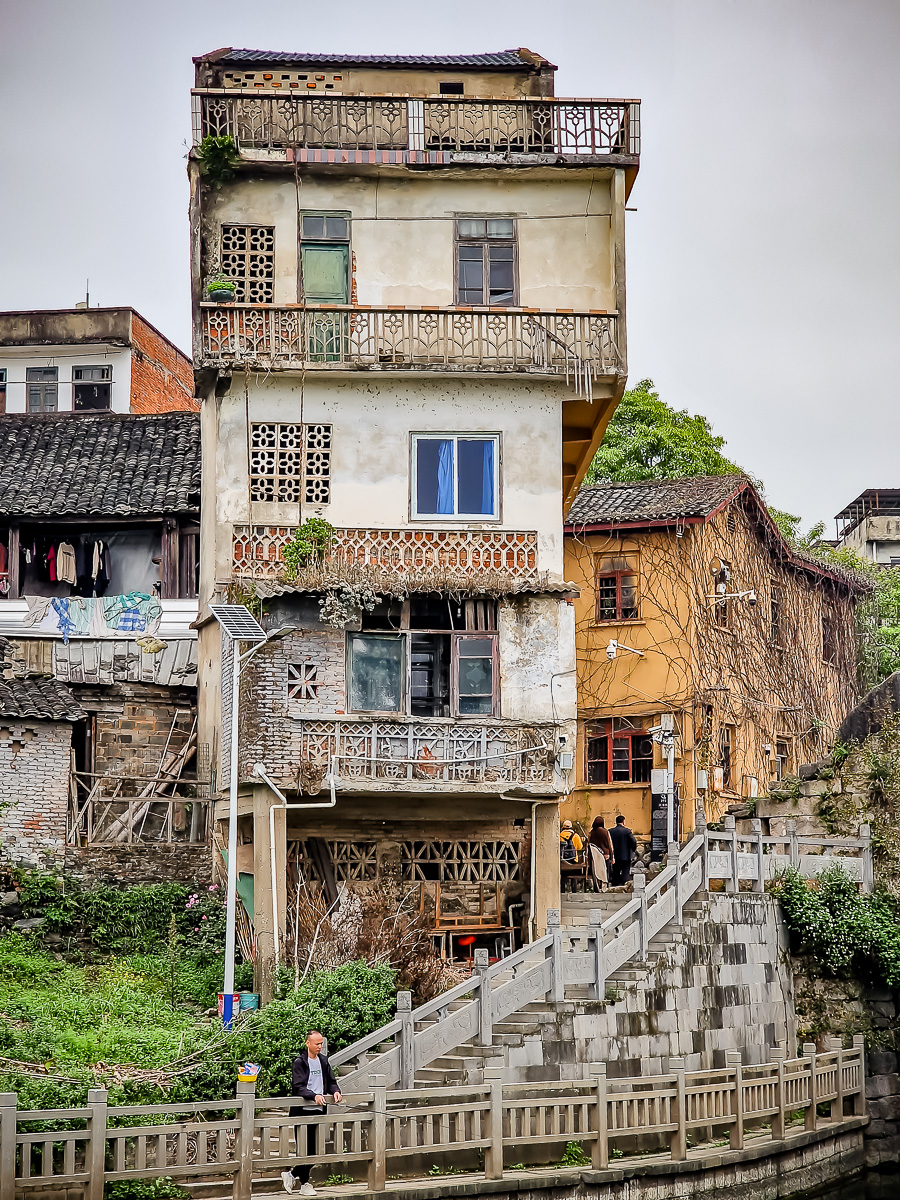
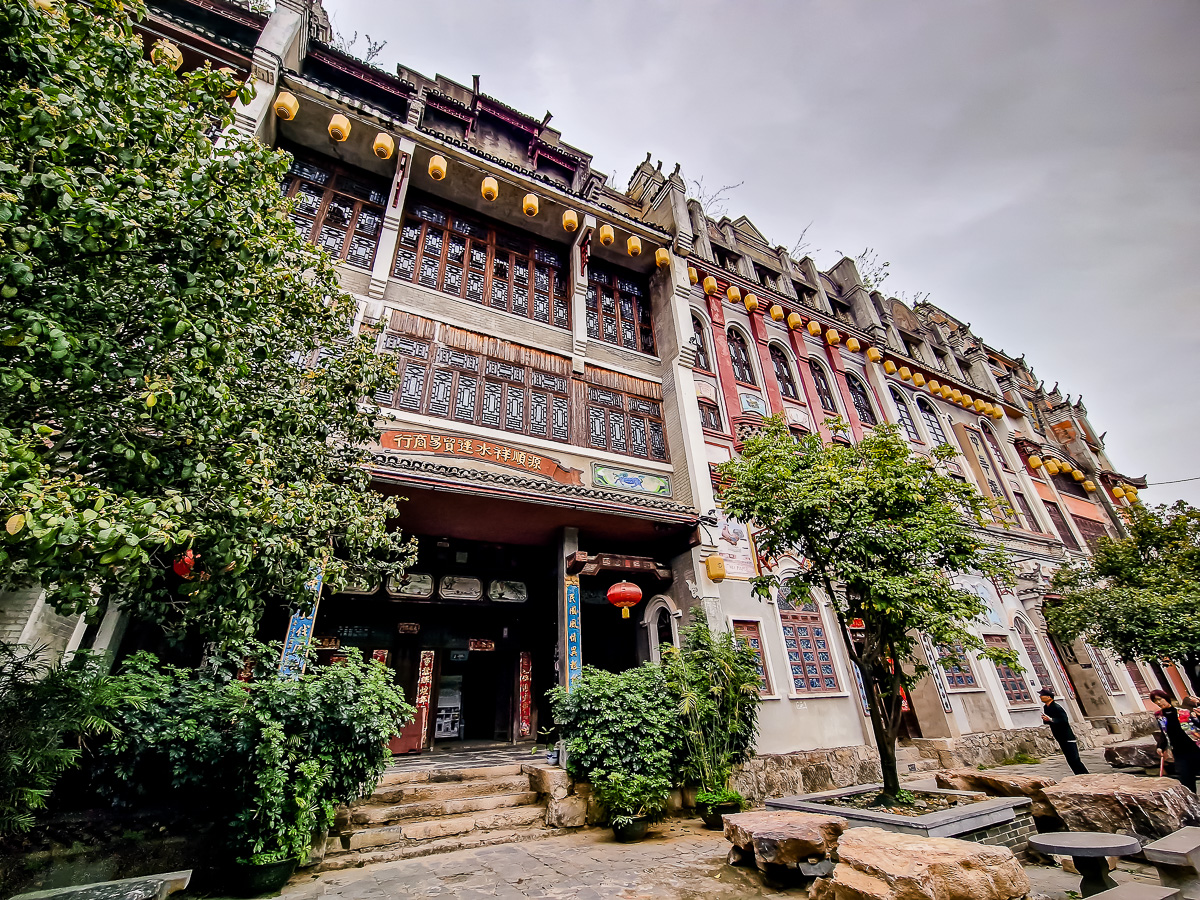
I look left and right with a child’s curiosity. Some houses are barely standing, while others are much more ornate, with distinctive architecture – a sign that something important either happens or once happened inside them.
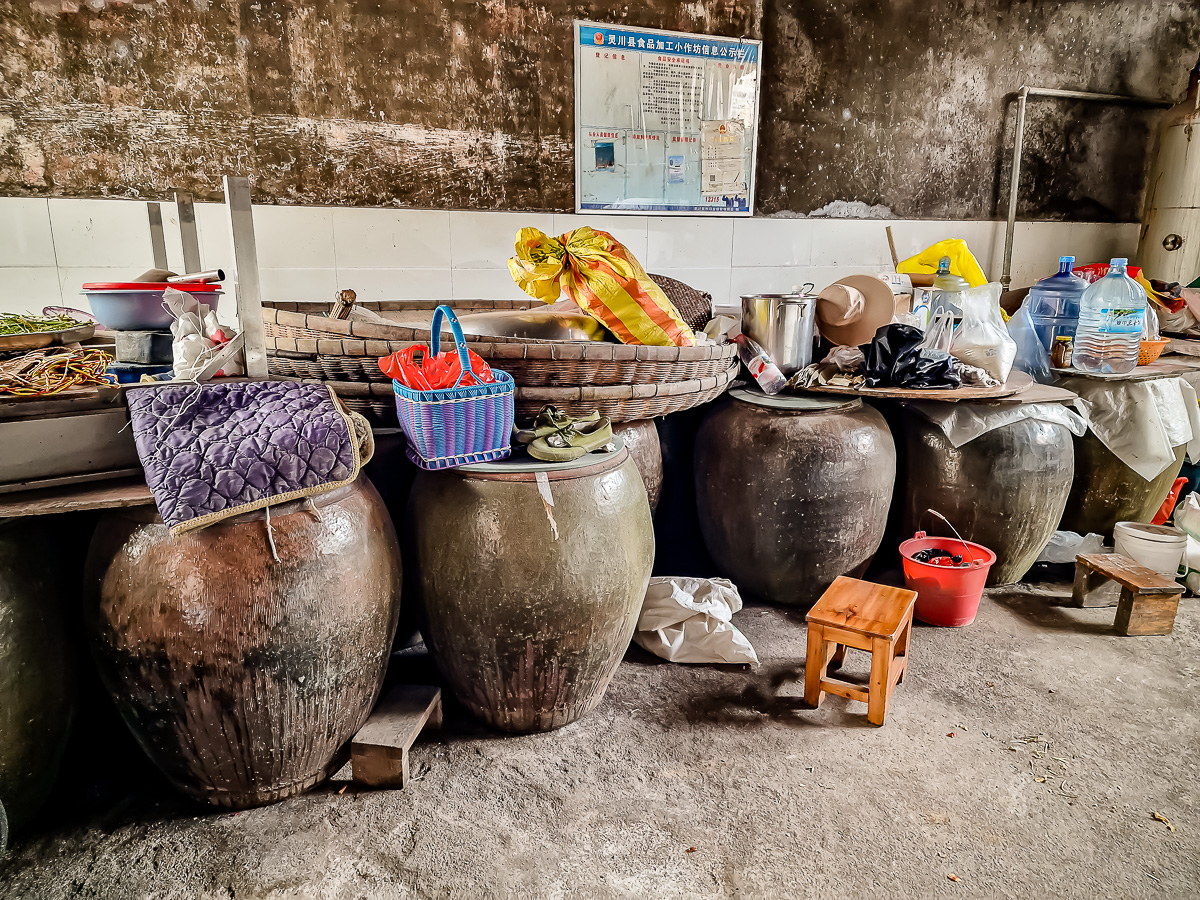
My guide takes me into the courtyard of a house where wine is made using a traditional method. Today, however, everything is “on hold”.
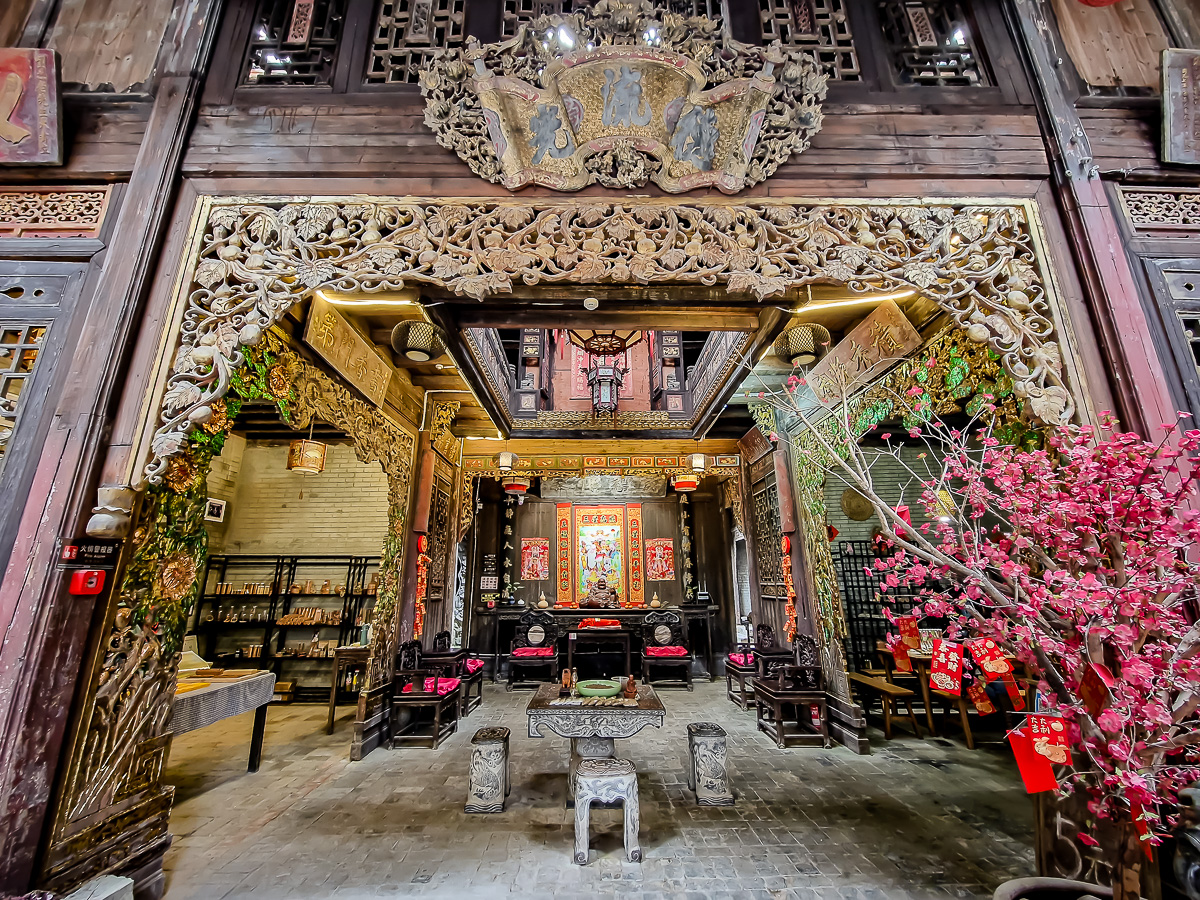
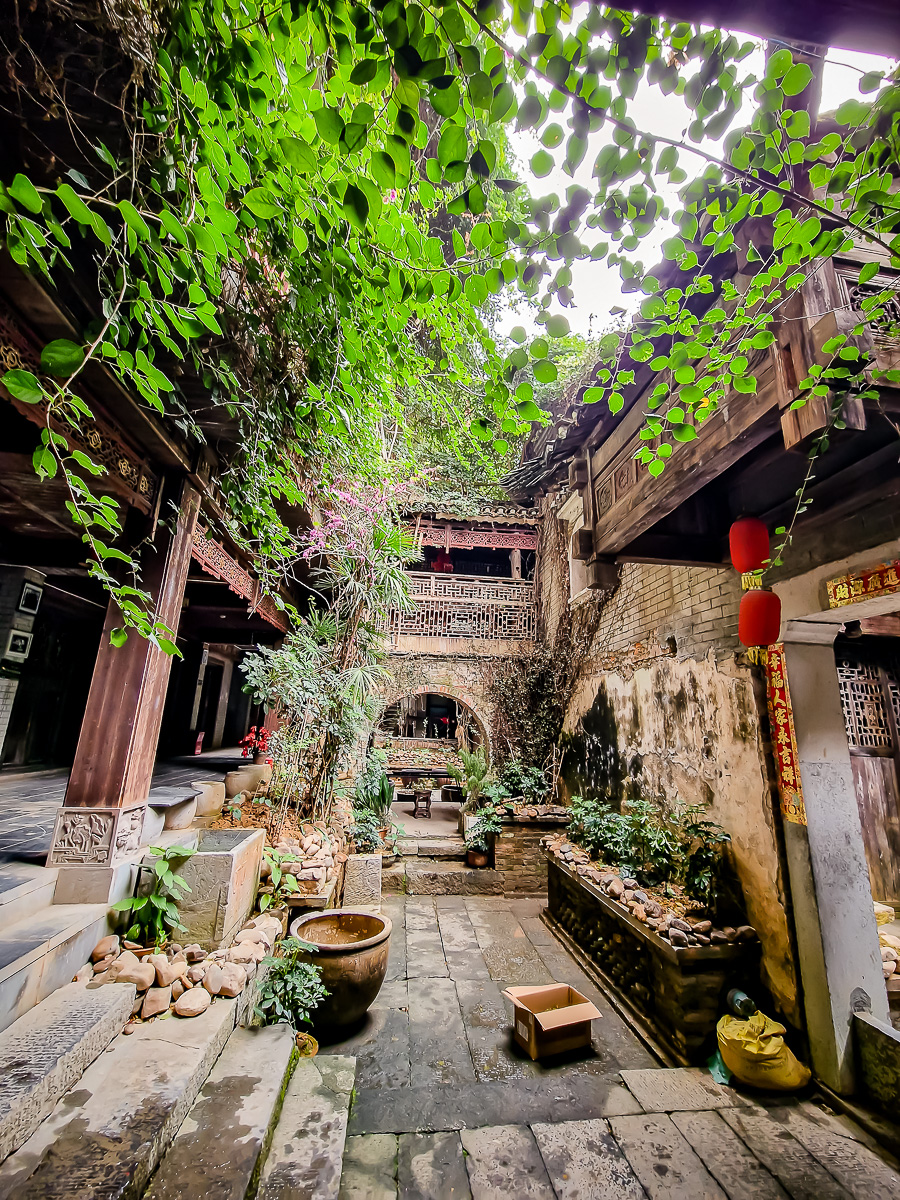
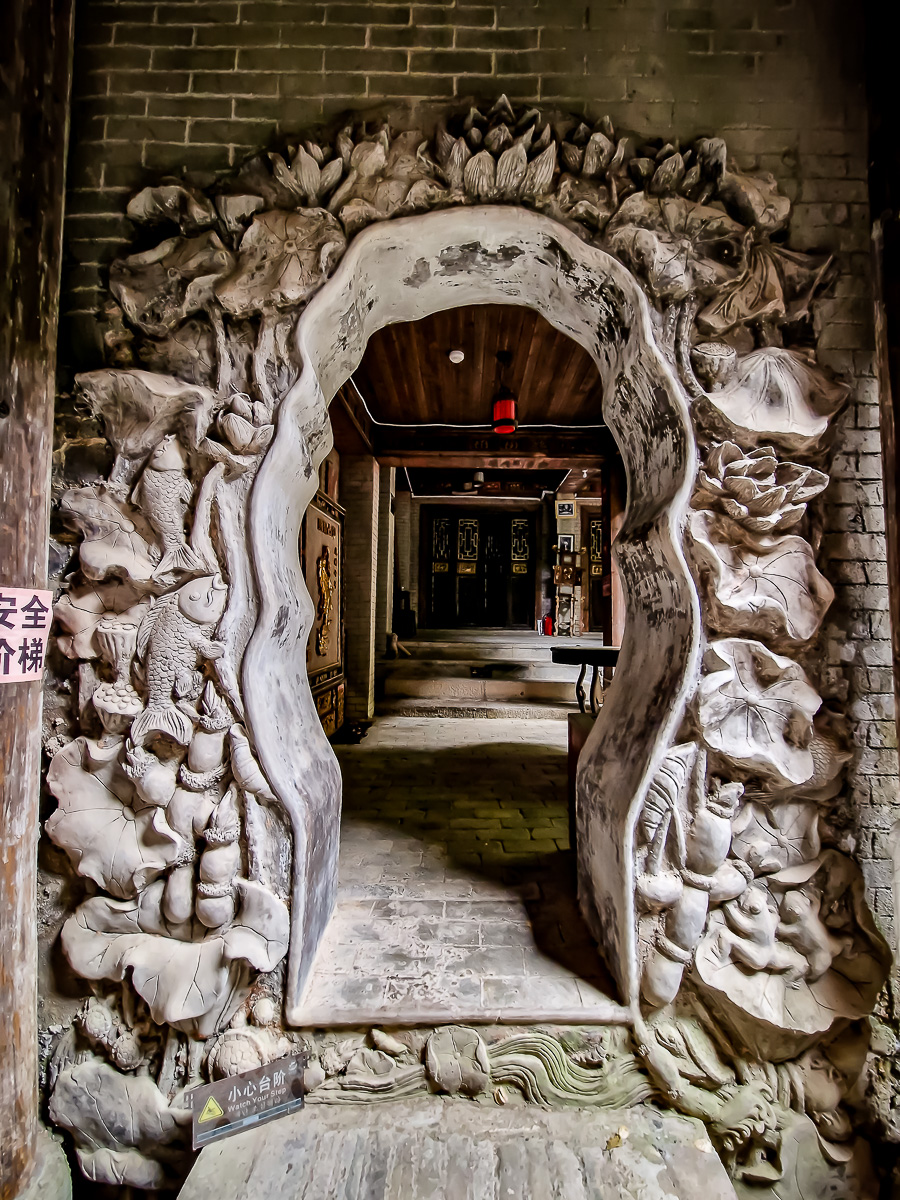
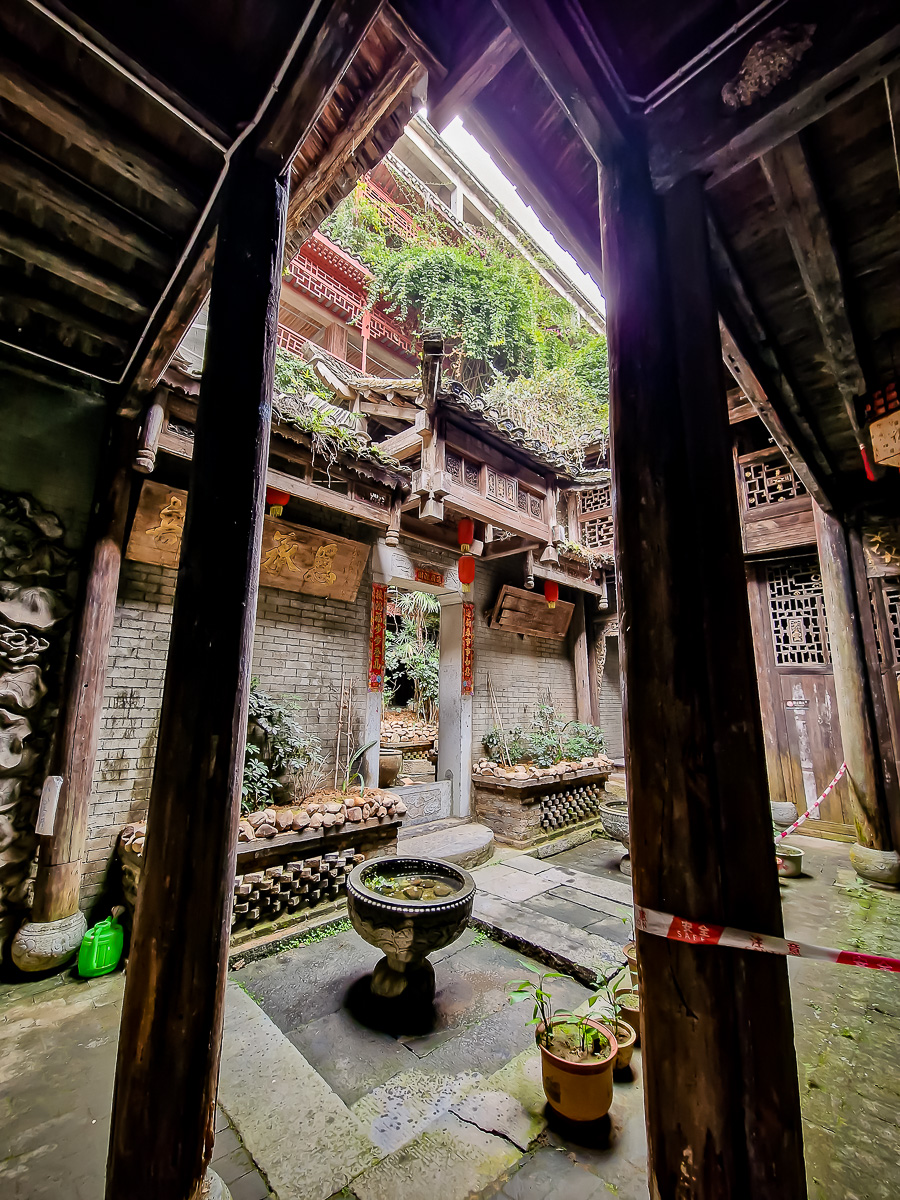
I also visit a traditional house that clearly once belonged to a wealthy family. Today it functions as a sort of museum.
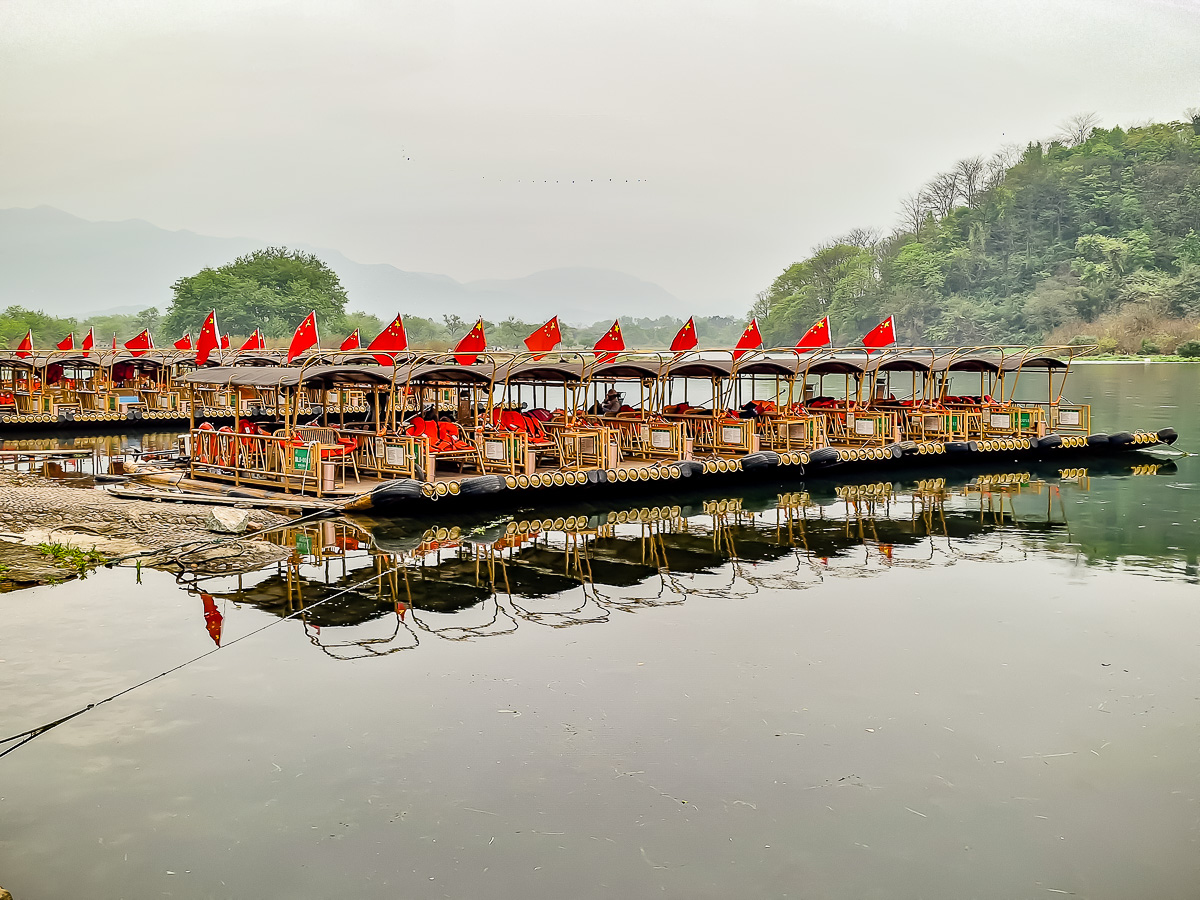
Traditional boats sit silently waiting for customers to take for a ride on the river. There’s nobody around. Either it’s too early or it’s too… spring.
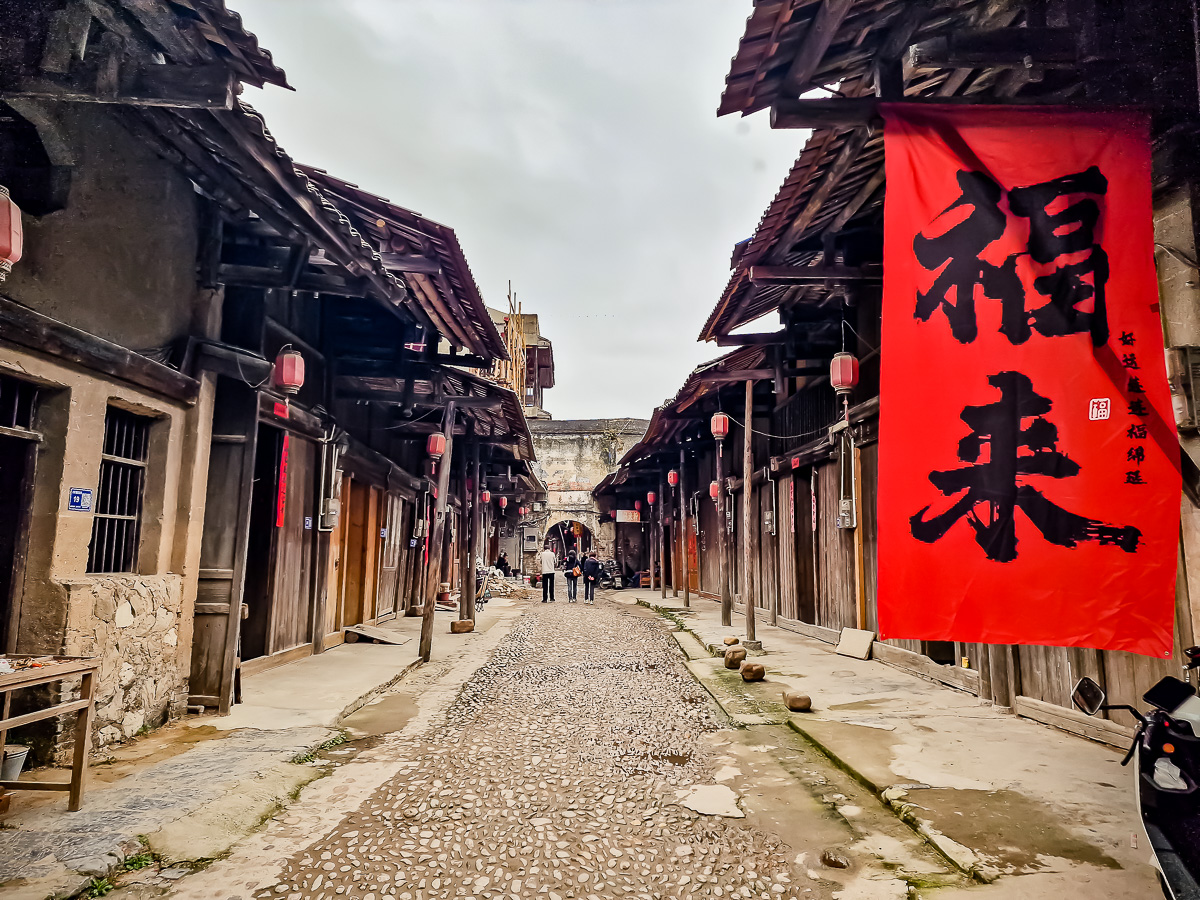
I reach a slightly livelier area. Some children are playing in a little park. Two or three tourists, guides beside them, wander the streets just like me, curious about everything.
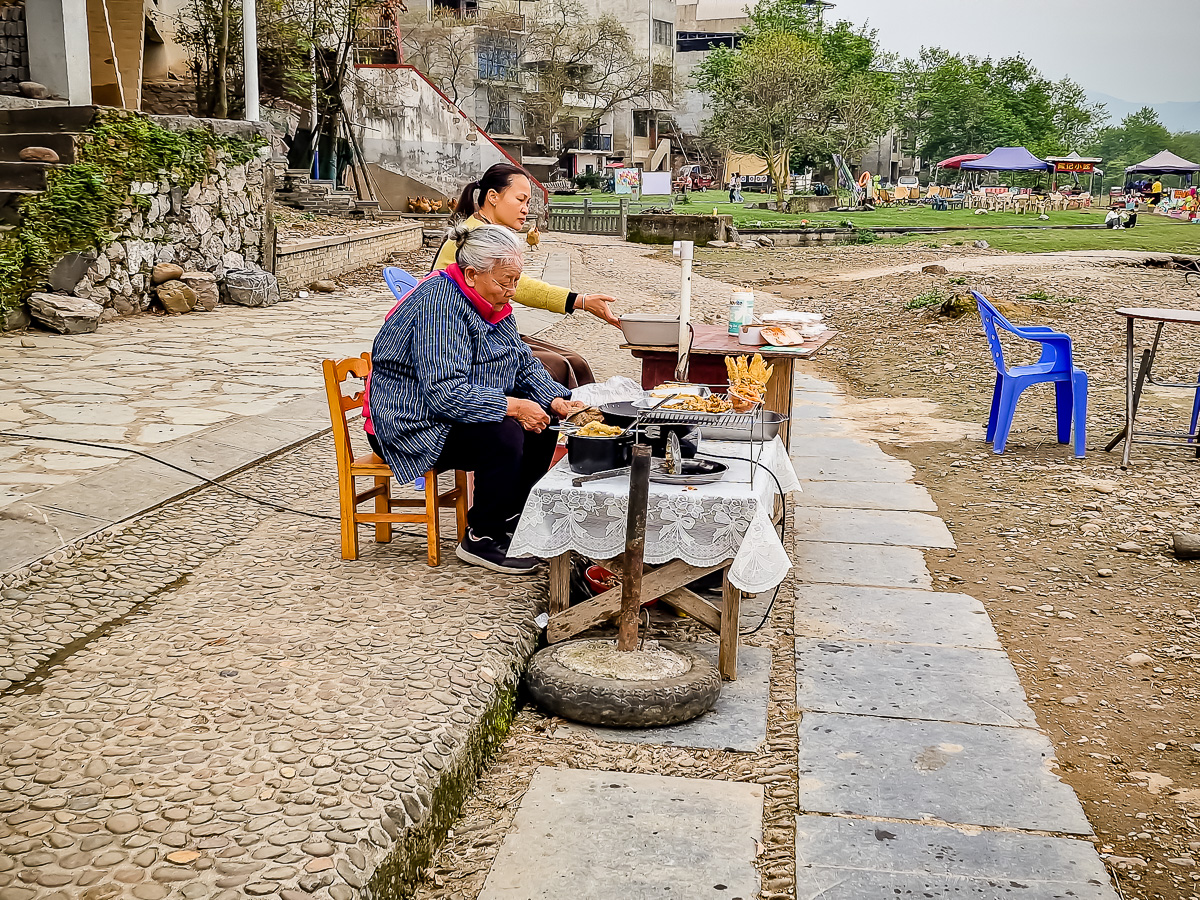
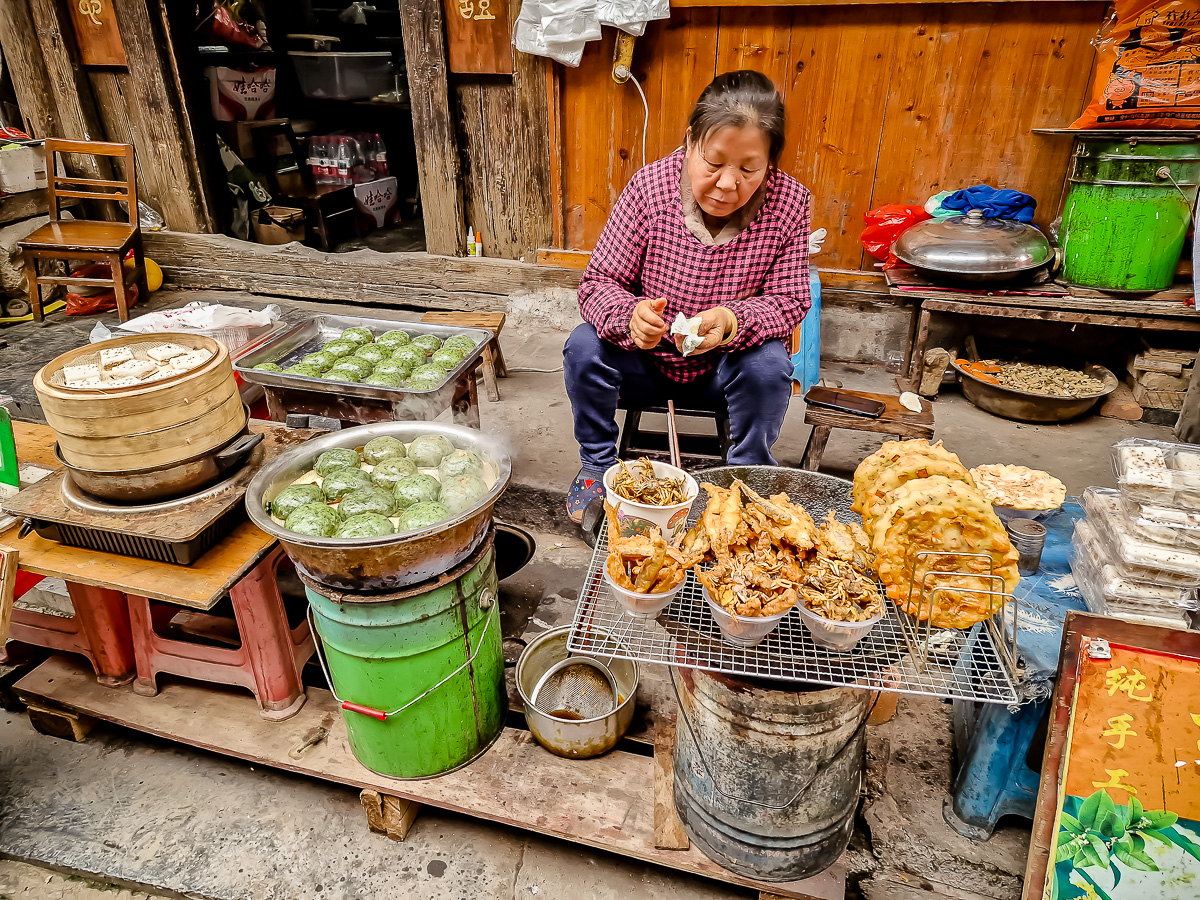
A few women are cooking quick street food for anyone who fancies a bite.
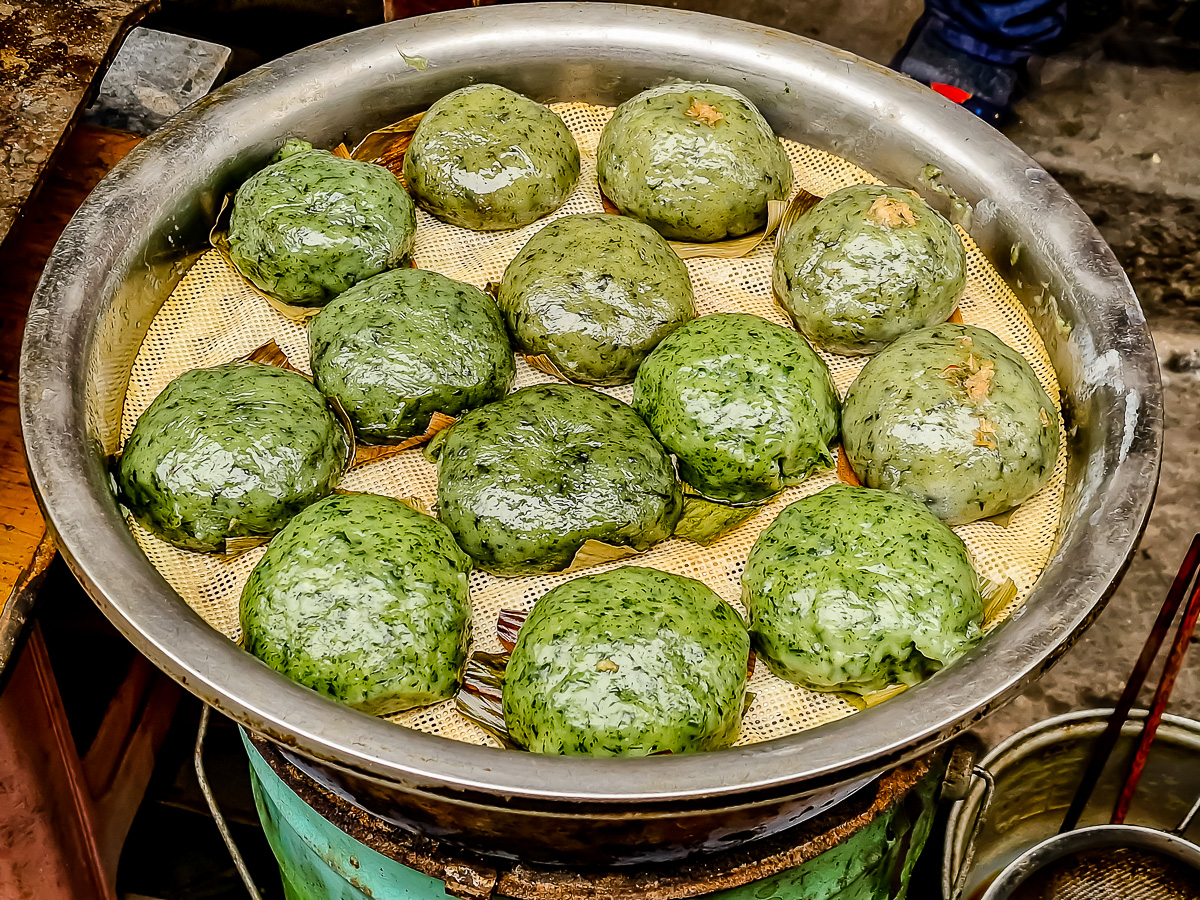
I stare at these doughnuts, which I’m told are made with green rice, but neither my brain nor my stomach shows any sign of wanting one.
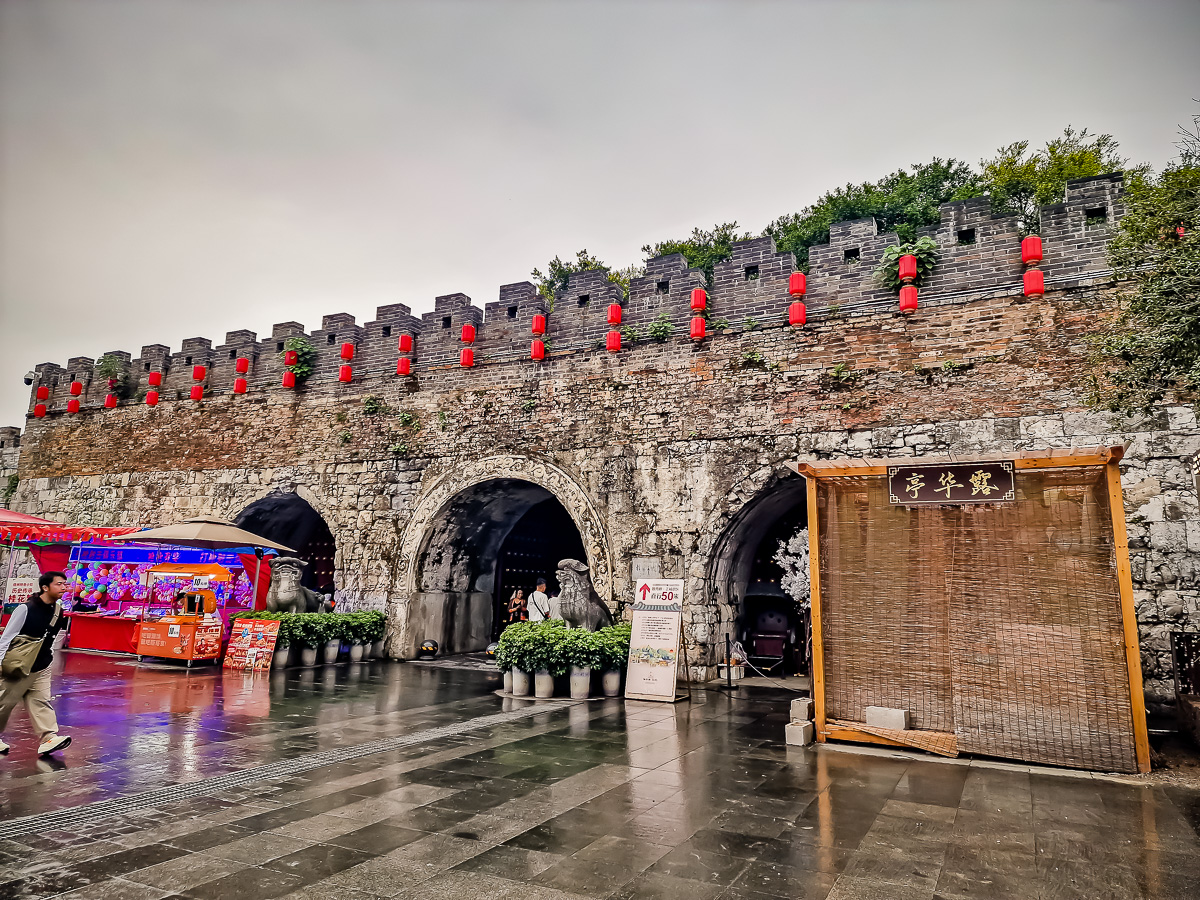
We leave this little town and head back to Guilin, because I still haven’t finished everything there is to see/do.
FUBO HILL
We arrive at another iconic rocky hill, typical of Guilin’s karst landscape. I quickly look up what “karst” actually means = a landscape formed in areas with rocks such as limestone, which water slowly dissolves and erodes. Over time, this creates spectacular formations – cliffs, steep hills, caves, grottoes etc.
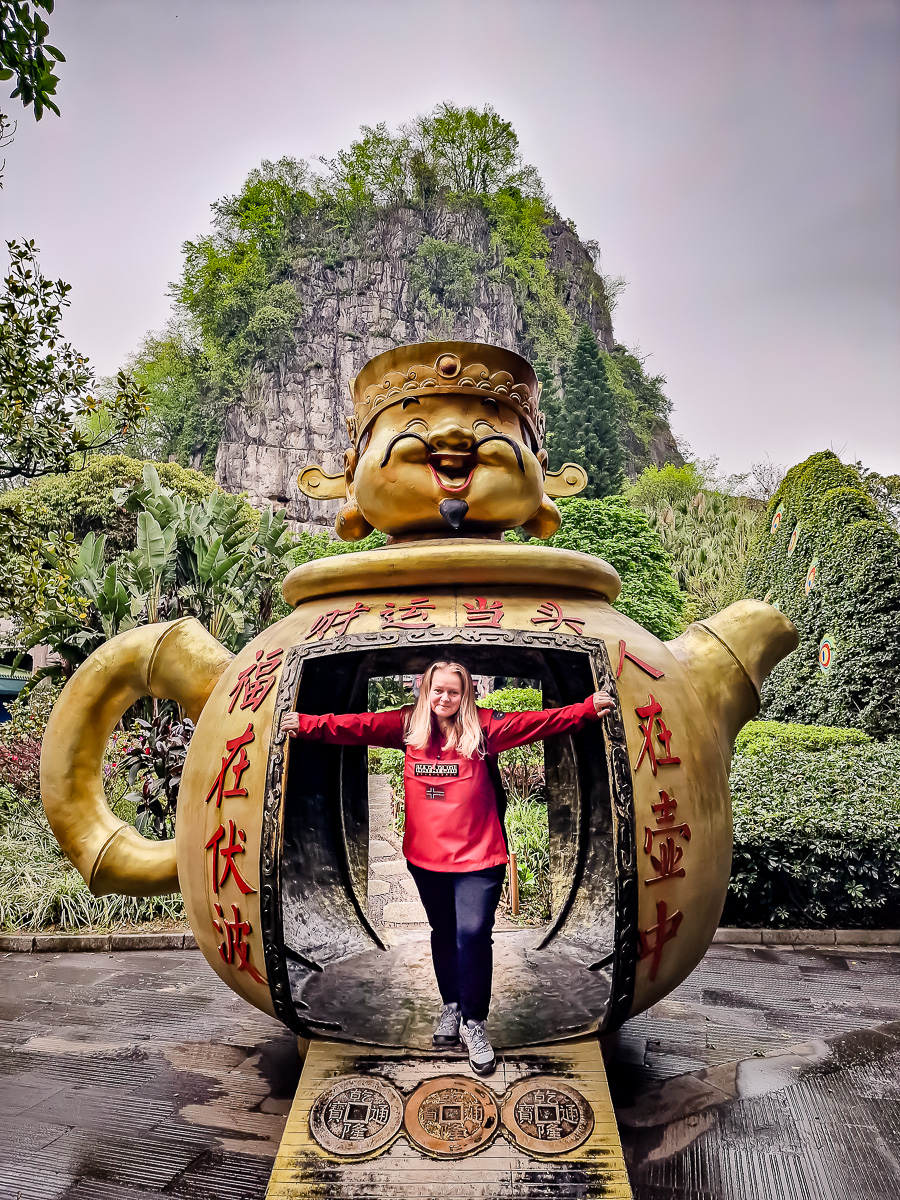
I take a picture inside the lucky teapot and immediately feel ready to go and play the lottery…
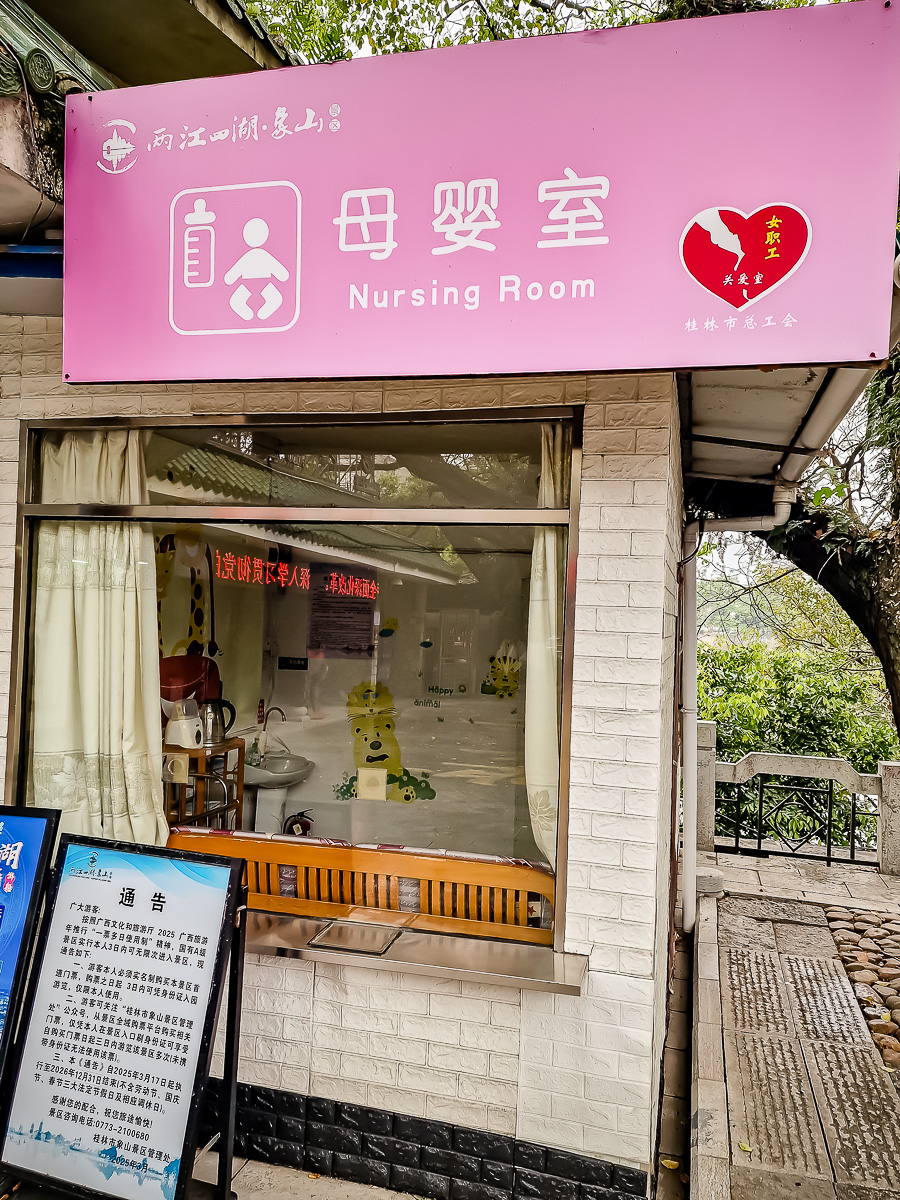
While my guide pays the entrance fee (around 3 euros), I’m surprised to discover a Nursing Room, one of the many signs of civilisation I came across in China. It’s a room equipped with absolutely everything a mother with a baby might need.
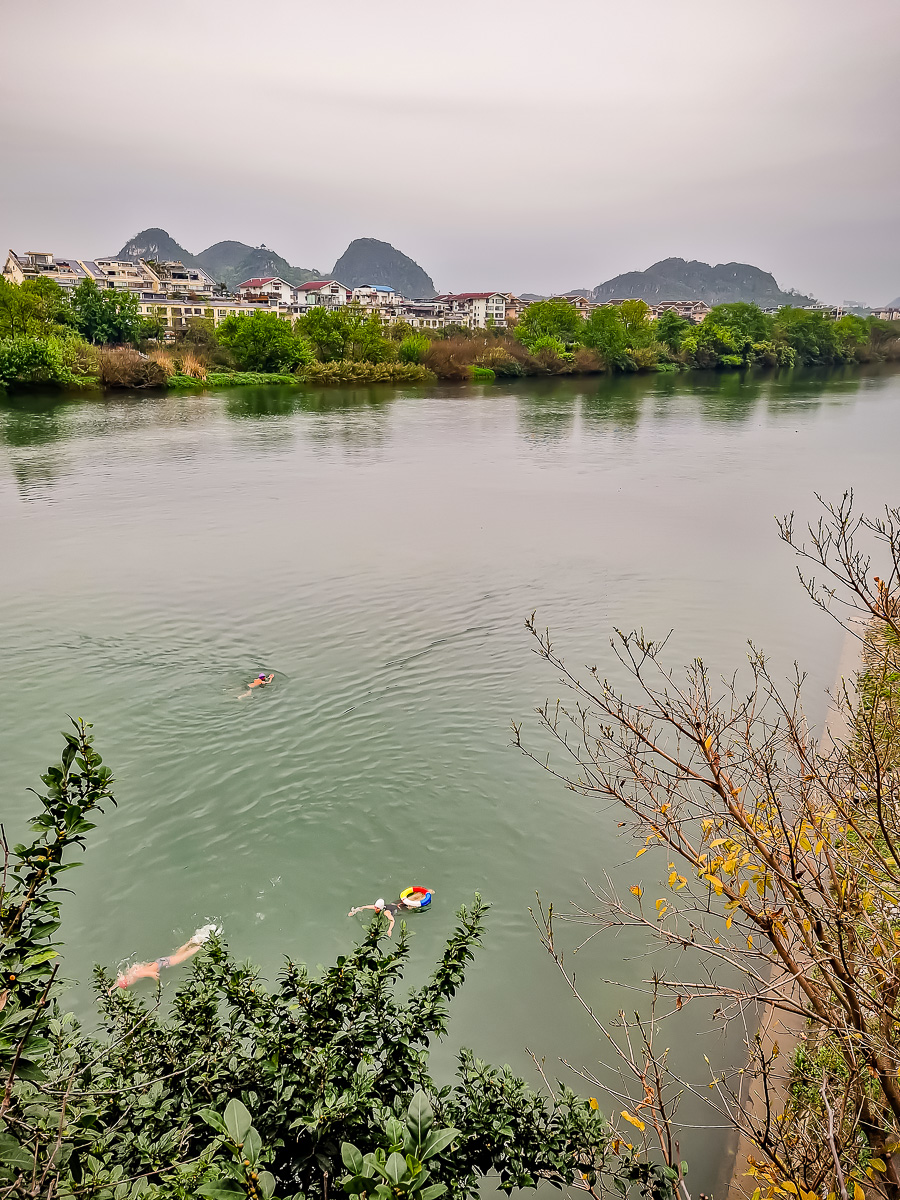
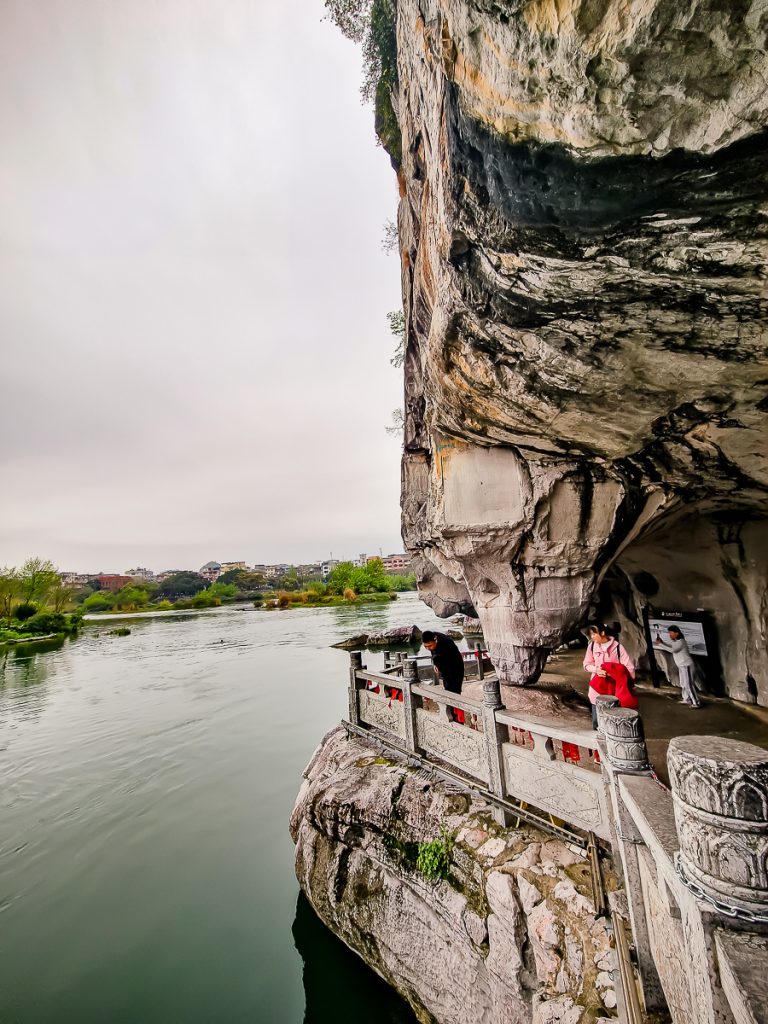
Fubo Hill is also on the banks of the Li River and has a panoramic viewpoint from which I stand fascinated, watching elderly swimmers going full steam ahead through water that is anything but warm.
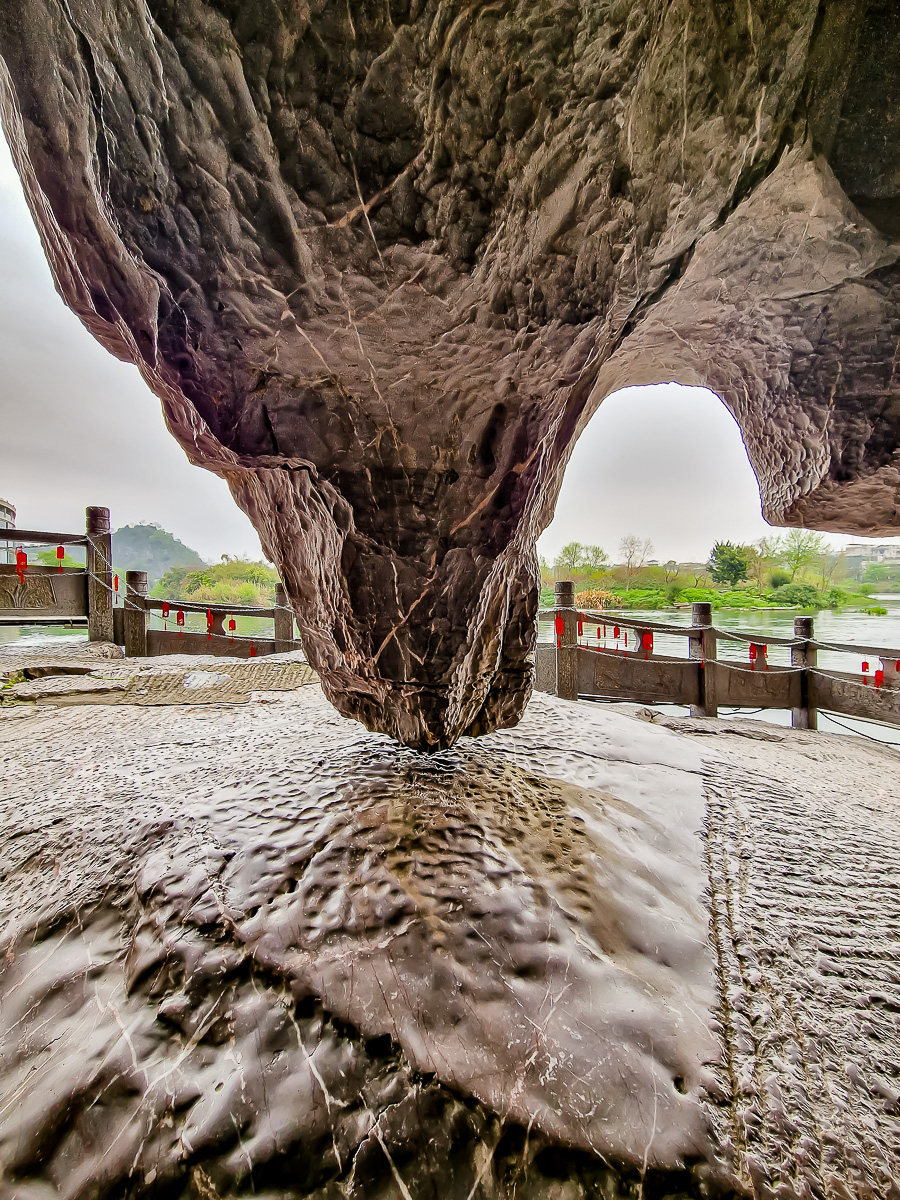
The highlight of the place is this rock – which I photographed from every bloody angle, just to make sure that yes, it really doesn’t touch the base.
This is the famous Sword-Testing Rock. It was given the name because of its unusual shape: the few-centimetre gap between the chunk of rock hanging down and the large, smooth rock beneath it looks as though it had been sliced by a sword.
The explanation is much simpler: over time, water eroded the rock at the base, where there is a very thin layer of calcareous shale.
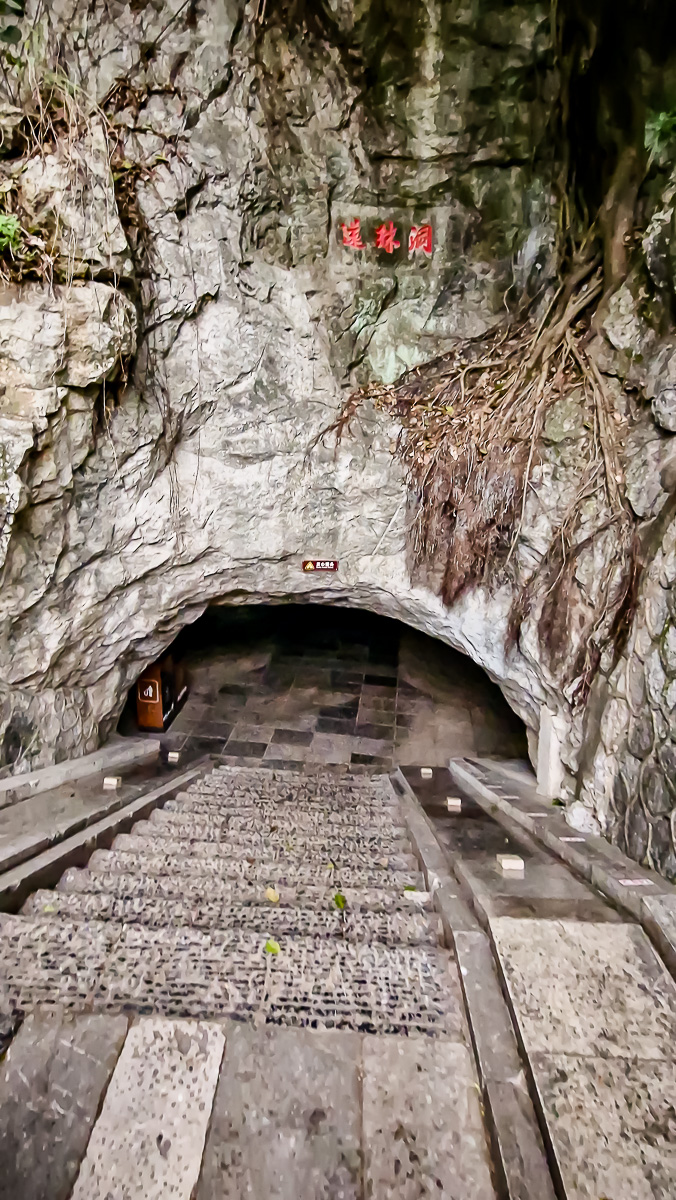
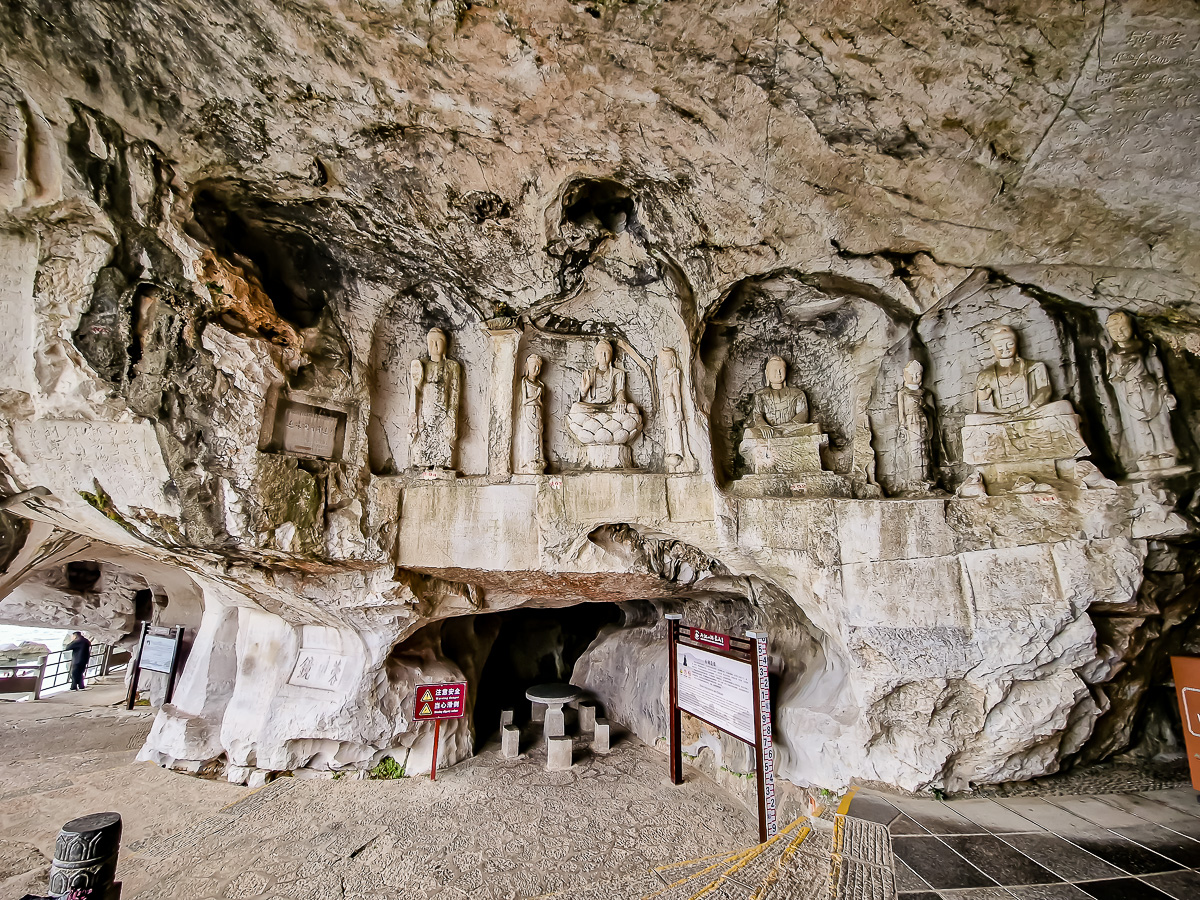
I head down into the caves at Fubo Hill, where I come across ancient Buddhist sculptures and even inscriptions carved into the stone, dating from different historical periods. No, I don’t find anything contemporary, along the lines of “Costel & Geta = Love”.
EAST-WEST ALLEY. ZHENGYANG PEDESTRIAN STREET.
God knows how, but after everything I’ve managed to visit during my one and only day here, I still have time to explore the city on foot.
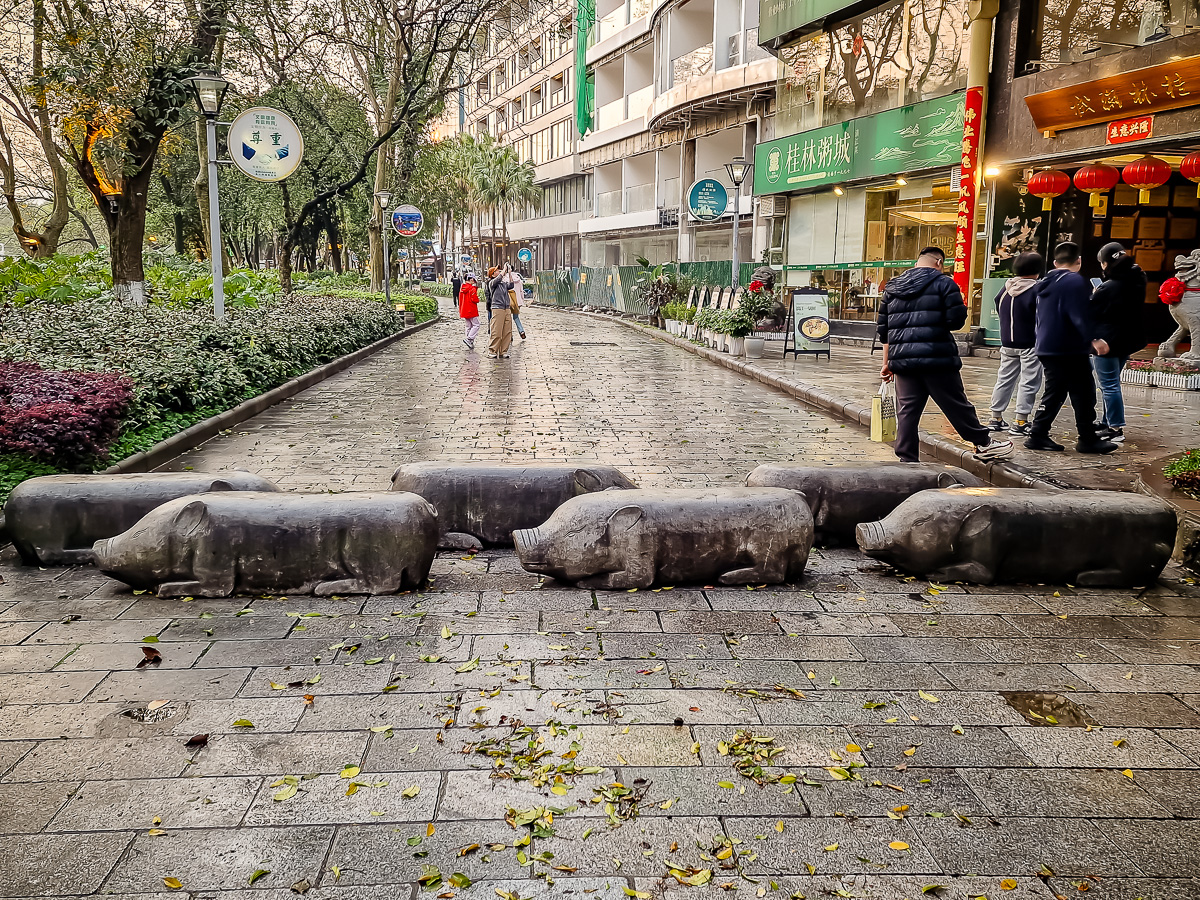
You can’t even drive through here because some pigs are blocking access 🙂
I notice loads of leaves on the ground, even though it’s the end of March. Apparently, there’s a type of tree here that changes its leaves in spring, which explains all the fallen leaves I keep seeing everywhere.
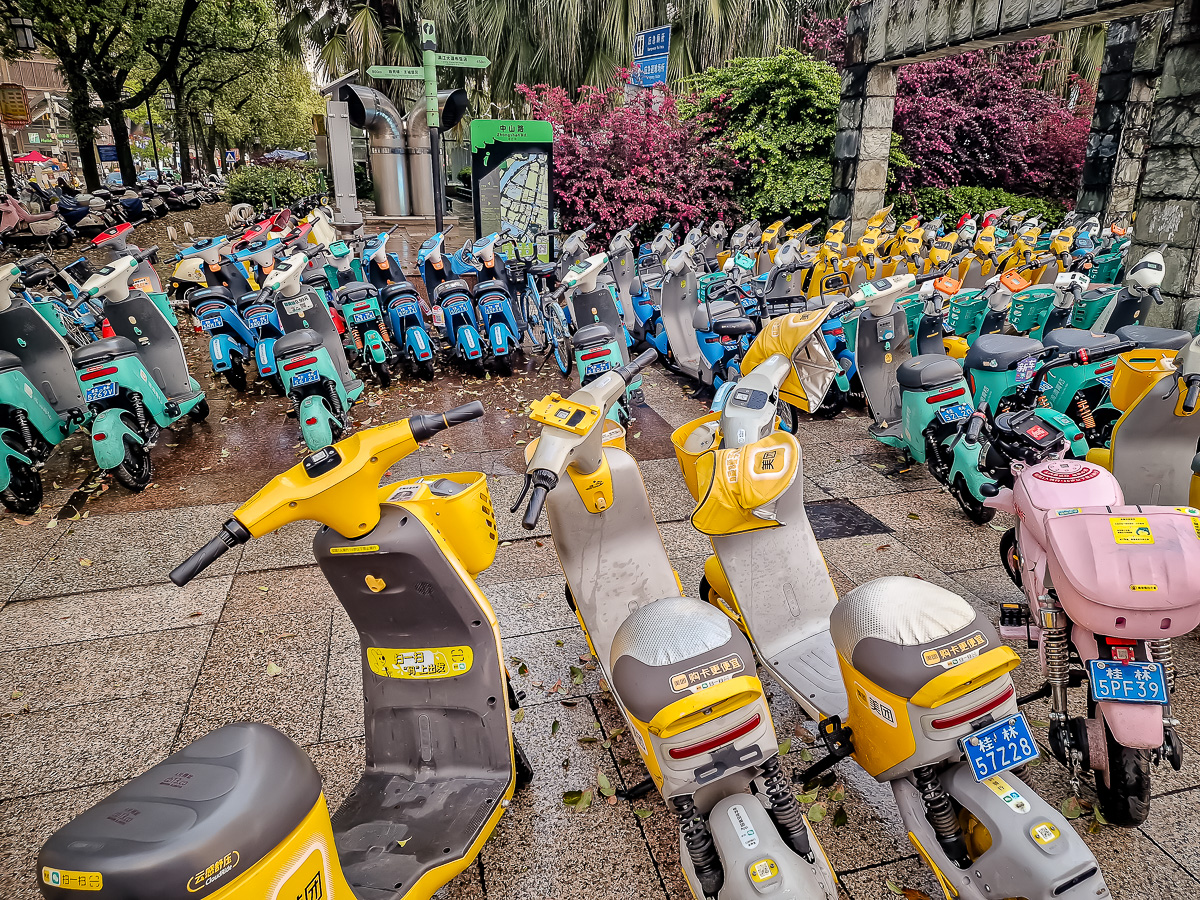
A scooter would be an option for exploring the city, as I come across looooads of them for rent. But I don’t bother. Walking is better, especially since I want to get to their pedestrian streets, packed with stalls and little shops!
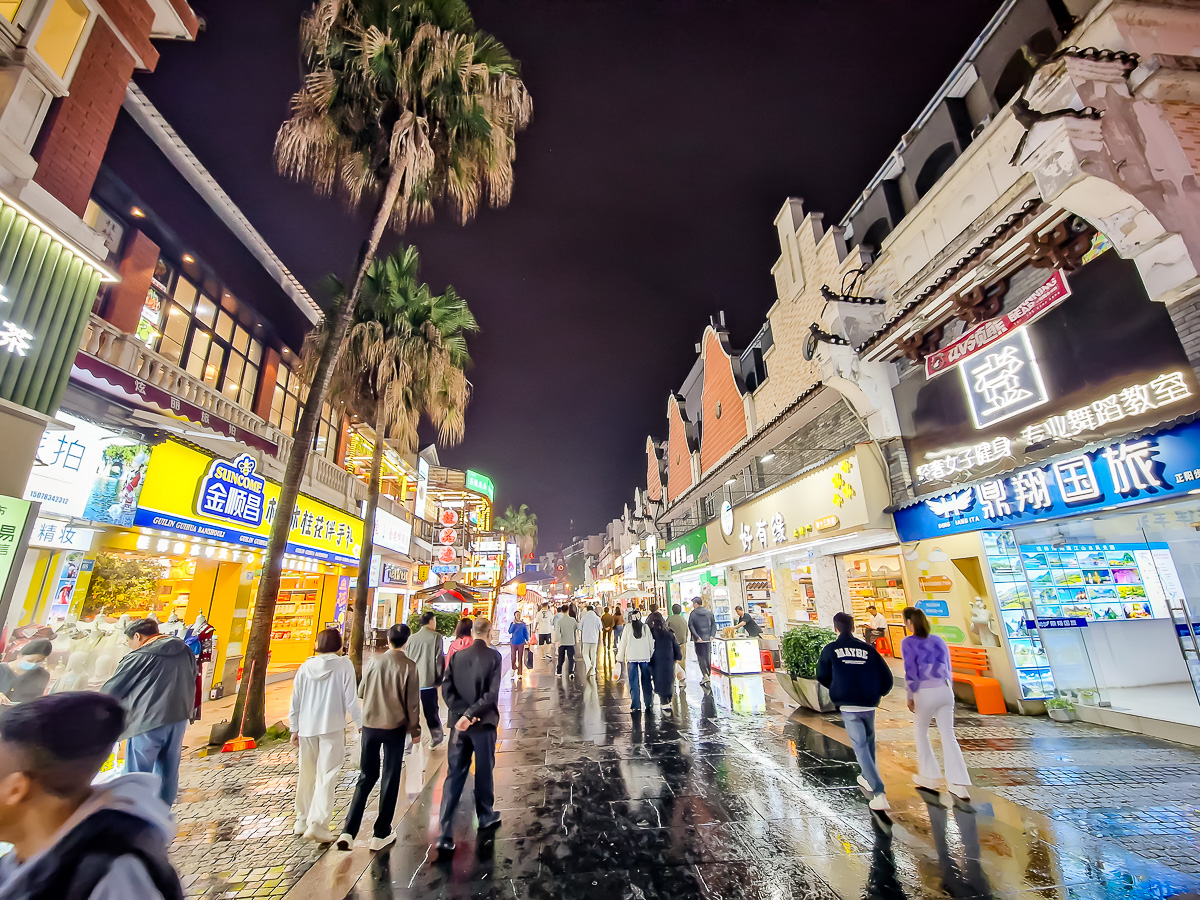
There are two I’d found online that were supposed to be “unmissable” – East-West Alley and Zhengyang Pedestrian Street. They’re close to each other, so you can easily do both if you want.
Basically, it’s a lively pedestrian area with lots of shops, cafés, food stalls and all kinds of souvenirs. One has been renovated in a traditional Chinese style, with reconstructed old buildings (East-West Alley), while the other is more “urban”.
There are plenty of things you can buy as souvenirs and plenty of things you can eat if you’re feeling adventurous.
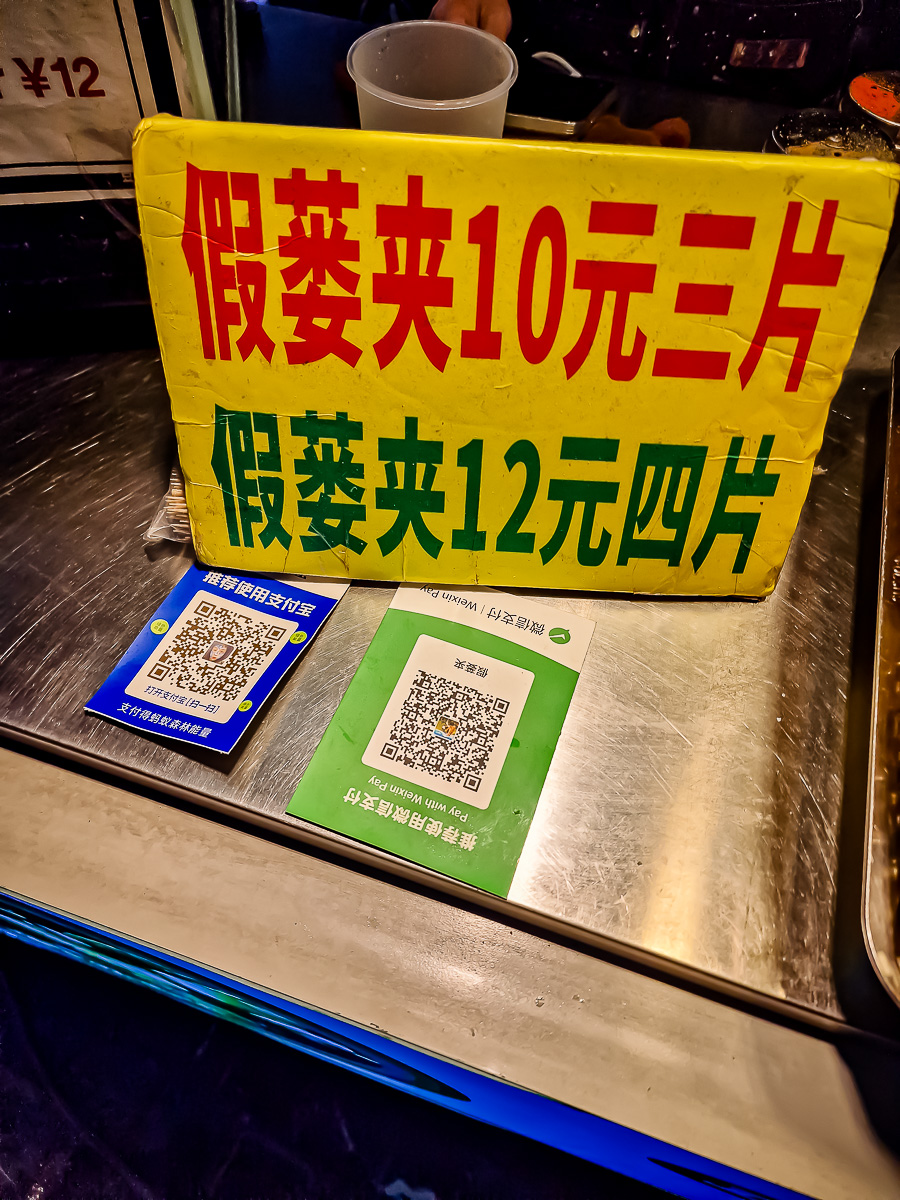
You can pay cash pretty much everywhere, but above all there’s Alipay and WeChat, the holy apps of China!
My unusual experiment here is a fresh… cactus juice!
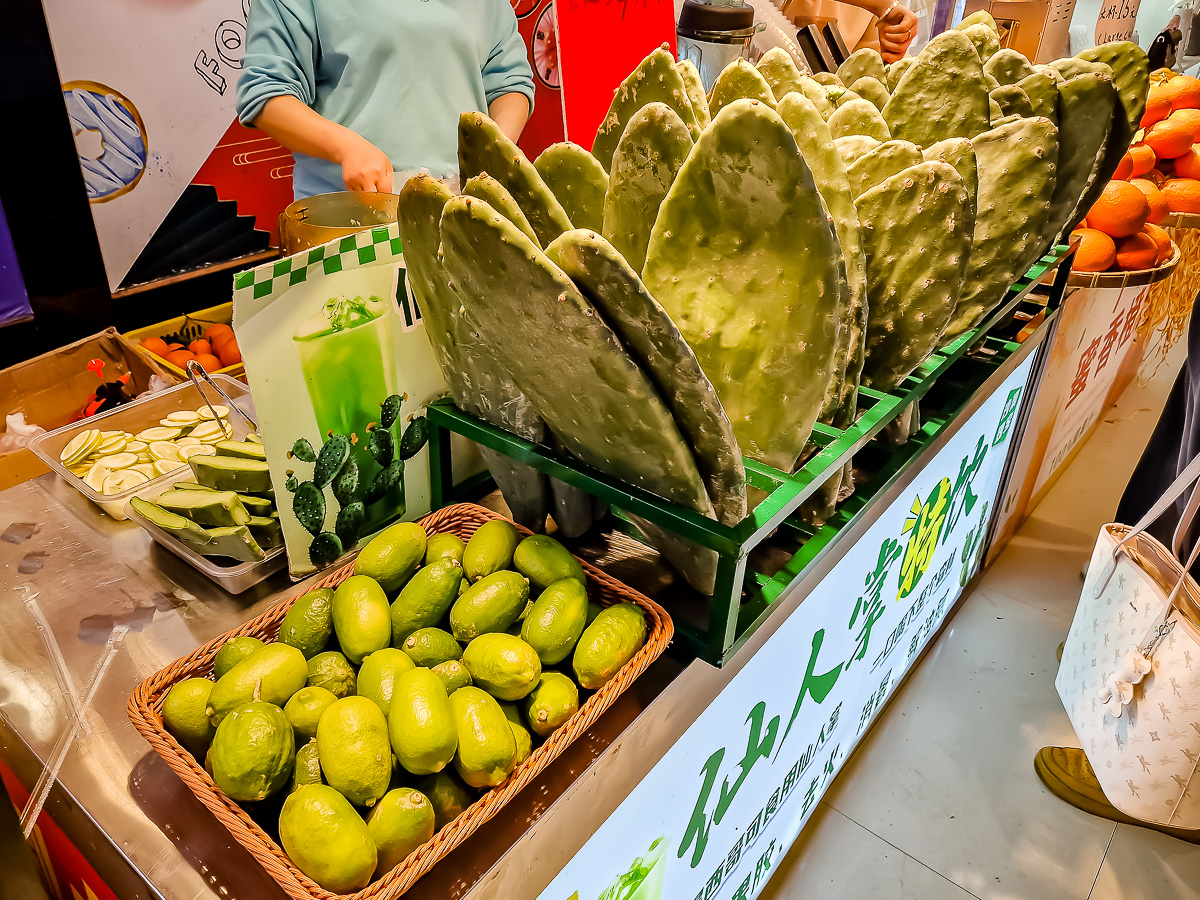
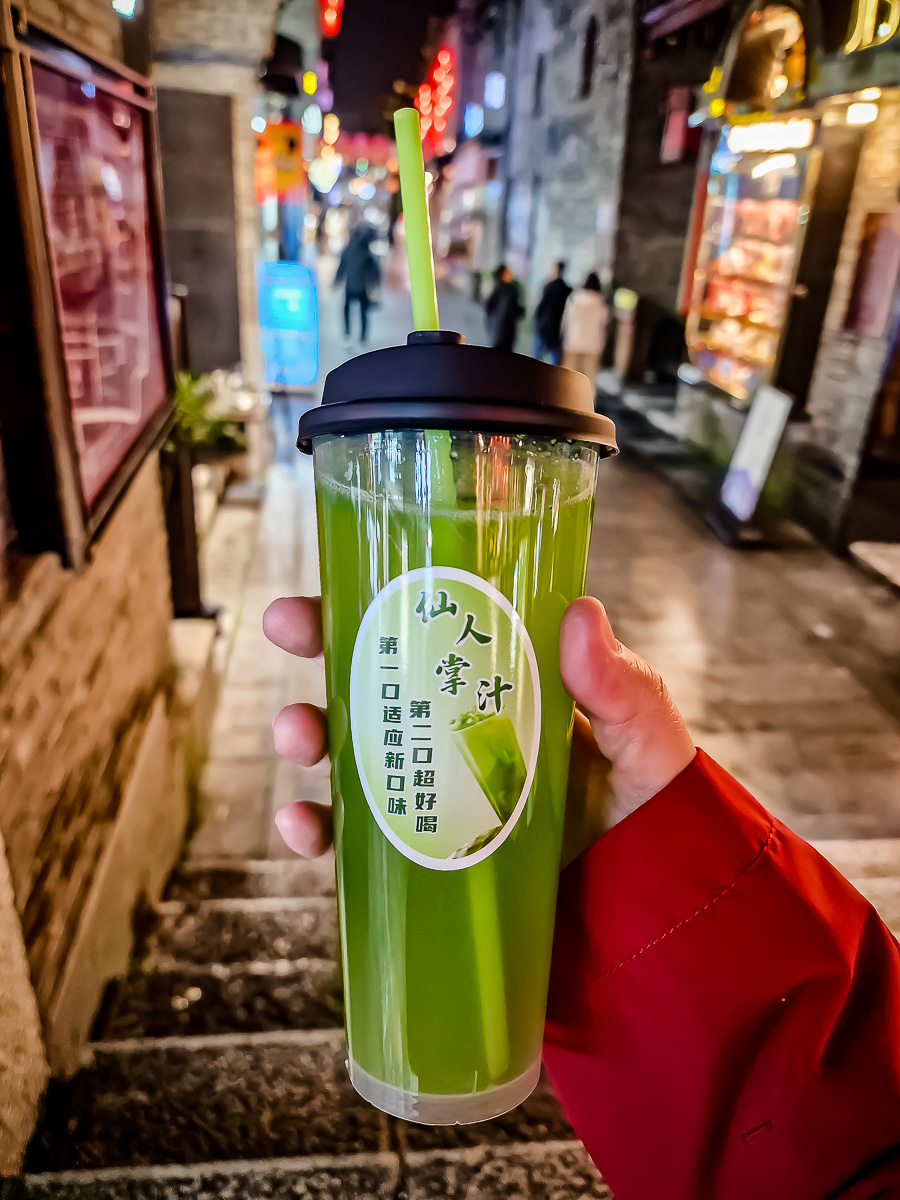
I didn’t get to see the girl in the shop squeezing the cactus pads, but I still stared at them in fascination – and watched the girl prepare my juice.
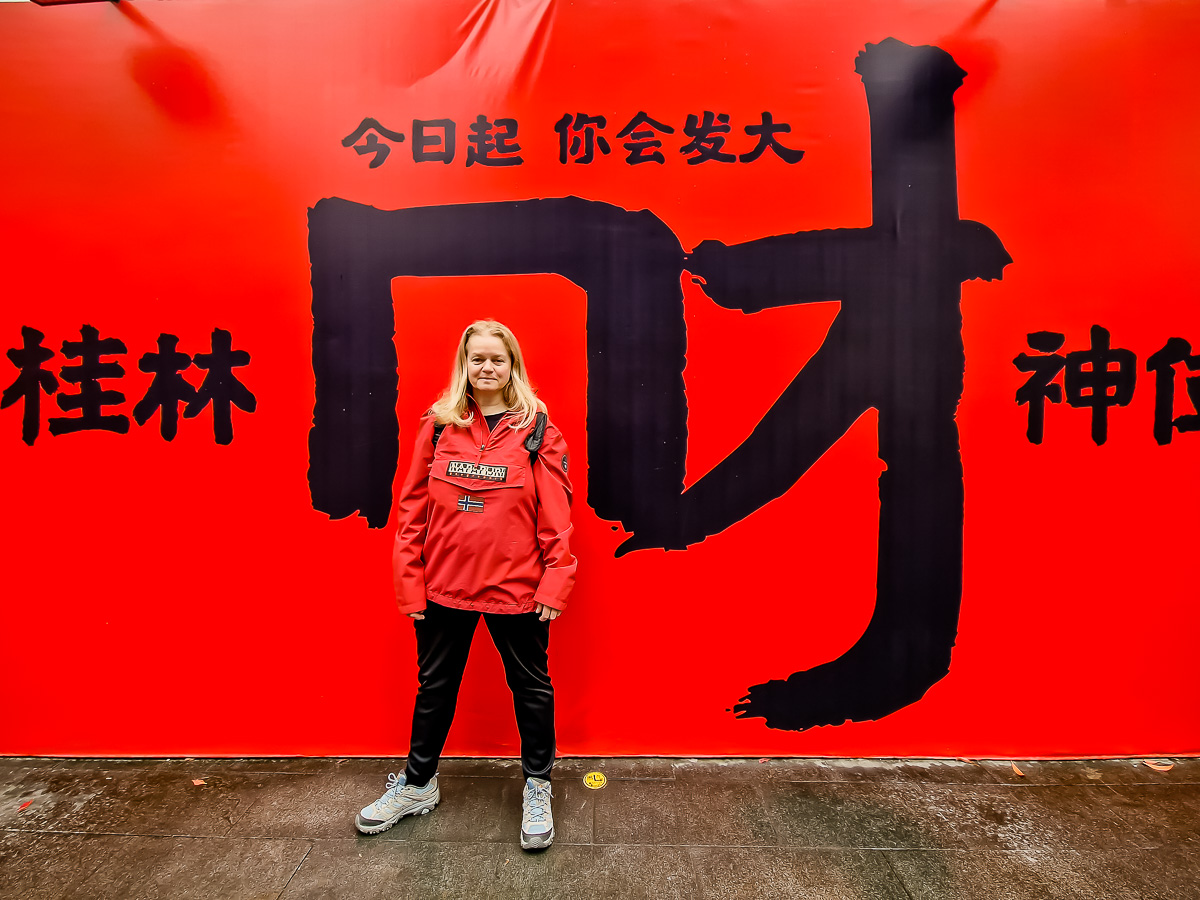
William, my guide, puts me up against the wall! All in the name of making me rich!
There’s one element missing from that big Chinese character on the banner. If you stand in the position I was told to stand in, your body completes the character. And it means: “Starting today, you will make a fortune!” The big character I’m helping complete is 财 = wealth, fortune, money.
Ahaaaa, THAT’S why all the Chinese people were queuing to have their picture taken here!
As for me, I’ll let you know when that “starting today” actually starts…
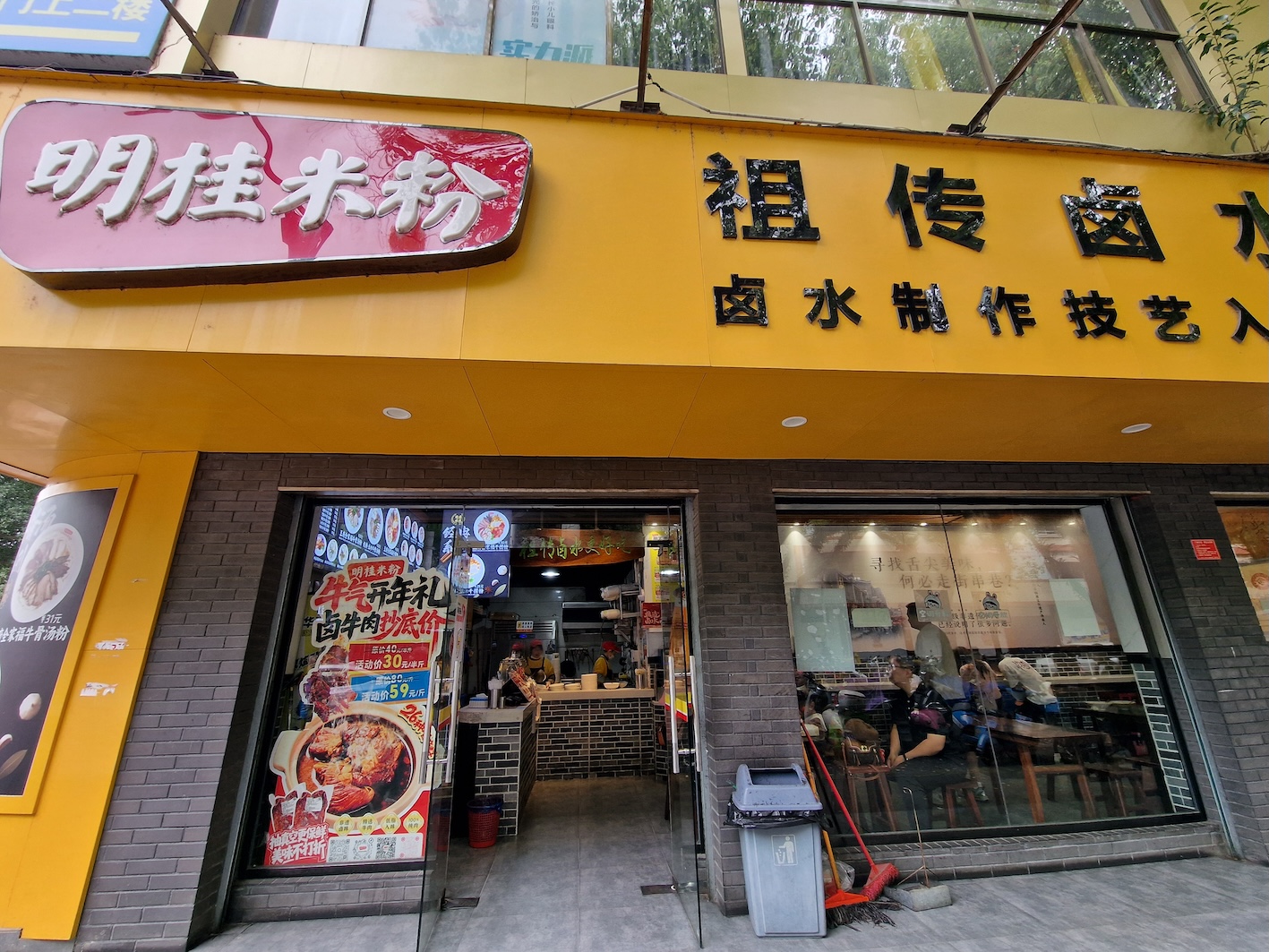
In the meantime, I enjoy Guilin’s cheap food – my guide takes me to a tiny street bistro, where I have a medium portion of rice noodles with pork and soybeans.
I learn that here, in southern China, they eat rice noodles, whereas in the north they eat wheat noodles.
How much do you think my noodles cost??
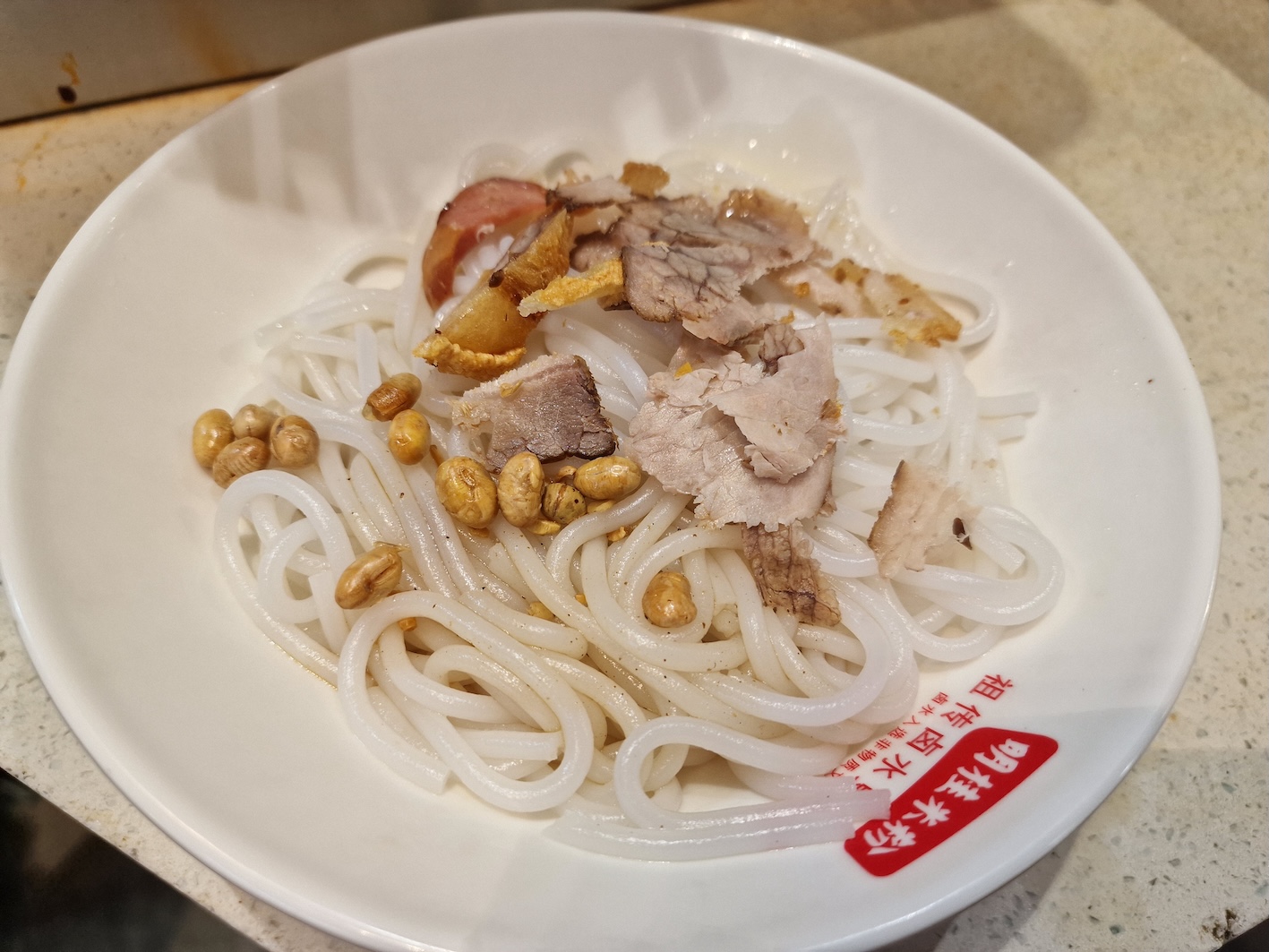
5 yuan! That’s just over half a euro, peopleeee. (And I could have added sauces too, except every single one was mega-ultra-spicy…)
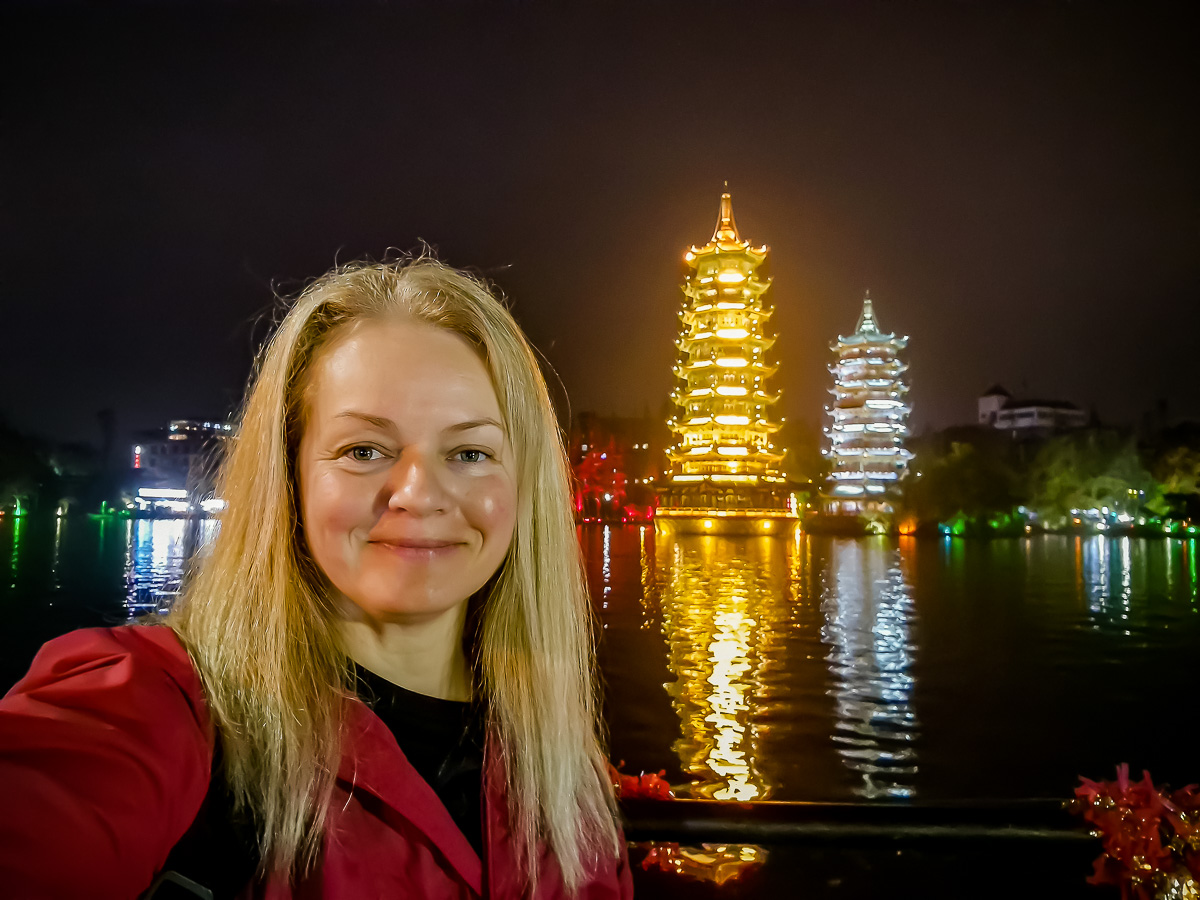
On the way back to the hotel, I go and say hello to the twin pagodas one more time, because the next morning I have a very early start – I need to catch the boat to Yangshuo.
LI RIVER CRUISE
Lots of pictures and very few words – that’s what this tour deserves, if you ask me.
Actually, it’s not really a tour but a four-hour transfer from Guilin to Yangshuo aboard a “4-star” boat, as it’s officially classified.
I panicked when I first heard how long it took. I couldn’t understand why on earth I had to spend that bloody long on a boat when you can drive between the two cities in an hour and a half! Ok, beautiful scenery, I get it, but I’d read that there were also one-hour trips on this river, taking you to one famous spot. Basically Guilin → famous spot → Guilin. I kept thinking I was wasting three hours I could use to see other things. Then I understood the trick…
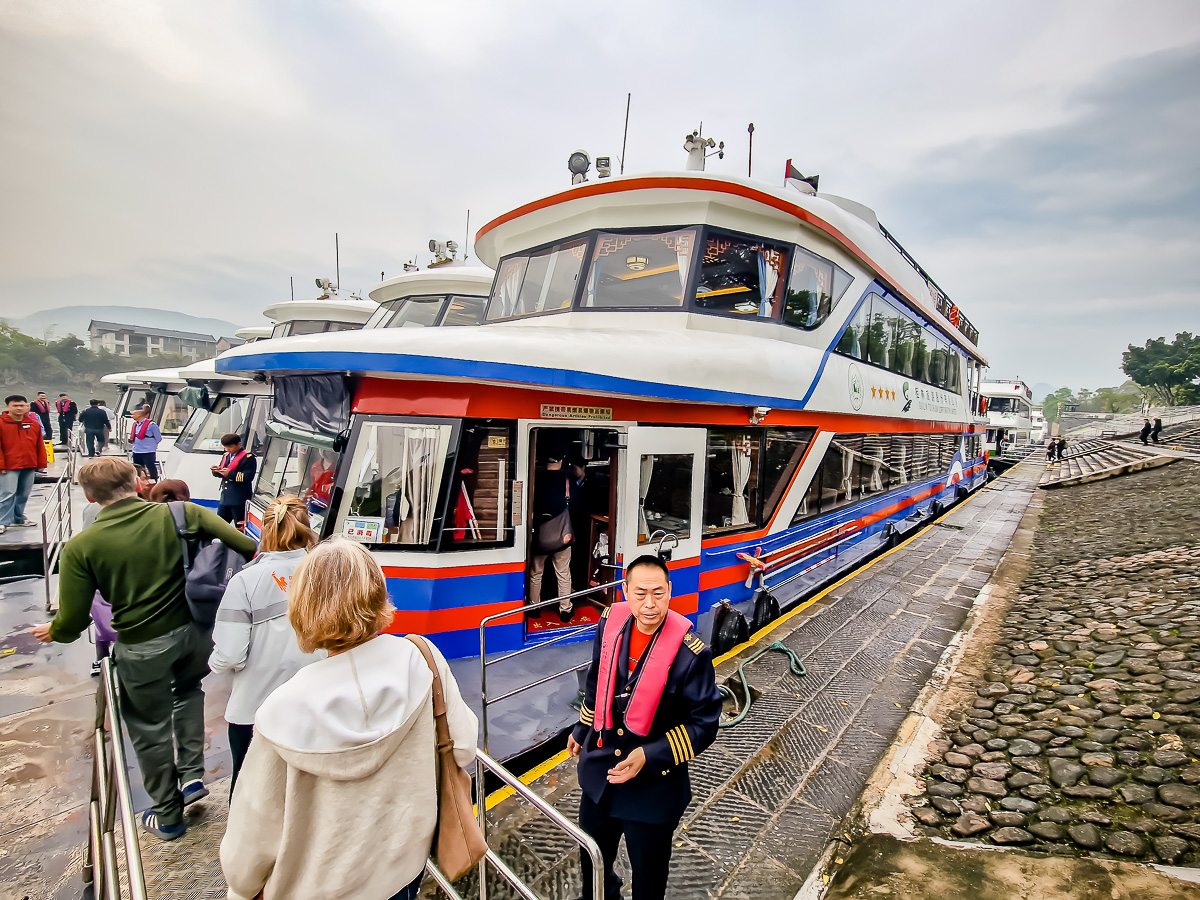
First thing in the morning, my guide and I arrive at the pier. It’s packed with people and packed with identical boats! Our ticket clearly says which boat we’re on, so off we go to find it. (Note: a ticket on the 4-star boat costs around 43 euros, buffet included, but there are also 3-star boats at a lower price – around 26 euros.)

Luxury and opulence 🙂 The seat is big and comfortable, nothing feels cramped, nobody is standing around without a seat – you can breathe.
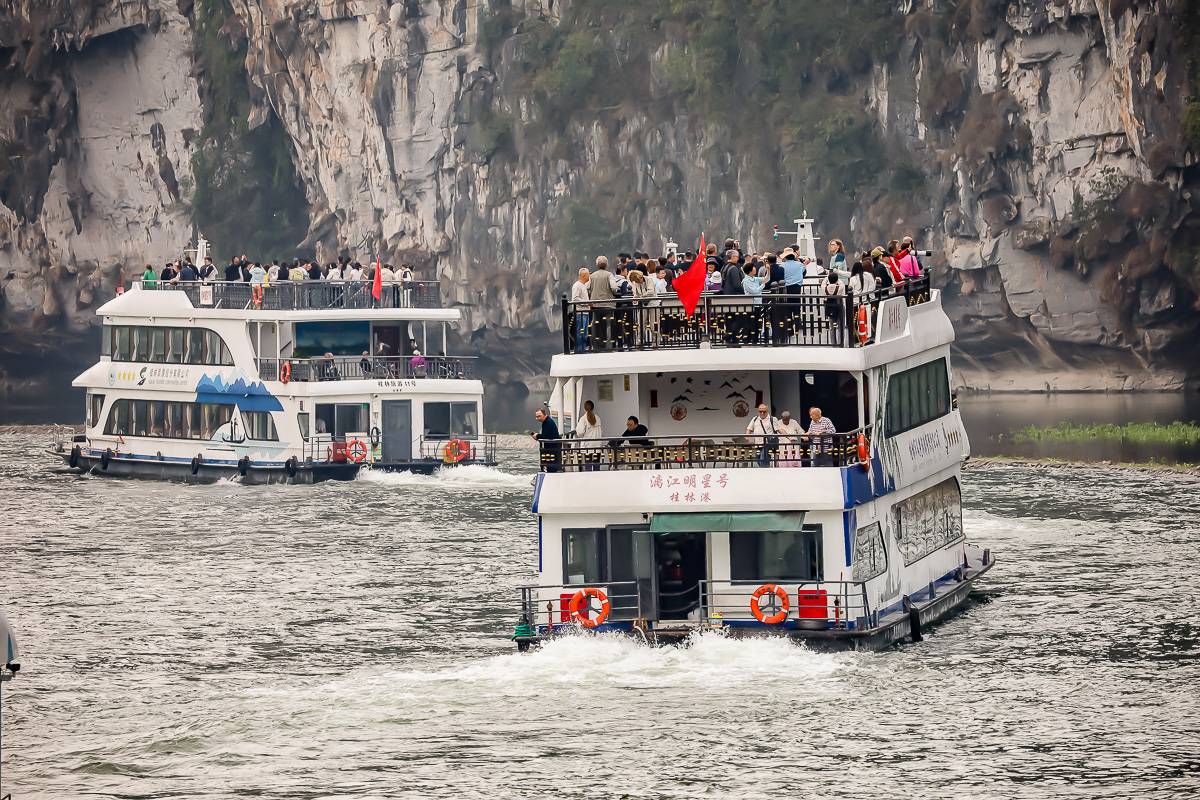
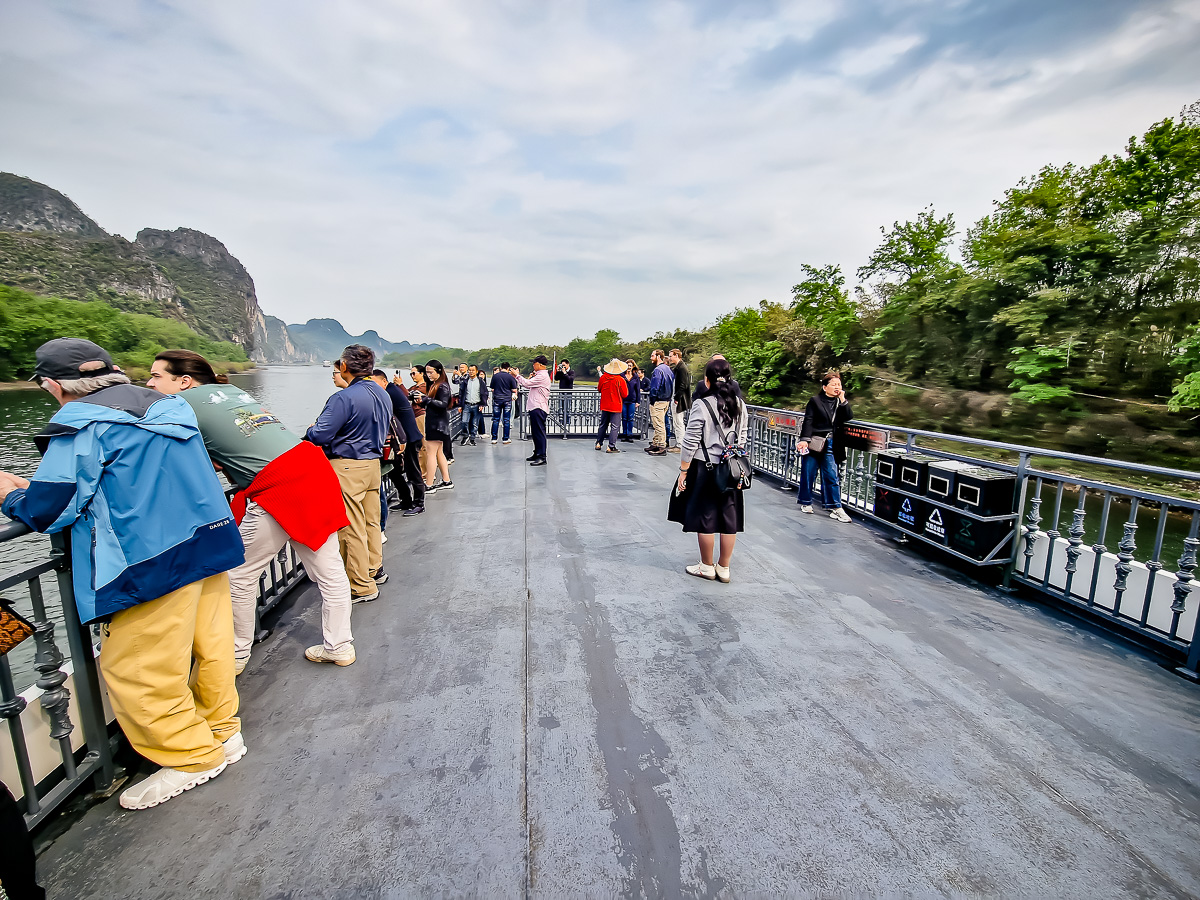
We set off in a convoy. Little by little, the boats spread out, so none of them blocks the view either ahead or behind.
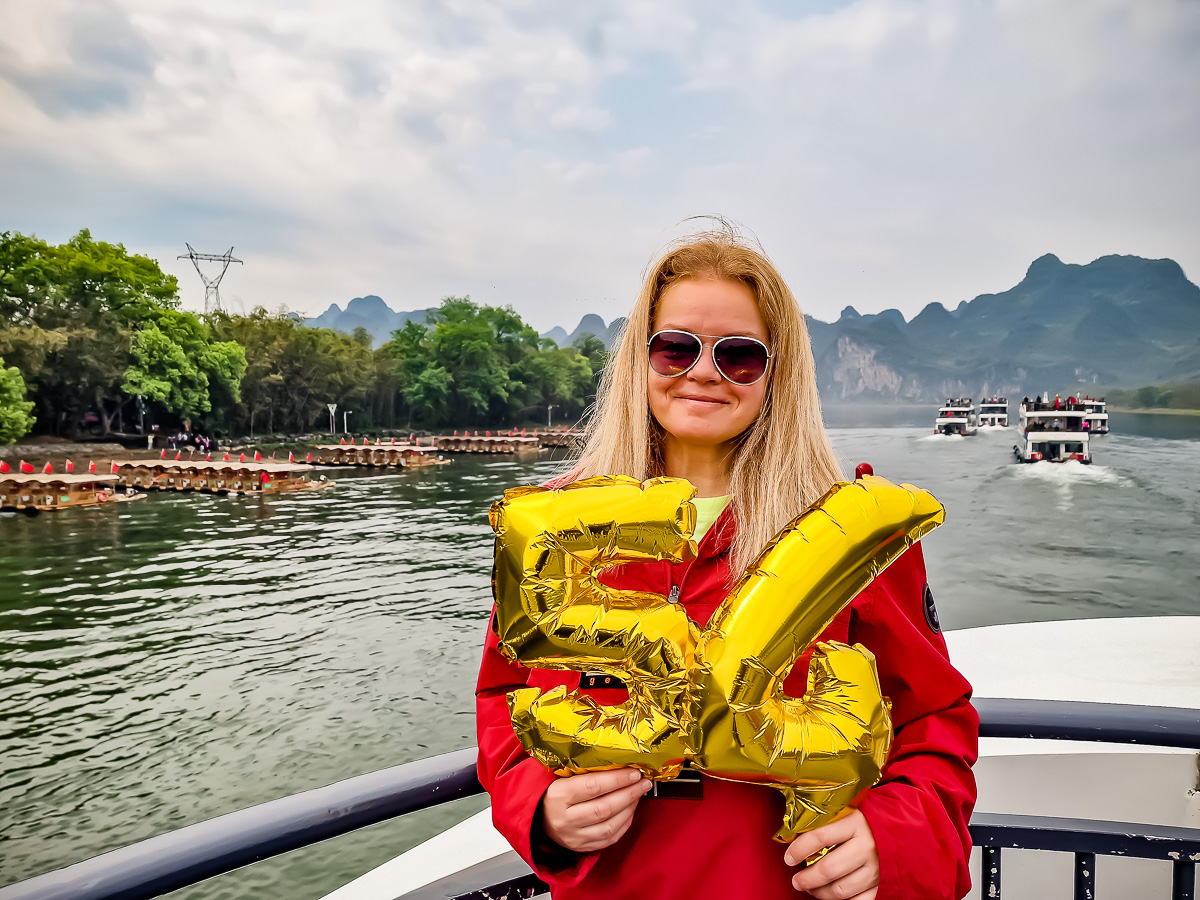
The first part of the journey isn’t particularly spectacular, so I nearly blow my lungs out inflating my birthday number balloons, then head up to the upper deck to get some birthday pictures 🙂 🙂
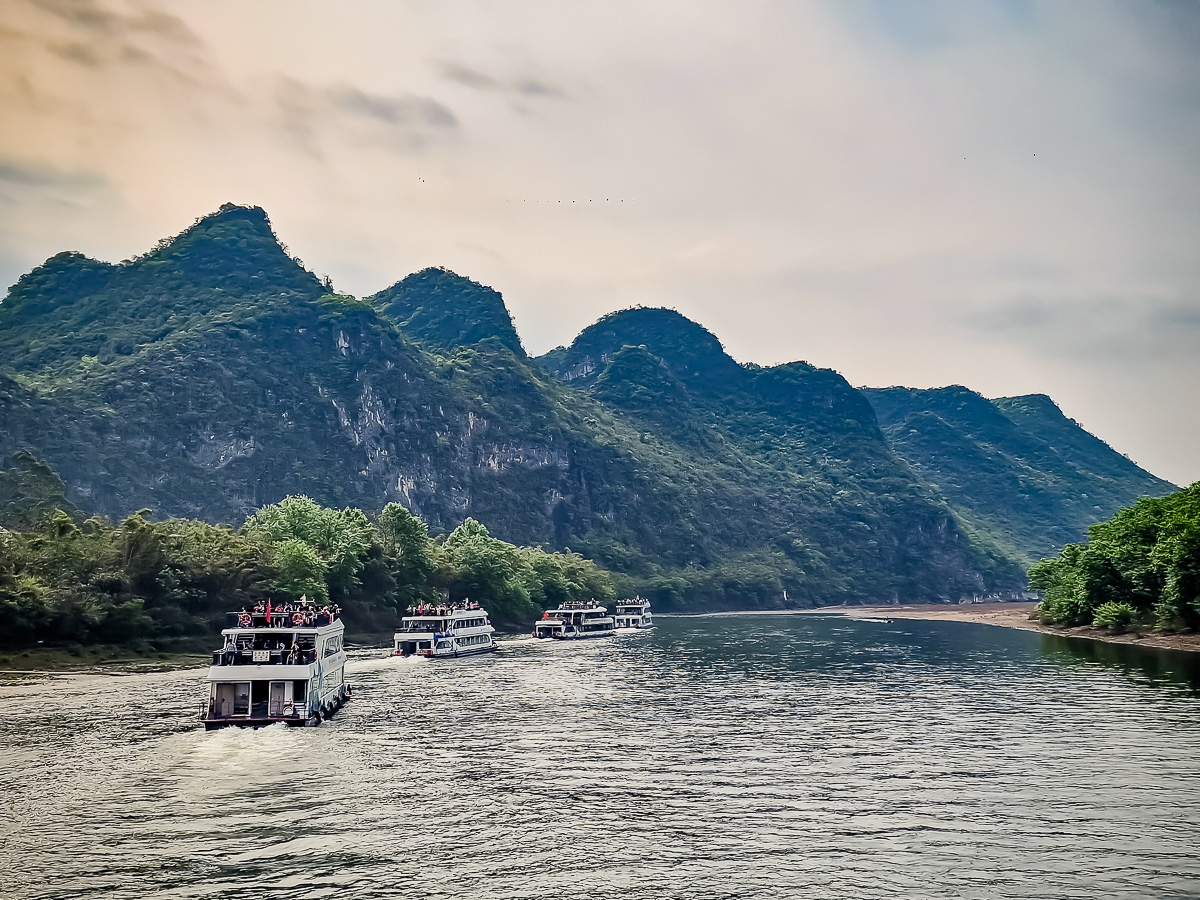
And then I just stand there, marvelling at the way we glide through this unreal scenery.
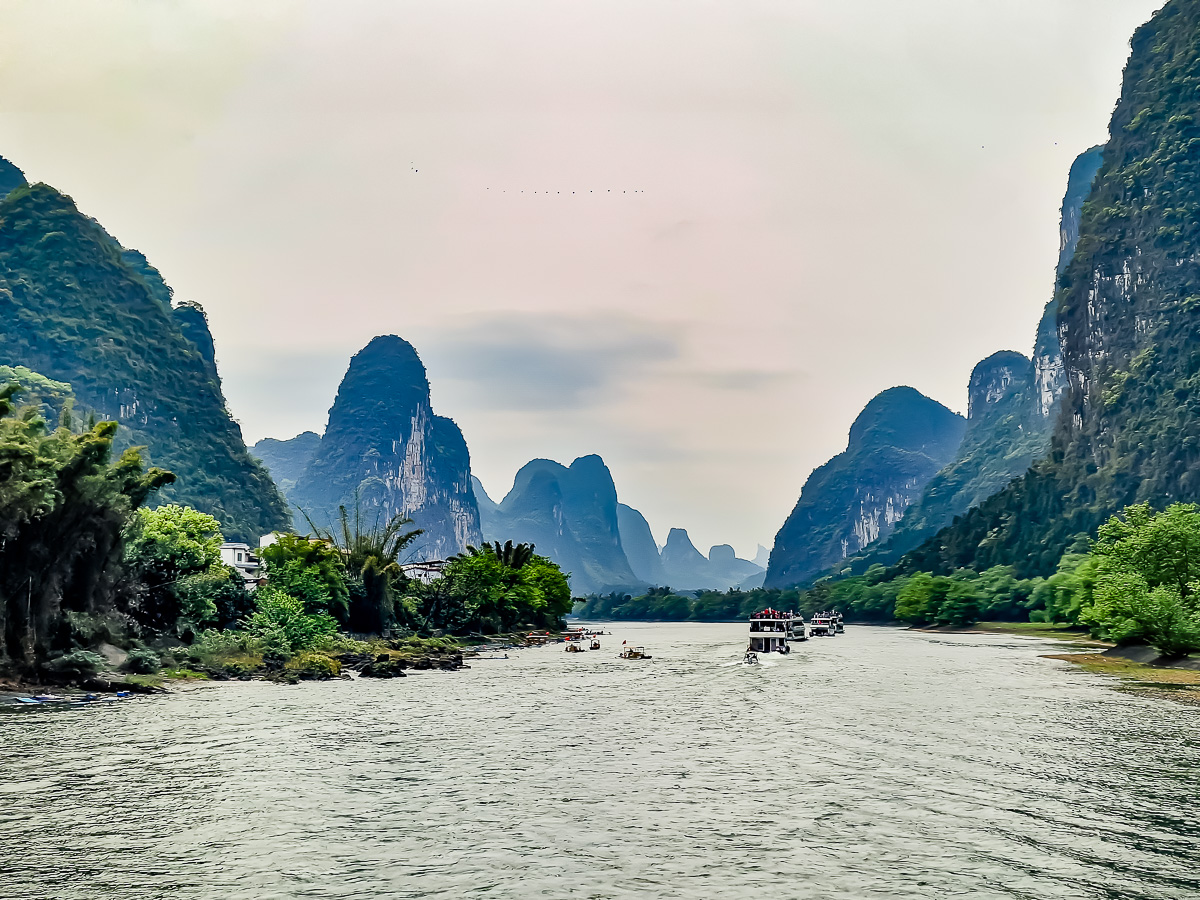
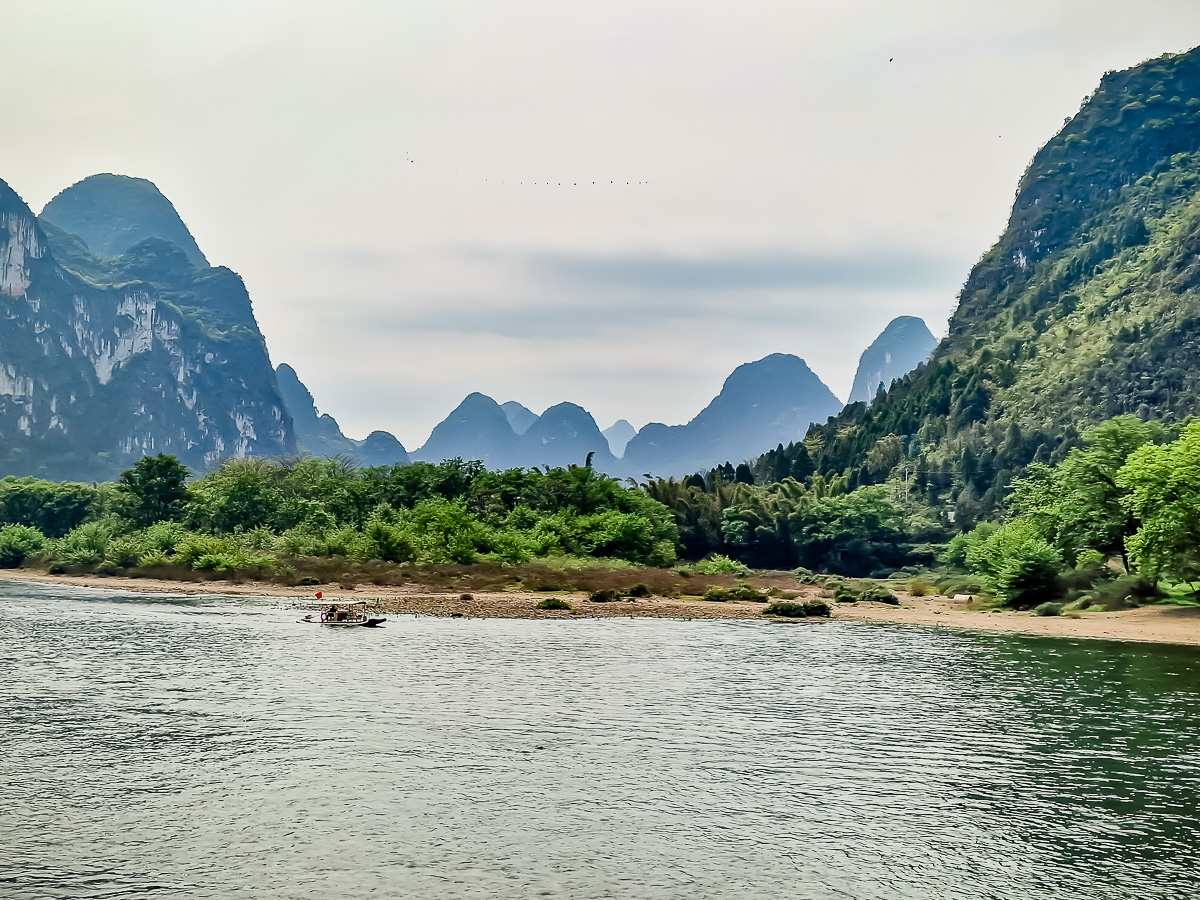
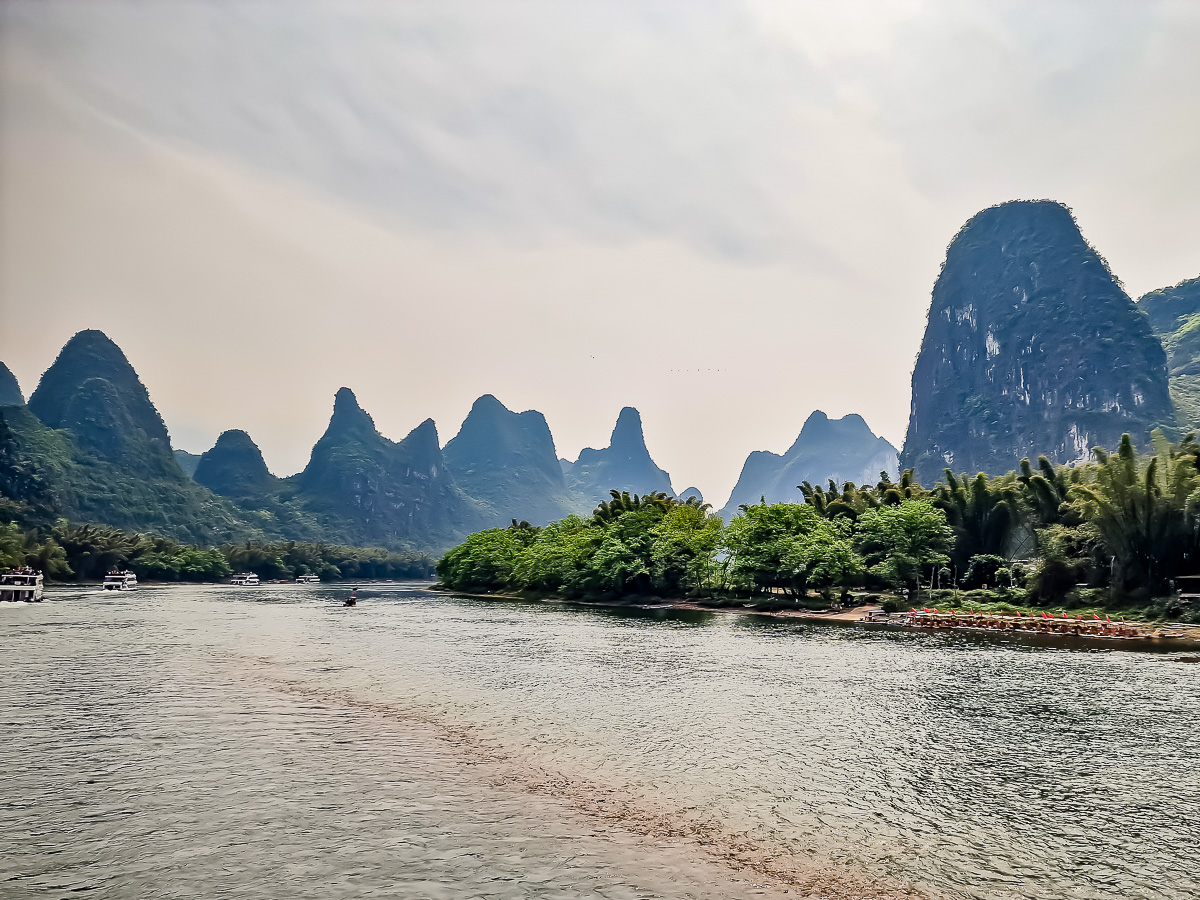
On both sides of the river and further away in the distance, countless pointy limestone peaks rise into the sky, and I have absolutely no idea what to photograph first!
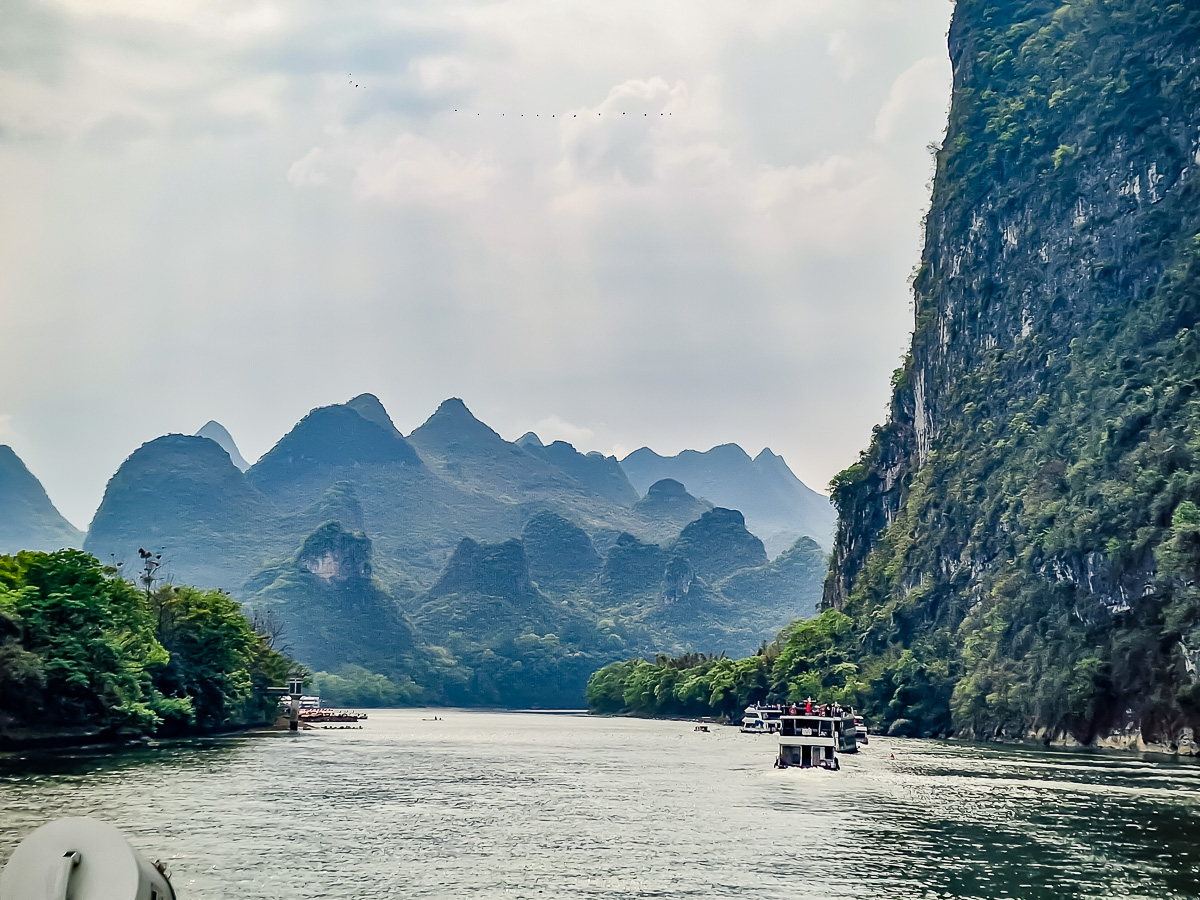
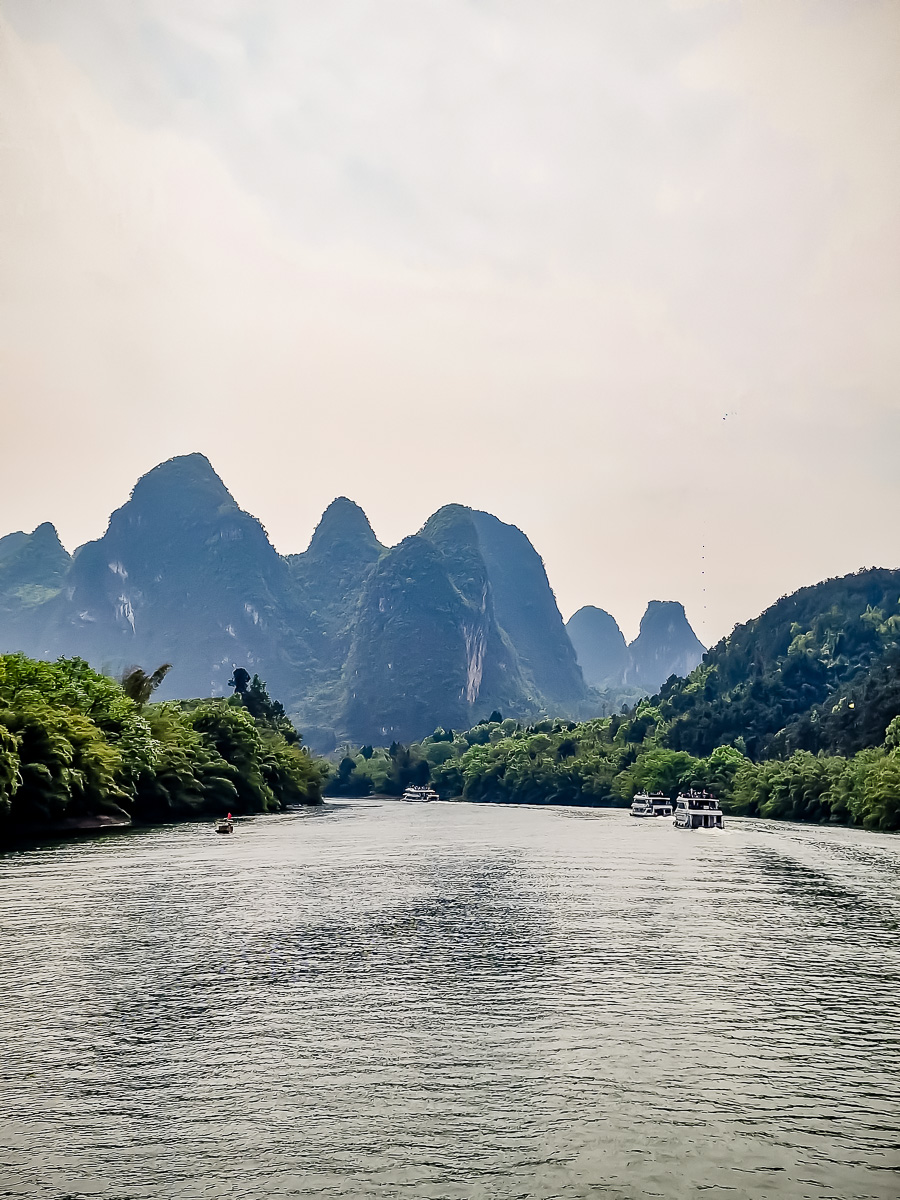

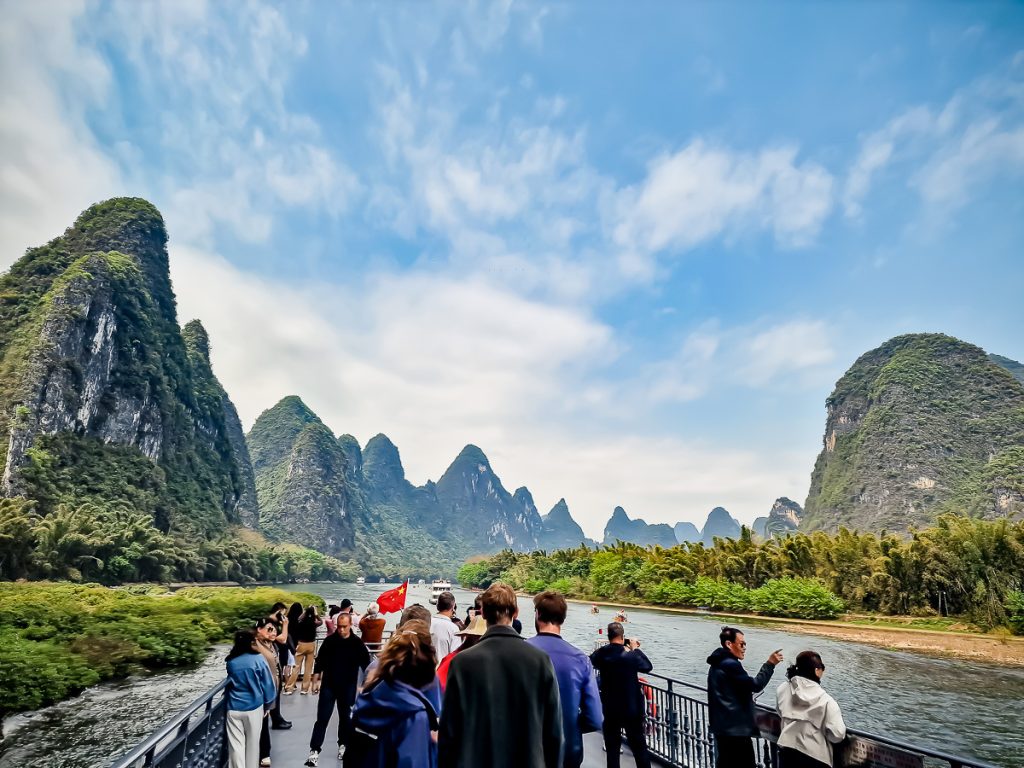
The view from the boat’s upper deck is gorgeous, especially since the weather decides to be on our side!
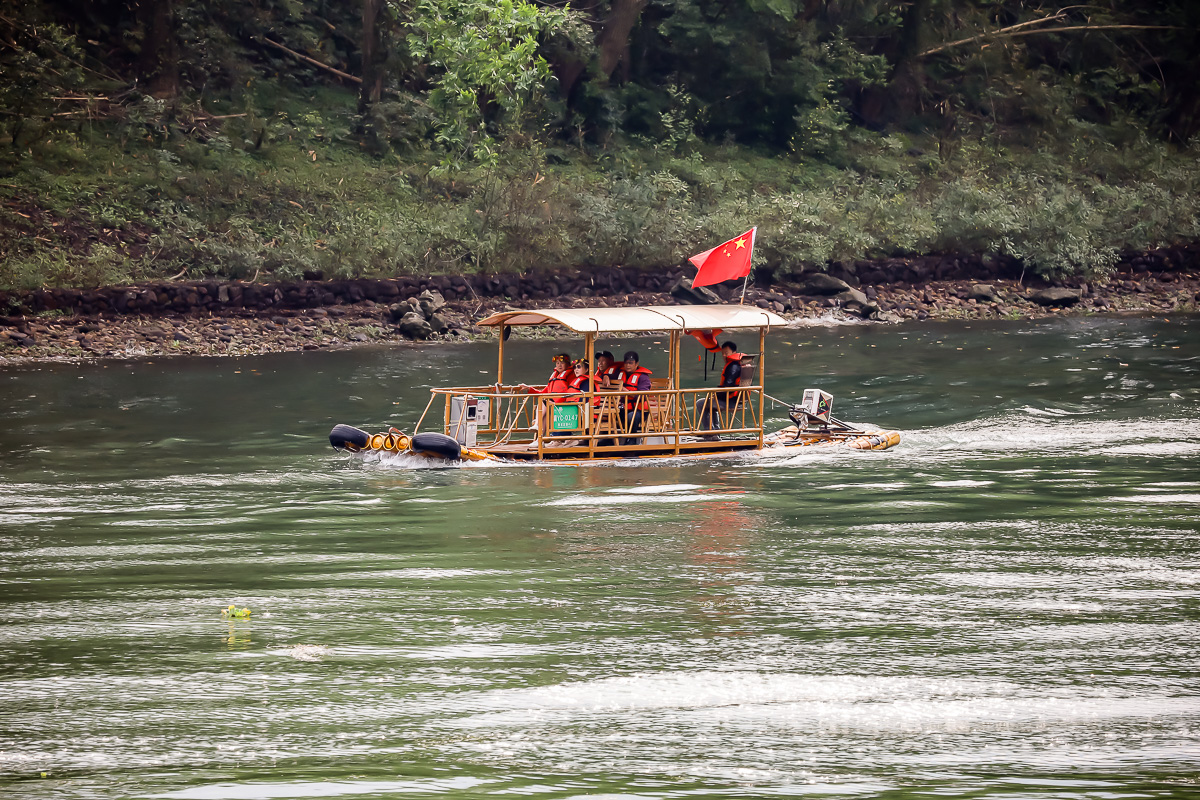
If you’re not off on a boat, you’re off on a raft… A motorised bamboo raft, that is.
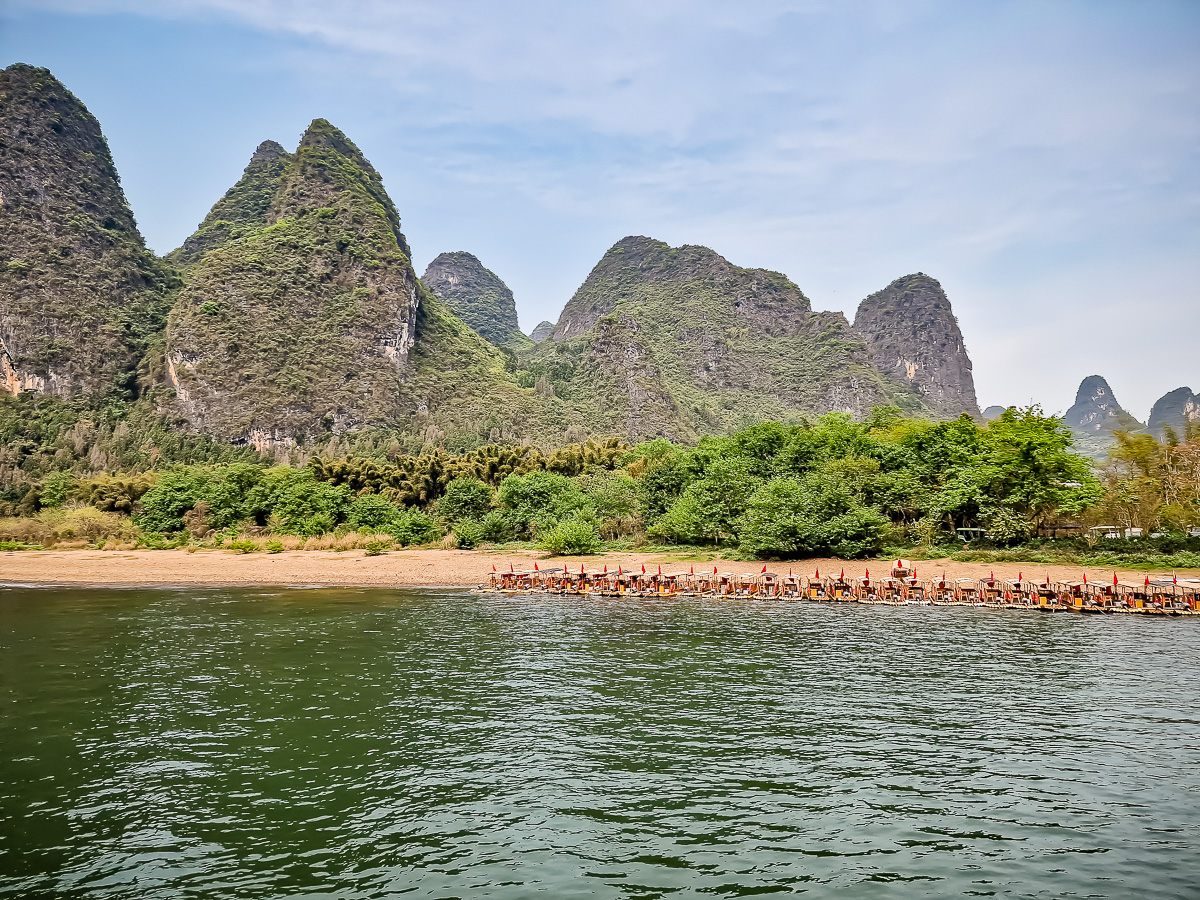
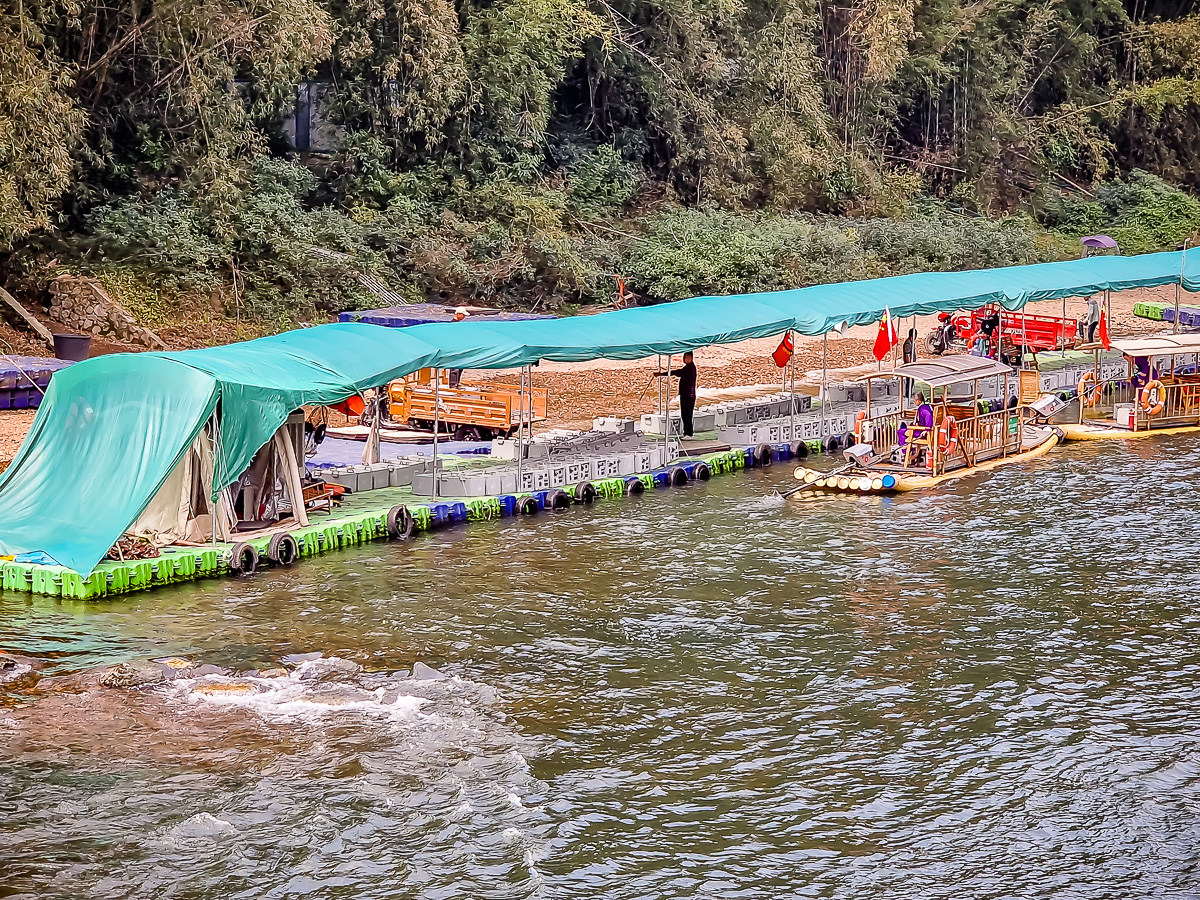
In several places, especially as we approach an important point along the route, I see pontoons where you can rent these rafts. They offer shorter trips along the river, particularly around the area we’ve all been told to get ready for!
THE IMAGE ON THE 20-YUAN BANKNOTE
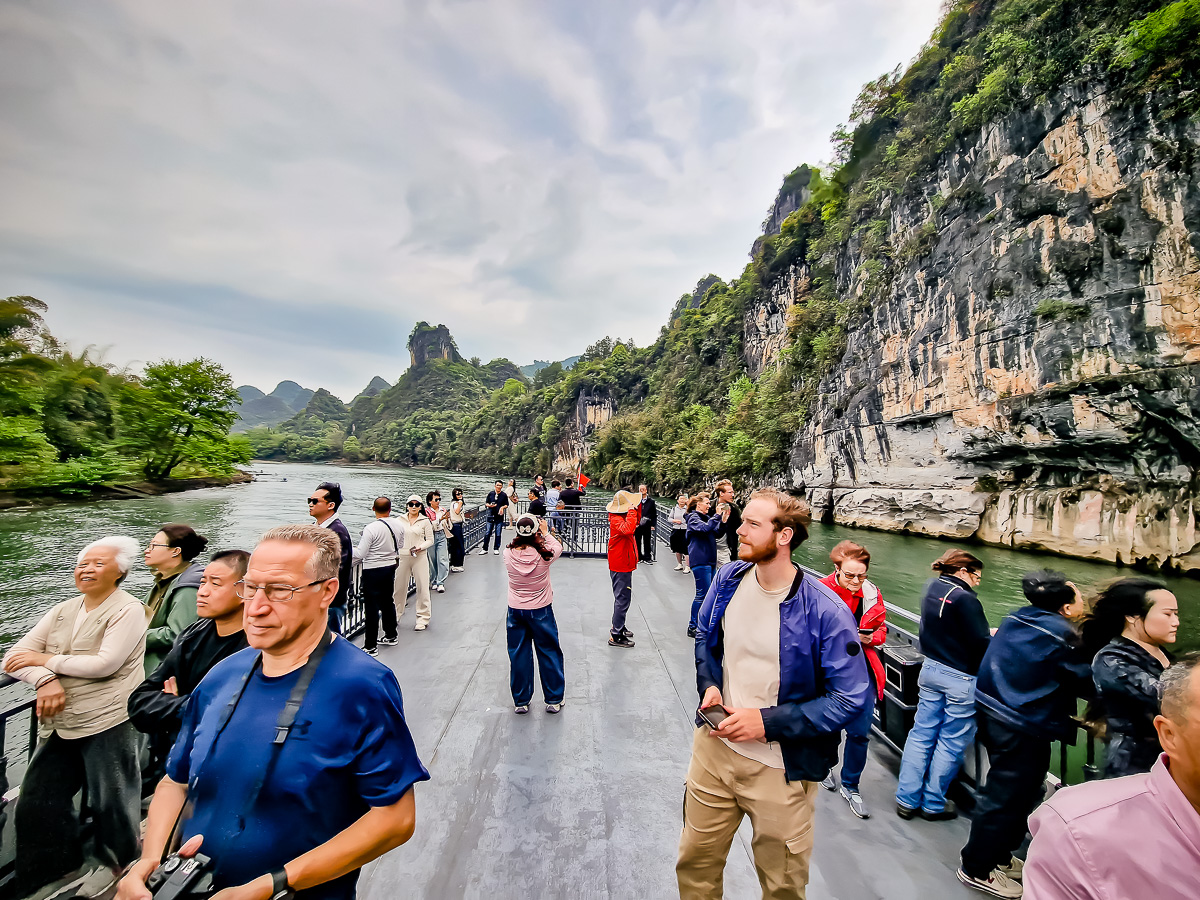
As if someone has given a signal, everyone on the boat rushes onto the deck, scrambling to get hold of a 20-yuan banknote.
We reach Xingping, the famous spot where you can see the exact landscape of karst mountains pictured on the back of the 20-yuan note.
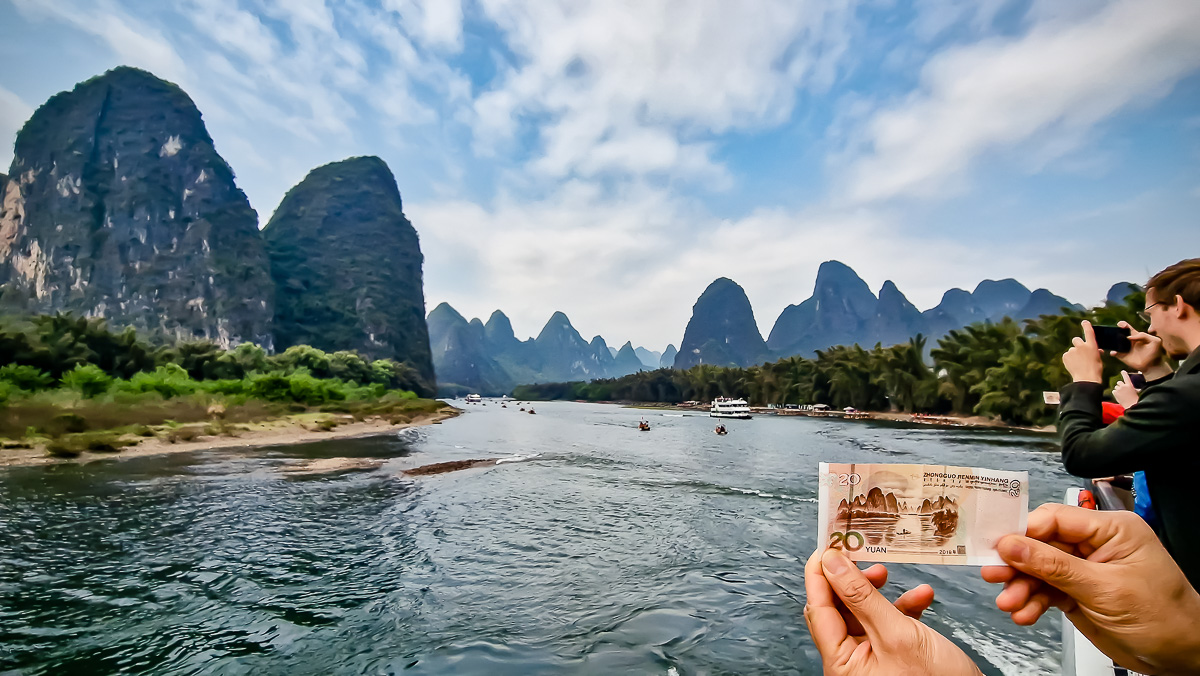
You should see all of us desperately trying to get exactly the same angle as the one on the banknote – because that’s the whole point…
I take a couple of photos. Or twenty 🙂 I realise there’s no way to fit all the mountains into the frame anyway, and finally calm down. My guide lends the 20-yuan note to other desperate souls who don’t possess the precious banknote required for the perfect picture.
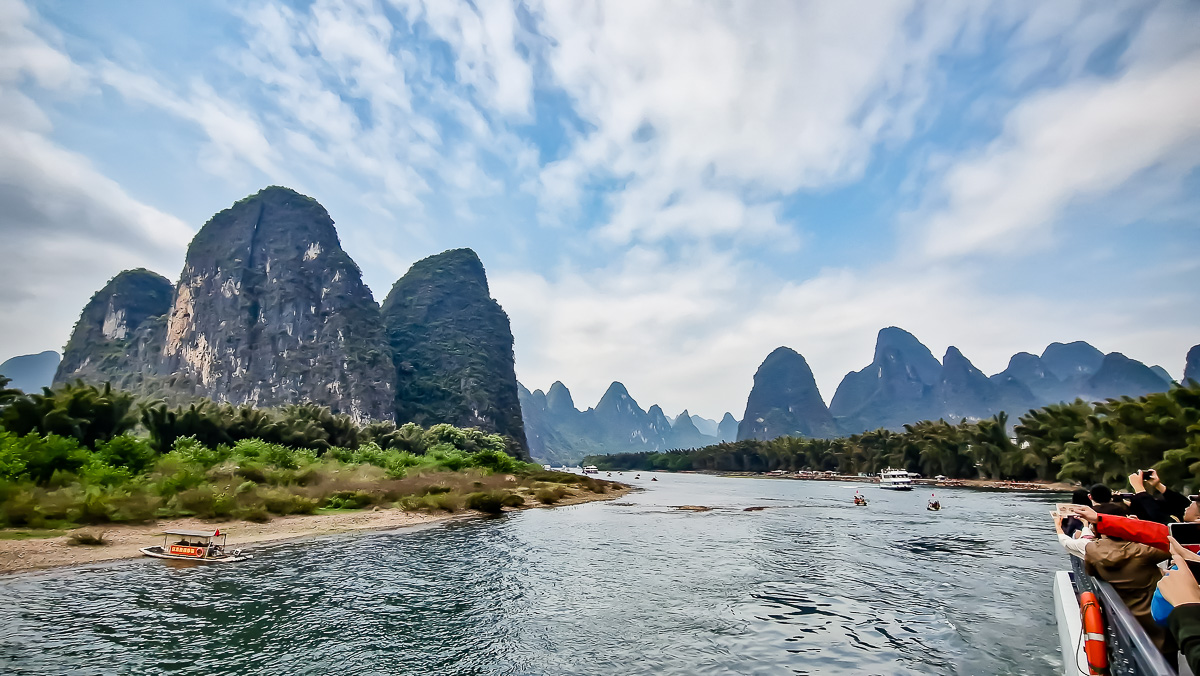
I carry on photographing the “painting”, which really is quite something.
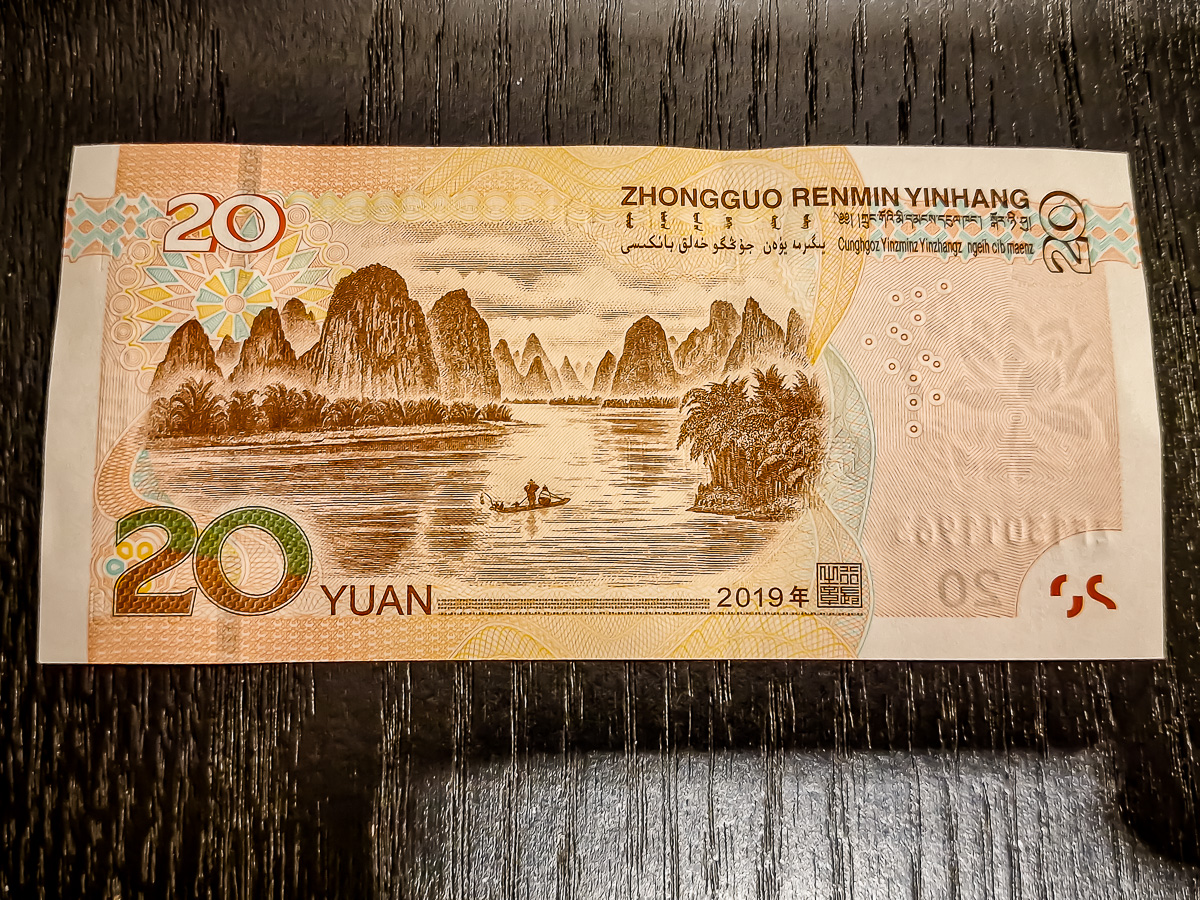
Water flows, rocks remain – and so we too floated past the famous spot, while I tucked the banknote safely away as a souvenir.
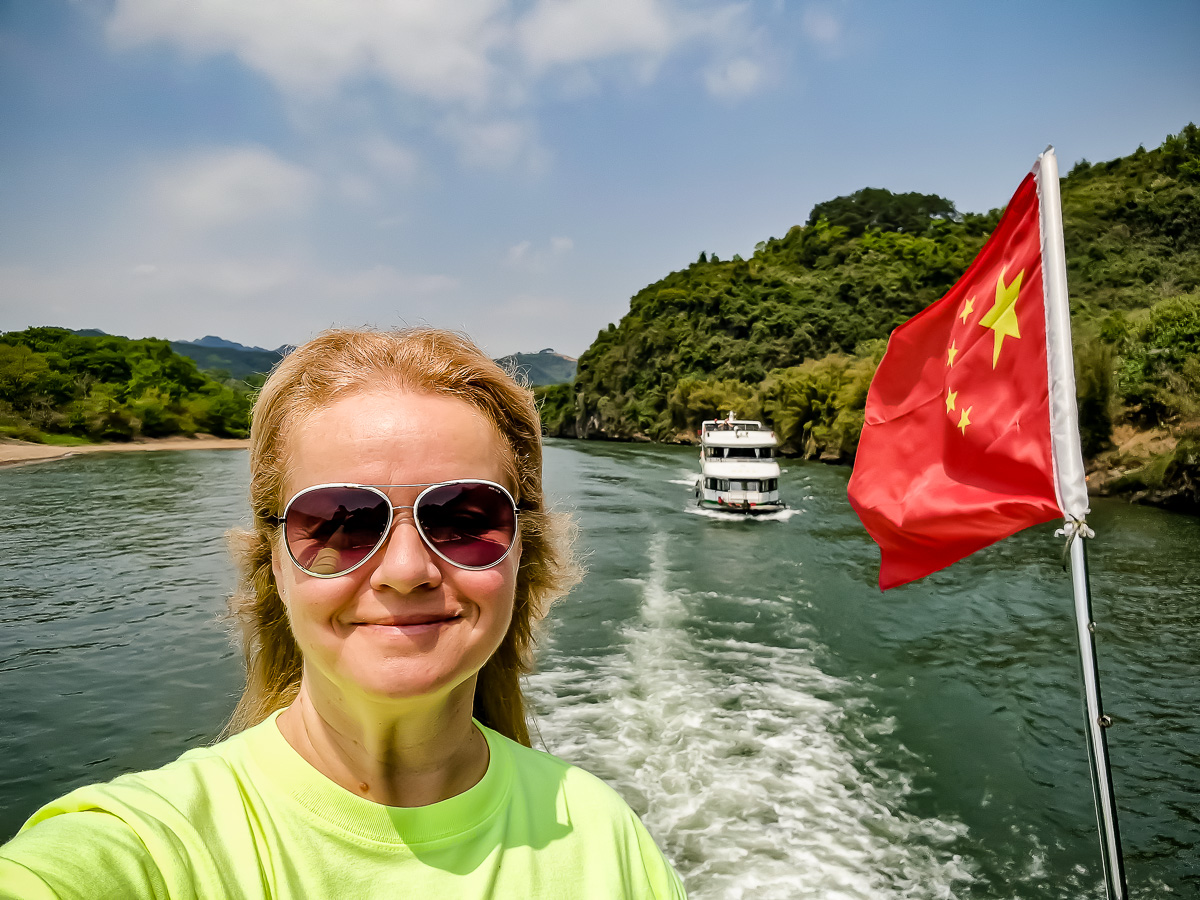
Not long after that, the scenery “calms down”, which makes it the perfect moment for us to attack the buffet prepared by the Chinese. I quickly nibble on something and head straight back up to the deck to take more pictures.
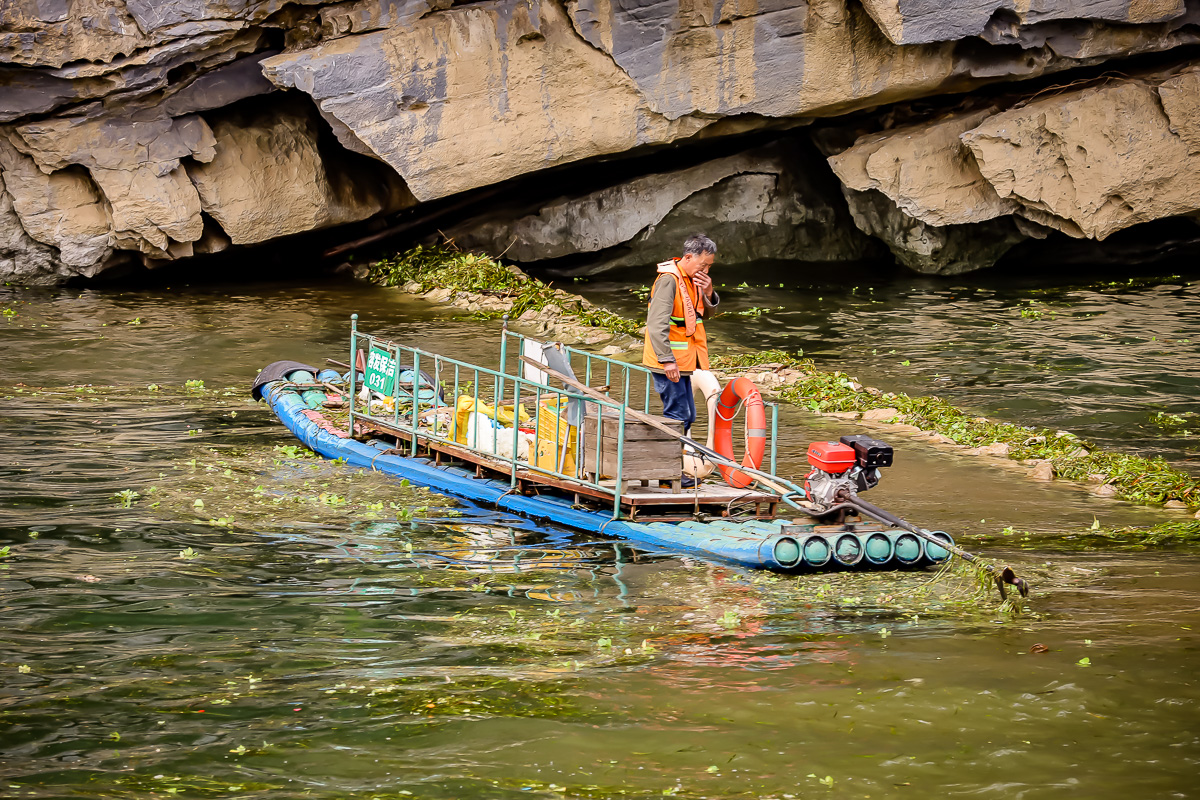
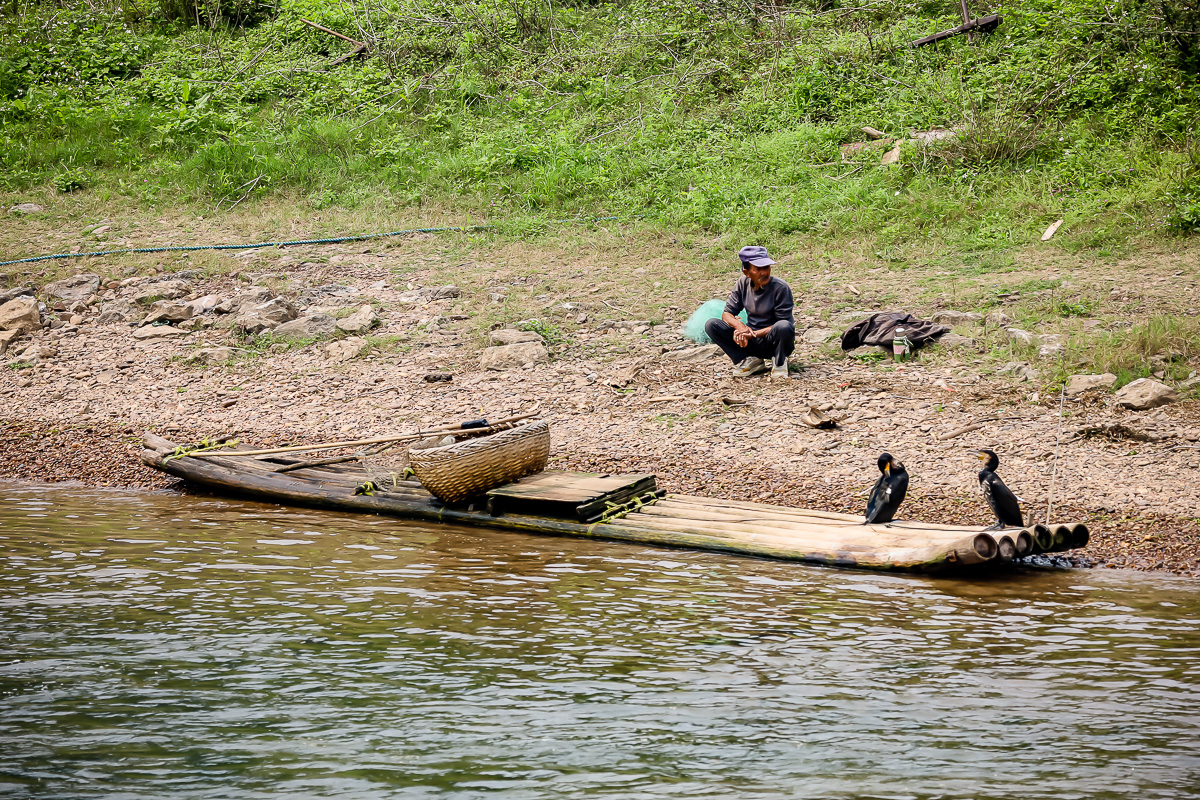
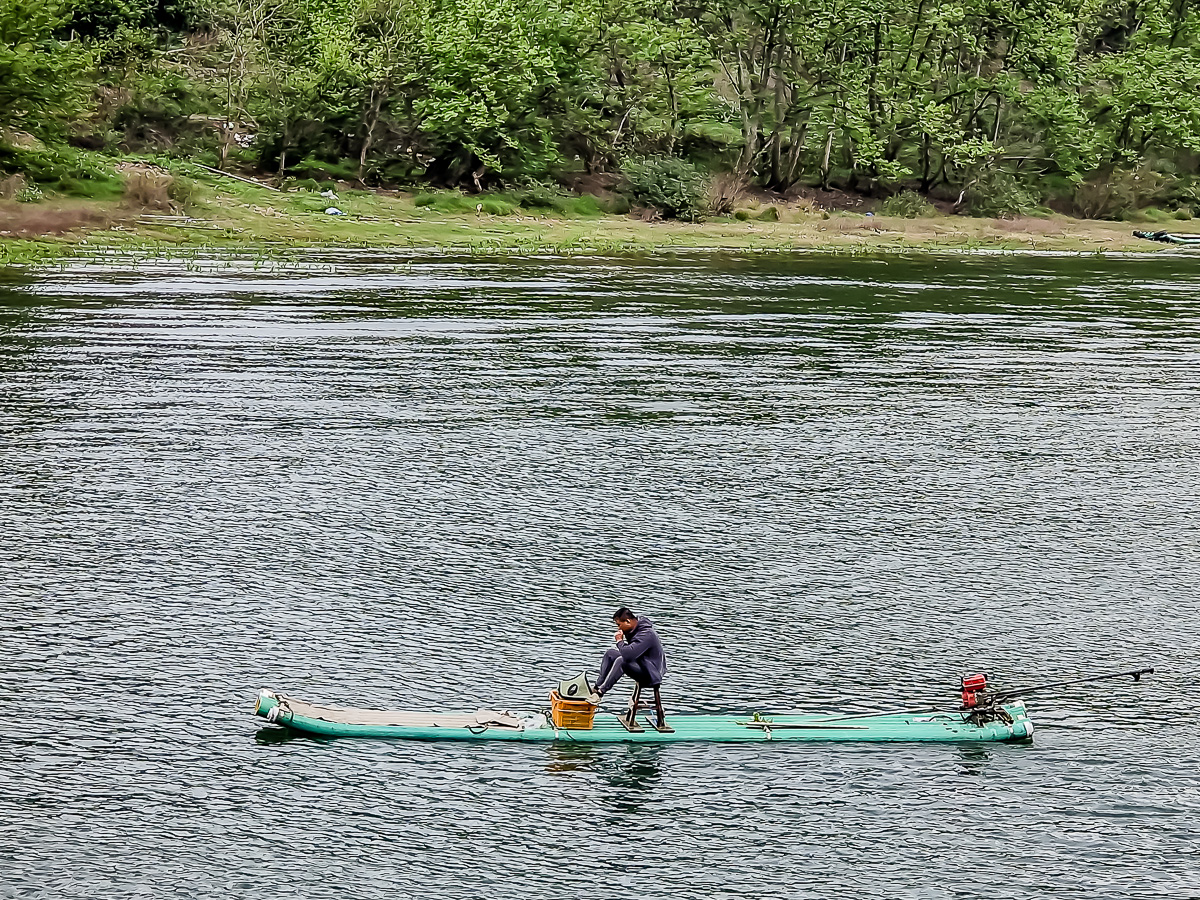
Along the way, we come across all sorts of fishermen, including some with cormorants – something I was going to learn much more about at my next stop, Yangshuo.
On the steep hillsides, I spot a few white goats hanging around.
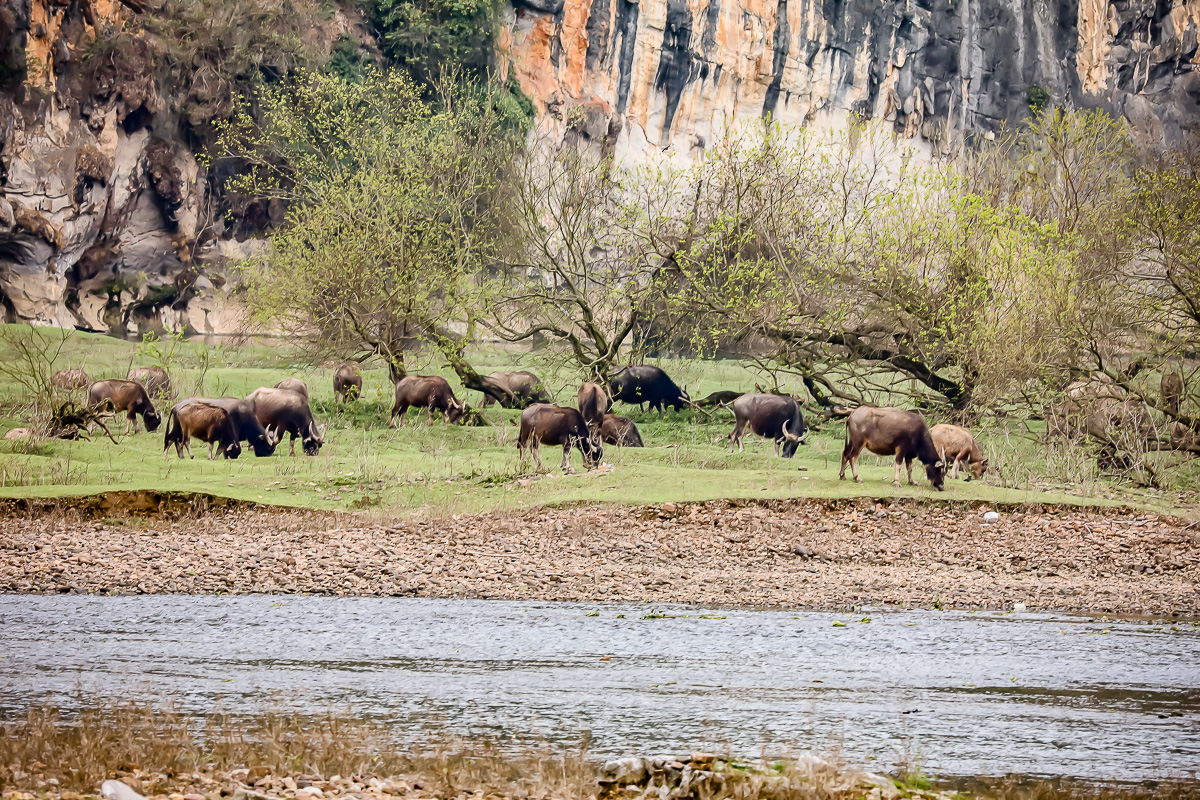
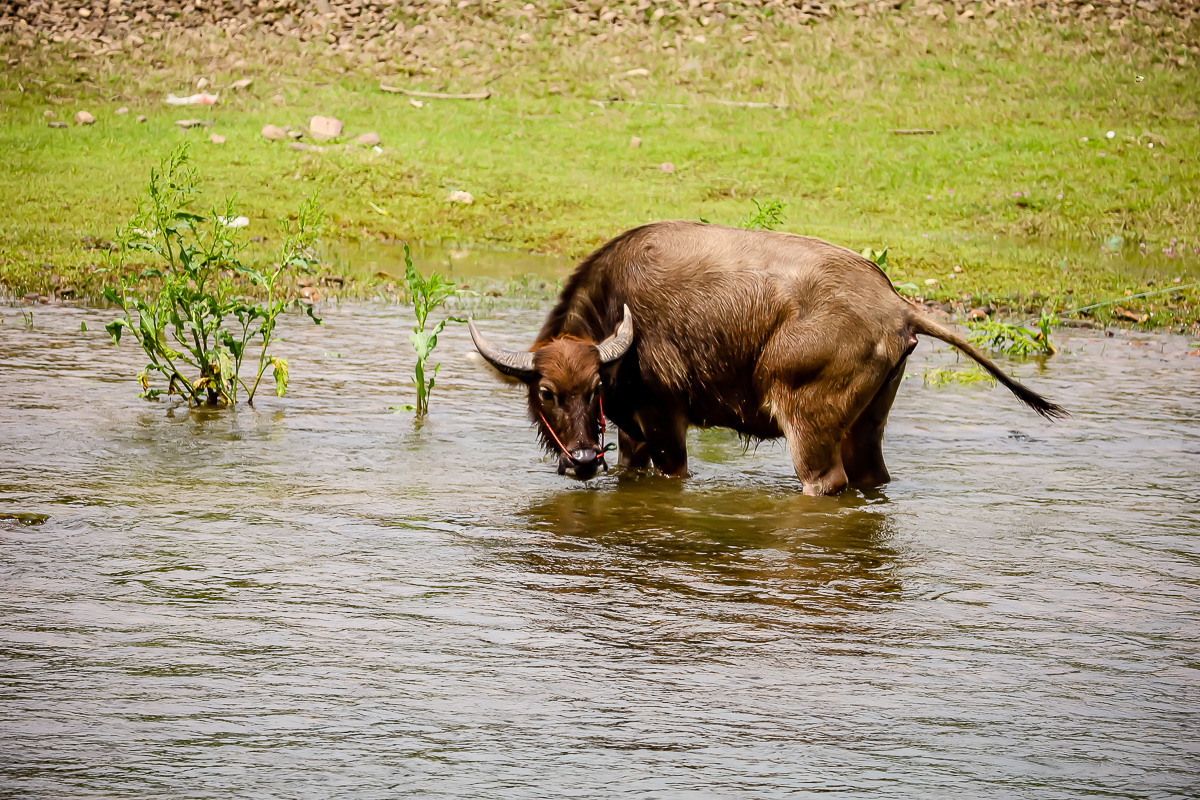
On the meadows by the river there are several herds of water buffalo. In fact, I even catch one in the water shamelessly having a poo right in front of us…
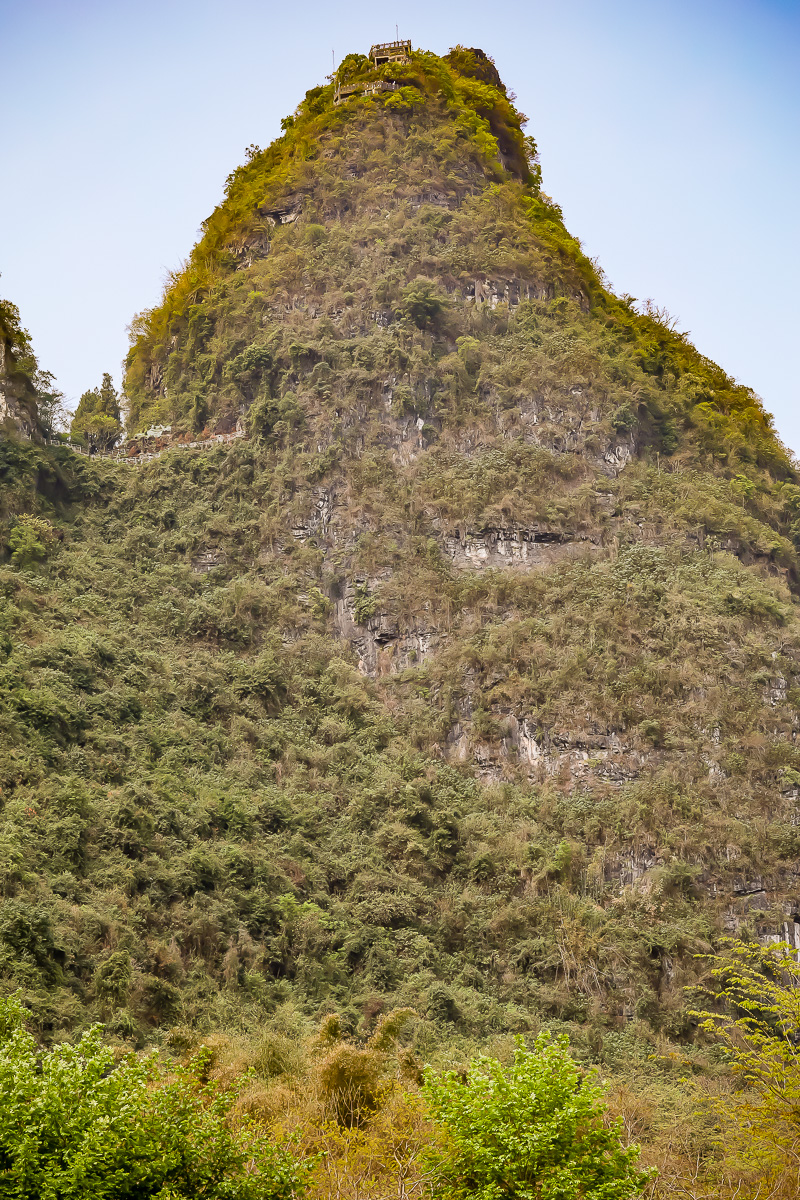
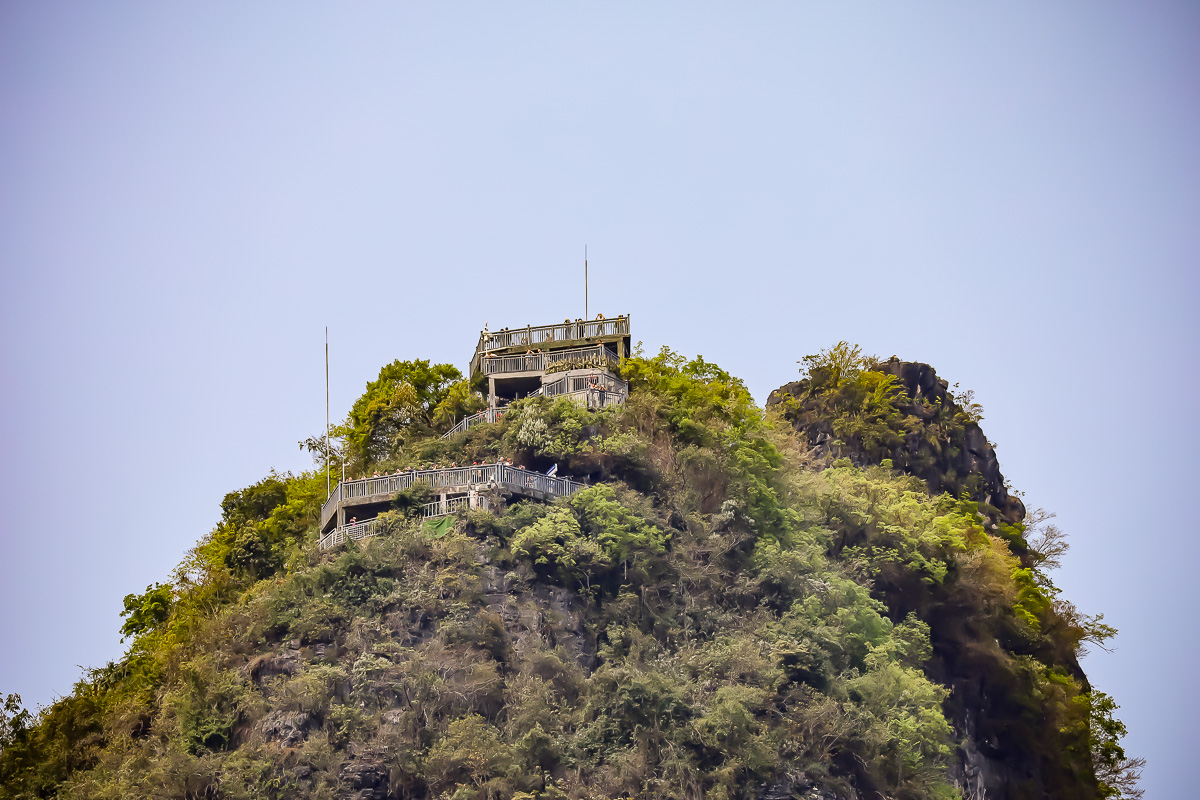
“Look, we’re going up there!” my guide says, pointing towards some viewing platforms at the top of a pointy hill. What?!? I hope he’s joking!
Nope. That’s exactly where we ended up. We didn’t climb the hill all the way from the bottom, but I still damn near coughed up a lung on those stairs. Totally worth it, though. Look:
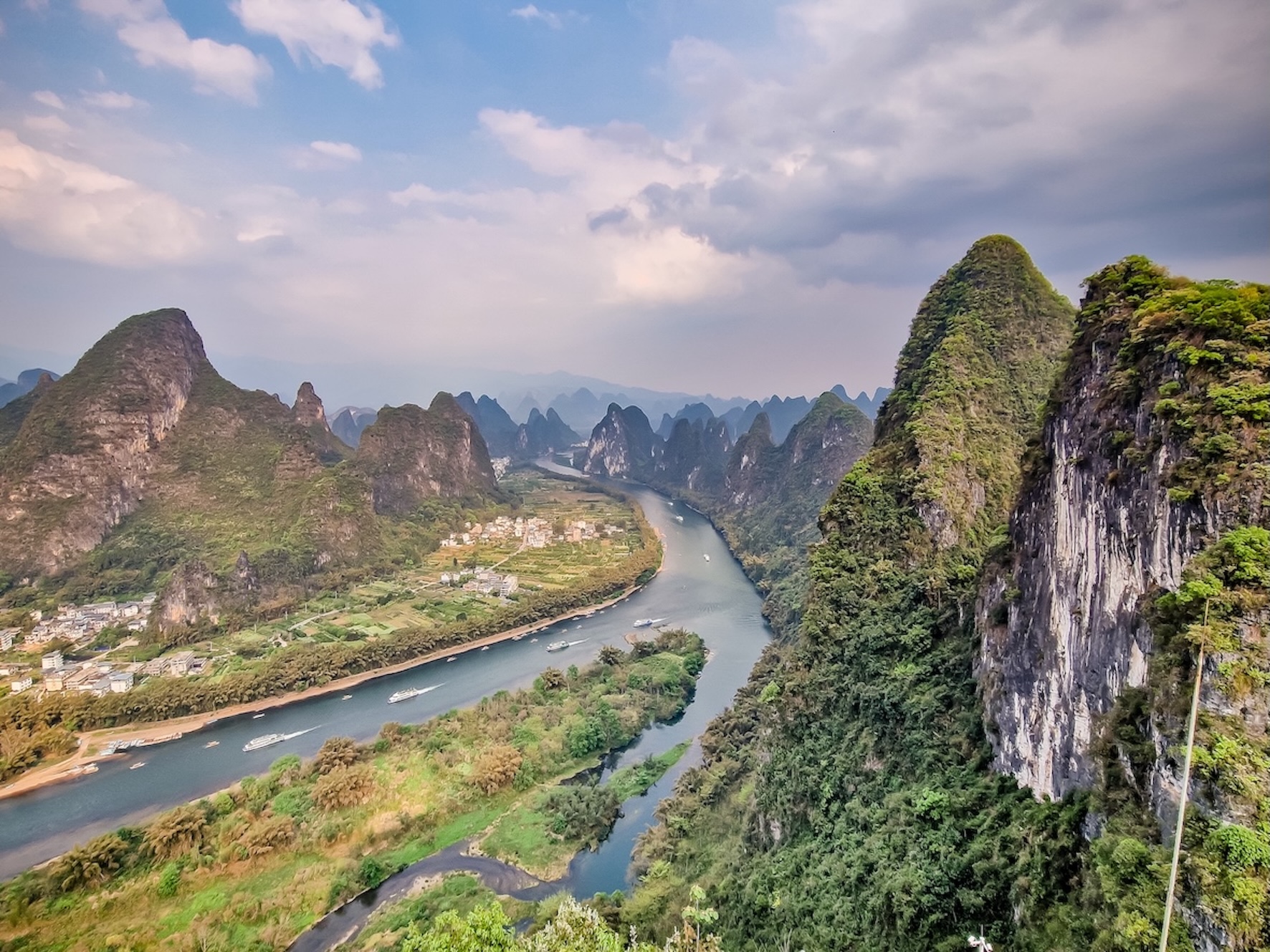
I’m in Yangshuo, and I can’t wait to show you all the amazing things I discovered here!
Until then, here’s a short video of the journey along the river:
And you can read about my unusual experience in Chengdu and especially about the giant pandas, about my first impressions of China and the experiences I had right from the start, as well as all the wow things I saw in Xi’an.